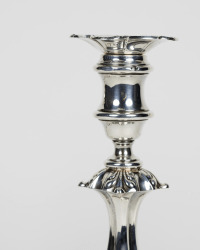
Centrepiece (3) - .800 silver - Antique Silver Wien


04
days
18
hours
01
minute
11
seconds
Current bid
€ 70
Reserve price not met

Expert
Selected by Inés Fernández
Specialised in Spanish and Portuguese silver with over 10 years in galleries and auctions.
Estimate € 600 - € 750
5 other people are watching this object
 Bidder 7334 Bidder 7334 | €70 | |
|---|---|---|
| Bidder 9821 | €65 | |
| Bidder 9821 | €60 | |
Catawiki Buyer Protection
Your payment’s safe with us until you receive your object.View details
Trustpilot 4.4 | 130109 reviews
Rated Excellent on Trustpilot.
Antique Viennese silver set from the mid-19th century consisting of two spice holders and a large spoon in Neo-Rococo style, made in .800 silver with ivory handle, weighing 60 g in total and measuring about 60 mm wide, 50 mm deep and 170 mm high, originating from Wien, Austria, in fair condition with possible parts missing.
AI-assisted summary
Description from the seller
Antique Austro-Hungarian Monarchy Silver Spice Holders and Spoons
A very elegant silver dining set from the heyday of the Austro-Hungarian Monarchy. The set consists of two identically shaped spice holders (salt shaker/pepper shaker bowl) and a large sauce or measuring spoon that matches them in style.
Material: 13 lats (lothiges) silver (corresponds to the later .812 - .800 fineness).
Weight: Total 60 grams.
Place of origin: Vienna (Wien), Austria.
Age: Late 1850s (bowls) and 1861 (spoon).
Style: Neo-Rococo, Viennese-Rococo which was the most popular trend in the Viennese court and bourgeois circles in the mid-19th century. The shell-patterned (rocaille) edges of the bowls and the dynamic lines of the spoon bear the most beautiful design marks of the era.
Handle: The handle of the spoon is original, contemporary ivory, which is made unique by a fine patina and the natural grain characteristic of the material.
The objects are marked with the official Vienna city mark (official stamp), which contains the year and the number 13 (lat).
The spoon's hallmark: Vienna stamp from 1861.
Master marks: * AK: Probably a significant Viennese workshop (e.g. Alois Kohl or a goldsmith of similar rank).
AB: Also a registered Viennese master from the mid-19th century (e.g. early period of Alexander Bachruch or Anton Brichta). Note: The "unresolved" status often increases the research value on the antique market.
The objects are in excellent condition for their age. The silver surfaces have a nice balance of original polish and natural patina. The ivory handle of the spoon is solid and uncracked, which is a rarity for pieces of this age. The hallmarks are clean and clearly visible, which is essential for verifying authenticity. The items were on display at the exhibition and are being sold with the blue box base.
Antique Austro-Hungarian Monarchy Silver Spice Holders and Spoons
A very elegant silver dining set from the heyday of the Austro-Hungarian Monarchy. The set consists of two identically shaped spice holders (salt shaker/pepper shaker bowl) and a large sauce or measuring spoon that matches them in style.
Material: 13 lats (lothiges) silver (corresponds to the later .812 - .800 fineness).
Weight: Total 60 grams.
Place of origin: Vienna (Wien), Austria.
Age: Late 1850s (bowls) and 1861 (spoon).
Style: Neo-Rococo, Viennese-Rococo which was the most popular trend in the Viennese court and bourgeois circles in the mid-19th century. The shell-patterned (rocaille) edges of the bowls and the dynamic lines of the spoon bear the most beautiful design marks of the era.
Handle: The handle of the spoon is original, contemporary ivory, which is made unique by a fine patina and the natural grain characteristic of the material.
The objects are marked with the official Vienna city mark (official stamp), which contains the year and the number 13 (lat).
The spoon's hallmark: Vienna stamp from 1861.
Master marks: * AK: Probably a significant Viennese workshop (e.g. Alois Kohl or a goldsmith of similar rank).
AB: Also a registered Viennese master from the mid-19th century (e.g. early period of Alexander Bachruch or Anton Brichta). Note: The "unresolved" status often increases the research value on the antique market.
The objects are in excellent condition for their age. The silver surfaces have a nice balance of original polish and natural patina. The ivory handle of the spoon is solid and uncracked, which is a rarity for pieces of this age. The hallmarks are clean and clearly visible, which is essential for verifying authenticity. The items were on display at the exhibition and are being sold with the blue box base.
Details
Era
1400-1900
Style subtype
Rococo Style
Gross weight
60 g
Silver type
.800 silver
Specific region of origin
Wien
Title additional information
Antique Silver Wien
Number of objects
3
Country of origin
Austria
Material
Silver
Style
Antique
Colour
Silver
Condition
Fair condition - heavily used & with possibly minor parts missing
Height
17 cm
Width
60 mm
Depth
50 mm
Estimated period
1850-1900
Sold by