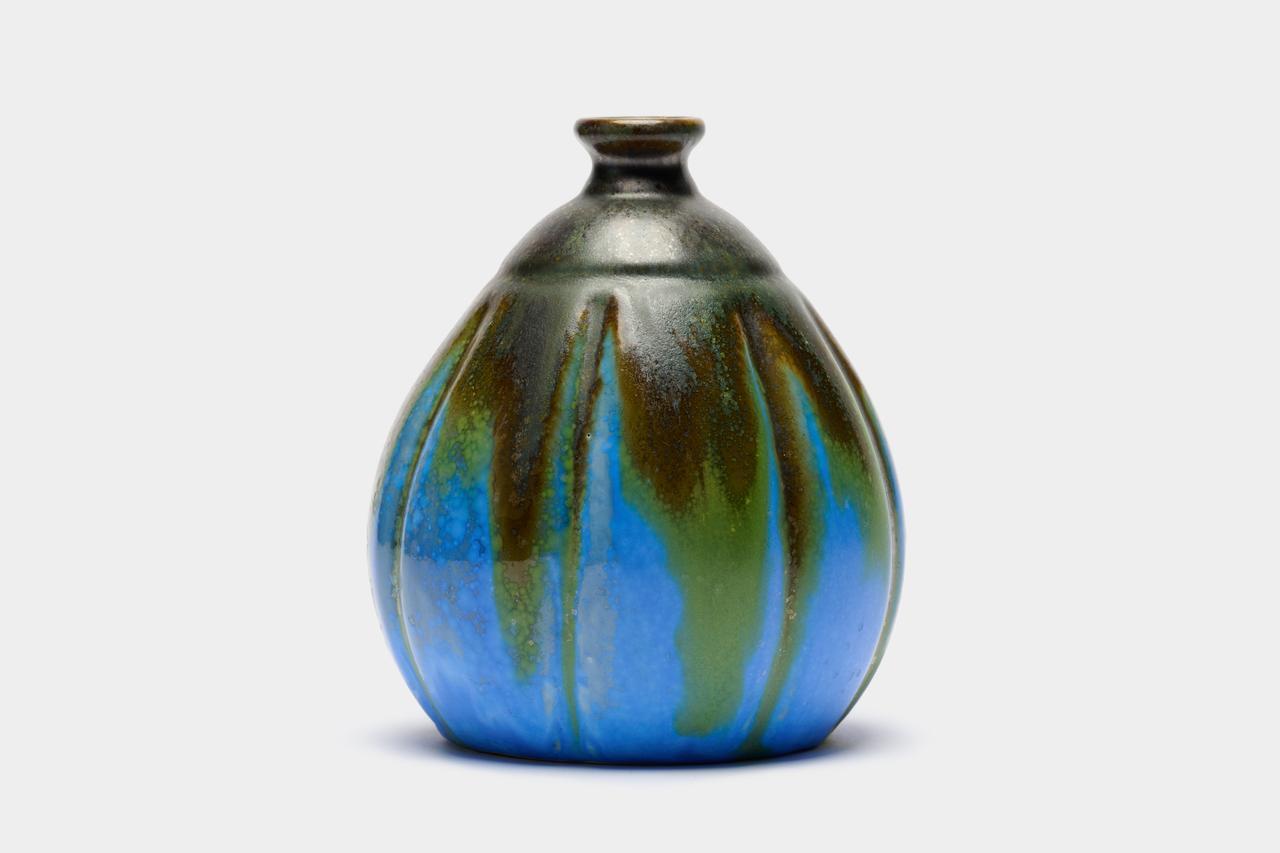
Vase - Glass - Art Deco Molded Glass

05
days
02
hours
58
minutes
23
seconds
Starting bid
€ 1
Reserve price not met
Michel Karis
Expert
Selected by Michel Karis

Art historian with extensive experience working at various auction houses in antiques.

Estimate  € 170 - € 200
No bids placed

Catawiki Buyer Protection

Your payment’s safe with us until you receive your object.View details

Trustpilot 4.4 | 129574 reviews

Rated Excellent on Trustpilot.

Unsigned Art Deco molded opalescent glass vase, ca. 1925–1935, made in Czechia with a bulbous body and a blue patina rubbed into the recessed pattern, weighing 1.408 kg and measuring 22 cm wide, 22 cm deep and 18 cm high.

AI-assisted summary

Description from the seller

This is an unsigned Art Deco molded opalescent/frosted glass vase, c. 1925–1935, produced in Continental Europe (most likely Czechoslovakia/Bohemia or a French commercial workshop in the style of Verlys, Pierre d’Avesn, Etling/Sabino, or direct Lalique imitators).

•  Bulbous body with short tapered neck and flat rim;
•  All-over high-relief pattern of vertical overlapping stylized leaves/fronds (fern/palm-like);
•  Thick heavy construction (1,408 g/28 cm is typical for these substantial pieces);
•  Frosted white opalescent glass with blue patina/staining rubbed into the recesses for dramatic contrast.

These were popular, affordable alternatives to Lalique during the Art Deco boom. Czechoslovakian factories (e.g., Inwald, Barolac, or anonymous mold-makers) mass-produced near-identical designs using the same pressed-molding technique and blue staining. French versions (Verlys, d’Avesn, etc.) exist but are usually signed in relief; many generic examples remain unmarked.

The pattern strongly echoes Lalique’s “Milan” or fern motifs but with softer edges and less crisp definition.

Possible attribution to Josef Inwald/Barolac (Czechoslovakia, 1930s). Barolac was Inwald’s famous frosted/satin glass line: thick pressed-molded opalescent pieces with high-relief stylized foliage patterns, often finished with blue or ice-blue patina rubbed into the recesses — exactly the technique, colour, weight (heavy 1.4 kg construction), and period of this vase.

Many Barolac vases are unsigned (or only faintly marked “Czechoslovakia” or a model number in the base) and commercial/export examples frequently have no visible mark at all — which matches the base perfectly.

Closest patterns from Inwald/Barolac:

•  Birch Leaves (and similar foliage/leaf-garland series): vertical overlapping stylized leaves/fronds with catkins or swirling detail — the closest documented match to this all-over vertical fern-like motif.
•  Leaf garlands, palm fronds, and other foliage reliefs: high-relief, bulbous forms, blue-green or ice-blue washes.
•  They also produced Lalique-inspired designs (this vase’s pattern is similar to René Lalique’s “Milan” fern vase from 1929 — Inwald and other Czech factories made affordable pressed-glass versions of these popular motifs).

This is a lovely, authentic 1930s piece with real period character — whether exactly Inwald/Barolac or a close Bohemian contemporary, it’s a strong example of the style that made Czech glass famous worldwide.

Condition is excellent: no chips, cracks, or repairs visible; even patina and good colour depth. Please examine the photos carefully.

This is an unsigned Art Deco molded opalescent/frosted glass vase, c. 1925–1935, produced in Continental Europe (most likely Czechoslovakia/Bohemia or a French commercial workshop in the style of Verlys, Pierre d’Avesn, Etling/Sabino, or direct Lalique imitators).

•  Bulbous body with short tapered neck and flat rim;
•  All-over high-relief pattern of vertical overlapping stylized leaves/fronds (fern/palm-like);
•  Thick heavy construction (1,408 g/28 cm is typical for these substantial pieces);
•  Frosted white opalescent glass with blue patina/staining rubbed into the recesses for dramatic contrast.

These were popular, affordable alternatives to Lalique during the Art Deco boom. Czechoslovakian factories (e.g., Inwald, Barolac, or anonymous mold-makers) mass-produced near-identical designs using the same pressed-molding technique and blue staining. French versions (Verlys, d’Avesn, etc.) exist but are usually signed in relief; many generic examples remain unmarked.

The pattern strongly echoes Lalique’s “Milan” or fern motifs but with softer edges and less crisp definition.

Possible attribution to Josef Inwald/Barolac (Czechoslovakia, 1930s). Barolac was Inwald’s famous frosted/satin glass line: thick pressed-molded opalescent pieces with high-relief stylized foliage patterns, often finished with blue or ice-blue patina rubbed into the recesses — exactly the technique, colour, weight (heavy 1.4 kg construction), and period of this vase.

Many Barolac vases are unsigned (or only faintly marked “Czechoslovakia” or a model number in the base) and commercial/export examples frequently have no visible mark at all — which matches the base perfectly.

Closest patterns from Inwald/Barolac:

•  Birch Leaves (and similar foliage/leaf-garland series): vertical overlapping stylized leaves/fronds with catkins or swirling detail — the closest documented match to this all-over vertical fern-like motif.
•  Leaf garlands, palm fronds, and other foliage reliefs: high-relief, bulbous forms, blue-green or ice-blue washes.
•  They also produced Lalique-inspired designs (this vase’s pattern is similar to René Lalique’s “Milan” fern vase from 1929 — Inwald and other Czech factories made affordable pressed-glass versions of these popular motifs).

This is a lovely, authentic 1930s piece with real period character — whether exactly Inwald/Barolac or a close Bohemian contemporary, it’s a strong example of the style that made Czech glass famous worldwide.

Condition is excellent: no chips, cracks, or repairs visible; even patina and good colour depth. Please examine the photos carefully.

Details

Era
1900-2000
Weight
1408 g
Title additional information
Art Deco Molded Glass
Number of objects
1
Country of origin
Czechia
Material
Glass
Condition
Good condition - used with small signs of aging & blemishes
Height
18 cm
Width
22 cm
Depth
22 cm
Diameter
10 cm
Estimated period
1920-1930, 1930-1940
FranceVerified
Private

Similar objects

For you in

Ceramics & Glass