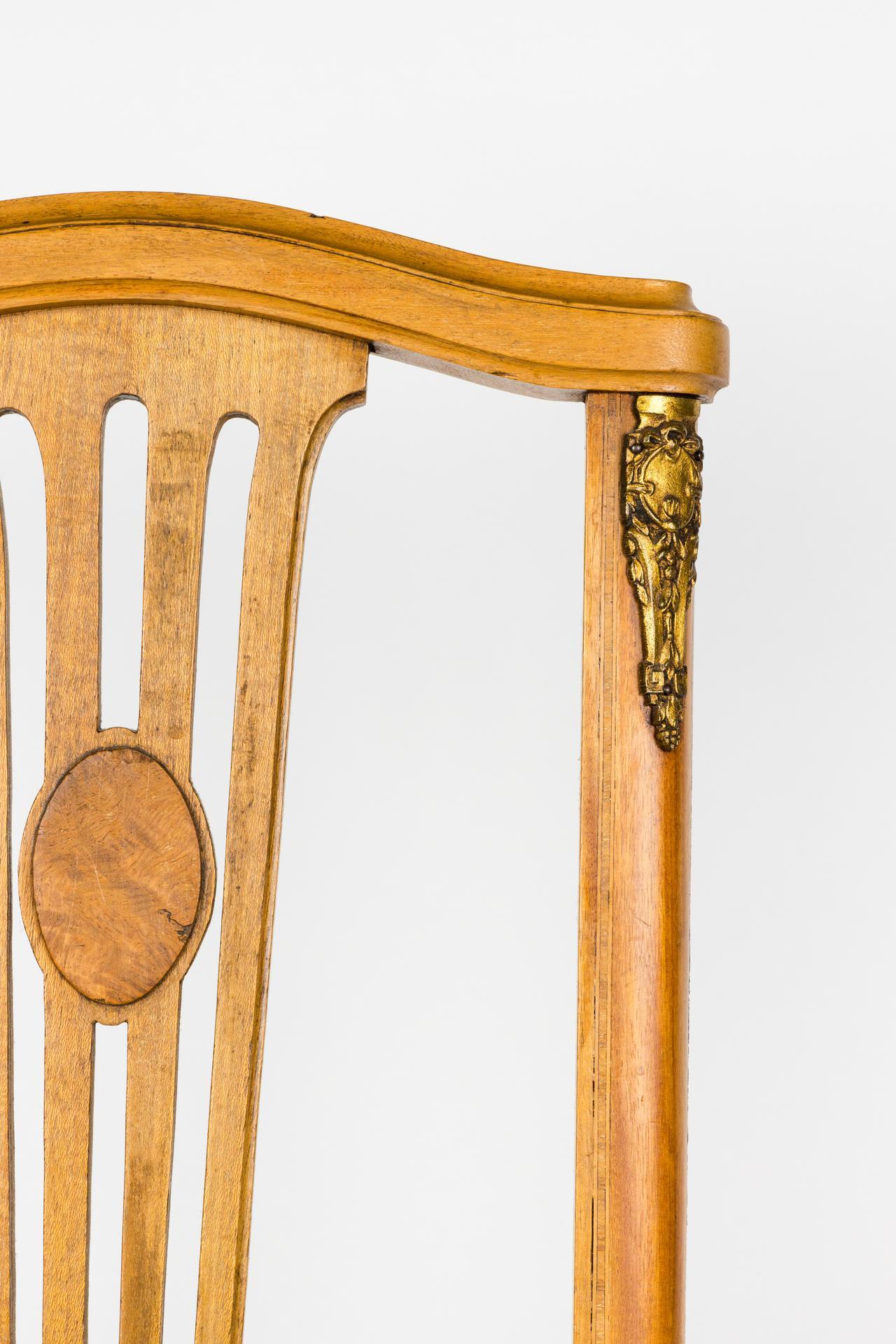
Centre table - Walnut, Glass


Opens Sunday
Starting bid
€ 1
Add to your favourites to get an alert when the auction starts.

Catawiki Buyer Protection
Your payment’s safe with us until you receive your object.View details
Trustpilot 4.4 | 129461 reviews
Rated Excellent on Trustpilot.
Description from the seller
Walnut wood display table with a glass lift-top, French Louis-Philippe style
This display table dates back to the period of the French Empire or the Restoration, circa 1820-1840. The design with crossed sabre legs (called 'curule') recalls the neoclassical aesthetic inspired by ancient Rome, very popular during the reign of Napoleon and Charles X. The lift-top with protective glass and blue interior fabric lining indicates that it was used to display precious objects such as jewelry, miniatures, medals, or small collections belonging to families of the upper middle class. These pieces represent the excellence of French cabinetmaking of the early nineteenth century, combining functionality and elegance. Similar pieces are highly valued by collectors of French antique furniture and by enthusiasts of neoclassical furnishing for their refinement and historical value. The European and American antique market shows a steady interest in these furnishings, particularly among interior designers and collectors seeking authentic pieces from the Empire and Restoration periods to furnish classical environments or to display personal collections.
Seller's Story
Welcome to our profile. We are antique enthusiasts with a deep passion for art, history, and the charm of the past, cultivated through years of research and dedication. On Catawiki we offer a careful and curated selection of antiques: from period furniture to refined objets d'art, up to paintings and sculptures of quality.
Our goal is to offer collectors and lovers of beauty authentic pieces, selected rigorously for their quality, rarity, and condition. We guarantee maximum transparency in descriptions, detailed photographs, and secure and professional packaging, so that these wonders of the past can reach your homes intact to continue their story.
Translated by Google TranslateWalnut wood display table with a glass lift-top, French Louis-Philippe style
This display table dates back to the period of the French Empire or the Restoration, circa 1820-1840. The design with crossed sabre legs (called 'curule') recalls the neoclassical aesthetic inspired by ancient Rome, very popular during the reign of Napoleon and Charles X. The lift-top with protective glass and blue interior fabric lining indicates that it was used to display precious objects such as jewelry, miniatures, medals, or small collections belonging to families of the upper middle class. These pieces represent the excellence of French cabinetmaking of the early nineteenth century, combining functionality and elegance. Similar pieces are highly valued by collectors of French antique furniture and by enthusiasts of neoclassical furnishing for their refinement and historical value. The European and American antique market shows a steady interest in these furnishings, particularly among interior designers and collectors seeking authentic pieces from the Empire and Restoration periods to furnish classical environments or to display personal collections.
Seller's Story
Welcome to our profile. We are antique enthusiasts with a deep passion for art, history, and the charm of the past, cultivated through years of research and dedication. On Catawiki we offer a careful and curated selection of antiques: from period furniture to refined objets d'art, up to paintings and sculptures of quality.
Our goal is to offer collectors and lovers of beauty authentic pieces, selected rigorously for their quality, rarity, and condition. We guarantee maximum transparency in descriptions, detailed photographs, and secure and professional packaging, so that these wonders of the past can reach your homes intact to continue their story.
Translated by Google TranslateDetails
Era
1400-1900
Weight
4 kg
Style subtype
Louis Philippe Style
Country of origin
France
Material
Glass, Walnut
Style
Antique
Condition
Good condition - used with small signs of aging & blemishes
Height
66 cm
Width
59 cm
Depth
39 cm
Height of the underside of the table
30 cm
Estimated period
1800-1850
Sold by