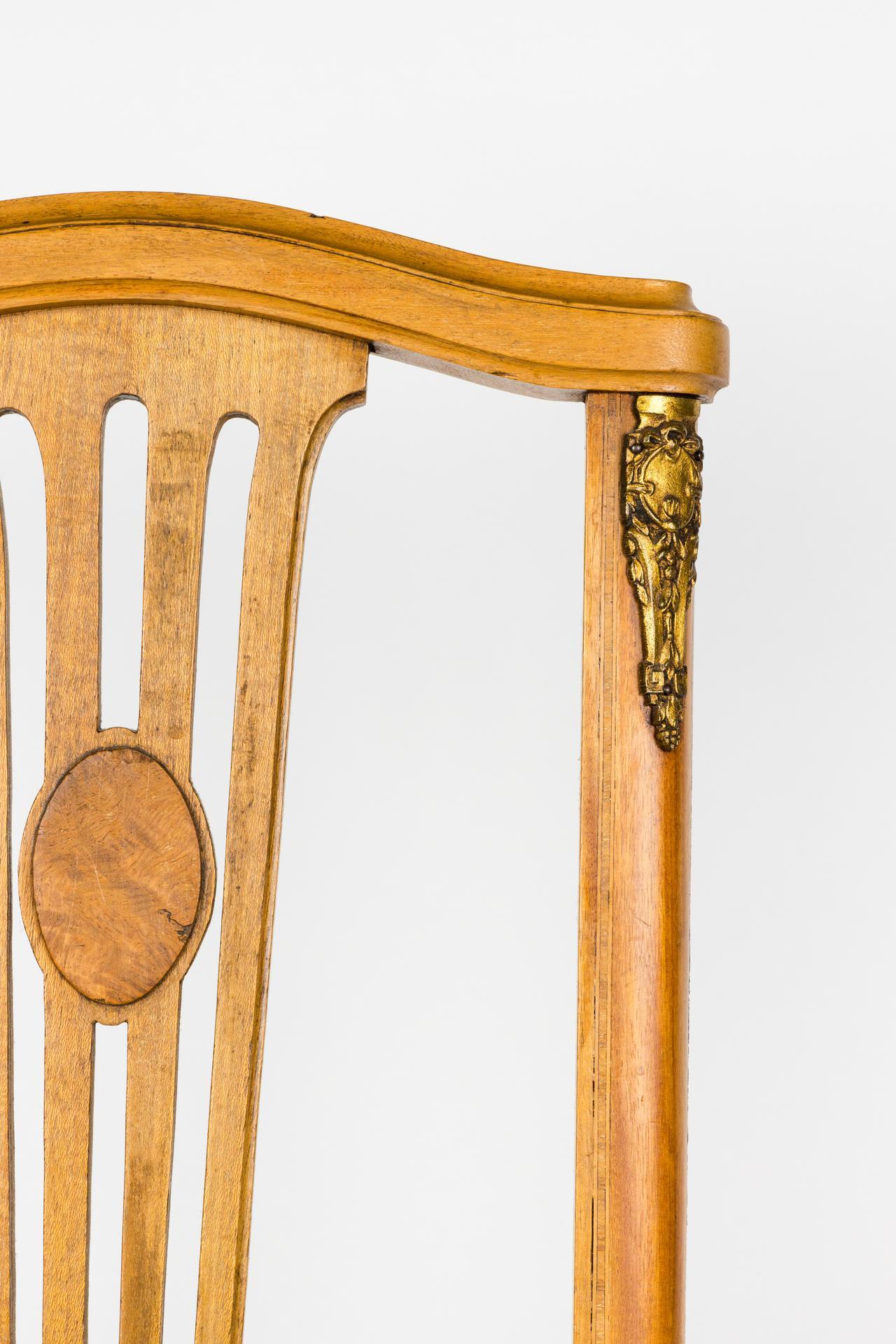
Chair - Wood


06
days
00
hours
37
minutes
36
seconds
Starting bid
€ 1
No reserve price

Expert
Selected by Michel Karis
Art historian with extensive experience working at various auction houses in antiques.
Estimate € 230 - € 280
No bids placed
Catawiki Buyer Protection
Your payment’s safe with us until you receive your object.View details
Trustpilot 4.4 | 130381 reviews
Rated Excellent on Trustpilot.
Description from the seller
Bentwood bistro chair with a printed seat, Thonet style
Bistro chairs in bent wood became iconic at the end of the 19th century, when Michael Thonet revolutionized furniture production with the steam-bending technique for shaping beech wood. These chairs were lightweight, sturdy, and inexpensive to manufacture, becoming a staple in European cafes and bistros between 1890 and 1930. This particular model features a seat with a printed floral decoration, a characteristic common in variants produced by Thonet and by competitors such as Mundus and Fischel.
These chairs are highly valued by antique furniture collectors, industrial design enthusiasts, and restaurant owners seeking authentic pieces to create a vintage atmosphere. Their appeal lies in the combination of practicality, craftsmanship, and historical significance as a symbol of European cafe culture. They represent a perfect example of democratic design that has endured for over a century while maintaining its aesthetic relevance.
Seller's Story
Welcome to the Portobello Road Napoli profile. We are an established entity in the field of modern collectibles, antiques, and collecting, with years of experience in selecting unique items. Our mission is to give new life to design pieces, vintage furniture, and rare curiosities. Every lot we offer on Catawiki is carefully selected and verified by our team of experts to ensure quality and authenticity. We ship with professional packaging to ensure your purchases arrive in perfect condition.
Translated by Google TranslateBentwood bistro chair with a printed seat, Thonet style
Bistro chairs in bent wood became iconic at the end of the 19th century, when Michael Thonet revolutionized furniture production with the steam-bending technique for shaping beech wood. These chairs were lightweight, sturdy, and inexpensive to manufacture, becoming a staple in European cafes and bistros between 1890 and 1930. This particular model features a seat with a printed floral decoration, a characteristic common in variants produced by Thonet and by competitors such as Mundus and Fischel.
These chairs are highly valued by antique furniture collectors, industrial design enthusiasts, and restaurant owners seeking authentic pieces to create a vintage atmosphere. Their appeal lies in the combination of practicality, craftsmanship, and historical significance as a symbol of European cafe culture. They represent a perfect example of democratic design that has endured for over a century while maintaining its aesthetic relevance.
Seller's Story
Welcome to the Portobello Road Napoli profile. We are an established entity in the field of modern collectibles, antiques, and collecting, with years of experience in selecting unique items. Our mission is to give new life to design pieces, vintage furniture, and rare curiosities. Every lot we offer on Catawiki is carefully selected and verified by our team of experts to ensure quality and authenticity. We ship with professional packaging to ensure your purchases arrive in perfect condition.
Translated by Google TranslateDetails
Era
1900-2000
Country of origin
Austria
Material
Wood
Condition
Excellent condition: barely used with minimal signs of wear
Height
90 cm
Width
40 cm
Depth
40 cm
Estimated period
1920-1930
Sold by