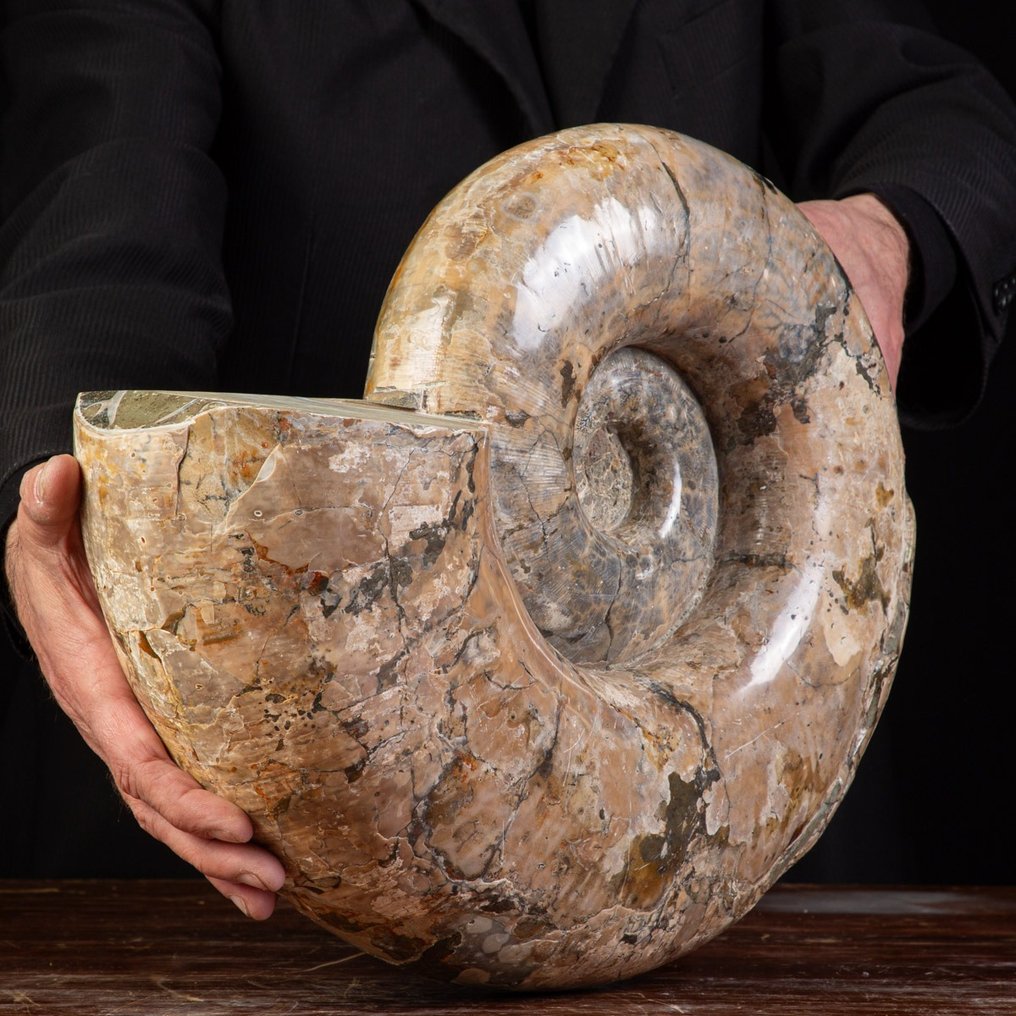
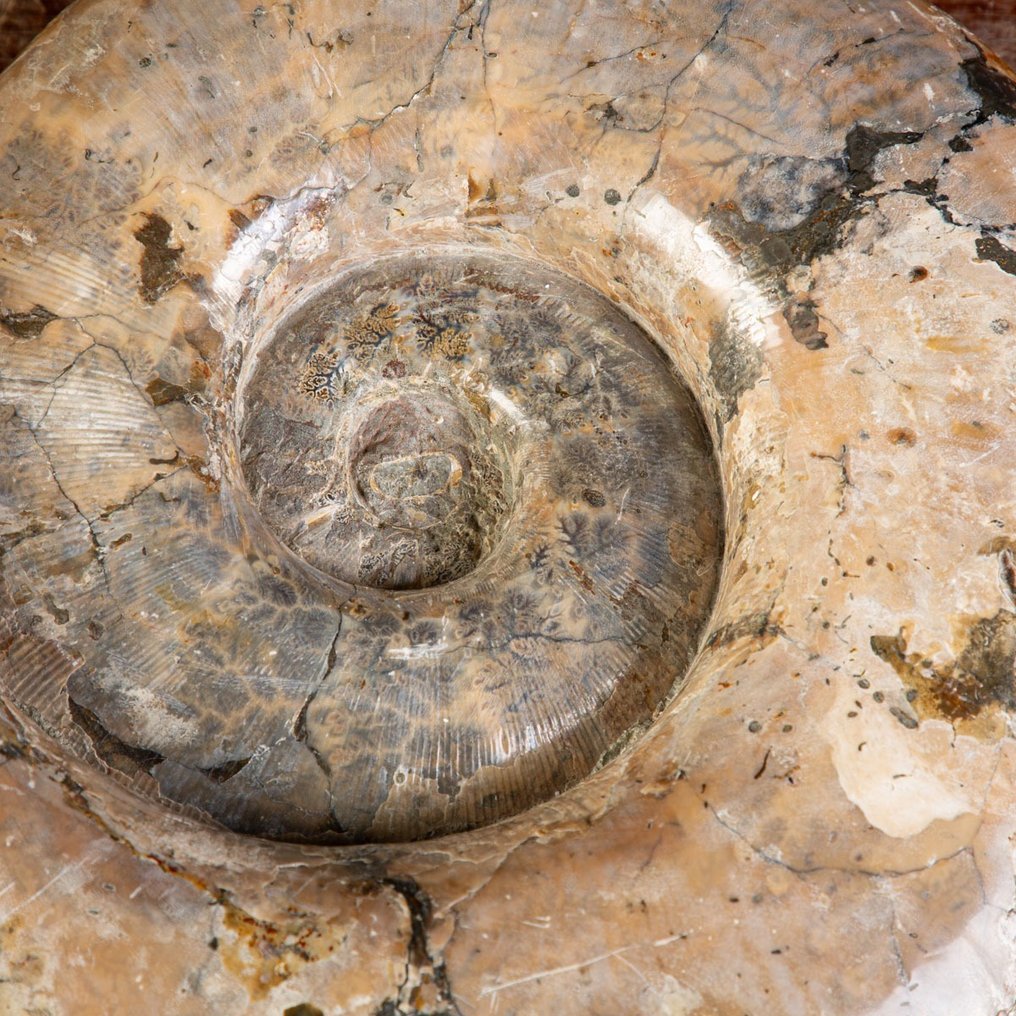
Great Ammonite of Madagascar - Fossilised shell - Lytoceras sp. - 400 mm - 330 mm



00
days
05
hours
11
minutes
43
seconds
Current bid
€ 200
Reserve price not met

Expert
Selected by Antonio Rapisarda
Holds a master’s in chemistry with 25 years’ experience in minerals consulting.
Estimate € 5,300 - € 6,100
10 other people are watching this object
 Bidder 5222 Bidder 5222 | €200 | |
|---|---|---|
 Bidder 4128 Bidder 4128 | €100 | |
| Bidder 4128 | €80 | |
Catawiki Buyer Protection
Your payment’s safe with us until you receive your object.View details
Trustpilot 4.4 | 121899 reviews
Rated Excellent on Trustpilot.
Ammonite fossil, Lytoceras sp., from Madagascar, Cretaceous lower (approximately 145–100.5 million years ago), natural condition, weight 20.5 kg, dimensions 400 × 330 × 140 mm.
AI-assisted summary
Description from the seller
The ammonite fossil belongs to the species Lytoceras, originating from Madagascar. This ammonite dates back to the Jurassic period, approximately 150-160 million years ago, when dinosaurs dominated the land and the first flowering plants began to appear.
Madagascar, during the Jurassic period, was part of the supercontinent Gondwana. The region was characterized by a tropical climate and hosted a wide range of marine habitats. The ideal conditions for fossilization, including limestone-rich sediments and low tectonic activity, allowed for the exceptional preservation of these fossils. The Lytoceras was found in shallow marine waters, where it thrived by feeding on small planktonic organisms and utilizing ocean currents for movement.
Seller's Story
The Mineral Art Gallery offers minerals, fossils, shells and natural elements.
Born in Italy in 2017, today she collaborates with international galleries and collectors, she is a direct importer of large minerals and naturalistic collectible elements; deals with the processing to insert them inside the living space. A section of the gallery was dedicated to the Wunderkammer, "chamber of wonders or cabinet of curiosities" in which Mirabilia elements are presented: naturalia and italiania, a union between "the present is the past".
All lots are shipped via DHL Express and Fercam couriers, with insured parcel and tracking.
Translated by Google TranslateThe ammonite fossil belongs to the species Lytoceras, originating from Madagascar. This ammonite dates back to the Jurassic period, approximately 150-160 million years ago, when dinosaurs dominated the land and the first flowering plants began to appear.
Madagascar, during the Jurassic period, was part of the supercontinent Gondwana. The region was characterized by a tropical climate and hosted a wide range of marine habitats. The ideal conditions for fossilization, including limestone-rich sediments and low tectonic activity, allowed for the exceptional preservation of these fossils. The Lytoceras was found in shallow marine waters, where it thrived by feeding on small planktonic organisms and utilizing ocean currents for movement.
Seller's Story
The Mineral Art Gallery offers minerals, fossils, shells and natural elements.
Born in Italy in 2017, today she collaborates with international galleries and collectors, she is a direct importer of large minerals and naturalistic collectible elements; deals with the processing to insert them inside the living space. A section of the gallery was dedicated to the Wunderkammer, "chamber of wonders or cabinet of curiosities" in which Mirabilia elements are presented: naturalia and italiania, a union between "the present is the past".
All lots are shipped via DHL Express and Fercam couriers, with insured parcel and tracking.
Translated by Google TranslateDetails
Specimen
Great Ammonite of Madagascar
Scientific name
Lytoceras sp.
Country of Origin
Madagascar
Geological Period
Cretaceous, Lower (145 - 100.5 million years)
Condition
Natural
Weight
20.5 kg
Height
400 mm
Width
330 mm
Depth
140 mm
Sold by