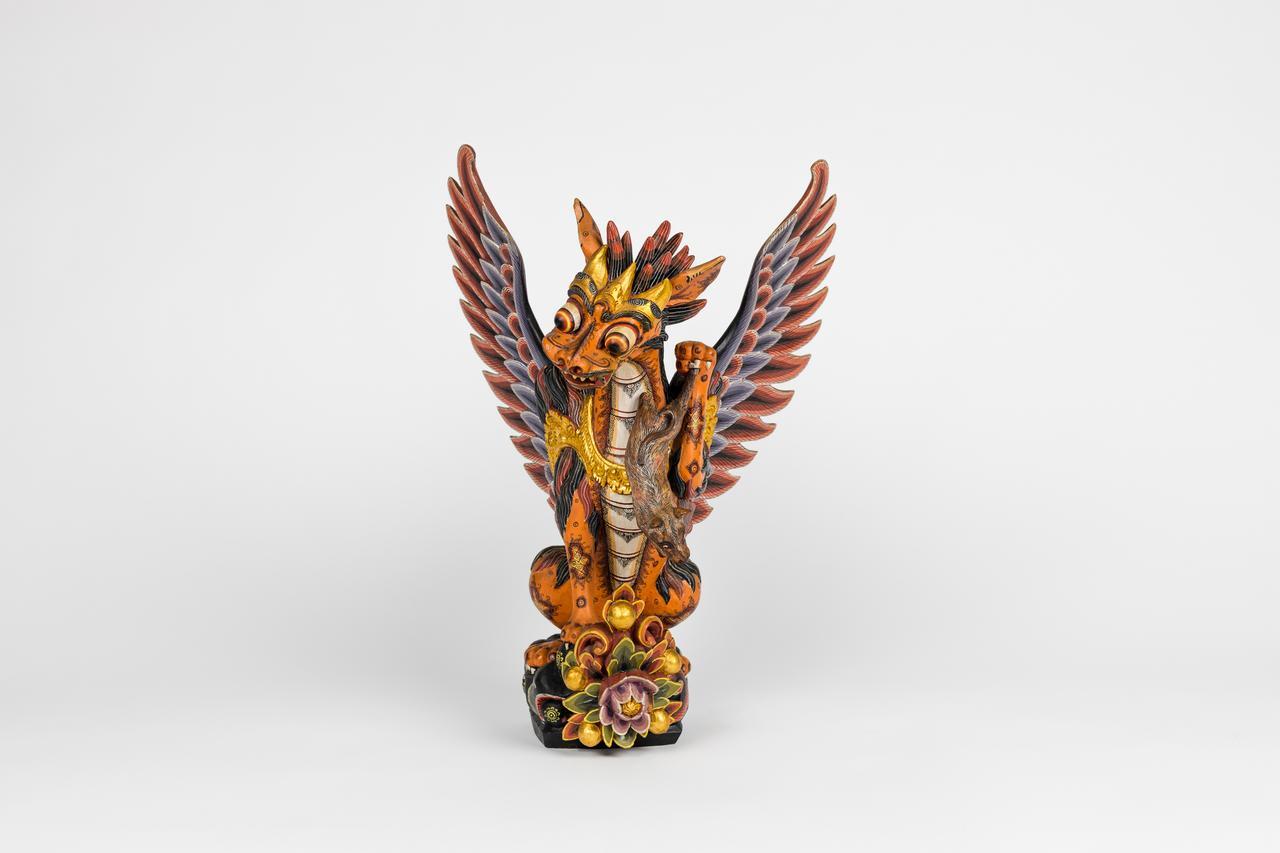
Ancestor mask - Dayak - Indonesia (No reserve price)


01
day
00
hours
49
minutes
54
seconds
Current bid
€ 30
No reserve price

Expert
Selected by Amy Wassing
Nearly 20 years' experience in Indonesian and Oceanian art with museum expertise.
Estimate € 150 - € 200
16 other people are watching this object
 Bidder 0830 Bidder 0830 | €30 | |
|---|---|---|
| Bidder 2838 | €25 | |
| Bidder 0830 | €20 |
Catawiki Buyer Protection
Your payment’s safe with us until you receive your object.View details
Trustpilot 4.4 | 122553 reviews
Rated Excellent on Trustpilot.
Ancestor mask carved in tropical wood from Indonesia, Dayak, 28 cm high, 23 cm wide, 16 cm deep, 793 g, from a private collection, in good condition, dating to the late 20th century, not wearable (no eye holes) and sold with tracking shipping.
AI-assisted summary
Description from the seller
This mask belongs to the tradition of the Dayak people, an indigenous ethnic group of.
Borneo. The Dayak use masks both in ritual dances and as sacred protective objects.
Often displayed in collective homes (longhouses) or family shrines.
The mask features:
Round and protruding eyes, typical of representations of spirits or ancestors.
Prominent nose and marked lips, stylized and caricatured traits with an apotropaic function.
spirit expeller
Ears sculpted laterally, possibly symbolically referencing listening to ancestors.
A mouth with carved teeth, perhaps to emphasize the power of the word or magical protection.
There are no eye holes, a detail suggesting that it was not meant to be.
Worn, but rather exposed in a fixed position, hanging or placed within a ritual or domestic context.
It is presumed that this mask had the function of:
Spiritual protection of the home or family.
Symbolic representation of a benevolent spirit or ancestor.
Possible object of worship linked to agricultural ceremonies, healing, or social status transitions.
Presumed period: probably the 1970s/80s, and possibly earlier.
Material: carved tropical wood, residual natural pigments, and a beautiful patina corresponding to use and age.
Purchased personally on-site, it will be properly packaged and shipped with a postal tracking number.
This mask belongs to the tradition of the Dayak people, an indigenous ethnic group of.
Borneo. The Dayak use masks both in ritual dances and as sacred protective objects.
Often displayed in collective homes (longhouses) or family shrines.
The mask features:
Round and protruding eyes, typical of representations of spirits or ancestors.
Prominent nose and marked lips, stylized and caricatured traits with an apotropaic function.
spirit expeller
Ears sculpted laterally, possibly symbolically referencing listening to ancestors.
A mouth with carved teeth, perhaps to emphasize the power of the word or magical protection.
There are no eye holes, a detail suggesting that it was not meant to be.
Worn, but rather exposed in a fixed position, hanging or placed within a ritual or domestic context.
It is presumed that this mask had the function of:
Spiritual protection of the home or family.
Symbolic representation of a benevolent spirit or ancestor.
Possible object of worship linked to agricultural ceremonies, healing, or social status transitions.
Presumed period: probably the 1970s/80s, and possibly earlier.
Material: carved tropical wood, residual natural pigments, and a beautiful patina corresponding to use and age.
Purchased personally on-site, it will be properly packaged and shipped with a postal tracking number.
Details
No. of items
1
Ethnic group/ culture
Dayak
Country of Origin
Indonesia
Period
Late 20th century
Material
Wood
Sold with stand
No
Condition
Good condition
Title of artwork
Ancestor mask
Height
28 cm
Width
23 cm
Depth
16 cm
Weight
793 g
Provenance
Private collection