Chest - Pinewood or another softwood - An Alto Adige Poker and Penwork Casket


06
days
08
hours
31
minutes
58
seconds
Starting bid
€ 1
Reserve price not met

Expert
Selected by Dési van Rhee
Over 20 years' experience in antiques with a background in art history.
Estimate € 2,000 - € 2,500
No bids placed
Catawiki Buyer Protection
Your payment’s safe with us until you receive your object.View details
Trustpilot 4.4 | 123053 reviews
Rated Excellent on Trustpilot.
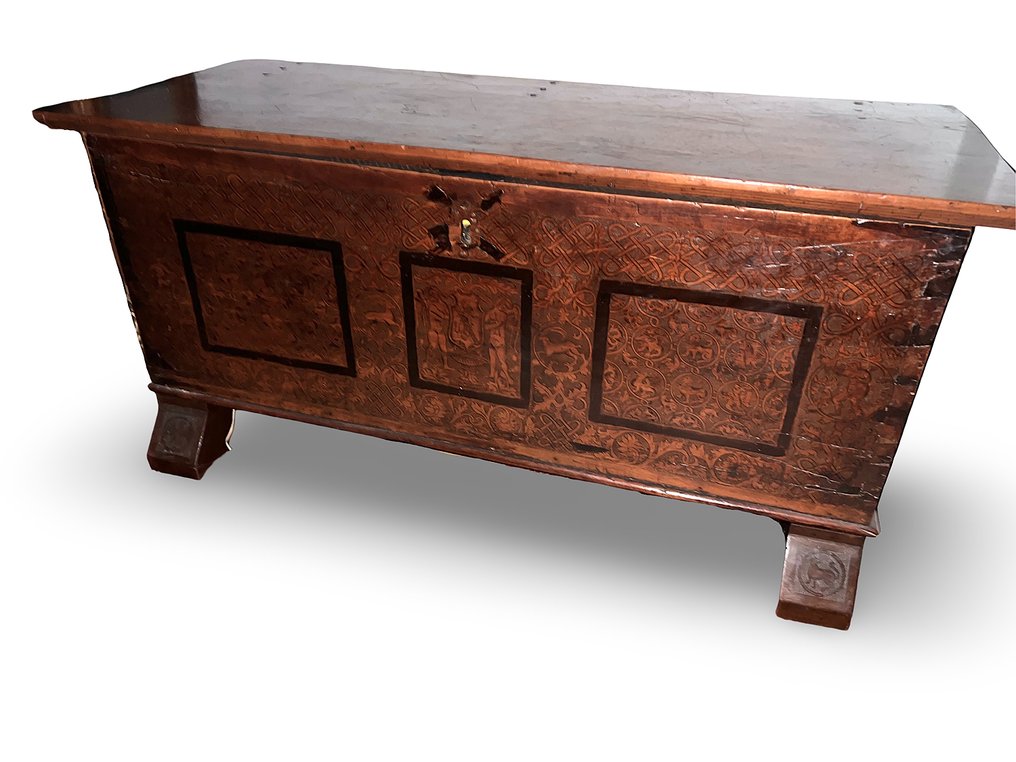
An Alto Adige poker and penwork cassone dating to the early 17th century, made of pinewood or other softwood, in brown and yellow tones, 115 cm wide by 75 cm high by 65 cm deep, originated from Venice, Italy, and in good used condition with minor age-related wear.
AI-assisted summary
Description from the seller
A magnificent cassone from Alto Adige with poker and feather, Venice, early 17th century.
Antiques - Old Furniture - Old Chests
The bride's chests were pieces of furniture of medieval origin used during the colonial period to store the trousseau that newlyweds took from the family home to the husband's house. Thus, these boxes stored dresses, shirts, books, jewelry, money, bedding, among other things, as these items, known as dote, represented the patrimony that the bride contributed to the new home.
The footnotes with later dates, restorations.
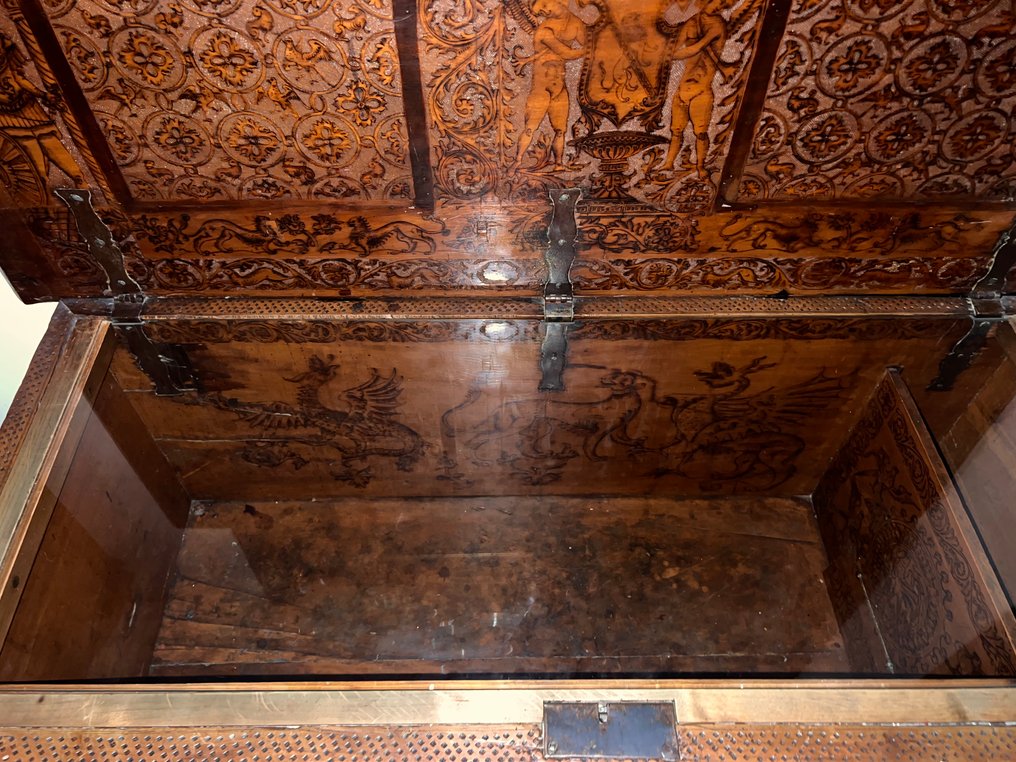
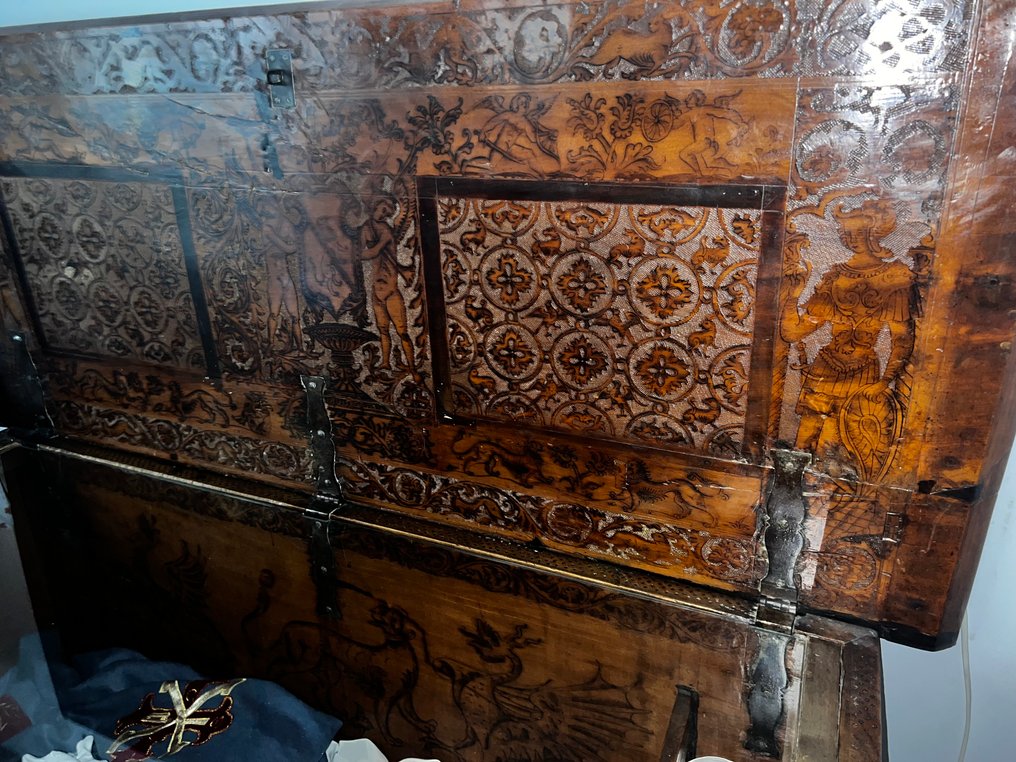
Interior illuminated with one fluorescent light and a glass cover adapted in the 20th century.
In some of these pieces, the decoration is extensive and may include polychromes, high and low relief carvings, among other techniques. In the example from the Colonial Museum, a floral decoration predominates, ending in four legs that lift the piece off the floor so that moisture does not damage either the contents or the chest.
It comes with a pine wood base lined with burgundy velvet, made in the 20th century (optional).
A magnificent cassone from Alto Adige with poker and feather, Venice, early 17th century.
Antiques - Old Furniture - Old Chests
The bride's chests were pieces of furniture of medieval origin used during the colonial period to store the trousseau that newlyweds took from the family home to the husband's house. Thus, these boxes stored dresses, shirts, books, jewelry, money, bedding, among other things, as these items, known as dote, represented the patrimony that the bride contributed to the new home.
The footnotes with later dates, restorations.
Interior illuminated with one fluorescent light and a glass cover adapted in the 20th century.
In some of these pieces, the decoration is extensive and may include polychromes, high and low relief carvings, among other techniques. In the example from the Colonial Museum, a floral decoration predominates, ending in four legs that lift the piece off the floor so that moisture does not damage either the contents or the chest.
It comes with a pine wood base lined with burgundy velvet, made in the 20th century (optional).
Details
Era
1400-1900
Wood type
Pinewood or another softwood
Specific region of origin
Venice
Over 200 years old
Yes
Title additional information
An Alto Adige Poker and Penwork Casket
No. of items
1
Country of Origin
Italy
Material
Wood
Colour
Brown, Yellow
Condition
Good condition - used with small signs of aging & blemishes
Height
75 cm
Width
115 cm
Depth
65 cm
Estimated period
Early 17th century
Sold by