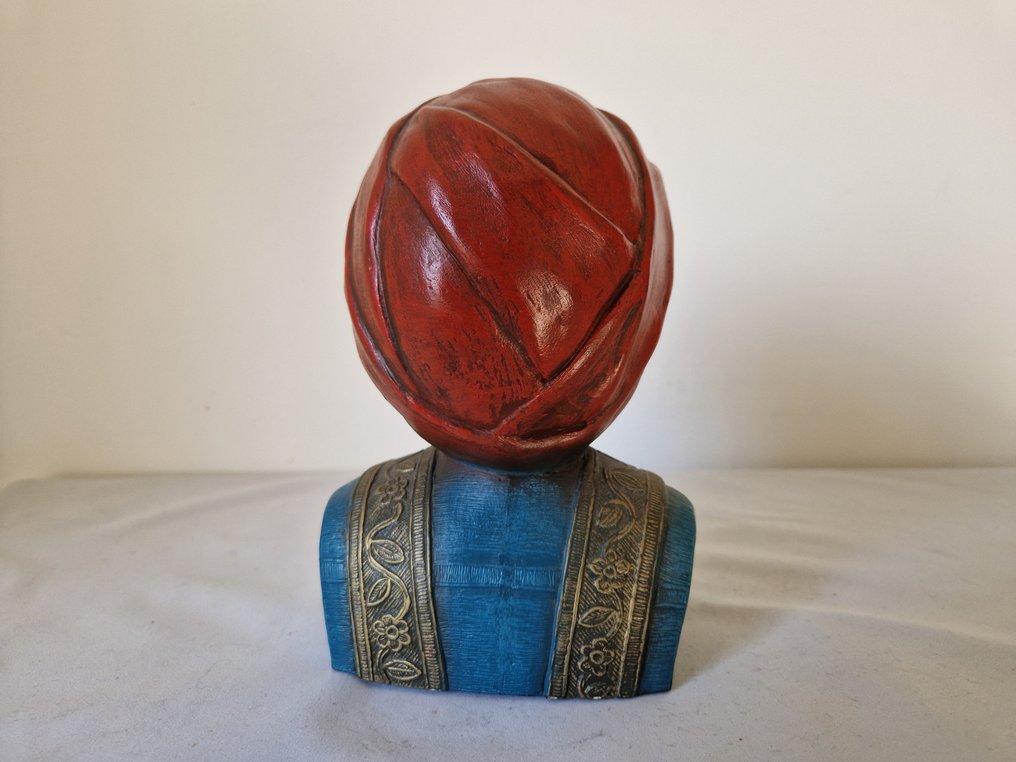
Sculpture, Intec gaper nr 31, handgeschilderd, collectors item - 19.5 cm - crushed natural stone - 1975




00
days
17
hours
10
minutes
33
seconds

13 other people are watching this object
 Bidder 9679 Bidder 9679 | €52 | |
|---|---|---|
 Bidder 4280 Bidder 4280 | €45 | |
| Bidder 9679 | €40 | |
Catawiki Buyer Protection
Your payment’s safe with us until you receive your object.View details
Trustpilot 4.4 | 122115 reviews
Rated Excellent on Trustpilot.
Intec gaper nr 31, hand-painted collectors item, produced by Intec in Veenendaal, Netherlands, dated 1975, edition 1950–1970, made of crushed natural stone, dimensions 12 × 19.5 × 12 cm, weight 2.6 kg, unsigned.
AI-assisted summary
Description from the seller
intec Gaper number 31. See and read the booklet. Collection of 41 gapers, published and made by the company Intec in Veenendaal. Only drugstores and chemists with sufficient turnover received these unique, hand-painted gapers. All of ground natural stone, only number 41, the last one is of resin. The molds were eventually destroyed in front of the guests at a farewell party of the Company
Gapers were identification marks for pharmacies, chemists and drugstores. They first appeared at the end of the sixteenth century and are only found in Dutch, Frisian and Flemish language areas. Most of those still used as identification marks date from the nineteenth century or are replicas.
The yawn remains a mysterious phenomenon. The origin is unknown. There are several explanations for its characteristic, the wide-open mouth. A physician; showing your tongue for a diagnosis, and then taking the prescribed medications. Some yawners have a pill on their tongue or a match in their mouth. Another explanation could be that the sick person, overcome by fatigue, lets his mouth fall open. The most common yawners are Orientals with a turban. There are also jesters, policemen, firefighters, Roman soldiers and sick
Gapers are real folk art products and only occurred in the Netherlands and Flanders
intec Gaper number 31. See and read the booklet. Collection of 41 gapers, published and made by the company Intec in Veenendaal. Only drugstores and chemists with sufficient turnover received these unique, hand-painted gapers. All of ground natural stone, only number 41, the last one is of resin. The molds were eventually destroyed in front of the guests at a farewell party of the Company
Gapers were identification marks for pharmacies, chemists and drugstores. They first appeared at the end of the sixteenth century and are only found in Dutch, Frisian and Flemish language areas. Most of those still used as identification marks date from the nineteenth century or are replicas.
The yawn remains a mysterious phenomenon. The origin is unknown. There are several explanations for its characteristic, the wide-open mouth. A physician; showing your tongue for a diagnosis, and then taking the prescribed medications. Some yawners have a pill on their tongue or a match in their mouth. Another explanation could be that the sick person, overcome by fatigue, lets his mouth fall open. The most common yawners are Orientals with a turban. There are also jesters, policemen, firefighters, Roman soldiers and sick
Gapers are real folk art products and only occurred in the Netherlands and Flanders
Details
Era
1900-2000
Country of Origin
Netherlands
Style
Folk Art
Material
crushed natural stone
Title of artwork
Intec gaper nr 31, handgeschilderd, collectors item
Signature
Not signed
Edition
1950-1970
Year
1975
Condition
Good condition
Height
19.5 cm
Width
12 cm
Depth
12 cm
Weight
2.6 kg