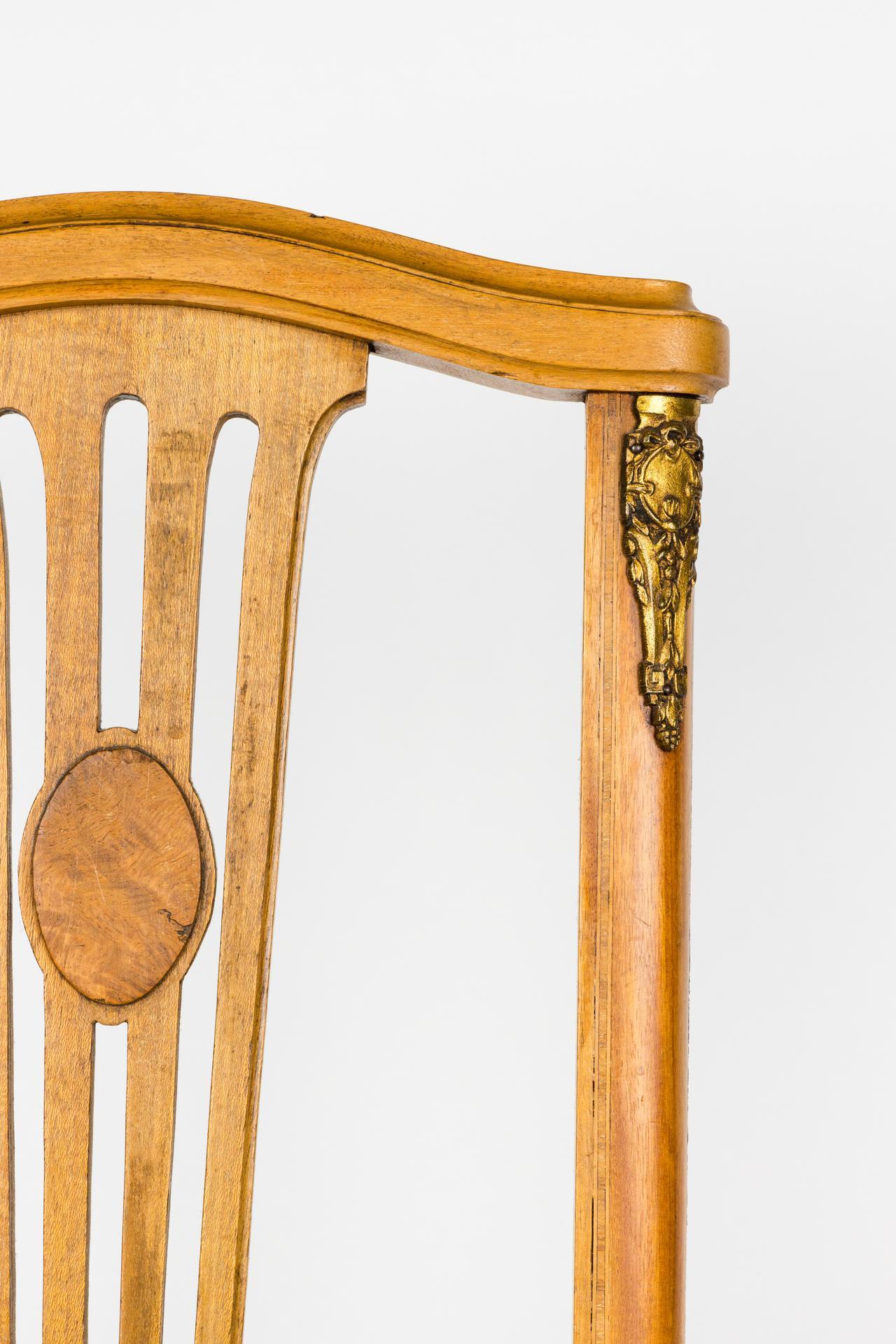
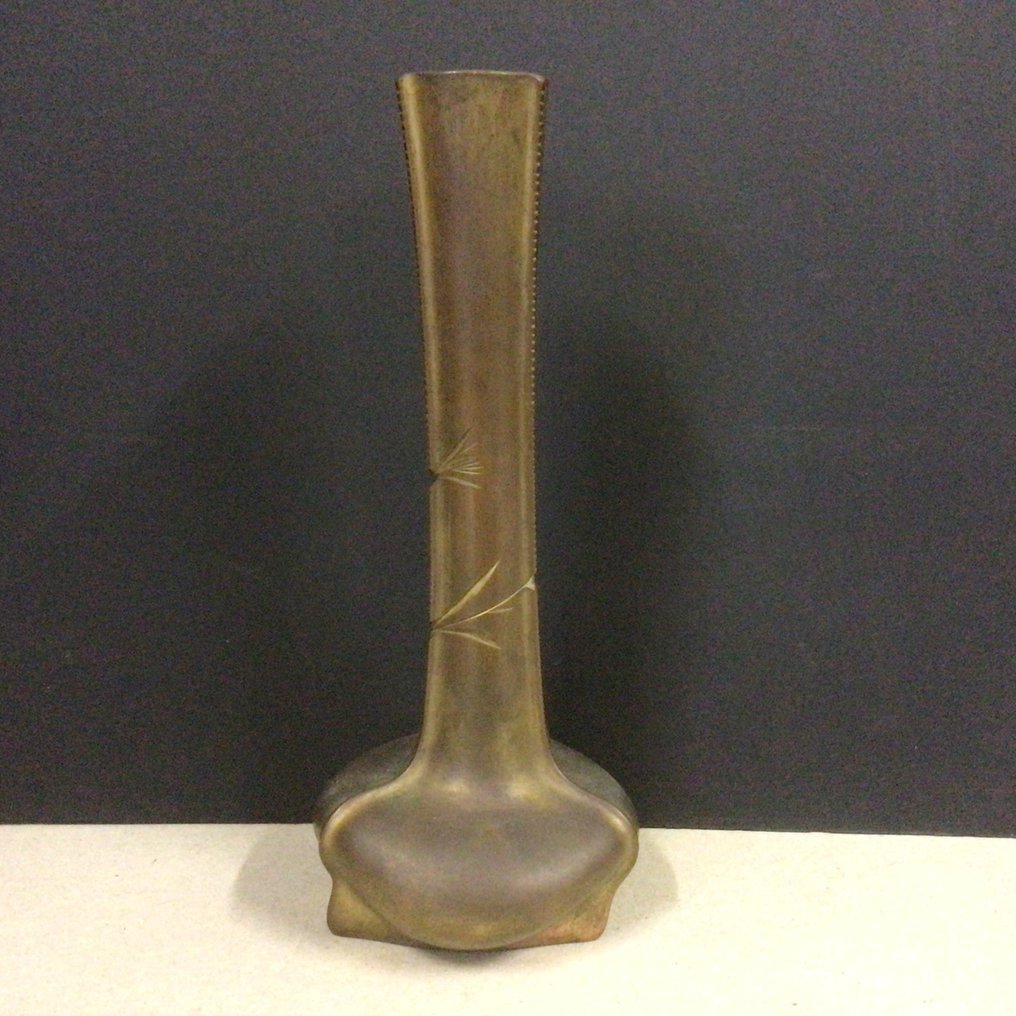
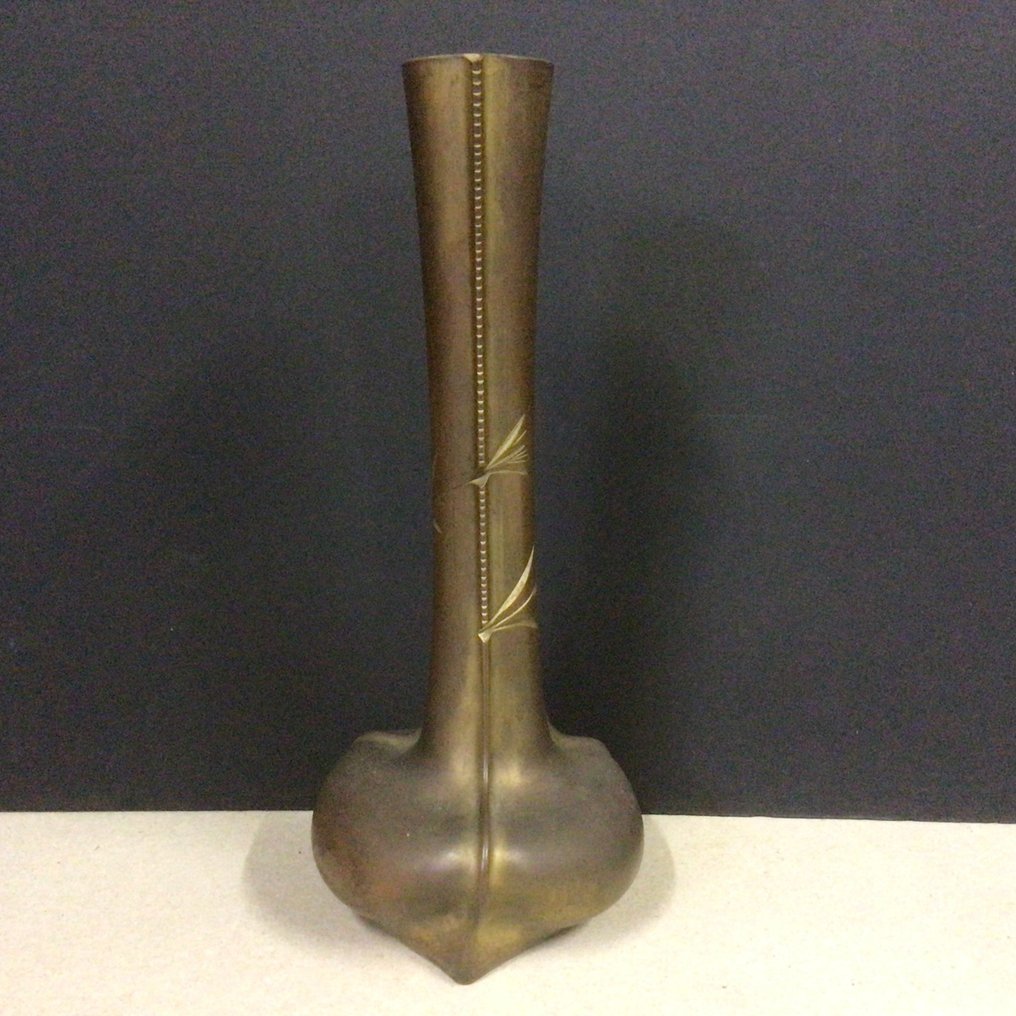
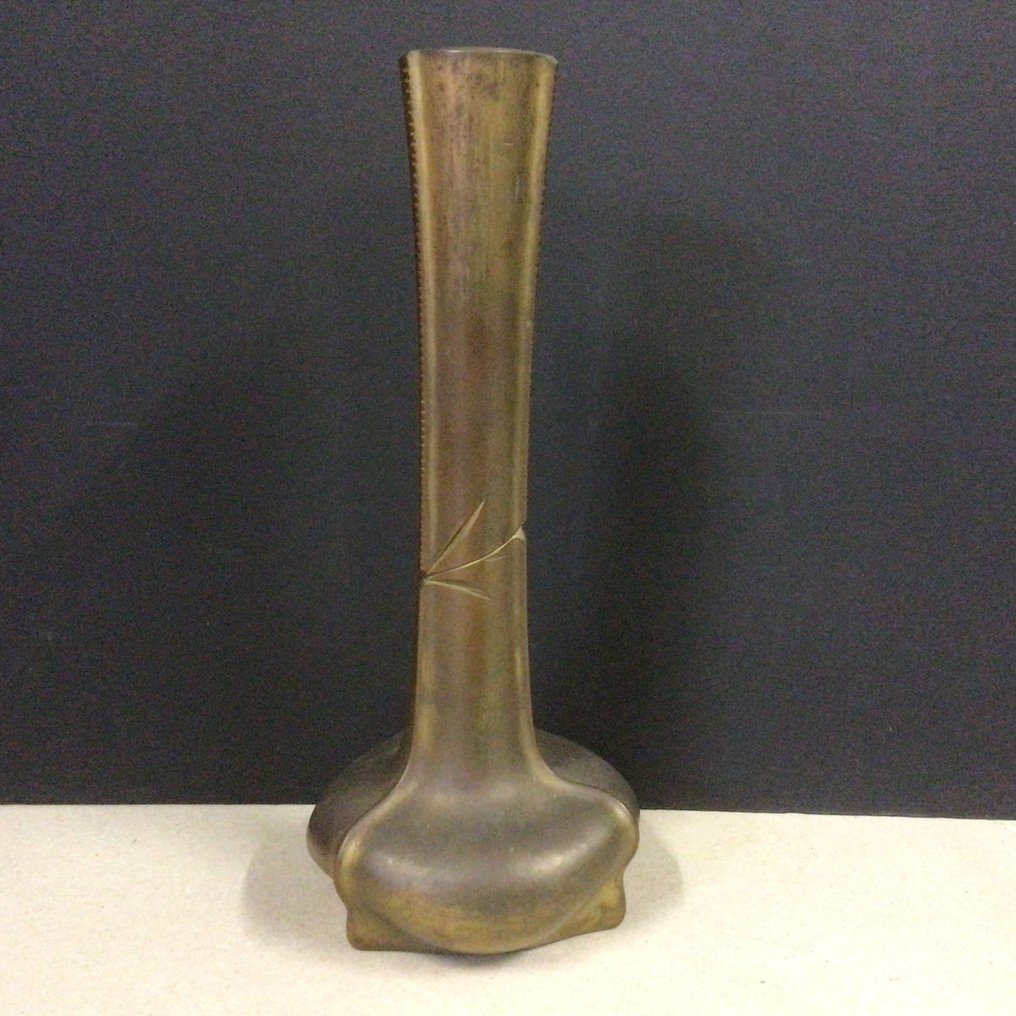
attr. to Val Saint Lambert - Vase - "Oignon de Jemeppe" - glassware produced using the sophisticated galvanoplastie technique


00
days
03
hours
21
minutes
16
seconds
Current bid
€ 30
No reserve price

Expert
Selected by Michel Karis
Art historian with extensive experience working at various auction houses in antiques.
Estimate € 140 - € 210
27 other people are watching this object
 Bidder 5941 Bidder 5941 | €30 | |
|---|---|---|
 Bidder 6157 Bidder 6157 | €2 | |
| Bidder 2015 | €1 |
Catawiki Buyer Protection
Your payment’s safe with us until you receive your object.View details
Trustpilot 4.4 | 121899 reviews
Rated Excellent on Trustpilot.
Val Saint Lambert’s 'Oignon de Jemeppe' vase from c. 1900–1910 blends glass with a galvanoplastic copper finish in Art Nouveau style, a technically striking electroformed piece with aged patina and a subtle interior crack.
AI-assisted summary
Description from the seller
Rare Val Saint Lambert (VSL) "Oignon de Jemeppe" Vase – Art Nouveau Electroformed Copper on Glass – c. 1900-1920
Description:
A fascinating and historically significant antique vase, known by the model name "Oignon de Jemeppe" , attributed to the Art Nouveau production era of Val Saint Lambert (VSL), Belgium. This piece belongs to a rare series of glassware produced using the sophisticated Galvanoplastie (Electroforming) technique, where a layer of metal (likely copper or bronze) is electrically deposited onto the glass form before being treated with a dark patina.
Historical Context:
Origin: The style is associated with the Jemeppe glassworks, which was acquired by Val Saint Lambert in 1883. Pieces from this era combine VSL glass with metallic art finishes.
Style: Art Nouveau (Early 20th Century). The smooth, organic "onion" shape of the foot transitioning into a slim, straight neck, combined with the stylized engraved details (likely bamboo leaves) on the metallic surface, is characteristic of the period.
Specifications:
Material: Glass/Crystal core with Electroplated (Galvanoplastie) Copper/Bronze finish.
Colour: Dark patinated metallic finish (bronze/copper tone).
Authenticity: Unsigned , which is common for pieces finished with this galvanoplastic process.
Condition Report
Overall Condition: Good antique condition, with patina and minimal signs of wear on the exterior metal layer.
There is glass damage/a crack to the interior of the piece in the neck of the vase that is hardly visible (see pictures) It does not affect the exterior appearance at all.
Patina: The metallic layer shows natural aged patina.
A unique collector's piece illustrating a rare decorative technique from the early history of the Val Saint Lambert crystal works.
Rare Val Saint Lambert (VSL) "Oignon de Jemeppe" Vase – Art Nouveau Electroformed Copper on Glass – c. 1900-1920
Description:
A fascinating and historically significant antique vase, known by the model name "Oignon de Jemeppe" , attributed to the Art Nouveau production era of Val Saint Lambert (VSL), Belgium. This piece belongs to a rare series of glassware produced using the sophisticated Galvanoplastie (Electroforming) technique, where a layer of metal (likely copper or bronze) is electrically deposited onto the glass form before being treated with a dark patina.
Historical Context:
Origin: The style is associated with the Jemeppe glassworks, which was acquired by Val Saint Lambert in 1883. Pieces from this era combine VSL glass with metallic art finishes.
Style: Art Nouveau (Early 20th Century). The smooth, organic "onion" shape of the foot transitioning into a slim, straight neck, combined with the stylized engraved details (likely bamboo leaves) on the metallic surface, is characteristic of the period.
Specifications:
Material: Glass/Crystal core with Electroplated (Galvanoplastie) Copper/Bronze finish.
Colour: Dark patinated metallic finish (bronze/copper tone).
Authenticity: Unsigned , which is common for pieces finished with this galvanoplastic process.
Condition Report
Overall Condition: Good antique condition, with patina and minimal signs of wear on the exterior metal layer.
There is glass damage/a crack to the interior of the piece in the neck of the vase that is hardly visible (see pictures) It does not affect the exterior appearance at all.
Patina: The metallic layer shows natural aged patina.
A unique collector's piece illustrating a rare decorative technique from the early history of the Val Saint Lambert crystal works.
Details
Era
1900-2000
Country of Origin
France
Model
"Oignon de Jemeppe"
Material
glassware produced using the sophisticated galvanoplastie technique
Style
Art Nouveau
Manufacturer/ Brand
attr. to Val Saint Lambert
Condition
Good condition - used with small signs of aging & blemishes
Height
20.5 cm
Width
8.5 cm
Depth
8.5 cm
Diameter
8.5 cm
Estimated Period
1900-1910
Sold by