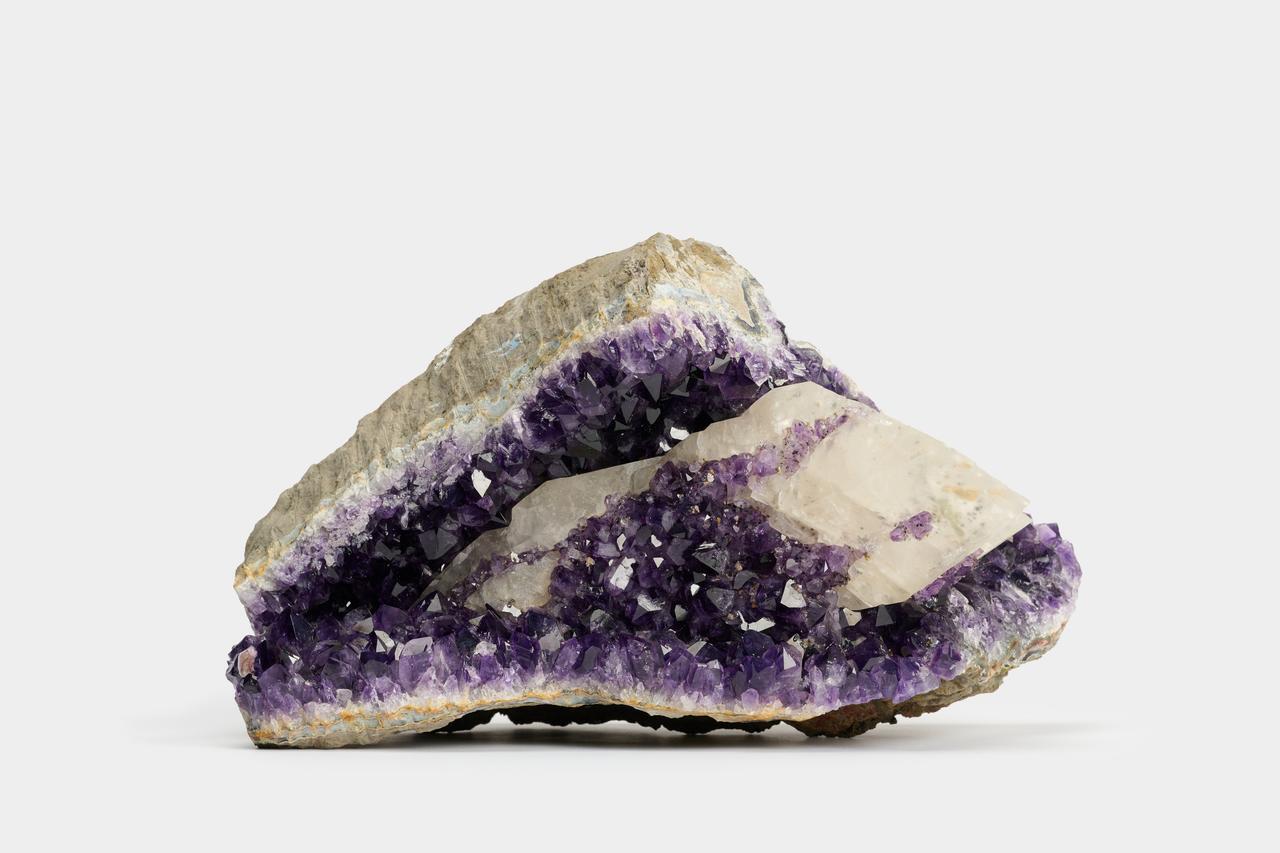
Specimen of Copal - natural - young Amber. Madagascar Copal – Fossil Resin with insect inclusions - Height: 160 mm - Width: 50 mm- 74 g


00
days
06
hours
48
minutes
17
seconds
Current bid
€ 10
Reserve price not met

Expert
Selected by Antonio Rapisarda
Holds a master’s in chemistry with 25 years’ experience in minerals consulting.
Estimate € 850 - € 950
19 other people are watching this object
 Bidder 3546 Bidder 3546 | €10 | |
|---|---|---|
 Bidder 7270 Bidder 7270 | €7 | |
 Bidder 5887 Bidder 5887 | €6 | |
Catawiki Buyer Protection
Your payment’s safe with us until you receive your object.View details
Trustpilot 4.4 | 121899 reviews
Rated Excellent on Trustpilot.
Specimen of Madagascar copal, a natural young amber fossil resin with insect inclusions from Madagascar, weighing 74 g and measuring 160 × 50 × 17 mm.
AI-assisted summary
Description from the seller
Sample of translucent copal from Madagascar, polished to enhance its natural transparency and rich presence of organic inclusions. The smooth, elongated surface highlights the warm color that varies from honey yellow to deep gold, crossed by veins and internal flows typical of ancient resin flows. Inside the specimen, several well-preserved insect inclusions are clearly visible, including: Diptera (gnats and mosquitoes), with recognizable bodies and wings; Hymenoptera (likely ants and small parasitic wasps); Lepidoptera (small nocturnal moths, with wings exceptionally well preserved). These inclusions offer a unique glimpse into the biodiversity that once inhabited Madagascar’s forests, providing opportunities for both aesthetic and scientific observations. Madagascar copal is a relatively young fossil resin compared to amber. Studies suggest an age ranging from a few hundred thousand to about 2 million years, placing it between the Late Pleistocene and early Holocene. It is considered an intermediate stage between fresh resin and true amber. Malagasy copal comes from surface deposits in the northwestern regions of the island, formed from the resin exuded by trees of the Leguminosae family (Hymenaea verrucosa), the same that produced Caribbean amber. This specimen, with its combination of transparency, bright color, and multiple insect inclusions, represents a piece of great naturalistic and collector’s interest, ideal for museums, scientific collections, and curiosity cabinets.
Seller's Story
The Mineral Art Gallery offers minerals, fossils, shells and natural elements.
Born in Italy in 2017, today she collaborates with international galleries and collectors, she is a direct importer of large minerals and naturalistic collectible elements; deals with the processing to insert them inside the living space. A section of the gallery was dedicated to the Wunderkammer, "chamber of wonders or cabinet of curiosities" in which Mirabilia elements are presented: naturalia and italiania, a union between "the present is the past".
All lots are shipped via DHL Express and Fercam couriers, with insured parcel and tracking.
Translated by Google TranslateSample of translucent copal from Madagascar, polished to enhance its natural transparency and rich presence of organic inclusions. The smooth, elongated surface highlights the warm color that varies from honey yellow to deep gold, crossed by veins and internal flows typical of ancient resin flows. Inside the specimen, several well-preserved insect inclusions are clearly visible, including: Diptera (gnats and mosquitoes), with recognizable bodies and wings; Hymenoptera (likely ants and small parasitic wasps); Lepidoptera (small nocturnal moths, with wings exceptionally well preserved). These inclusions offer a unique glimpse into the biodiversity that once inhabited Madagascar’s forests, providing opportunities for both aesthetic and scientific observations. Madagascar copal is a relatively young fossil resin compared to amber. Studies suggest an age ranging from a few hundred thousand to about 2 million years, placing it between the Late Pleistocene and early Holocene. It is considered an intermediate stage between fresh resin and true amber. Malagasy copal comes from surface deposits in the northwestern regions of the island, formed from the resin exuded by trees of the Leguminosae family (Hymenaea verrucosa), the same that produced Caribbean amber. This specimen, with its combination of transparency, bright color, and multiple insect inclusions, represents a piece of great naturalistic and collector’s interest, ideal for museums, scientific collections, and curiosity cabinets.
Seller's Story
The Mineral Art Gallery offers minerals, fossils, shells and natural elements.
Born in Italy in 2017, today she collaborates with international galleries and collectors, she is a direct importer of large minerals and naturalistic collectible elements; deals with the processing to insert them inside the living space. A section of the gallery was dedicated to the Wunderkammer, "chamber of wonders or cabinet of curiosities" in which Mirabilia elements are presented: naturalia and italiania, a union between "the present is the past".
All lots are shipped via DHL Express and Fercam couriers, with insured parcel and tracking.
Translated by Google TranslateDetails
Main Mineral
Specimen of Copal - natural - young Amber.
Mineral Form
Madagascar Copal – Fossil Resin with insect inclusions
Weight
74 g
Country of Origin
Madagascar
Height
160 mm
Width
50 mm
Depth
17 mm
Sold by