Primitive echinoderms - Eocrinoidea!!! - Fossilised animal - Rhopalocystis fraga (Chauvel, 1971) - 11 cm - 7 cm


04
days
10
hours
39
minutes
09
seconds

No bids placed
Catawiki Buyer Protection
Your payment’s safe with us until you receive your object.View details
Trustpilot 4.4 | 121798 reviews
Rated Excellent on Trustpilot.
Scientific name Rhopalocystis fraga (Chauvel, 1971); Specimen: Equinodermos primitivos - Eocrinoidea!!!; Geological Period: Lower Ordovician, Tremadociense – Fezouata formation; Condition: Natural.
AI-assisted summary
Description from the seller
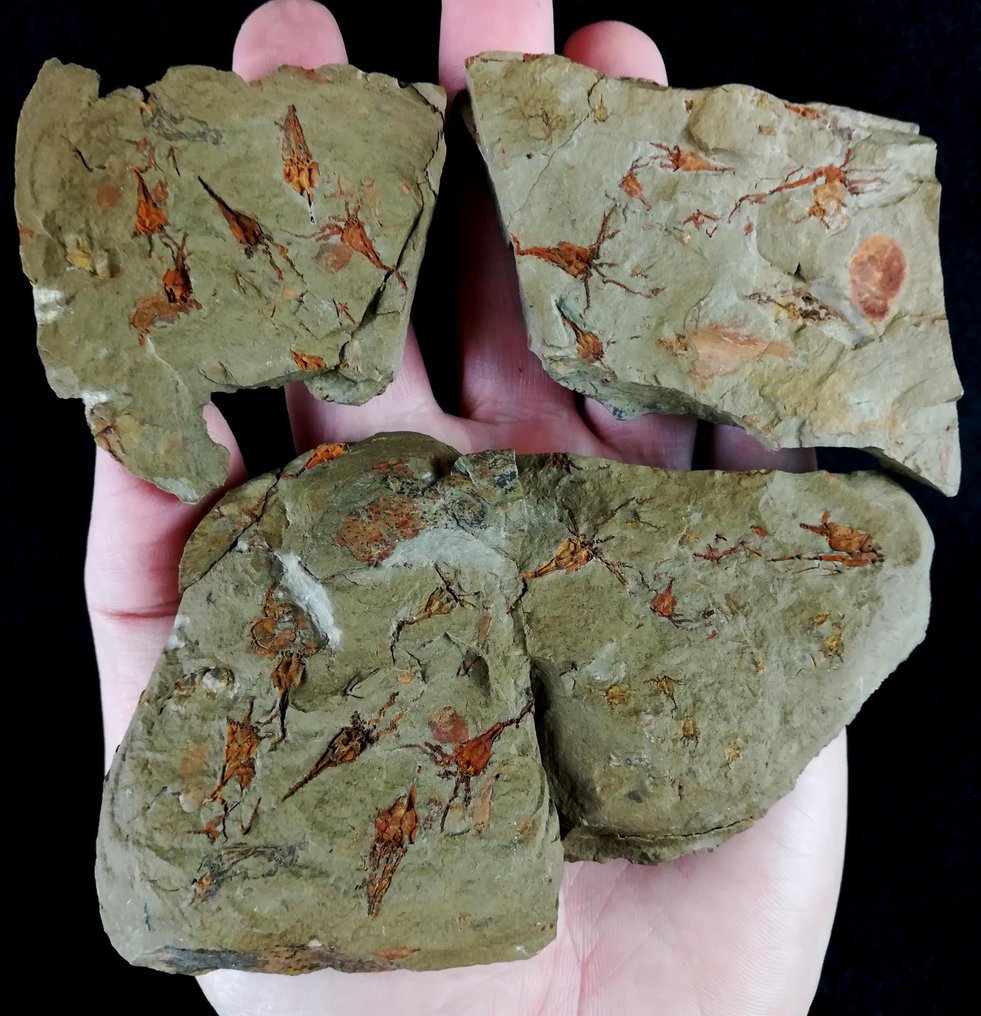
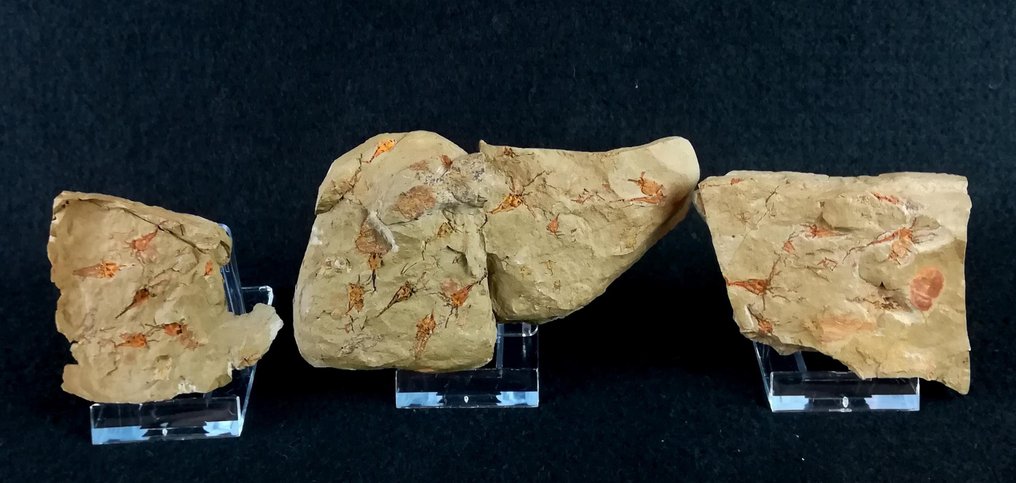
Spectacular plate with 7 complete and rare specimens of Rhopalocystis fraga, a primitive and enigmatic echinoderm that lived during the Ordovician period of the eocrinoid group. Rhopalocystis fraga is the rarest species of Rhopalocystis described in the Fezouata Formation of Zagora (Morocco). The eocrinoids were a primitive group of echinoderms, possibly close to the crinoids. There is one plate and two counterplates.
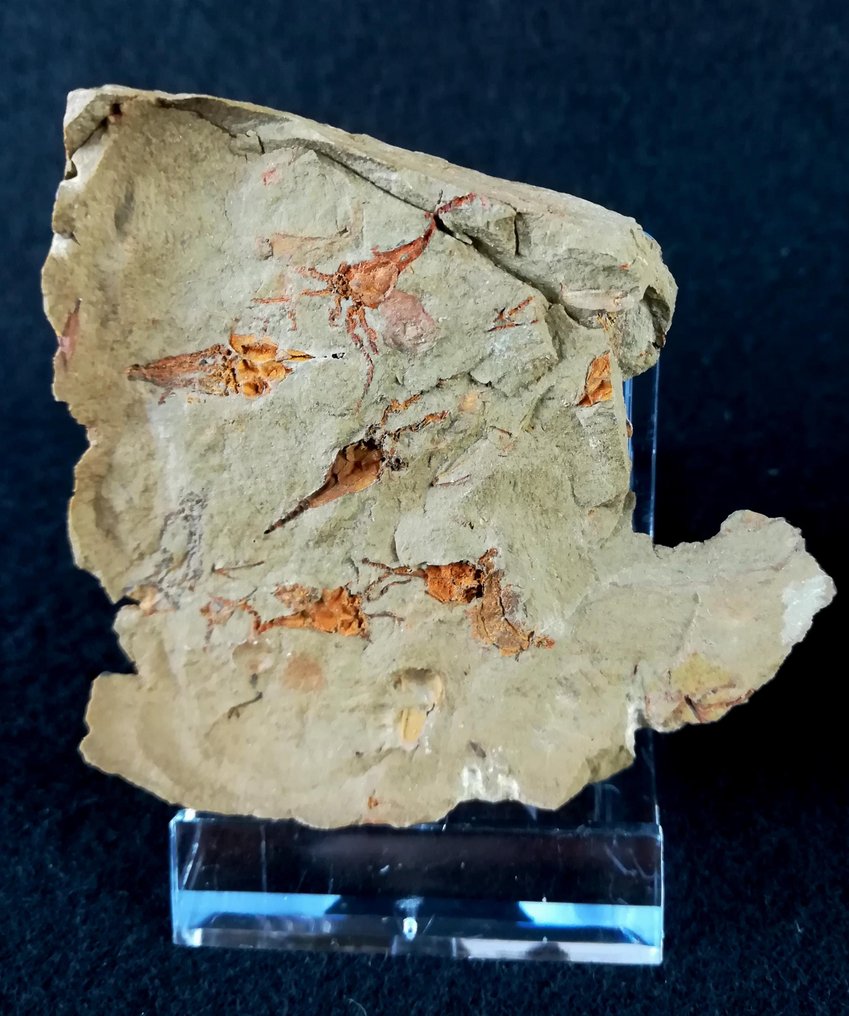
The slab contains 7 complete specimens and remains of at least 5 more specimens of Rhopalocystis fraga. There are also two other echinoderms different from the group of solutes. Specimens with this preservation are extremely rare. The contrast of the fossils with the matrix is spectacular. The extraordinary preservation of the fossils allows for detailed observation of their delicate structures. A specimen worthy of a museum.
Largest measurements of Rhopalocystis: 18 x 9 mm
Plate 1 measurements: 122 g; 11 x 7 x 1 cm
Plate measures 2: 65 g; 7 x 5.5 x 1 cm.
Plate measurements 3: 24 g; 6 x 6 x 0.6 cm
Plastic supports included.
The deposits of the Fezouata formation, near the Moroccan city of Zagora, are providing a rich and diverse record of fossils with extraordinary preservation, up to soft tissues or soft-bodied animals being recorded fairly frequently. This type of preservation is similar, although later in time, to that of the famous Burgess Shale site (Canada).
These are fossils dating from between 480 and 472 million years ago. At that time, Morocco was an ocean and was located over the South Pole.
Spectacular plate with 7 complete and rare specimens of Rhopalocystis fraga, a primitive and enigmatic echinoderm that lived during the Ordovician period of the eocrinoid group. Rhopalocystis fraga is the rarest species of Rhopalocystis described in the Fezouata Formation of Zagora (Morocco). The eocrinoids were a primitive group of echinoderms, possibly close to the crinoids. There is one plate and two counterplates.
The slab contains 7 complete specimens and remains of at least 5 more specimens of Rhopalocystis fraga. There are also two other echinoderms different from the group of solutes. Specimens with this preservation are extremely rare. The contrast of the fossils with the matrix is spectacular. The extraordinary preservation of the fossils allows for detailed observation of their delicate structures. A specimen worthy of a museum.
Largest measurements of Rhopalocystis: 18 x 9 mm
Plate 1 measurements: 122 g; 11 x 7 x 1 cm
Plate measures 2: 65 g; 7 x 5.5 x 1 cm.
Plate measurements 3: 24 g; 6 x 6 x 0.6 cm
Plastic supports included.
The deposits of the Fezouata formation, near the Moroccan city of Zagora, are providing a rich and diverse record of fossils with extraordinary preservation, up to soft tissues or soft-bodied animals being recorded fairly frequently. This type of preservation is similar, although later in time, to that of the famous Burgess Shale site (Canada).
These are fossils dating from between 480 and 472 million years ago. At that time, Morocco was an ocean and was located over the South Pole.
Details
Number of items
1
Specimen
Primitive echinoderms - Eocrinoidea!!!
Scientific name
Rhopalocystis fraga (Chauvel, 1971)
Country of Origin
Bou Chrebeb, Zagora, Morocco
Geological Period
Lower Ordovician, Tremadocian - Fezouata Formation
Condition
Natural
Weight
211 g
Height
11 cm
Width
7 cm
Depth
1 cm