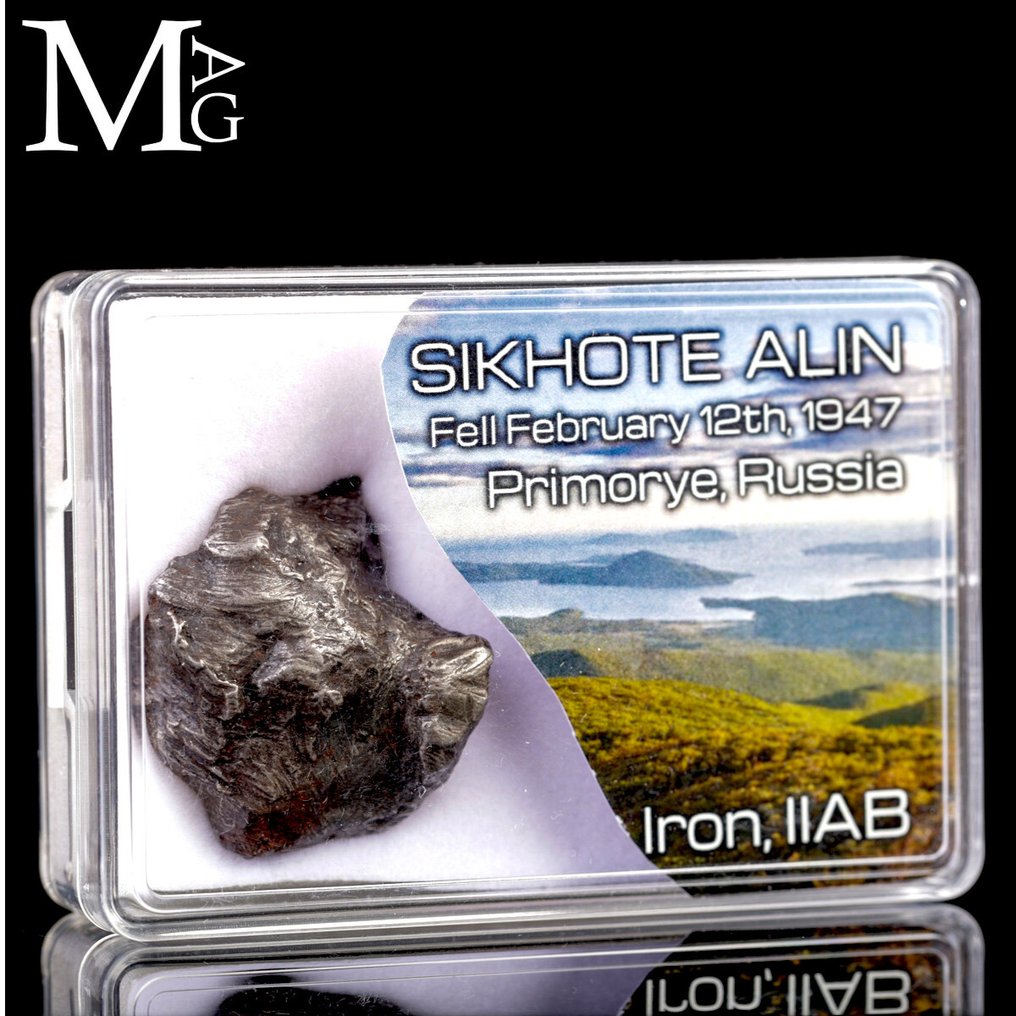
Sikhote-Alin Meteorite – Sky-sculpted fragment, Russia 1947 Siderite group IIAB - Height: 33 mm - Width: 32 mm - 36.89 g


02
days
07
hours
10
minutes
12
seconds
Current bid
€ 65
Reserve price not met

Expert
Selected by Jonas Rathaj
Has worked with taxidermy since childhood and gained retailer experience.
Estimate € 450 - € 500
9 other people are watching this object
 Bidder 8809 Bidder 8809 | €65 | |
|---|---|---|
| Bidder 8809 | €60 | |
| Bidder 8809 | €55 | |
Catawiki Buyer Protection
Your payment’s safe with us until you receive your object.View details
Trustpilot 4.4 | 122630 reviews
Rated Excellent on Trustpilot.
Specimen Sikhote-Alin meteorite, scientific name Iron IIAB.
AI-assisted summary
Description from the seller
This authentic specimen of the Sikhote-Alin meteorite is a direct witness to one of the most impressive meteorite falls ever observed. On February 12, 1947, a huge meteor traversed the cold atmosphere of eastern Siberia, exploding above the Sikhote-Alin mountain range. The event was so powerful that it generated a rain of over 23 tons of metallic fragments, many of which, like this one, retain the intact traces of their cosmic impact.
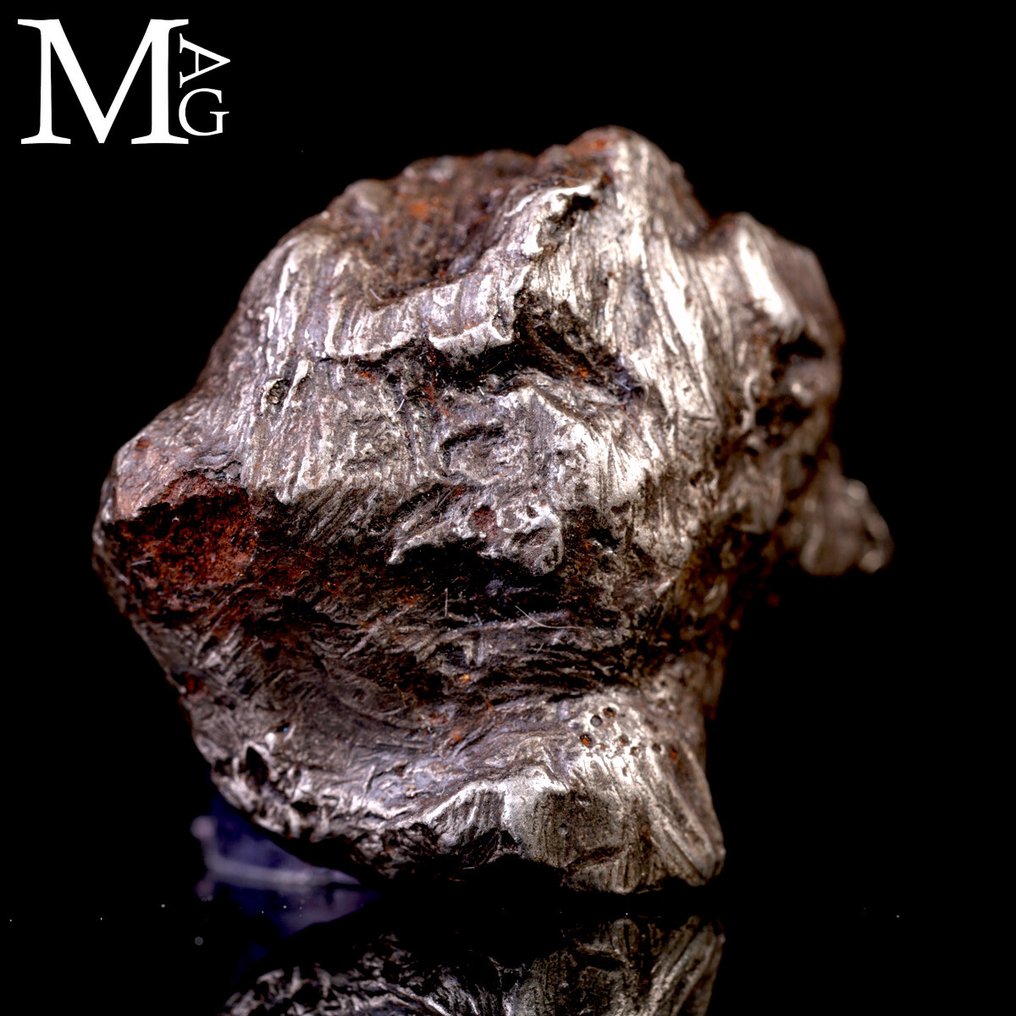
The sample presented here perfectly displays the characteristics of an iron meteorite from the IIAB group: a rough and dark surface, sculpted by atmospheric fusion, with ridges, folds, and small cavities that testify to the speed and heat endured during its fall. The contrast between the shiny nickel-iron areas and the zones with traces of natural oxidation reveals a fascinating duality between extraterrestrial matter and the slow terrestrial transformation. The delicate streaks visible on the surface are signs of solidified metallic flow, a detail that makes each fragment unique.
Beyond its aesthetic and scientific value, this piece represents an authentic cosmic relic, formed billions of years ago in the core of an ancient asteroid. The Sikhote-Alin fall is also famous for being observed by numerous eyewitnesses: a very rare case in meteorite history. Some fragments were collected immediately after the impact, while others – like this one – were found later in the taiga, protected by time and vegetation.
An original fragment of the cosmos, perfect for collectors, science enthusiasts, and anyone wishing to preserve an authentic piece of the universe.
Sikhote-Alin
Type: Ferrous meteorite (Iron, IIAB)
Composition: Iron, nickel
Drop location: Sikhote-Alin Mountains, Russia
Date of the fall: February 12, 1947.
Features: Surface sculpted by atmospheric fusion, natural structure, not cut or polished.
Seller's Story
The Mineral Art Gallery offers minerals, fossils, shells and natural elements.
Born in Italy in 2017, today she collaborates with international galleries and collectors, she is a direct importer of large minerals and naturalistic collectible elements; deals with the processing to insert them inside the living space. A section of the gallery was dedicated to the Wunderkammer, "chamber of wonders or cabinet of curiosities" in which Mirabilia elements are presented: naturalia and italiania, a union between "the present is the past".
All lots are shipped via DHL Express and Fercam couriers, with insured parcel and tracking.
Translated by Google TranslateThis authentic specimen of the Sikhote-Alin meteorite is a direct witness to one of the most impressive meteorite falls ever observed. On February 12, 1947, a huge meteor traversed the cold atmosphere of eastern Siberia, exploding above the Sikhote-Alin mountain range. The event was so powerful that it generated a rain of over 23 tons of metallic fragments, many of which, like this one, retain the intact traces of their cosmic impact.
The sample presented here perfectly displays the characteristics of an iron meteorite from the IIAB group: a rough and dark surface, sculpted by atmospheric fusion, with ridges, folds, and small cavities that testify to the speed and heat endured during its fall. The contrast between the shiny nickel-iron areas and the zones with traces of natural oxidation reveals a fascinating duality between extraterrestrial matter and the slow terrestrial transformation. The delicate streaks visible on the surface are signs of solidified metallic flow, a detail that makes each fragment unique.
Beyond its aesthetic and scientific value, this piece represents an authentic cosmic relic, formed billions of years ago in the core of an ancient asteroid. The Sikhote-Alin fall is also famous for being observed by numerous eyewitnesses: a very rare case in meteorite history. Some fragments were collected immediately after the impact, while others – like this one – were found later in the taiga, protected by time and vegetation.
An original fragment of the cosmos, perfect for collectors, science enthusiasts, and anyone wishing to preserve an authentic piece of the universe.
Sikhote-Alin
Type: Ferrous meteorite (Iron, IIAB)
Composition: Iron, nickel
Drop location: Sikhote-Alin Mountains, Russia
Date of the fall: February 12, 1947.
Features: Surface sculpted by atmospheric fusion, natural structure, not cut or polished.
Seller's Story
The Mineral Art Gallery offers minerals, fossils, shells and natural elements.
Born in Italy in 2017, today she collaborates with international galleries and collectors, she is a direct importer of large minerals and naturalistic collectible elements; deals with the processing to insert them inside the living space. A section of the gallery was dedicated to the Wunderkammer, "chamber of wonders or cabinet of curiosities" in which Mirabilia elements are presented: naturalia and italiania, a union between "the present is the past".
All lots are shipped via DHL Express and Fercam couriers, with insured parcel and tracking.
Translated by Google TranslateDetails
Name of meteorite
Sikhote-Alin Meteorite – Sky-sculpted fragment, Russia 1947
Type of meteorite
Siderite group IIAB
Weight
36.89 g
Country of Origin
Siberia - Russia
Height
33 mm
Width
32 mm
Depth
21 mm
Sold by