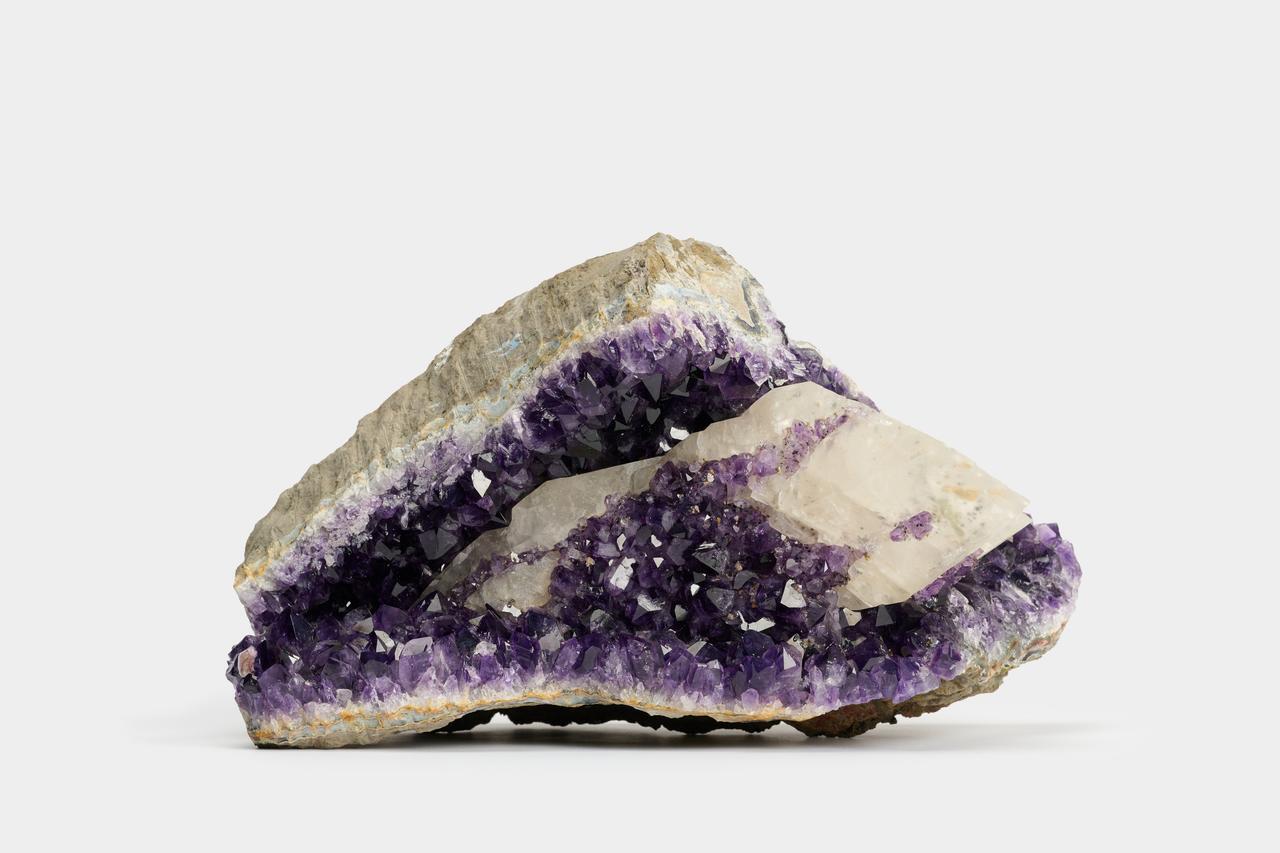
Phylloceras – Fossil ammonite on wooden base - Height: 200 mm - Width: 135 mm- 1259 g


04
days
07
hours
24
minutes
14
seconds
Starting bid
€ 1
Reserve price not met

Expert
Selected by Georgia Foteinou
Holds BSc in geology and post-graduate qualifications in geochemistry.
Estimate € 380 - € 450
No bids placed
Catawiki Buyer Protection
Your payment’s safe with us until you receive your object.View details
Trustpilot 4.4 | 122630 reviews
Rated Excellent on Trustpilot.
Phylloceras – Fossil Ammonite on a wooden base from Madagascar, weighing 1259 g with dimensions 200 × 135 × 55 mm.
AI-assisted summary
Description from the seller
This specimen belongs to the genus Phylloceras, an elegant and ancient ammonite from the Mesozoic era. Its shape is immediately recognizable: a highly involute spiral, in which the last whorl almost completely envelops the previous ones, leaving a tiny umbilicus and a full, harmonious profile. It is the signature of the Phylloceratidae, ammonites that traversed the Mesozoic with refined and surprisingly stable morphology. The surface has been polished, revealing a natural mineralization: a network of orange-honey dendrites branching across the shell, following old fractures, pores, and microchannels formed during fossilization. It is a spontaneous pattern, impossible to replicate, making each specimen unique. The warm hue, typical of the Cretaceous layers of Madagascar, complements the rounded and full shape of the shell. The fossil is mounted on a solid wood base, chosen to provide stability while allowing visual space for the spiral.
Seller's Story
The Mineral Art Gallery offers minerals, fossils, shells and natural elements.
Born in Italy in 2017, today she collaborates with international galleries and collectors, she is a direct importer of large minerals and naturalistic collectible elements; deals with the processing to insert them inside the living space. A section of the gallery was dedicated to the Wunderkammer, "chamber of wonders or cabinet of curiosities" in which Mirabilia elements are presented: naturalia and italiania, a union between "the present is the past".
All lots are shipped via DHL Express and Fercam couriers, with insured parcel and tracking.
Translated by Google TranslateThis specimen belongs to the genus Phylloceras, an elegant and ancient ammonite from the Mesozoic era. Its shape is immediately recognizable: a highly involute spiral, in which the last whorl almost completely envelops the previous ones, leaving a tiny umbilicus and a full, harmonious profile. It is the signature of the Phylloceratidae, ammonites that traversed the Mesozoic with refined and surprisingly stable morphology. The surface has been polished, revealing a natural mineralization: a network of orange-honey dendrites branching across the shell, following old fractures, pores, and microchannels formed during fossilization. It is a spontaneous pattern, impossible to replicate, making each specimen unique. The warm hue, typical of the Cretaceous layers of Madagascar, complements the rounded and full shape of the shell. The fossil is mounted on a solid wood base, chosen to provide stability while allowing visual space for the spiral.
Seller's Story
The Mineral Art Gallery offers minerals, fossils, shells and natural elements.
Born in Italy in 2017, today she collaborates with international galleries and collectors, she is a direct importer of large minerals and naturalistic collectible elements; deals with the processing to insert them inside the living space. A section of the gallery was dedicated to the Wunderkammer, "chamber of wonders or cabinet of curiosities" in which Mirabilia elements are presented: naturalia and italiania, a union between "the present is the past".
All lots are shipped via DHL Express and Fercam couriers, with insured parcel and tracking.
Translated by Google TranslateDetails
Mineral Form
Phylloceras – Fossil ammonite on wooden base
Weight
1259 g
Country of Origin
Madagascar
Height
200 mm
Width
135 mm
Depth
55 mm
Sold by