Kralik - Vase - iridescent glass - Art Nouveau mod twist


06
days
05
hours
00
minutes
05
seconds
Current bid
€ 3
No reserve price

Expert
Selected by Michel Karis
Art historian with extensive experience working at various auction houses in antiques.
Estimate € 180 - € 210
9 other people are watching this object
 Bidder 7019 Bidder 7019 | €3 |
|---|
Catawiki Buyer Protection
Your payment’s safe with us until you receive your object.View details
Trustpilot 4.4 | 121980 reviews
Rated Excellent on Trustpilot.
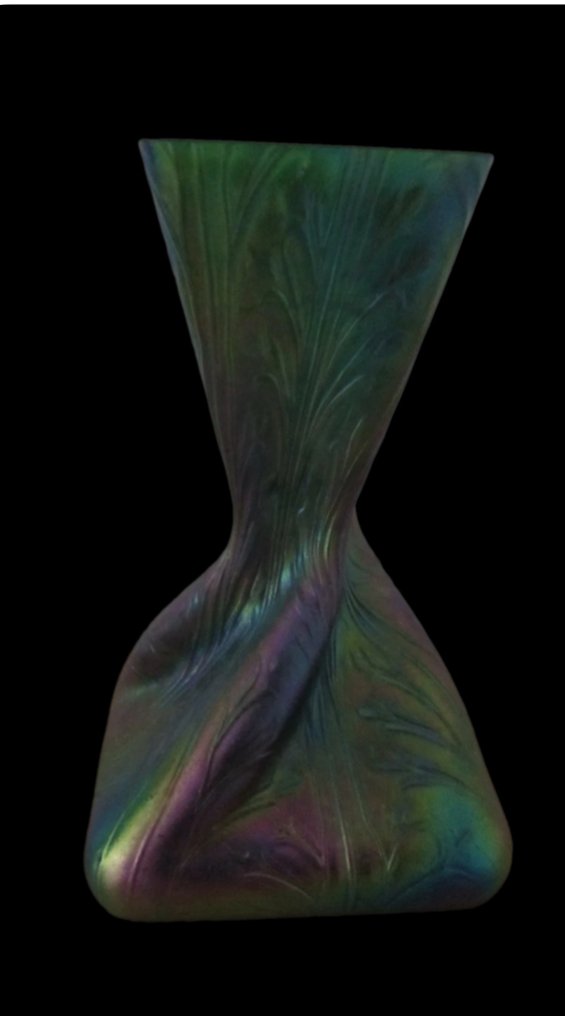
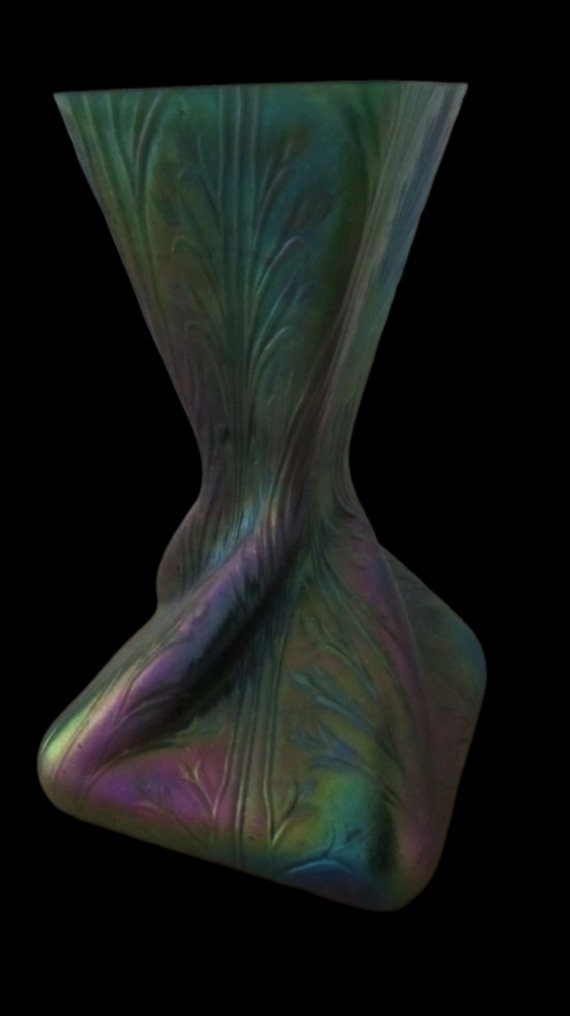
Iridescent glass vase Loetz Twist, Art Nouveau, circa 1900, Bohemia origin, measuring 7 cm wide, 7 cm deep and 24 cm high, condition used with probable small missing pieces.
AI-assisted summary
Description from the seller
This is an iridescent glass vase, Loetz Phänomen.
Model 'Twist' (Turnov).
Produced around 1900, it is a significant example of Art Nouveau artistic glass.
It features a distinctive twisted shape and an iridescent finish with embossed leaf patterns.
The 'Phänomen' technique was renowned for its unique light effects and vibrant colors, rivaling with the
Tiffany glass
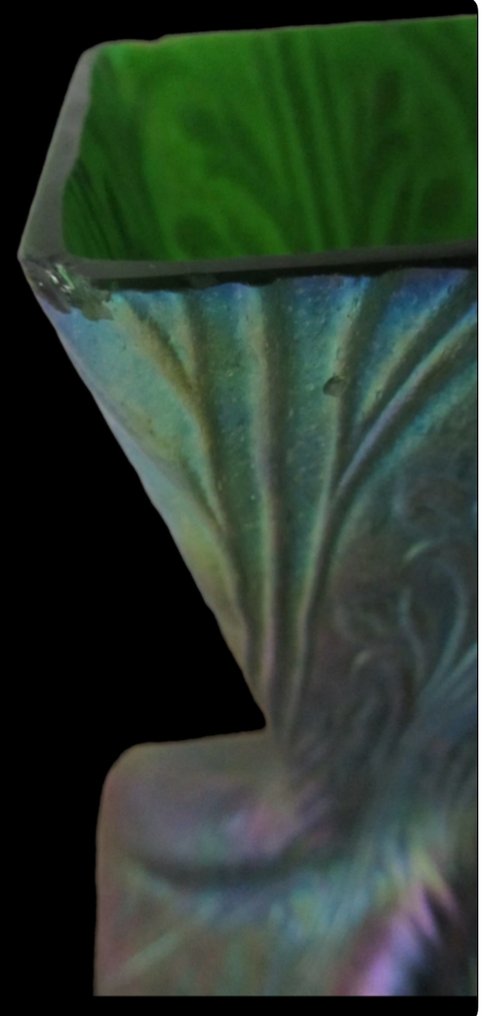
Some imperfections are present on the edge as shown in the photo.
The history of Loetz vases is linked to the story of the Austrian glassworks founded by Johan Loetz in 1839, which became famous for its artistic glass in the Art Nouveau style, characterized by iridescent colors and organic shapes inspired by nature. Production began in Klostermühle, Bohemia (now the Czech Republic), and achieved international success at the 1900 Paris World Fair with its colored glass. The most famous decorations are often referred to as 'Genere Phenomenon'.
Birth and development
The history of the Loetz glassworks begins in 1839 with Johan Loetz's acquisition of the Klostermühle glassworks.
Golden period: The company reached its peak between the late 19th and early 20th centuries, with the production of Art Nouveau-style pieces that gained it international fame.
International success: In 1900, the glassworks achieved great success at the Paris World's Fair, showcasing colored glass that became extremely popular.
Characteristics of Loetz vases
Vetri iridescenti: They are known for their iridescent effects, with metallic reflections, often achieved through advanced blowing and decoration techniques.
Organic shapes: Their form often evokes natural elements, with curved and sinuous lines reminiscent of flowers, plants, and animals.
Unique decorations: They stand out for their use of vivid colors, sometimes created by layering colored glass or applying gilding and silvering.
"Genre Phenomenon": Many of the most innovative and appreciated decorations received the title of "Genre Phenomenon".
Lack of signature: Most Loetz products do not bear a signature, except for those intended for export and specifically requested by the client.
This is an iridescent glass vase, Loetz Phänomen.
Model 'Twist' (Turnov).
Produced around 1900, it is a significant example of Art Nouveau artistic glass.
It features a distinctive twisted shape and an iridescent finish with embossed leaf patterns.
The 'Phänomen' technique was renowned for its unique light effects and vibrant colors, rivaling with the
Tiffany glass
Some imperfections are present on the edge as shown in the photo.
The history of Loetz vases is linked to the story of the Austrian glassworks founded by Johan Loetz in 1839, which became famous for its artistic glass in the Art Nouveau style, characterized by iridescent colors and organic shapes inspired by nature. Production began in Klostermühle, Bohemia (now the Czech Republic), and achieved international success at the 1900 Paris World Fair with its colored glass. The most famous decorations are often referred to as 'Genere Phenomenon'.
Birth and development
The history of the Loetz glassworks begins in 1839 with Johan Loetz's acquisition of the Klostermühle glassworks.
Golden period: The company reached its peak between the late 19th and early 20th centuries, with the production of Art Nouveau-style pieces that gained it international fame.
International success: In 1900, the glassworks achieved great success at the Paris World's Fair, showcasing colored glass that became extremely popular.
Characteristics of Loetz vases
Vetri iridescenti: They are known for their iridescent effects, with metallic reflections, often achieved through advanced blowing and decoration techniques.
Organic shapes: Their form often evokes natural elements, with curved and sinuous lines reminiscent of flowers, plants, and animals.
Unique decorations: They stand out for their use of vivid colors, sometimes created by layering colored glass or applying gilding and silvering.
"Genre Phenomenon": Many of the most innovative and appreciated decorations received the title of "Genre Phenomenon".
Lack of signature: Most Loetz products do not bear a signature, except for those intended for export and specifically requested by the client.
Details
Era
1400-1900
Glass type
iridescent glass
Specific region of origin
Boemia
Title additional information
Art Nouveau mod twist
Country of Origin
Slovakia
Material
Glass
Style
Art Nouveau
Manufacturer/ Brand
Kralik
Condition
Fair condition - heavily used & with possibly minor parts missing
Height
24 cm
Width
7 cm
Depth
7 cm
Estimated period
1850-1900
Sold by