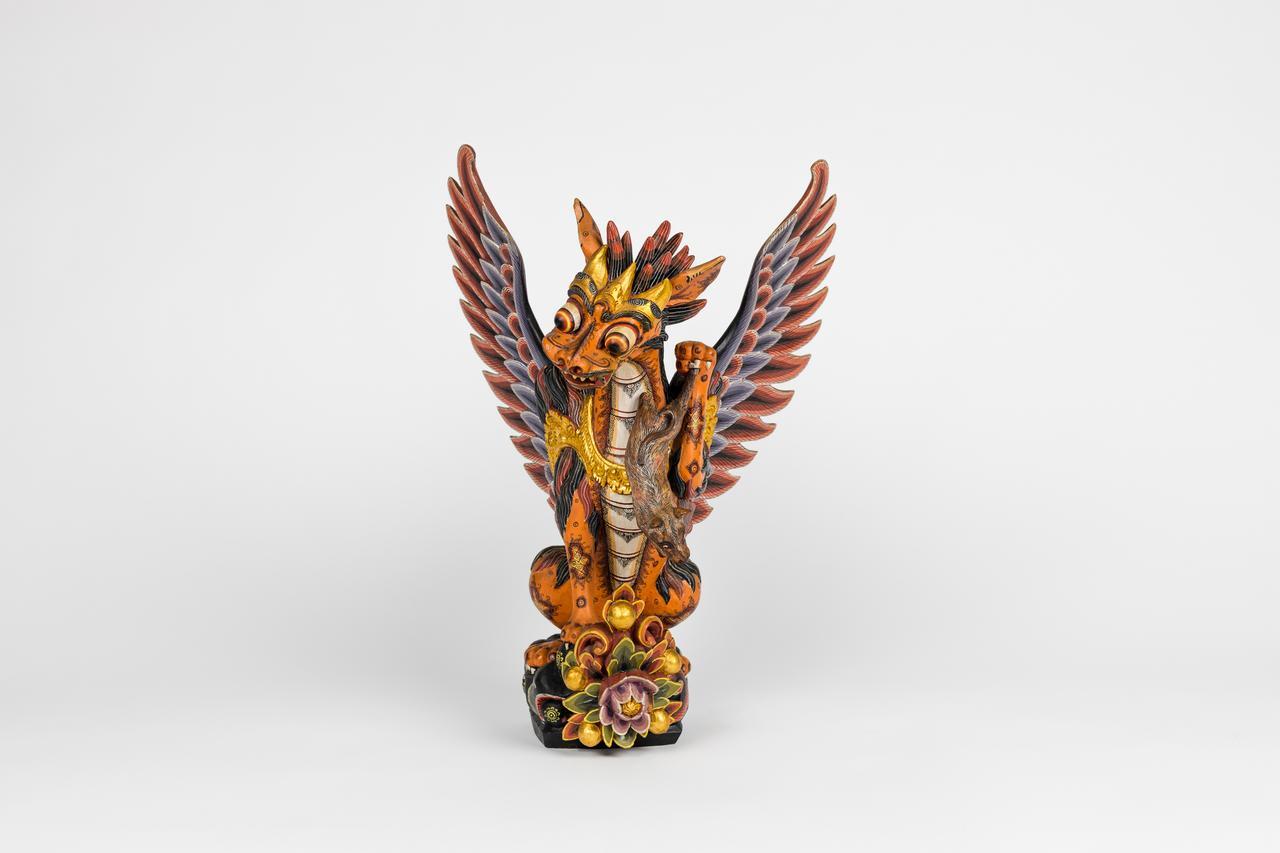
Buddha Gautama della Terra Testimone (“Bhumisparsha”) - Statue - Myanmar/Burma


00
days
06
hours
21
minutes
23
seconds
Current bid
€ 201
Reserve price not met

Expert
Selected by Amy Wassing
Nearly 20 years' experience in Indonesian and Oceanian art with museum expertise.
Estimate € 850 - € 1,000
50 other people are watching this object
 Bidder 0381 Bidder 0381 | €201 | |
|---|---|---|
| Bidder 0381 | €191 | |
| Bidder 9713 | €181 | |
Catawiki Buyer Protection
Your payment’s safe with us until you receive your object.View details
Trustpilot 4.4 | 122529 reviews
Rated Excellent on Trustpilot.
A carved wooden Budha in lacquer and gold leaf from Myanmar, depicting the Bhumisparsha mudra, with historic Mandalay Konbaung cues and a graceful 26 by 38 by 13.5 cm form.
AI-assisted summary
Description from the seller
Buddha Gautama of the Earth Witness ('Bhumisparsha')
Estimated origin: Myanmar (Burma), presumably Shan or Mandalay region, 18th–19th century.
Material: Carved wood with a lacquer and gold leaf finish, on a lacquered base as well.
Iconography and posture: The figure depicts the historical Buddha (Gautama Shakyamuni) seated in meditation, in the 'Vajrasana' posture (cross-legged) with the right hand touching the ground (mudrā Bhumisparsha, 'calling the earth'), a symbolic gesture of the moment of enlightenment. The left arm is folded in the lap, palm facing upward, completing the iconographic balance of the scene.
The statue rests on a flat base (probably a modern or restored base in your case), but it may also have originally been on a small lotus-shaped throne, as is often seen in Burmese sculptures.
Historical and Artistic Contextualization
During the Konbaung period (1752–1885) in Burma, Buddhist wooden statuary with lacquer (often 'thayo lacquer') and gilding was particularly popular.
The 'thayo' technique involves a modeled layer of lacquer mixed with materials such as rice ash or ground bones, applied on a wooden structure, then lacquered and gilded.
1. Iconographic importance: The mudrā Bhumisparsha is one of the most emblematic postures in the Burmese Theravāda Buddhist tradition, associated with the moment of the Buddha's enlightenment.
2. Traditional technique: The use of lacquer and gilding with thayo is technically refined and historically significant for the Mandalay / Konbaung period.
We offer a refined Burmese Buddha in lacquered and gilded wood dating from the 18th-19th century, depicted in meditation with the gesture of Bhumisparsha (call of the Earth), a symbol of enlightenment. Made with traditional Burmese techniques, probably during the Mandalay / Konbaung period, on a wooden core with lacquer work and subsequent gilding. The sculpture displays a natural patina, cracks in the lacquer, and authentic signs of wear, testament to devotional use. A piece of great historical, artistic, and spiritual significance, ideal for collectors of Asian and Buddhist art.
Accurate and tracked shipping
The photos are part of the description.
Wooden bases or gifted
Buddha Gautama of the Earth Witness ('Bhumisparsha')
Estimated origin: Myanmar (Burma), presumably Shan or Mandalay region, 18th–19th century.
Material: Carved wood with a lacquer and gold leaf finish, on a lacquered base as well.
Iconography and posture: The figure depicts the historical Buddha (Gautama Shakyamuni) seated in meditation, in the 'Vajrasana' posture (cross-legged) with the right hand touching the ground (mudrā Bhumisparsha, 'calling the earth'), a symbolic gesture of the moment of enlightenment. The left arm is folded in the lap, palm facing upward, completing the iconographic balance of the scene.
The statue rests on a flat base (probably a modern or restored base in your case), but it may also have originally been on a small lotus-shaped throne, as is often seen in Burmese sculptures.
Historical and Artistic Contextualization
During the Konbaung period (1752–1885) in Burma, Buddhist wooden statuary with lacquer (often 'thayo lacquer') and gilding was particularly popular.
The 'thayo' technique involves a modeled layer of lacquer mixed with materials such as rice ash or ground bones, applied on a wooden structure, then lacquered and gilded.
1. Iconographic importance: The mudrā Bhumisparsha is one of the most emblematic postures in the Burmese Theravāda Buddhist tradition, associated with the moment of the Buddha's enlightenment.
2. Traditional technique: The use of lacquer and gilding with thayo is technically refined and historically significant for the Mandalay / Konbaung period.
We offer a refined Burmese Buddha in lacquered and gilded wood dating from the 18th-19th century, depicted in meditation with the gesture of Bhumisparsha (call of the Earth), a symbol of enlightenment. Made with traditional Burmese techniques, probably during the Mandalay / Konbaung period, on a wooden core with lacquer work and subsequent gilding. The sculpture displays a natural patina, cracks in the lacquer, and authentic signs of wear, testament to devotional use. A piece of great historical, artistic, and spiritual significance, ideal for collectors of Asian and Buddhist art.
Accurate and tracked shipping
The photos are part of the description.
Wooden bases or gifted
Details
Era
1400-1900
Over 200 years old
No
Country of Origin
Myanmar/Burma
Style
Antique
Material
Wood
Title of artwork
Buddha Gautama della Terra Testimone (“Bhumisparsha”)
Signature
Not signed
Condition
Excellent condition
Height
38 cm
Width
26 cm
Depth
13.5 cm
Sold by