Eman Ali - Succession Oman Photo Ltd. 300 OOP - 2019




00
days
03
hours
58
minutes
06
seconds
Current bid
€ 25
Reserve price not met

Expert
Selected by Sebastian Hau
Founded and directed two French book fairs; nearly 20 years of experience in contemporary books.
Estimate € 180 - € 220
8 other people are watching this object
 Bidder 7183 Bidder 7183 | €25 | |
|---|---|---|
| Bidder 7183 | €20 | |
 Bidder 2841 Bidder 2841 | €4 | |
Catawiki Buyer Protection
Your payment’s safe with us until you receive your object.View details
Trustpilot 4.4 | 122385 reviews
Rated Excellent on Trustpilot.
Eman Ali’s Succession Oman Photo Ltd. 300 OOP is a first edition photobook that reframes Oman’s modern history through dreamlike archive images.
AI-assisted summary
Description from the seller
For the moment, I am unable to ship to America due to the tariffs. I ship every couple of days and cannot hold packages. If you plan to buy, thank you, but please be aware that I have to ship on time and to the address provided on CW.
In Succession, I explore Oman’s modern history through the lens of the archive - examining what it preserves, what it omits, and the silences it leaves behind. The images for this project come from a quarterly newsletter titled Oman, published by the Embassy of the Sultanate in the United Kingdom between 1973 and the 1980s - a collection carefully preserved by my father. This publication aimed to present Oman to the West as a modern, stable, and economically prosperous nation, carefully crafting a narrative of progress under the rule of Sultan Qaboos bin Said. It was both a tool of diplomacy and an artifact of a nation in the process of reshaping its identity.
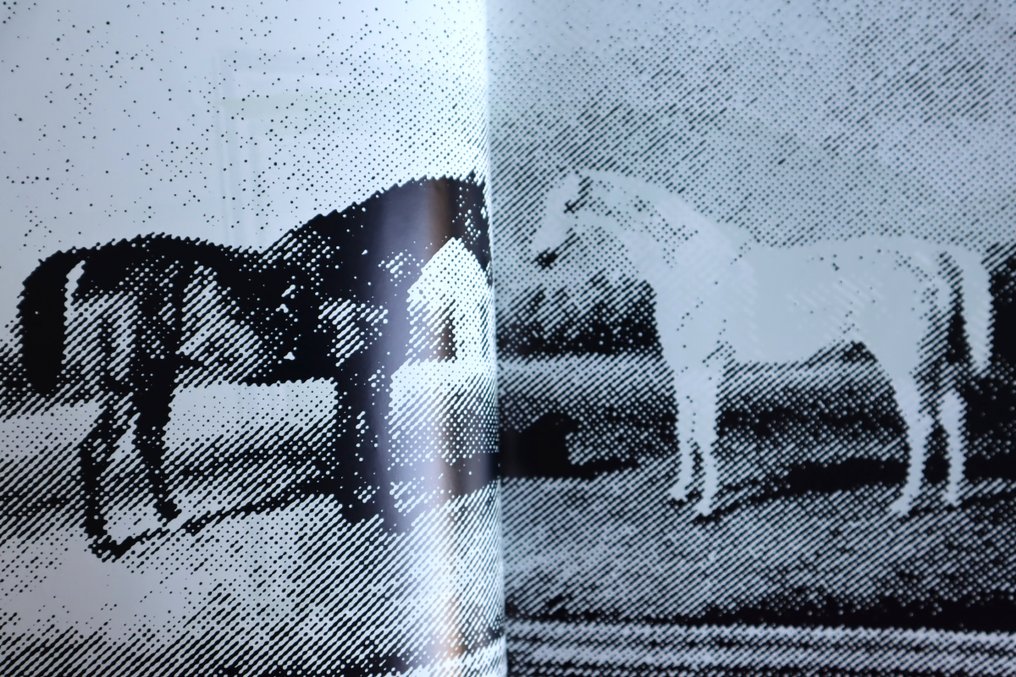
I focus on the early years of Sultan Qaboos’s rule, a period of great transformation and reinvention. These years raise questions about power, memory, and history - questions that compel me because they expose the slippery, constructed nature of the past. The photobook I created is not a straightforward documentation of this era. Instead, it is a sequence of iPhone images, carefully altered and reimagined into something more akin to a dream than a record. These images do not clarify or explain; they hover in ambiguity, evoking a sense of history that is layered, fluid, and alive. Through them, I explore what it means to frame a moment, a place, or a nation - and to call that frame truth.
Oman’s long period of isolation before 1970 looms large in this work. For much of its history, the country was shrouded in mystery, its narratives often constructed by external observers. With Succession, I confront this legacy - not by attempting to fill the gaps left by the colonial gaze but by sitting with those gaps, interrogating their silences and contradictions. The archive is not a static repository of truth; it is a dynamic space of negotiation, shaped by power and perception.
In an era of political uncertainty and instability, I find myself drawn to the concept of impermanence. National identity, to me, is not fixed; it is fragile, ever-shifting, and shaped by forces both visible and invisible. Succession is not an attempt to provide answers or definitive narratives. Instead, it is a space for contemplation - a way to engage with what lingers and what fades, and to confront the tension between the two.
This book has been commissioned by Ffotogallery on the occasion of the exhibition 'The Place I Call Home', curated by David Drake, for the British Council. The exhibition has toured the UK and the GCC.
For the moment, I am unable to ship to America due to the tariffs. I ship every couple of days and cannot hold packages. If you plan to buy, thank you, but please be aware that I have to ship on time and to the address provided on CW.
In Succession, I explore Oman’s modern history through the lens of the archive - examining what it preserves, what it omits, and the silences it leaves behind. The images for this project come from a quarterly newsletter titled Oman, published by the Embassy of the Sultanate in the United Kingdom between 1973 and the 1980s - a collection carefully preserved by my father. This publication aimed to present Oman to the West as a modern, stable, and economically prosperous nation, carefully crafting a narrative of progress under the rule of Sultan Qaboos bin Said. It was both a tool of diplomacy and an artifact of a nation in the process of reshaping its identity.
I focus on the early years of Sultan Qaboos’s rule, a period of great transformation and reinvention. These years raise questions about power, memory, and history - questions that compel me because they expose the slippery, constructed nature of the past. The photobook I created is not a straightforward documentation of this era. Instead, it is a sequence of iPhone images, carefully altered and reimagined into something more akin to a dream than a record. These images do not clarify or explain; they hover in ambiguity, evoking a sense of history that is layered, fluid, and alive. Through them, I explore what it means to frame a moment, a place, or a nation - and to call that frame truth.
Oman’s long period of isolation before 1970 looms large in this work. For much of its history, the country was shrouded in mystery, its narratives often constructed by external observers. With Succession, I confront this legacy - not by attempting to fill the gaps left by the colonial gaze but by sitting with those gaps, interrogating their silences and contradictions. The archive is not a static repository of truth; it is a dynamic space of negotiation, shaped by power and perception.
In an era of political uncertainty and instability, I find myself drawn to the concept of impermanence. National identity, to me, is not fixed; it is fragile, ever-shifting, and shaped by forces both visible and invisible. Succession is not an attempt to provide answers or definitive narratives. Instead, it is a space for contemplation - a way to engage with what lingers and what fades, and to confront the tension between the two.
This book has been commissioned by Ffotogallery on the occasion of the exhibition 'The Place I Call Home', curated by David Drake, for the British Council. The exhibition has toured the UK and the GCC.
Details
Number of Books
1
Subject
Islamic heritage
Book Title
Succession Oman Photo Ltd. 300 OOP
Author/ Illustrator
Eman Ali
Condition
Fine
Publication year oldest item
2019
Edition
1st Edition
Language
English
Original language
Yes
Publisher
Self
Binding/ Material
Softback
Number of pages
160
Sold by