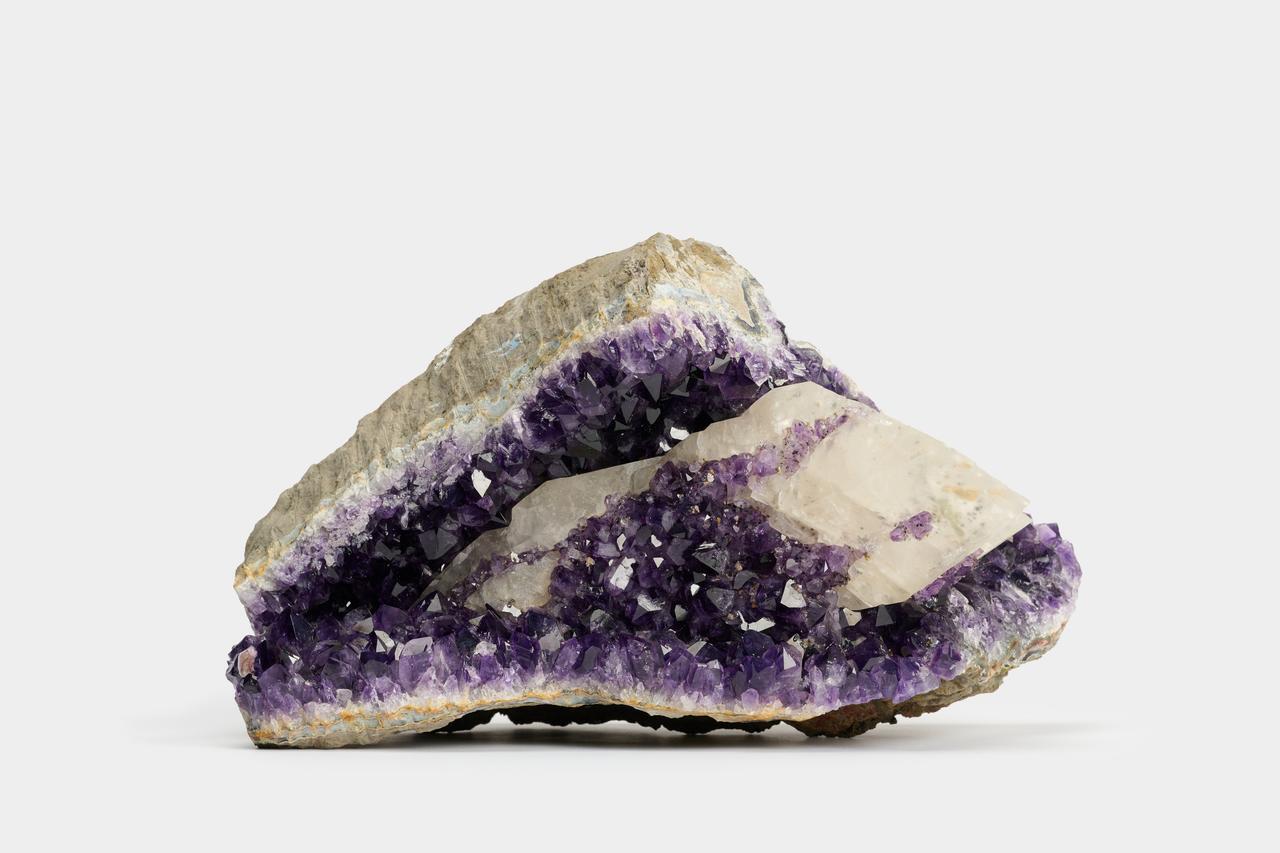
Magnificent large-sized jade bust. Carving - Height: 200 mm - Width: 90 mm- 1400 g - (1)


01
day
12
hours
15
minutes
33
seconds
Current bid
€ 4
Reserve price not met

Expert
Selected by Georgia Foteinou
Holds BSc in geology and post-graduate qualifications in geochemistry.
Estimate € 270 - € 300
16 other people are watching this object
 Bidder 8143 Bidder 8143 | €4 | |
|---|---|---|
 Bidder 0751 Bidder 0751 | €3 | |
| Bidder 0751 | €2 | |
Catawiki Buyer Protection
Your payment’s safe with us until you receive your object.View details
Trustpilot 4.4 | 122190 reviews
Rated Excellent on Trustpilot.
Description from the seller
Magnificent large-sized jade bust.
An essential for your interior decoration.
Jade stone arrived in Europe at the end of the 15th century thanks to the Portuguese established in Canton. This mineral, which adorns carved objects, was then called piedra de ijada, meaning 'stone of the flank.' This name refers to the healing powers of this stone on renal pains, also known as nephritic pains.
In some Latin texts, the name lapis nephreticus is used to refer to the jade stone. Translated as nephritic stone, scholars then use nephrite to denote this mineral. The French discovered this mineral in the 17th century. They used the term éjade as a translation of ijada. The initial vowel -é gradually disappeared, and the name Jade became international.
Five thousand years ago, Jade was already used in China to make objects. During Chinese prehistory, Jade became a sacred stone. The Liangzhu culture, highly hierarchical, placed ivory and Jade at the top. Only the tombs of the elite could contain Jade objects. To protect the body from decay, Jade and gold filled the openings of the deceased. As a symbol of eternal life, a Jade stone was placed in the mouth of the deceased so they could access resurrection. Jade also symbolized absolute power. Wearing a Jade stone in China today signifies claiming imperial dignity.
During antiquity, many symbols and myths surrounded Jade. In Greece, this stone accompanied people from birth to death through the Moirai, the three goddesses of destiny. The Greeks also used it to soothe and heal their wounds. For eye pain, they would place a piece of Jade directly on their eyelids or dissolve it into a cleansing solution. For many pre-Hispanic peoples, Jade was worth much more than gold.
In New Zealand, the Maoris used this gemstone to make tools, weapons, and jewelry. They associated it with Hune-nui-te-po, the goddess of death. In Europe, Jade is given to celebrate 26 years of marriage.
The main jade deposits are found in China, Russia, Canada, and New Zealand. About ten years ago, jadeite deposits were discovered in Italy by Pierre Pétrequin.
About the shipment:
Here, you can always rely on careful and reliable shipping. Please pay promptly to avoid any delays.
When you purchase multiple lots, you only pay the shipping fees once.
Make sure that each batch is eligible for combined shipping.
About our lots:
We prioritize excellent customer service and reliability because your experience and satisfaction are of the utmost importance to us. Feel free to browse our fantastic reviews from other buyers, which show that we are highly rated. Each of our items is photographed individually, ensuring that the attached photos accurately represent the actual item for sale.
Magnificent large-sized jade bust.
An essential for your interior decoration.
Jade stone arrived in Europe at the end of the 15th century thanks to the Portuguese established in Canton. This mineral, which adorns carved objects, was then called piedra de ijada, meaning 'stone of the flank.' This name refers to the healing powers of this stone on renal pains, also known as nephritic pains.
In some Latin texts, the name lapis nephreticus is used to refer to the jade stone. Translated as nephritic stone, scholars then use nephrite to denote this mineral. The French discovered this mineral in the 17th century. They used the term éjade as a translation of ijada. The initial vowel -é gradually disappeared, and the name Jade became international.
Five thousand years ago, Jade was already used in China to make objects. During Chinese prehistory, Jade became a sacred stone. The Liangzhu culture, highly hierarchical, placed ivory and Jade at the top. Only the tombs of the elite could contain Jade objects. To protect the body from decay, Jade and gold filled the openings of the deceased. As a symbol of eternal life, a Jade stone was placed in the mouth of the deceased so they could access resurrection. Jade also symbolized absolute power. Wearing a Jade stone in China today signifies claiming imperial dignity.
During antiquity, many symbols and myths surrounded Jade. In Greece, this stone accompanied people from birth to death through the Moirai, the three goddesses of destiny. The Greeks also used it to soothe and heal their wounds. For eye pain, they would place a piece of Jade directly on their eyelids or dissolve it into a cleansing solution. For many pre-Hispanic peoples, Jade was worth much more than gold.
In New Zealand, the Maoris used this gemstone to make tools, weapons, and jewelry. They associated it with Hune-nui-te-po, the goddess of death. In Europe, Jade is given to celebrate 26 years of marriage.
The main jade deposits are found in China, Russia, Canada, and New Zealand. About ten years ago, jadeite deposits were discovered in Italy by Pierre Pétrequin.
About the shipment:
Here, you can always rely on careful and reliable shipping. Please pay promptly to avoid any delays.
When you purchase multiple lots, you only pay the shipping fees once.
Make sure that each batch is eligible for combined shipping.
About our lots:
We prioritize excellent customer service and reliability because your experience and satisfaction are of the utmost importance to us. Feel free to browse our fantastic reviews from other buyers, which show that we are highly rated. Each of our items is photographed individually, ensuring that the attached photos accurately represent the actual item for sale.
Details
Number of items
1
Main Mineral
Magnificent large-sized jade bust.
Mineral Form
Carving
Weight
1400 g
Country of Origin
China
Height
200 mm
Width
90 mm
Sold by
Disclaimer
It is believed that certain gemstones and minerals have beneficial health and spiritual properties. However, using or wearing gemstones or minerals does not mean that you can treat, cure or prevent any disease. Please consult your health care professional for information on health care issues and do not stop any medications or courses of treatment, without first consulting your health care professional. The use of gemstones or minerals as a wellness therapy is one of personal choice. While stones or crystals have been used historically to relieve or prevent symptoms, the objects sold on our website offer no guarantee of results. Therefore, Catawiki cannot guarantee or be held liable for the effectiveness of these objects sold herein.
It is believed that certain gemstones and minerals have beneficial health and spiritual properties. However, using or wearing gemstones or minerals does not mean that you can treat, cure or prevent any disease. Please consult your health care professional for information on health care issues and do not stop any medications or courses of treatment, without first consulting your health care professional. The use of gemstones or minerals as a wellness therapy is one of personal choice. While stones or crystals have been used historically to relieve or prevent symptoms, the objects sold on our website offer no guarantee of results. Therefore, Catawiki cannot guarantee or be held liable for the effectiveness of these objects sold herein.