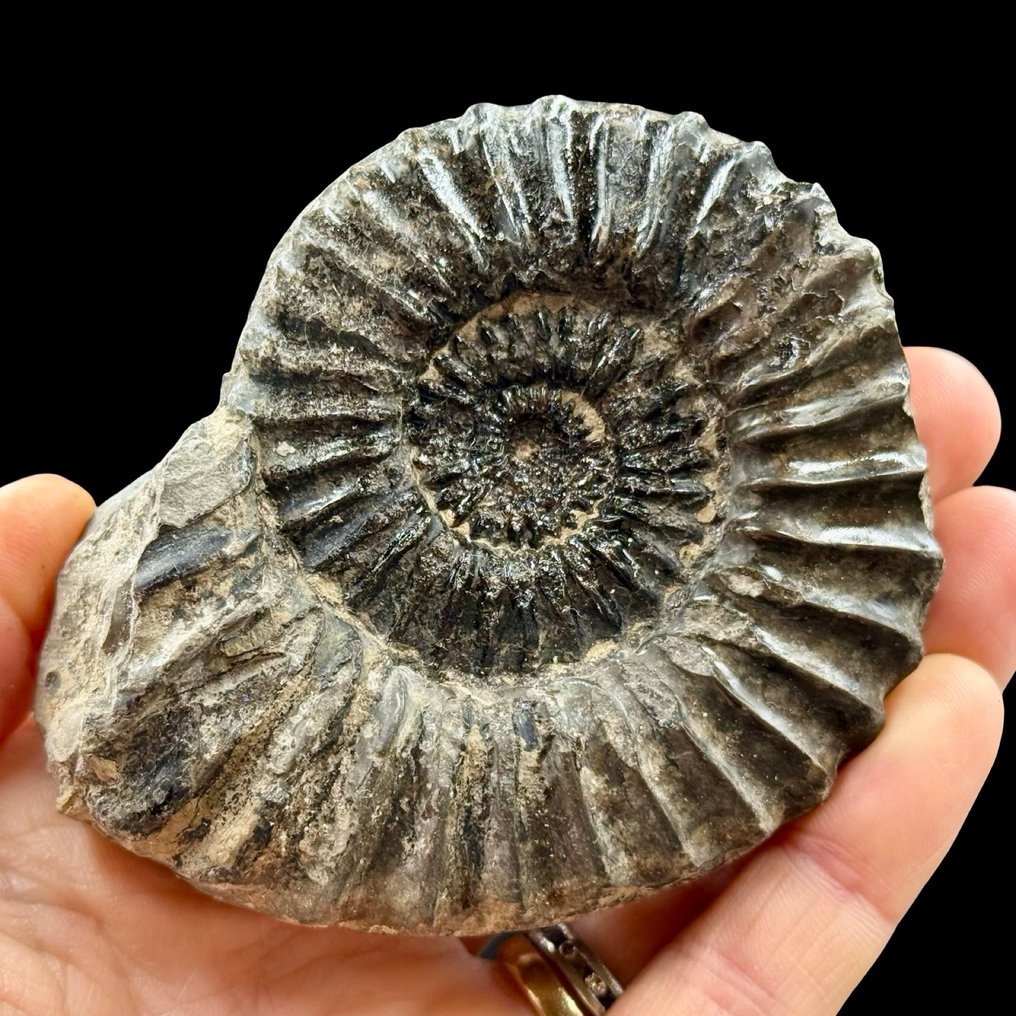
Ammonite - Fossilised shell - Pleuroceras (Yorkshire) - 21 mm - 87 mm (No Reserve Price)


00
days
08
hours
19
minutes
15
seconds

12 other people are watching this object
 Bidder 8627 Bidder 8627 | €25 | |
|---|---|---|
 Bidder 8595 Bidder 8595 | €20 | |
| Bidder 3955 | €15 | |
Catawiki Buyer Protection
Your payment’s safe with us until you receive your object.View details
Trustpilot 4.4 | 121798 reviews
Rated Excellent on Trustpilot.
Scientific name Pleuroceras (Yorkshire); Specimen: Ammonite; Geological Period: Upper Jurassic (around 163.5–145 million years); Treatment: Conserved; Condition: Natural.
AI-assisted summary
Description from the seller
Exceptional Pleuroceras Ammonite from Yorkshire
This striking Pleuroceras ammonite fossil originates from Kettleness, Yorkshire, one of the most renowned fossil-bearing localities in the United Kingdom. Dating to the Upper Toarcian Stage of the Jurassic, this authentic specimen represents an ancient marine world from approximately 180 million years ago. Kettleness is famed for its beautifully preserved ammonites, uniquely shaped by the region’s coastal shale and ironstone deposits. The fossil shown in the photographs is the exact piece you will receive. All of our fossils are 100% genuine and include a Certificate of Authenticity.
Geological Setting and Age
The ammonite was found within Upper Toarcian deposits, a division of the Lower Jurassic known for its rich marine fossil content. During this geological stage, the Kettleness region formed part of a warm epicontinental sea where fine sediments accumulated rapidly. These environments were ideal for fossil preservation, allowing ammonites such as Pleuroceras to be sealed quickly beneath layers of silt, shale, and iron-rich mud. Over millions of years the sediments lithified, capturing intricate shell details and retaining the distinctive ornamentation for which this genus is known.
Taxonomy and Scientific Context
Pleuroceras belongs to the family Dactylioceratidae within the order Ammonitida, a diverse lineage of cephalopods that flourished during the Jurassic period. Members of this family are celebrated for their bold ribbing and dynamic shell structures, which make them highly recognisable and valuable for biostratigraphic work. Pleuroceras ammonites serve as important index fossils within the Toarcian, aiding researchers in correlating rock layers across Europe. Their widespread distribution and identifiable morphology have made them a cornerstone of early Jurassic palaeontology.
Morphological Features
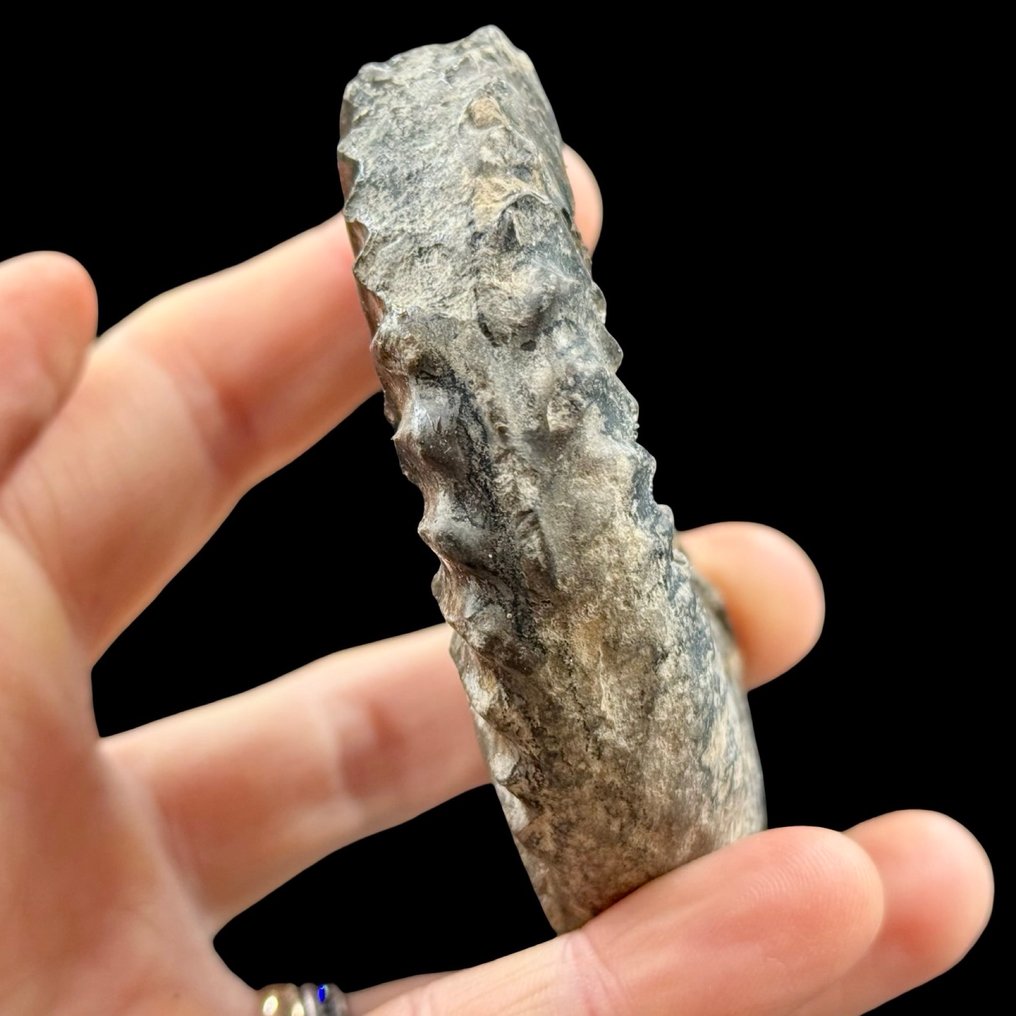
This specimen displays the characteristic features of Pleuroceras: sharply defined ribs, cleanly divided whorls, and a robust shell structure that gives the ammonite a strong three-dimensional presence. The ribbing sweeps forward in a distinctive style, ending in pronounced ventral keels that reflect the active hydrodynamic adaptations of the animal. The whorl section is typically rounded to slightly compressed, showcasing the classic profile of the genus. Fossils from Kettleness often possess crisp, well-defined preservation due to the ironstone nodules and dense shale matrices that enclose them. This specimen offers exceptional clarity, with the ornamental details preserved in fine resolution.
Depositional Environment
The Upper Toarcian seas were dynamic ecosystems influenced by periodic low-oxygen events, which helped enhance fossil preservation by reducing scavenging and decay. Fine sediments settled in quiet marine basins, entombing shells rapidly and protecting them from physical disturbance. In the Kettleness area, the interplay between marine shales and ironstone concretions created conditions ideal for preserving ammonites in near-perfect condition. The result is a fossil record that captures both the diversity and the evolutionary development of Jurassic ammonites in remarkable detail.
Provenance and Collector Appeal
Kettleness is one of Britain’s most iconic Jurassic fossil destinations, known worldwide for its abundance of high-quality ammonites. This carefully selected Pleuroceras specimen stands out for its bold sculpturing, geological importance, and well-preserved structure. Its provenance and natural form make it a desirable addition for collectors seeking a scientifically relevant piece with strong visual impact. Whether acquired for display, study, or educational purposes, this ammonite represents an authentic fragment of British geological heritage and a superb example of early Jurassic marine life.
Size: 87 x 71 x 21mm
Weight: 162g
Exceptional Pleuroceras Ammonite from Yorkshire
This striking Pleuroceras ammonite fossil originates from Kettleness, Yorkshire, one of the most renowned fossil-bearing localities in the United Kingdom. Dating to the Upper Toarcian Stage of the Jurassic, this authentic specimen represents an ancient marine world from approximately 180 million years ago. Kettleness is famed for its beautifully preserved ammonites, uniquely shaped by the region’s coastal shale and ironstone deposits. The fossil shown in the photographs is the exact piece you will receive. All of our fossils are 100% genuine and include a Certificate of Authenticity.
Geological Setting and Age
The ammonite was found within Upper Toarcian deposits, a division of the Lower Jurassic known for its rich marine fossil content. During this geological stage, the Kettleness region formed part of a warm epicontinental sea where fine sediments accumulated rapidly. These environments were ideal for fossil preservation, allowing ammonites such as Pleuroceras to be sealed quickly beneath layers of silt, shale, and iron-rich mud. Over millions of years the sediments lithified, capturing intricate shell details and retaining the distinctive ornamentation for which this genus is known.
Taxonomy and Scientific Context
Pleuroceras belongs to the family Dactylioceratidae within the order Ammonitida, a diverse lineage of cephalopods that flourished during the Jurassic period. Members of this family are celebrated for their bold ribbing and dynamic shell structures, which make them highly recognisable and valuable for biostratigraphic work. Pleuroceras ammonites serve as important index fossils within the Toarcian, aiding researchers in correlating rock layers across Europe. Their widespread distribution and identifiable morphology have made them a cornerstone of early Jurassic palaeontology.
Morphological Features
This specimen displays the characteristic features of Pleuroceras: sharply defined ribs, cleanly divided whorls, and a robust shell structure that gives the ammonite a strong three-dimensional presence. The ribbing sweeps forward in a distinctive style, ending in pronounced ventral keels that reflect the active hydrodynamic adaptations of the animal. The whorl section is typically rounded to slightly compressed, showcasing the classic profile of the genus. Fossils from Kettleness often possess crisp, well-defined preservation due to the ironstone nodules and dense shale matrices that enclose them. This specimen offers exceptional clarity, with the ornamental details preserved in fine resolution.
Depositional Environment
The Upper Toarcian seas were dynamic ecosystems influenced by periodic low-oxygen events, which helped enhance fossil preservation by reducing scavenging and decay. Fine sediments settled in quiet marine basins, entombing shells rapidly and protecting them from physical disturbance. In the Kettleness area, the interplay between marine shales and ironstone concretions created conditions ideal for preserving ammonites in near-perfect condition. The result is a fossil record that captures both the diversity and the evolutionary development of Jurassic ammonites in remarkable detail.
Provenance and Collector Appeal
Kettleness is one of Britain’s most iconic Jurassic fossil destinations, known worldwide for its abundance of high-quality ammonites. This carefully selected Pleuroceras specimen stands out for its bold sculpturing, geological importance, and well-preserved structure. Its provenance and natural form make it a desirable addition for collectors seeking a scientifically relevant piece with strong visual impact. Whether acquired for display, study, or educational purposes, this ammonite represents an authentic fragment of British geological heritage and a superb example of early Jurassic marine life.
Size: 87 x 71 x 21mm
Weight: 162g
Details
Number of items
1
Specimen
Ammonite
Scientific name
Pleuroceras (Yorkshire)
Country of Origin
United Kingdom
Geological Period
Jurassic, Upper (163.5 - 145 million years)
Condition
Natural
Treatment
Conserved
Weight
162 g
Height
21 mm
Width
87 mm
Depth
71 mm
Sold by