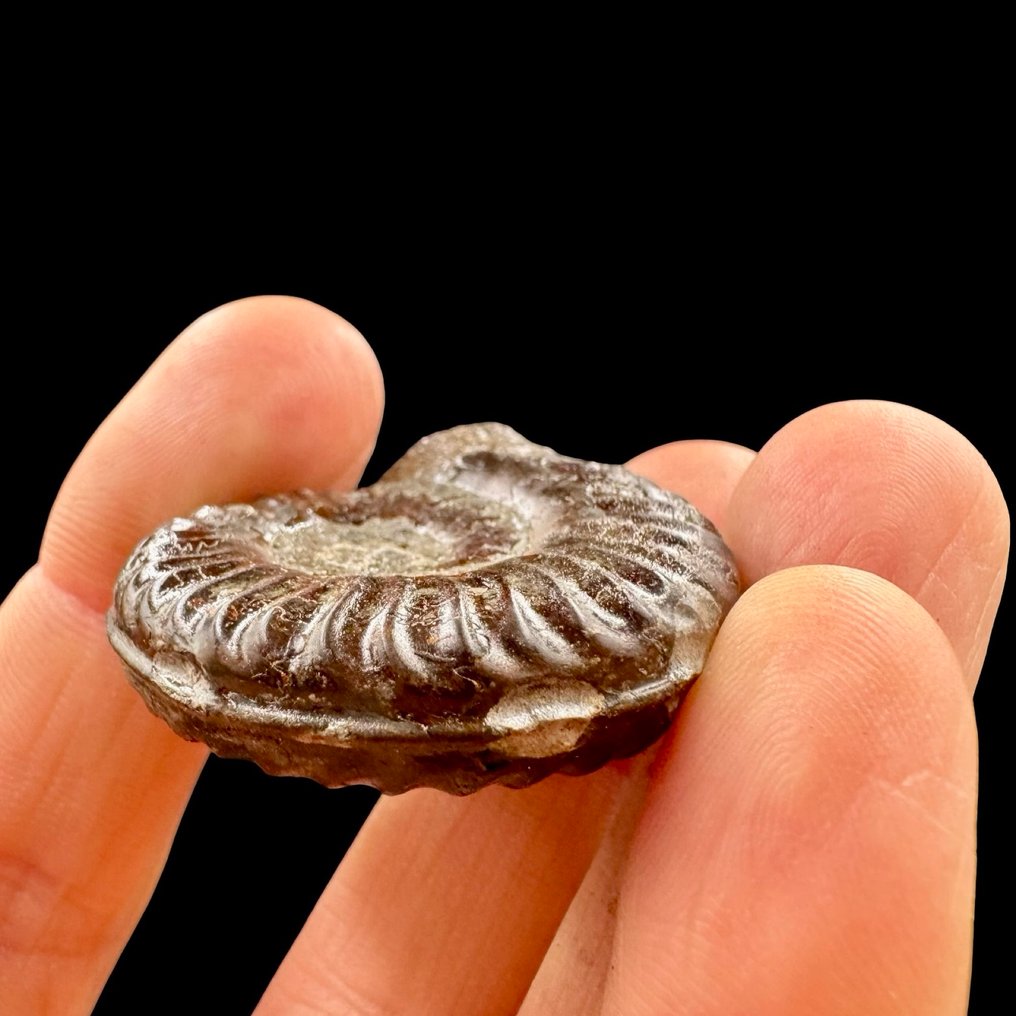
Ammonite - Fossilised shell - Polyptectus discoides - 11 mm - 43 mm (No Reserve Price)



Opens 16:00
Starting bid
€ 1
Add to your favourites to get an alert when the auction starts.

Catawiki Buyer Protection
Your payment’s safe with us until you receive your object.View details
Trustpilot 4.4 | 121899 reviews
Rated Excellent on Trustpilot.
Description from the seller
Exceptional Pyrite Polyptectus discoides Ammonite from Rhone
This remarkable Polyptectus discoides ammonite, naturally preserved in gleaming pyrite, originates from the renowned Rhone region of France, an area celebrated for its beautifully mineralised Jurassic fossils. Dating to the Upper Toarcian Stage of the Early Jurassic period, this specimen formed approximately 180 million years ago under unique geochemical conditions that produced its striking metallic finish. The ammonite shown in the photographs is the exact specimen you will receive. Every fossil we offer is 100% genuine and comes with a Certificate of Authenticity for complete peace of mind.
Geological Origin and Toarcian Setting
During the Upper Toarcian, the Rhone region was submerged beneath a warm epicontinental sea. This marine environment experienced periodic episodes of low oxygen, which played a crucial role in the exceptional preservation of ammonites. Fine clay and silt settled on the seafloor, entombing marine organisms with minimal disturbance. In these calm, oxygen-poor conditions, sulphide-rich waters triggered the replacement of original shell material with iron sulphides. As these minerals stabilised over millions of years, they transformed into golden pyrite, giving fossils from this locality their distinctive brilliance and exceptional definition.
Taxonomy and Scientific Significance
Polyptectus discoides is a member of the family Dactylioceratidae, a prominent ammonite family within the order Ammonitida. This group is renowned for its ornate ribbing and diagnostic shell structures, making it an important genus in Jurassic biostratigraphy. Polyptectus discoides appears consistently in specific Upper Toarcian horizons, allowing researchers to use it as an index fossil for correlating sedimentary layers across Europe. Its presence provides valuable insight into the distribution, evolution, and diversity of ammonites following major environmental shifts early in the Jurassic.
Morphology and Preservation
This specimen exhibits the classic features of Polyptectus discoides: bold, evenly spaced ribs, cleanly defined whorls, and a compact, symmetrical shell structure. The ribs sweep gracefully along the whorl, creating a striking pattern accentuated by the natural pyrite coating. The metallic mineralisation enhances every ridge and groove, allowing fine details such as rib bifurcations and growth lines to be viewed with exceptional clarity. The pyritic replacement not only preserves the original morphology with remarkable fidelity but also elevates the fossil aesthetically, making it both scientifically valuable and visually captivating.
Depositional Environment
The pyritisation process that characterises fossils from the Rhone region is tied directly to the unique depositional environment of the Upper Toarcian seas. Frequent episodes of reduced oxygen created ideal conditions for early mineralisation, preventing decay and promoting rapid chemical alteration. As sediment continued to accumulate, ammonites were sealed within layers of fine-grained mud. Over geological time, these sediments compacted into shale, preserving delicate shell architecture beneath a glittering coat of pyrite. The result is a fossil record that captures both the beauty and the geological complexity of early Jurassic marine settings.
Provenance and Collector Value
Pyritised ammonites from Rhone are considered some of the most visually striking Jurassic fossils available, highly sought after by collectors, educators, and enthusiasts. This Polyptectus discoides specimen stands out for its excellent preservation, strong definition, and natural golden sheen. Its combination of geological rarity, scientific relevance, and aesthetic allure makes it an ideal centrepiece for any fossil collection. Whether for display, study, or gifting, this carefully selected fossil represents an extraordinary piece of natural history and an iconic example of Upper Toarcian pyrite mineralisation.
Size: 43 x 34 x 11mm
Weight: 24g
Exceptional Pyrite Polyptectus discoides Ammonite from Rhone
This remarkable Polyptectus discoides ammonite, naturally preserved in gleaming pyrite, originates from the renowned Rhone region of France, an area celebrated for its beautifully mineralised Jurassic fossils. Dating to the Upper Toarcian Stage of the Early Jurassic period, this specimen formed approximately 180 million years ago under unique geochemical conditions that produced its striking metallic finish. The ammonite shown in the photographs is the exact specimen you will receive. Every fossil we offer is 100% genuine and comes with a Certificate of Authenticity for complete peace of mind.
Geological Origin and Toarcian Setting
During the Upper Toarcian, the Rhone region was submerged beneath a warm epicontinental sea. This marine environment experienced periodic episodes of low oxygen, which played a crucial role in the exceptional preservation of ammonites. Fine clay and silt settled on the seafloor, entombing marine organisms with minimal disturbance. In these calm, oxygen-poor conditions, sulphide-rich waters triggered the replacement of original shell material with iron sulphides. As these minerals stabilised over millions of years, they transformed into golden pyrite, giving fossils from this locality their distinctive brilliance and exceptional definition.
Taxonomy and Scientific Significance
Polyptectus discoides is a member of the family Dactylioceratidae, a prominent ammonite family within the order Ammonitida. This group is renowned for its ornate ribbing and diagnostic shell structures, making it an important genus in Jurassic biostratigraphy. Polyptectus discoides appears consistently in specific Upper Toarcian horizons, allowing researchers to use it as an index fossil for correlating sedimentary layers across Europe. Its presence provides valuable insight into the distribution, evolution, and diversity of ammonites following major environmental shifts early in the Jurassic.
Morphology and Preservation
This specimen exhibits the classic features of Polyptectus discoides: bold, evenly spaced ribs, cleanly defined whorls, and a compact, symmetrical shell structure. The ribs sweep gracefully along the whorl, creating a striking pattern accentuated by the natural pyrite coating. The metallic mineralisation enhances every ridge and groove, allowing fine details such as rib bifurcations and growth lines to be viewed with exceptional clarity. The pyritic replacement not only preserves the original morphology with remarkable fidelity but also elevates the fossil aesthetically, making it both scientifically valuable and visually captivating.
Depositional Environment
The pyritisation process that characterises fossils from the Rhone region is tied directly to the unique depositional environment of the Upper Toarcian seas. Frequent episodes of reduced oxygen created ideal conditions for early mineralisation, preventing decay and promoting rapid chemical alteration. As sediment continued to accumulate, ammonites were sealed within layers of fine-grained mud. Over geological time, these sediments compacted into shale, preserving delicate shell architecture beneath a glittering coat of pyrite. The result is a fossil record that captures both the beauty and the geological complexity of early Jurassic marine settings.
Provenance and Collector Value
Pyritised ammonites from Rhone are considered some of the most visually striking Jurassic fossils available, highly sought after by collectors, educators, and enthusiasts. This Polyptectus discoides specimen stands out for its excellent preservation, strong definition, and natural golden sheen. Its combination of geological rarity, scientific relevance, and aesthetic allure makes it an ideal centrepiece for any fossil collection. Whether for display, study, or gifting, this carefully selected fossil represents an extraordinary piece of natural history and an iconic example of Upper Toarcian pyrite mineralisation.
Size: 43 x 34 x 11mm
Weight: 24g
Details
Number of items
1
Specimen
Ammonite
Scientific name
Polyptectus discoides
Country of Origin
France
Geological Period
Jurassic, Upper (163.5 - 145 million years)
Condition
Natural
Treatment
Conserved
Weight
24 g
Height
11 mm
Width
43 mm
Depth
34 mm
Sold by
