Yayoi Kusama - Yayoi Kusama: I Who Have Arrived in Heaven - 2014


05
days
01
hour
50
minutes
22
seconds
Current bid
€ 72
No reserve price

Expert
Selected by Tom Hopman
Studied history and managed a large online book catalogue with 13 years' antiquarian bookshop experience.
Estimate € 200 - € 250
15 other people are watching this object
 Bidder 2402 Bidder 2402 | €72 | |
|---|---|---|
 Bidder 4672 Bidder 4672 | €65 | |
| Bidder 2402 | €60 | |
Catawiki Buyer Protection
Your payment’s safe with us until you receive your object.View details
Trustpilot 4.4 | 121980 reviews
Rated Excellent on Trustpilot.
Yayoi Kusama: I Who Have Arrived in Heaven, a 2014 first edition hardback from David Zwirner Books, showcases Kusama’s vibrant art in 108 pages.
AI-assisted summary
Description from the seller
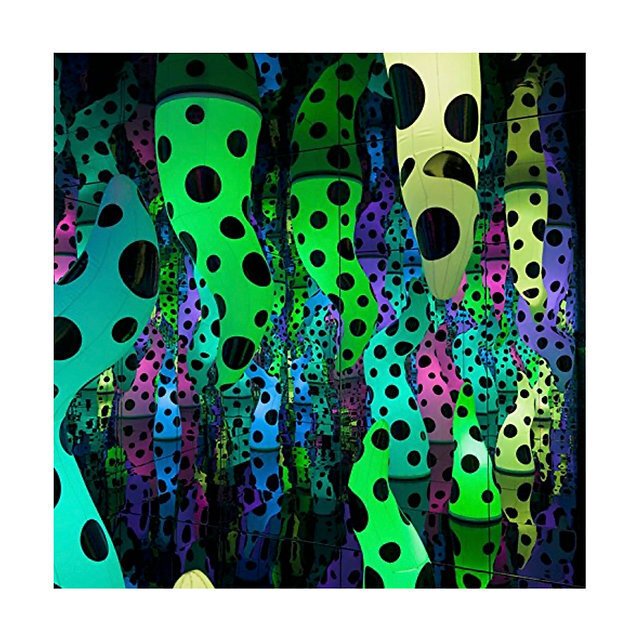
As articulated by art critic and poet Akira Tatehata in his accompanying catalogue essay, “the genius that generates [Kusama’s] fertile artistic world, a paean to life, is driven by obsessive thoughts”―and her extraordinary and highly influential career encompasses works in various mediums that unfailingly conjure both microscopic and macroscopic universes at once. Kusama’s critically acclaimed inaugural 2013 exhibition at David Zwirner in New York presented a selection of the artist’s large-scale square-format acrylic on canvas paintings. This vibrant publication― printed with multiple inks at the highest quality to fully capture the dazzling glow of Kusama’s colorful canvases―opens with a selection of these works, which anchored the gallery presentation. Kusama’s practice recurrently integrates motifs that evoke the cosmic and the primordial, from the ethereal to earthly, and embodies the unique amalgamation of representational and non-representational subject matter. Also featured are stills of the video installation SONG OF A MANHATTAN SUICIDE ADDICT, as well as stunning panoramic views of the exhibition’s two infinity rooms, including INFINITY MIRRORED ROOM – THE SOULS OF MILLIONS OF LIGHT YEARS AWAY, which was hailed by The New York Times as encouraging “the ultimate selfie.” The other room, LOVE IS CALLING, stands out as among the artist’s most immersive environments to date: a darkened, mirrored room illuminated by inflatable, tentacle-like forms covered in her signature polka dots, extending from floor to ceiling and slowly shifting color. Concluding the publication, an original poem written by Kusama herself, After the Battle, I Want to Die at the End of the Universe, contextualizes her practice: “Having always been distressed over how to live,” she writes, “I have kept carrying the banner for pursuit of art.”
Seller's Story
Dartbooks is a bookstore based in Barcelona, Spain, we are specialized in photobooks, rare books, architecture and art. In our catalog you can find both new edition books and the first editions most sought after by collectors from all over the world.
Translated by Google TranslateAs articulated by art critic and poet Akira Tatehata in his accompanying catalogue essay, “the genius that generates [Kusama’s] fertile artistic world, a paean to life, is driven by obsessive thoughts”―and her extraordinary and highly influential career encompasses works in various mediums that unfailingly conjure both microscopic and macroscopic universes at once. Kusama’s critically acclaimed inaugural 2013 exhibition at David Zwirner in New York presented a selection of the artist’s large-scale square-format acrylic on canvas paintings. This vibrant publication― printed with multiple inks at the highest quality to fully capture the dazzling glow of Kusama’s colorful canvases―opens with a selection of these works, which anchored the gallery presentation. Kusama’s practice recurrently integrates motifs that evoke the cosmic and the primordial, from the ethereal to earthly, and embodies the unique amalgamation of representational and non-representational subject matter. Also featured are stills of the video installation SONG OF A MANHATTAN SUICIDE ADDICT, as well as stunning panoramic views of the exhibition’s two infinity rooms, including INFINITY MIRRORED ROOM – THE SOULS OF MILLIONS OF LIGHT YEARS AWAY, which was hailed by The New York Times as encouraging “the ultimate selfie.” The other room, LOVE IS CALLING, stands out as among the artist’s most immersive environments to date: a darkened, mirrored room illuminated by inflatable, tentacle-like forms covered in her signature polka dots, extending from floor to ceiling and slowly shifting color. Concluding the publication, an original poem written by Kusama herself, After the Battle, I Want to Die at the End of the Universe, contextualizes her practice: “Having always been distressed over how to live,” she writes, “I have kept carrying the banner for pursuit of art.”
Seller's Story
Dartbooks is a bookstore based in Barcelona, Spain, we are specialized in photobooks, rare books, architecture and art. In our catalog you can find both new edition books and the first editions most sought after by collectors from all over the world.
Translated by Google TranslateDetails
Number of Books
1
Subject
Art
Book Title
Yayoi Kusama: I Who Have Arrived in Heaven
Author/ Illustrator
Yayoi Kusama
Condition
Very good
Artist
Yayoi Kusama
Publication year oldest item
2014
Height
32.5 cm
Edition
1st Edition
Width
32.5 cm
Language
English
Original language
Yes
Publisher
David Zwirner Books
Binding/ Material
Hardback
Number of pages
108
Style
Pop Art