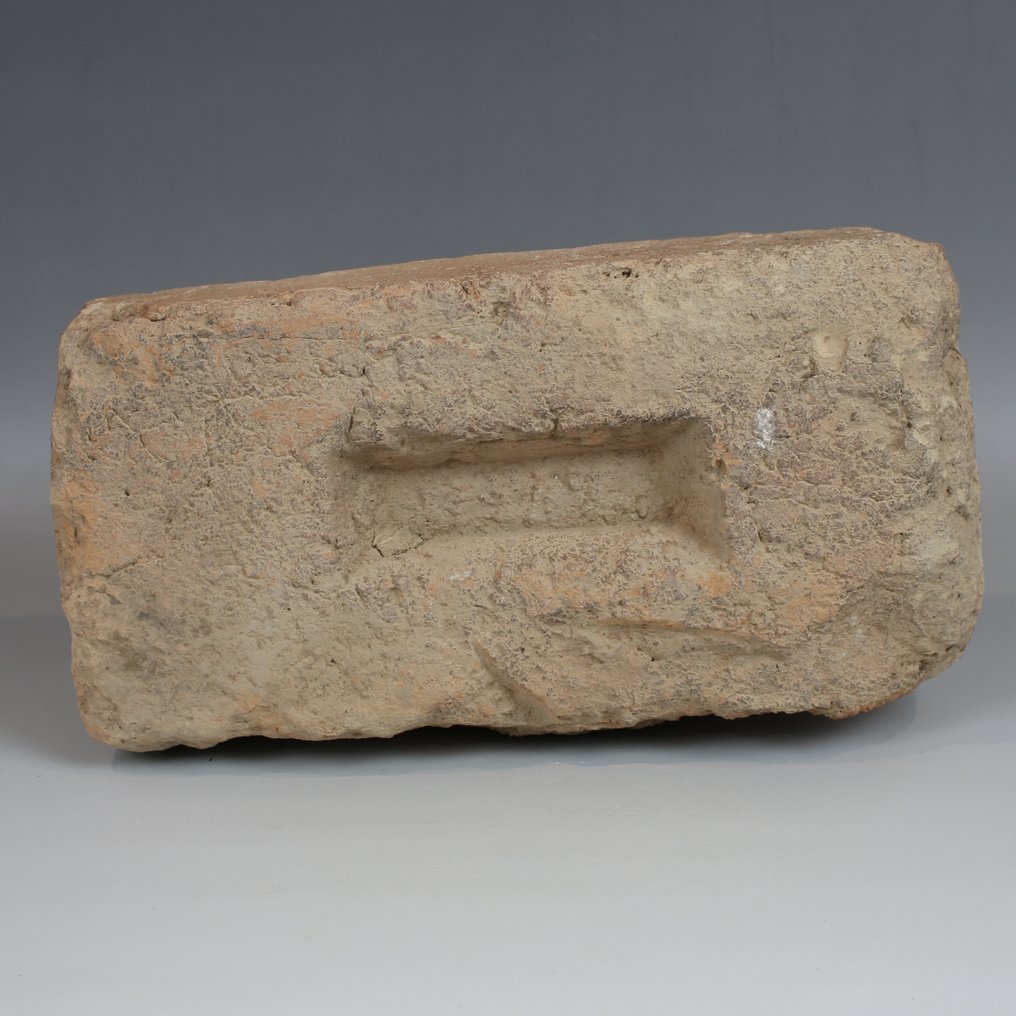
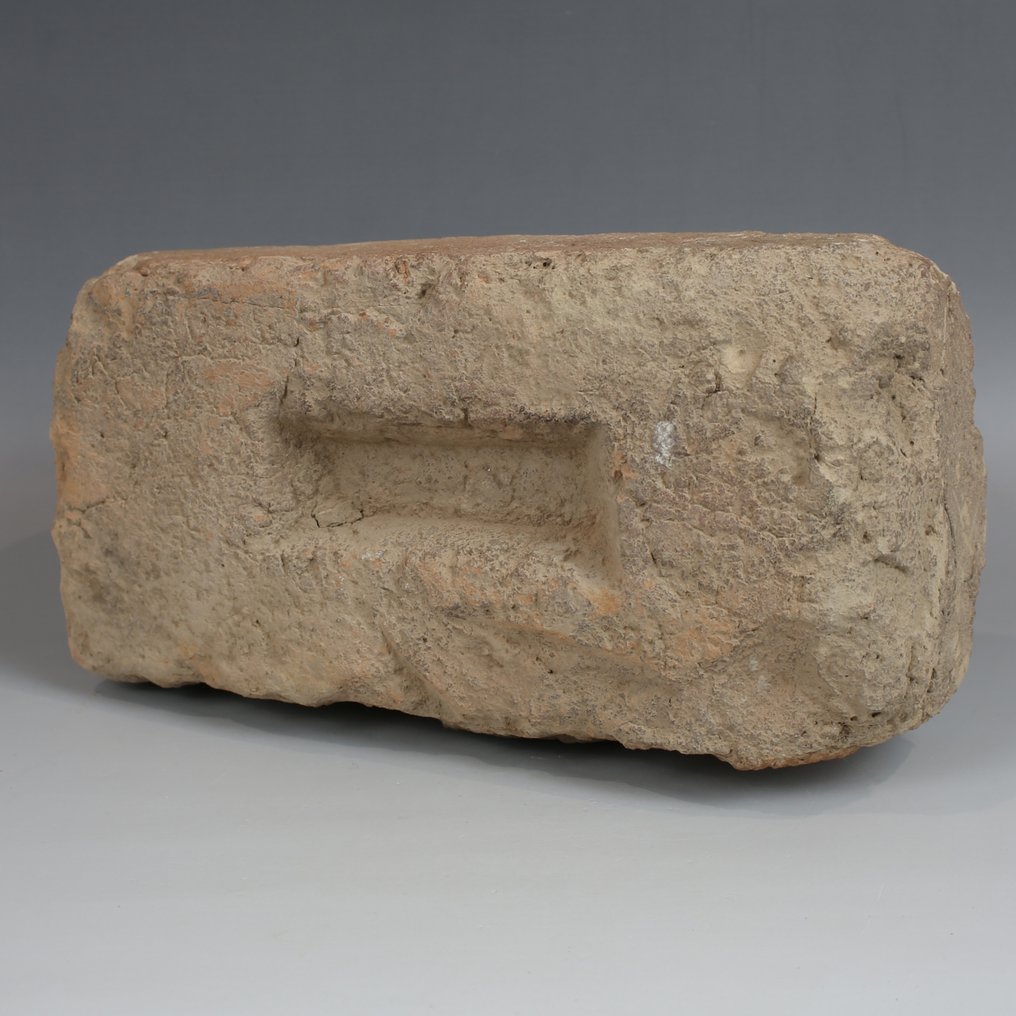
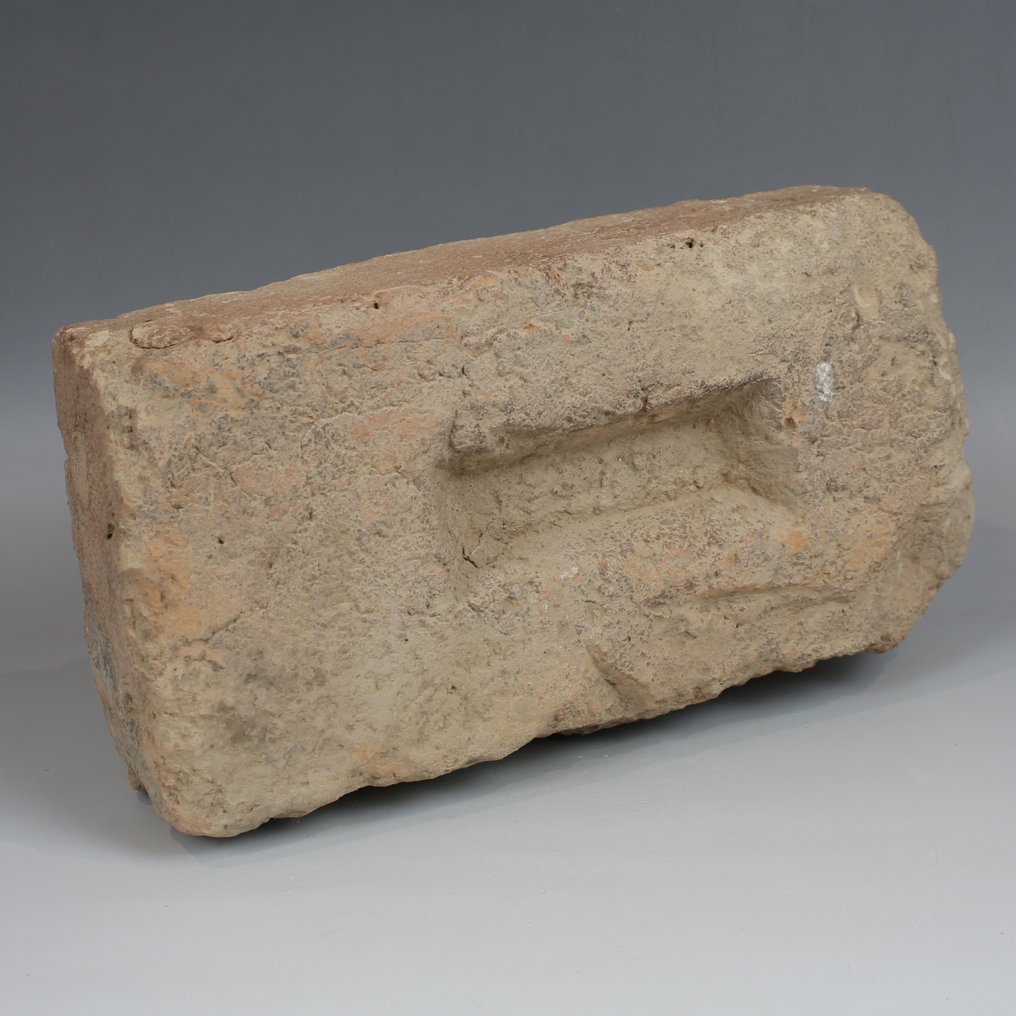
Mesopotamian Pottery Foundation brick (No Reserve Price)


02
days
13
hours
57
minutes
33
seconds
Current bid
€ 4
No reserve price

Expert
Selected by Ruth Garrido Vila
Directed the Ifergan Collection Museum, specialising in Phoenician and Mediterranean archaeology.
Estimate € 330 - € 400
26 other people are watching this object
 Bidder 5288 Bidder 5288 | €4 | |
|---|---|---|
 Bidder 1482 Bidder 1482 | €3 | |
 Bidder 3729 Bidder 3729 | €2 | |
Catawiki Buyer Protection
Your payment’s safe with us until you receive your object.View details
Trustpilot 4.4 | 121798 reviews
Rated Excellent on Trustpilot.
Foundation brick from Mesopotamian culture, dating to the 3rd–2nd millennium B.C., made of pottery; dimensions 120 mm × 225 mm × 72 mm; good condition; acquired in 2025 from a German private collection and comes with a Certificate of Authenticity and EU export license.
AI-assisted summary
Description from the seller
ITEM: Foundation brick
MATERIAL: Pottery
CULTURE: Mesopotamian
PERIOD: 3rd - 2nd millenium B.C
DIMENSIONS: 120 mm x 225 mm x 72 mm
CONDITION: Good condition. Includes scanned document from Artonline (see last picture)
PROVENANCE: Ex German private collection, F.B., acquired in Artonline, France, 2022. Ex German private collection, Lux, 2019.
Comes with Certificate of Authenticity and European Union export license
If you bid outside European Union and win the item, we must request a new export license to your country and the shipment will delay between 3 - 5 weeks.
The Mesopotamian foundation brick, often found in temples and palaces, served as a crucial votive and documentary object in ancient Near Eastern construction practices. Rather than just being a structural component, these special bricks or foundation deposits were ritually placed beneath the structure's foundations—particularly at corners, doorways, or perimeters. This practice was deeply intertwined with the ideology of kingship and the divine world. By embedding inscribed bricks or figures (sometimes in clay boxes) into the earth, the king sought to secure the favor and protection of the gods for the new building and to symbolically anchor the structure to the sacred ground
What distinguishes a Mesopotamian foundation brick is the presence of an inscription, typically written in Sumerian or Akkadian cuneiform. These texts invariably record the name and titles of the ruling monarch, the name of the deity the temple was dedicated to, and details about the building project, such as the construction or restoration of the temple. For example, bricks from the Ur III period often bear the name of King Ur-Nammu, celebrating his building works and his title "King of Sumer and Akkad." These inscriptions functioned as a perpetual record of the king's piety and power, ensuring his name would be remembered by the gods and by future rulers who might uncover the deposit during subsequent building phases.
Foundation bricks were a small, but ritually significant, part of the wider Mesopotamian architectural tradition which relied heavily on brick construction, as stone was scarce in the region. Most buildings used sun-dried mud bricks, which led to a cycle of decay, leveling, and rebuilding on the same site over centuries, resulting in raised mounds known as tells. Foundation deposits—which included both inscribed bricks and figures (like foundation pegs depicting the king carrying a basket of earth)—were integral to this cycle. They connected the ruler, the structure, and the divine mandate, proclaiming that the king was obedient to the gods' architectural wishes, thus guaranteeing the community's prosperity and the building's spiritual integrity.
Seller's Story
Your Antiquarian offers ancient art and ancient coins. Our main objective is to offer the highest quality at the best price respecting and strictly complying with the laws of heritage protection and UNESCO heritage norms. Therefore, all the pieces that are published come from private collections in which the provenance can be checked or international auctions. All our antiquities and coins are accompanied by their Certificate of Authenticity. We have a no quibble 90 day return policy. At Your Antiquarian we are committed to helping disadvantaged groups and for this reason a portion of each purchase is donated to charities to help people in need.
Translated by Google TranslateITEM: Foundation brick
MATERIAL: Pottery
CULTURE: Mesopotamian
PERIOD: 3rd - 2nd millenium B.C
DIMENSIONS: 120 mm x 225 mm x 72 mm
CONDITION: Good condition. Includes scanned document from Artonline (see last picture)
PROVENANCE: Ex German private collection, F.B., acquired in Artonline, France, 2022. Ex German private collection, Lux, 2019.
Comes with Certificate of Authenticity and European Union export license
If you bid outside European Union and win the item, we must request a new export license to your country and the shipment will delay between 3 - 5 weeks.
The Mesopotamian foundation brick, often found in temples and palaces, served as a crucial votive and documentary object in ancient Near Eastern construction practices. Rather than just being a structural component, these special bricks or foundation deposits were ritually placed beneath the structure's foundations—particularly at corners, doorways, or perimeters. This practice was deeply intertwined with the ideology of kingship and the divine world. By embedding inscribed bricks or figures (sometimes in clay boxes) into the earth, the king sought to secure the favor and protection of the gods for the new building and to symbolically anchor the structure to the sacred ground
What distinguishes a Mesopotamian foundation brick is the presence of an inscription, typically written in Sumerian or Akkadian cuneiform. These texts invariably record the name and titles of the ruling monarch, the name of the deity the temple was dedicated to, and details about the building project, such as the construction or restoration of the temple. For example, bricks from the Ur III period often bear the name of King Ur-Nammu, celebrating his building works and his title "King of Sumer and Akkad." These inscriptions functioned as a perpetual record of the king's piety and power, ensuring his name would be remembered by the gods and by future rulers who might uncover the deposit during subsequent building phases.
Foundation bricks were a small, but ritually significant, part of the wider Mesopotamian architectural tradition which relied heavily on brick construction, as stone was scarce in the region. Most buildings used sun-dried mud bricks, which led to a cycle of decay, leveling, and rebuilding on the same site over centuries, resulting in raised mounds known as tells. Foundation deposits—which included both inscribed bricks and figures (like foundation pegs depicting the king carrying a basket of earth)—were integral to this cycle. They connected the ruler, the structure, and the divine mandate, proclaiming that the king was obedient to the gods' architectural wishes, thus guaranteeing the community's prosperity and the building's spiritual integrity.
Seller's Story
Your Antiquarian offers ancient art and ancient coins. Our main objective is to offer the highest quality at the best price respecting and strictly complying with the laws of heritage protection and UNESCO heritage norms. Therefore, all the pieces that are published come from private collections in which the provenance can be checked or international auctions. All our antiquities and coins are accompanied by their Certificate of Authenticity. We have a no quibble 90 day return policy. At Your Antiquarian we are committed to helping disadvantaged groups and for this reason a portion of each purchase is donated to charities to help people in need.
Translated by Google TranslateDetails
Culture
Mesopotamian
Century/ Timeframe
3rd - 2nd millenium B.C
Name of object
Foundation brick
Acquired from
Private collection
Year acquired
2025
Material
Pottery
Country acquired from
Germany
Condition
Good
Previous owner acquired from
Gallery / Antique dealer
Previous owner - year acquired
2022
Previous owner - country acquired from
France
I verify that I have obtained this object legally and that I am allowed to sell it
Yes
Sold by
Disclaimer
The seller was informed by Catawiki about documentation requirements and guarantees the following: - the object was legally obtained, - the seller has the right to sell and/or export the object, as relevant, - the seller will provide the necessary provenance information and arrange required documentation and permits/licenses, as applicable and as per local laws, - the seller will notify the buyer of any delays in obtaining permits/licenses. By bidding, you acknowledge that import documentation may be required depending on your country of residence and that obtaining permits/licenses may cause delays in the delivery of your object.
The seller was informed by Catawiki about documentation requirements and guarantees the following: - the object was legally obtained, - the seller has the right to sell and/or export the object, as relevant, - the seller will provide the necessary provenance information and arrange required documentation and permits/licenses, as applicable and as per local laws, - the seller will notify the buyer of any delays in obtaining permits/licenses. By bidding, you acknowledge that import documentation may be required depending on your country of residence and that obtaining permits/licenses may cause delays in the delivery of your object.
