Ancient Roman Iridescent Glass Lachrymatory (Tear Vial) - 14.5 mm (No Reserve Price)


02
days
13
hours
48
minutes
33
seconds
Current bid
€ 7
No reserve price

Expert
Selected by Peter Reynaers
Has nearly 30 years’ experience and moderated multiple online art research groups.
Estimate € 230 - € 280
24 other people are watching this object
 Bidder 0459 Bidder 0459 | €7 | |
|---|---|---|
| Bidder 4071 | €6 | |
 Bidder 4652 Bidder 4652 | €4 | |
Catawiki Buyer Protection
Your payment’s safe with us until you receive your object.View details
Trustpilot 4.4 | 121798 reviews
Rated Excellent on Trustpilot.
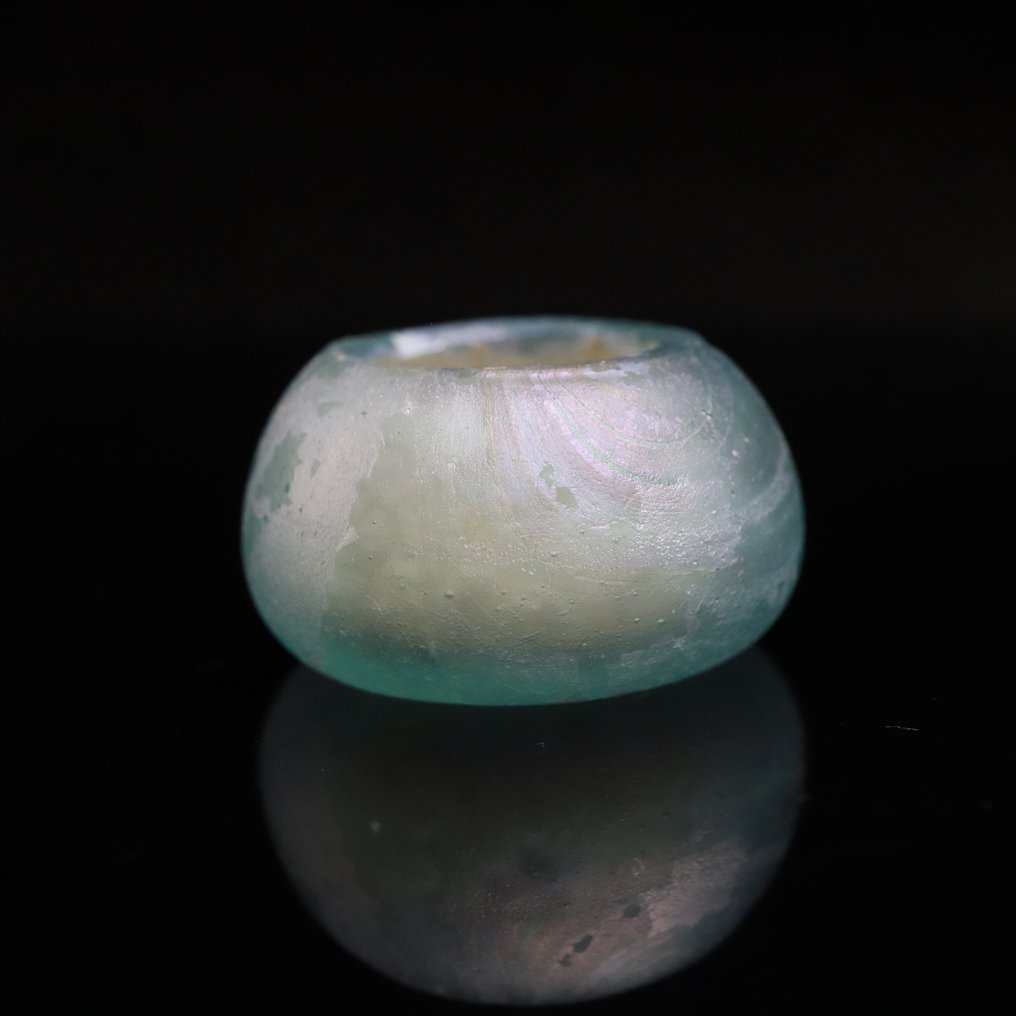
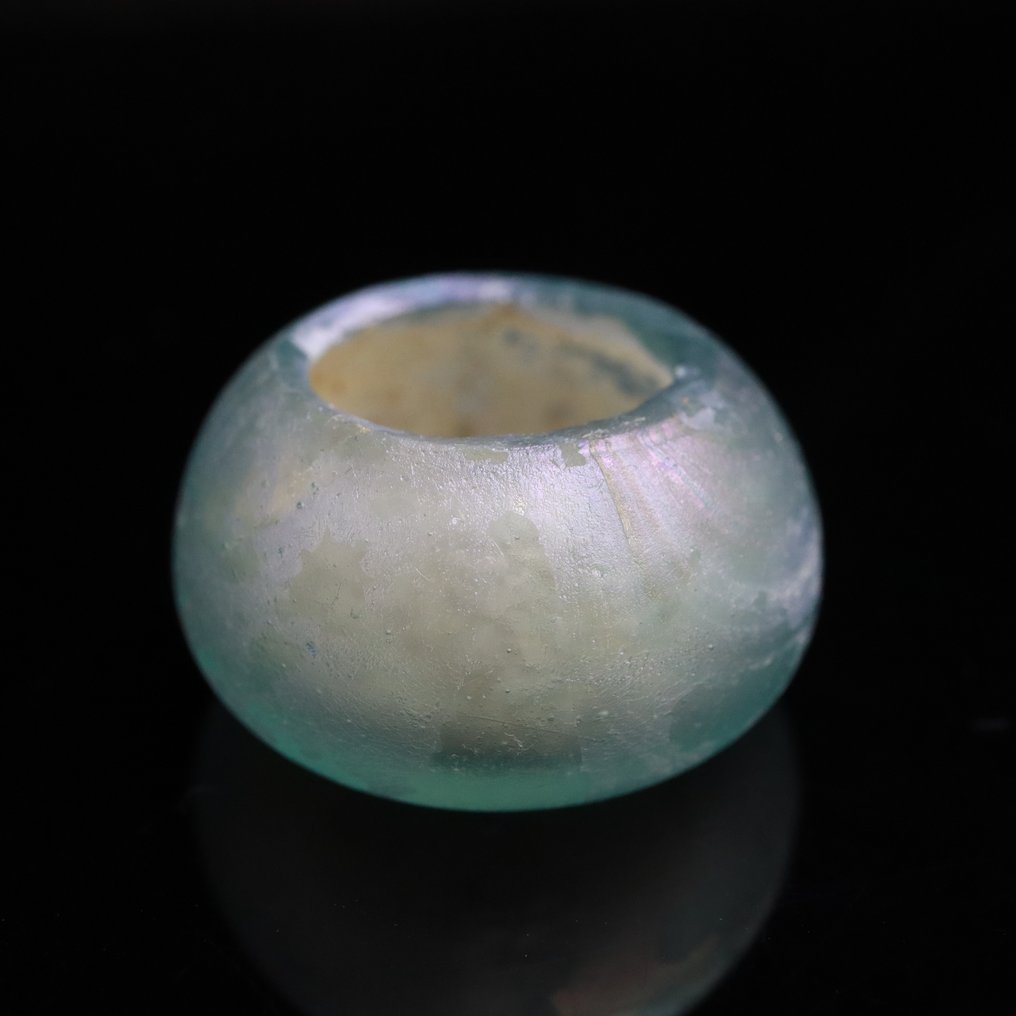
An Ancient Roman lachrymatory in iridescent glass, 1st–4th century AD, in excellent condition with a striking weathered patina.
AI-assisted summary
Description from the seller
Ancient Roman Iridescent Glass Lachrymatory (Tear Vial), 1st–4th Century AD - Top Condition
Note: Sorry, no shipping outside Europe.
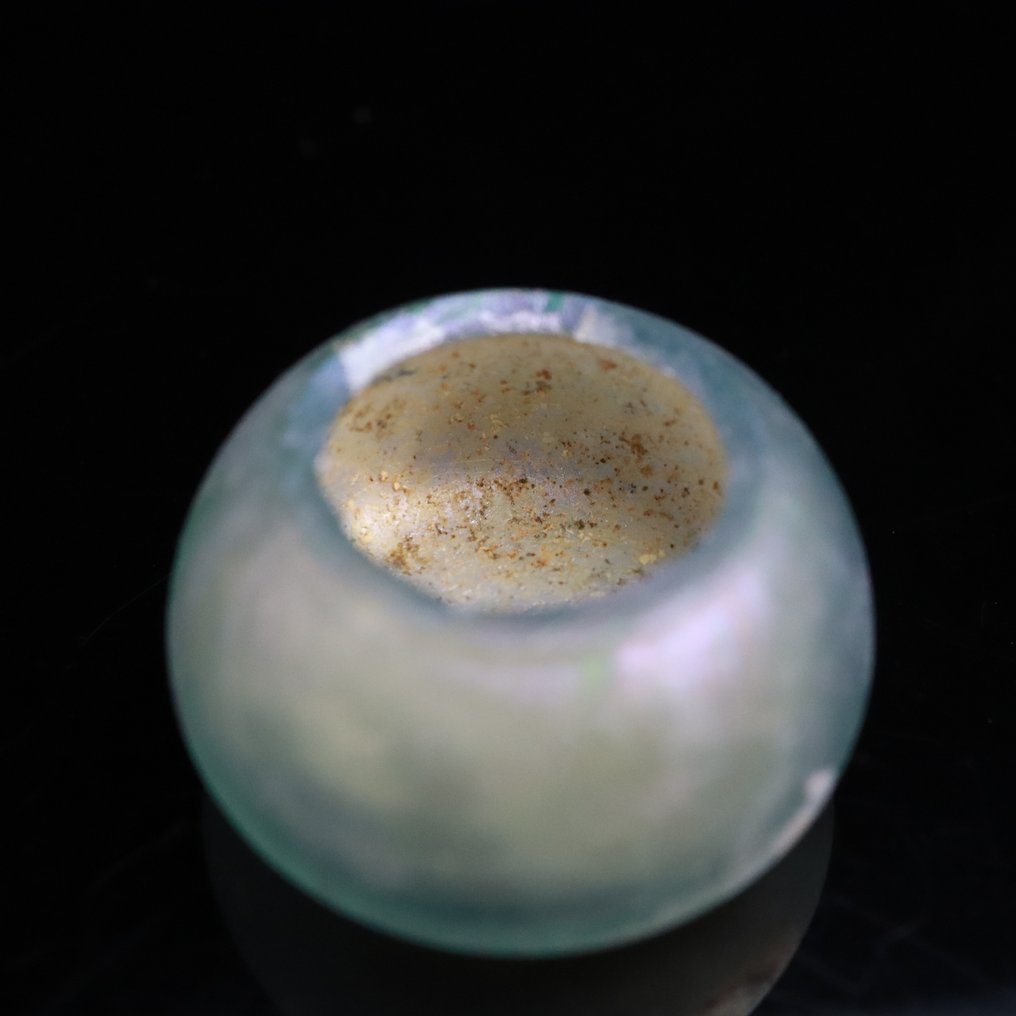
This exquisite ancient Roman glass lachrymatory, often romantically known as a "tear vial," dates to the 1st–4th century AD and features a compact, bulbous form with a wide mouth opening for easy access. Crafted from translucent blue-green glass, it exhibits a striking iridescent sheen—professionally termed "iridescence" or "weathering patina"—that produces rainbow-like colors under light, resulting from the natural delamination and oxidation of the glass surface over centuries of burial.
Symbolism & Historical Significance:
Lachrymatory Vial: These small vessels were primarily used in Roman daily life to hold perfumes, oils, unguents, or medicinal essences, rather than tears as later Victorian myths suggested. The iridescence, caused by the breakdown of silica layers in the glass due to environmental exposure (such as moisture and soil chemicals), creates a prismatic effect that enhances the object's ethereal beauty.
In Roman culture, such vials symbolized personal care, beauty rituals, and sometimes mourning or funerary practices, where they were placed in tombs as grave goods to accompany the deceased into the afterlife.
The shimmering surface, while a product of aging, mirrors the advanced Roman glassmaking techniques, including blowing and molding, which allowed for mass production of delicate items across the empire.
Connection to Ancient Rome:
Produced during the height of the Roman Empire, these lachrymatories were common in households, baths, and burial contexts from Britain to the Near East. The iridescent effect, unique to ancient glass, was not intentional but became a hallmark of authenticity, with similar examples excavated from sites like Pompeii and Roman cemeteries in the Levant, reflecting the widespread trade and innovation in glass technology influenced by earlier Hellenistic traditions.
Condition:
Intact with a beautiful iridescent patina covering the surface, and no cracks or repairs; the glass retains its structural integrity, making it a well-preserved example of Roman artistry.
Dimensions:
Outer Diameter: 26.5 mm
Height: 14.5 mm
Weight: 7.58 g
Provenance:
Previously part of a private European collection, established in the 1980s. A provenance document and declaration of legal origin are available in PDF format upon request.
Note: Please examine the provided images for a detailed impression of the vial. The photos are highly magnified to showcase the iridescent details the best way possible; otherwise, the piece is even more beautiful and attractive in person.
In top condition making it relevant for both collectors and special Christmas gift seekers
Seller's Story
As a second-generation history enthusiast and antique art collector, I have a deep passion for historical artifacts—from prehistoric civilizations to the Medieval era. I love connecting with fellow history lovers and sharing unique, carefully selected pieces. My goal is to find new homes for remarkable items while continuing to expand my own collection. Feel free to explore my selection—I hope you find something special!
Ancient Roman Iridescent Glass Lachrymatory (Tear Vial), 1st–4th Century AD - Top Condition
Note: Sorry, no shipping outside Europe.
This exquisite ancient Roman glass lachrymatory, often romantically known as a "tear vial," dates to the 1st–4th century AD and features a compact, bulbous form with a wide mouth opening for easy access. Crafted from translucent blue-green glass, it exhibits a striking iridescent sheen—professionally termed "iridescence" or "weathering patina"—that produces rainbow-like colors under light, resulting from the natural delamination and oxidation of the glass surface over centuries of burial.
Symbolism & Historical Significance:
Lachrymatory Vial: These small vessels were primarily used in Roman daily life to hold perfumes, oils, unguents, or medicinal essences, rather than tears as later Victorian myths suggested. The iridescence, caused by the breakdown of silica layers in the glass due to environmental exposure (such as moisture and soil chemicals), creates a prismatic effect that enhances the object's ethereal beauty.
In Roman culture, such vials symbolized personal care, beauty rituals, and sometimes mourning or funerary practices, where they were placed in tombs as grave goods to accompany the deceased into the afterlife.
The shimmering surface, while a product of aging, mirrors the advanced Roman glassmaking techniques, including blowing and molding, which allowed for mass production of delicate items across the empire.
Connection to Ancient Rome:
Produced during the height of the Roman Empire, these lachrymatories were common in households, baths, and burial contexts from Britain to the Near East. The iridescent effect, unique to ancient glass, was not intentional but became a hallmark of authenticity, with similar examples excavated from sites like Pompeii and Roman cemeteries in the Levant, reflecting the widespread trade and innovation in glass technology influenced by earlier Hellenistic traditions.
Condition:
Intact with a beautiful iridescent patina covering the surface, and no cracks or repairs; the glass retains its structural integrity, making it a well-preserved example of Roman artistry.
Dimensions:
Outer Diameter: 26.5 mm
Height: 14.5 mm
Weight: 7.58 g
Provenance:
Previously part of a private European collection, established in the 1980s. A provenance document and declaration of legal origin are available in PDF format upon request.
Note: Please examine the provided images for a detailed impression of the vial. The photos are highly magnified to showcase the iridescent details the best way possible; otherwise, the piece is even more beautiful and attractive in person.
In top condition making it relevant for both collectors and special Christmas gift seekers
Seller's Story
As a second-generation history enthusiast and antique art collector, I have a deep passion for historical artifacts—from prehistoric civilizations to the Medieval era. I love connecting with fellow history lovers and sharing unique, carefully selected pieces. My goal is to find new homes for remarkable items while continuing to expand my own collection. Feel free to explore my selection—I hope you find something special!
Details
Culture
Ancient Roman
Century/ Timeframe
1st–4th Century AD
Name of object
Lachrymatory (Tear Vial)
Acquired from
Private collection
Year acquired
2024
Material
Iridescent Glass
Country acquired from
Denmark
Condition
Excellent
Previous owner acquired from
Inherited
Height
14.5 mm
Previous owner - year acquired
1980
Width
26.5 mm
Previous owner - country acquired from
Europe
I verify that I have obtained this object legally and that I am allowed to sell it
Yes
Sold by
Disclaimer
The seller was informed by Catawiki about documentation requirements and guarantees the following: - the object was legally obtained, - the seller has the right to sell and/or export the object, as relevant, - the seller will provide the necessary provenance information and arrange required documentation and permits/licenses, as applicable and as per local laws, - the seller will notify the buyer of any delays in obtaining permits/licenses. By bidding, you acknowledge that import documentation may be required depending on your country of residence and that obtaining permits/licenses may cause delays in the delivery of your object.
The seller was informed by Catawiki about documentation requirements and guarantees the following: - the object was legally obtained, - the seller has the right to sell and/or export the object, as relevant, - the seller will provide the necessary provenance information and arrange required documentation and permits/licenses, as applicable and as per local laws, - the seller will notify the buyer of any delays in obtaining permits/licenses. By bidding, you acknowledge that import documentation may be required depending on your country of residence and that obtaining permits/licenses may cause delays in the delivery of your object.
