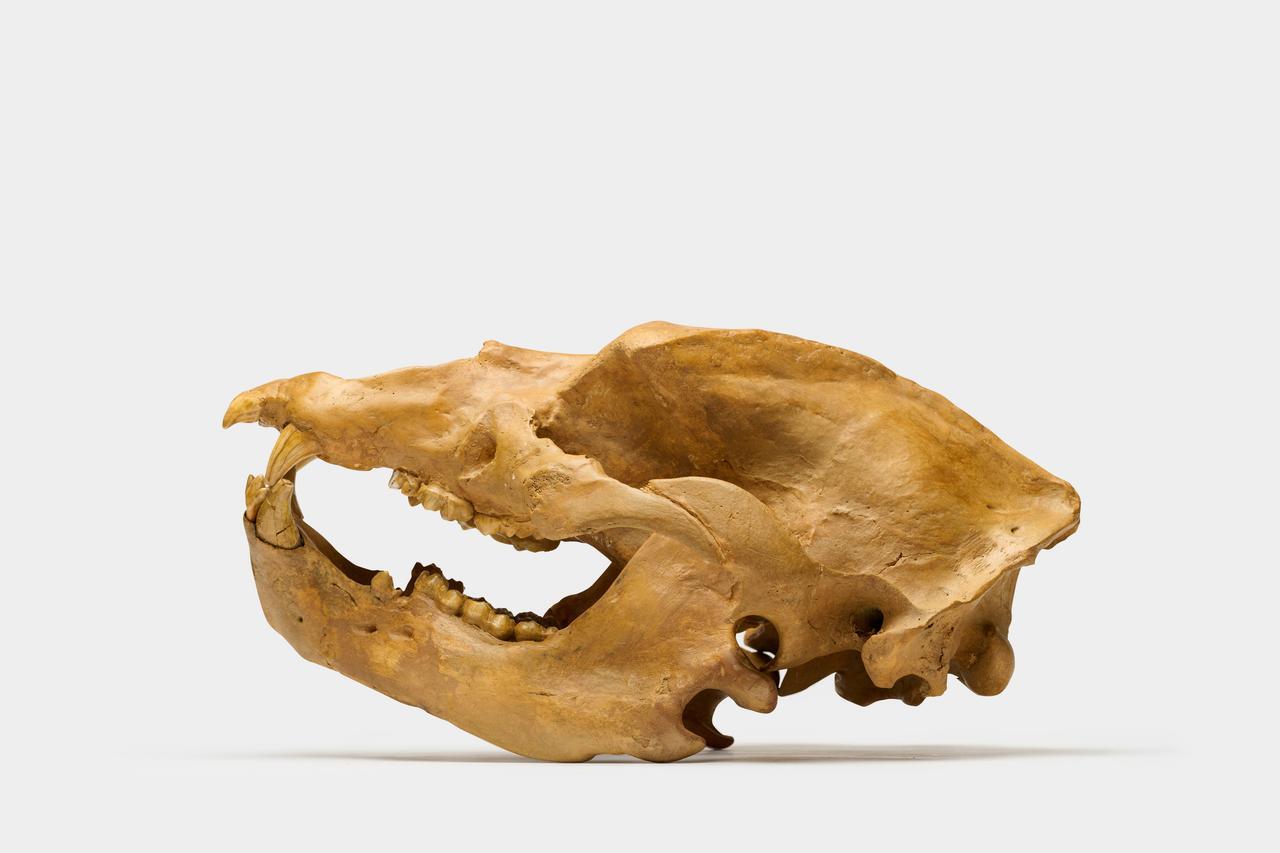
Fossil teeth - Basilosaurus - 14 cm - 9 cm


03
days
02
hours
28
minutes
18
seconds

11 other people are watching this object
 Bidder 6458 Bidder 6458 | €2 | |
|---|---|---|
 Bidder 5389 Bidder 5389 | €1 |
Catawiki Buyer Protection
Your payment’s safe with us until you receive your object.View details
Trustpilot 4.4 | 121899 reviews
Rated Excellent on Trustpilot.
Basilosaurus specimen: an authentic fossil fragment of a jaw with an original molar from the Samlat Formation in southwest Morocco, dating to the Paleogene Eocene about 40 million years ago; conservatively restored without altering authenticity, in natural condition.
AI-assisted summary
Description from the seller
Authentic fossil of Basilosaurus – Fragment of jaw with a molar
Origin: Samlat Formation, southwest of Morocco.
Age: Eocene (about 40 million years ago)
Dimensions: 14 × 9 × 3 cm
Exceptional fossil fragment belonging to a Basilosaurus, an ancient whale from the Eocene, with a portion of jawbone that retains a clearly visible original molar.
Basilosaurids could reach gigantic sizes, up to 18 meters (60 feet) in length, and fed on fish, sharks, and seabirds. Their dentition was highly specialized: the front teeth, pointed, were used to capture and hold prey, while the molars, characterized by a unique morphology and double roots, were optimized for chewing and grinding.
The find comes from the Samlat Formation in southwestern Morocco, an area known for its rich deposits of Eocene marine fossils. It underwent a conservation restoration that ensured stability and readability without altering its authenticity.
A fossil with significant visual and scientific impact, rare for its completeness and state of preservation, perfect for enriching a paleontological collection or a cabinet of curiosities.
Authentic fossil of Basilosaurus – Fragment of jaw with a molar
Origin: Samlat Formation, southwest of Morocco.
Age: Eocene (about 40 million years ago)
Dimensions: 14 × 9 × 3 cm
Exceptional fossil fragment belonging to a Basilosaurus, an ancient whale from the Eocene, with a portion of jawbone that retains a clearly visible original molar.
Basilosaurids could reach gigantic sizes, up to 18 meters (60 feet) in length, and fed on fish, sharks, and seabirds. Their dentition was highly specialized: the front teeth, pointed, were used to capture and hold prey, while the molars, characterized by a unique morphology and double roots, were optimized for chewing and grinding.
The find comes from the Samlat Formation in southwestern Morocco, an area known for its rich deposits of Eocene marine fossils. It underwent a conservation restoration that ensured stability and readability without altering its authenticity.
A fossil with significant visual and scientific impact, rare for its completeness and state of preservation, perfect for enriching a paleontological collection or a cabinet of curiosities.
Details
Number of items
1
Scientific name
Basilosaurus
Country of Origin
Africa
Geological Period
Paleogene, Eocene (56 - 33.9 million years)
Condition
Natural
Weight
1 kg
Height
14 cm
Width
9 cm
Depth
3 cm
Sold by