Sugar caster - Asklepios met Esculaap - .934 silver - 18th-century sugar cup


02
days
15
hours
07
minutes
02
seconds
Current bid
€ 70
Reserve price not met

Expert
Selected by Jeroen Zoetmulder
Has over 30 years of experience in archaeology and is an appraiser specialising in archaeological objects.
Estimate € 170 - € 200
13 other people are watching this object
 Bidder 2304 Bidder 2304 | €70 | |
|---|---|---|
| Bidder 2304 | €65 | |
| Bidder 2304 | €60 | |
Catawiki Buyer Protection
Your payment’s safe with us until you receive your object.View details
Trustpilot 4.4 | 122115 reviews
Rated Excellent on Trustpilot.
Description from the seller
Origin: Netherlands
Period: Mid/late 18th century
Maker: Unapproved
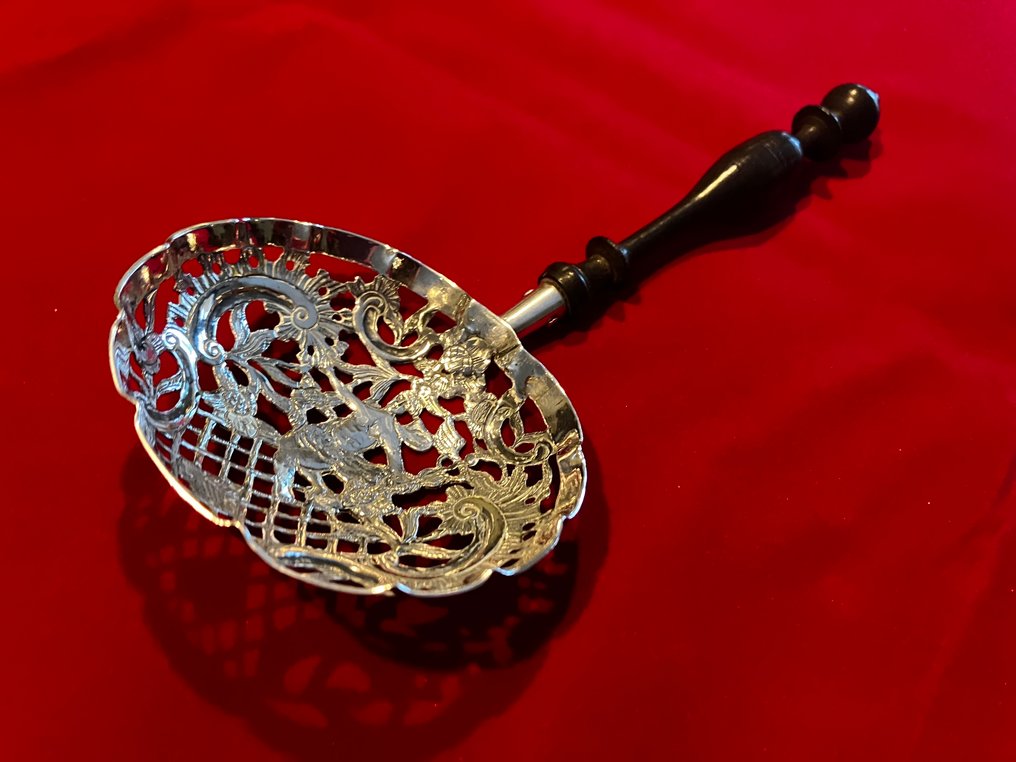
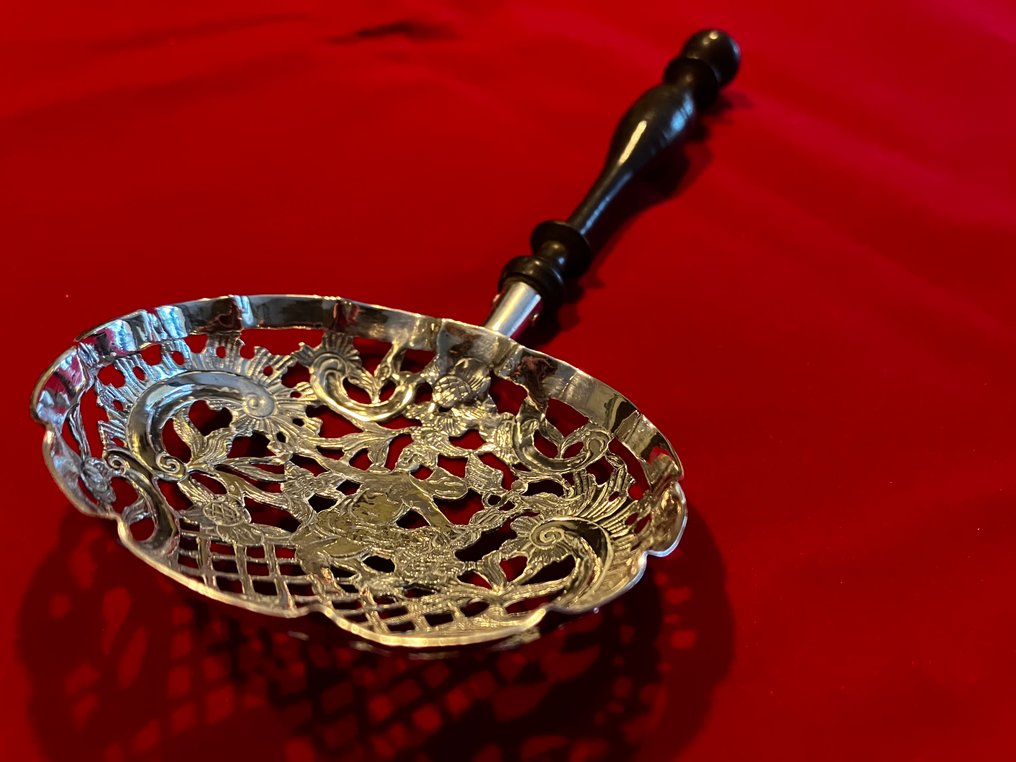
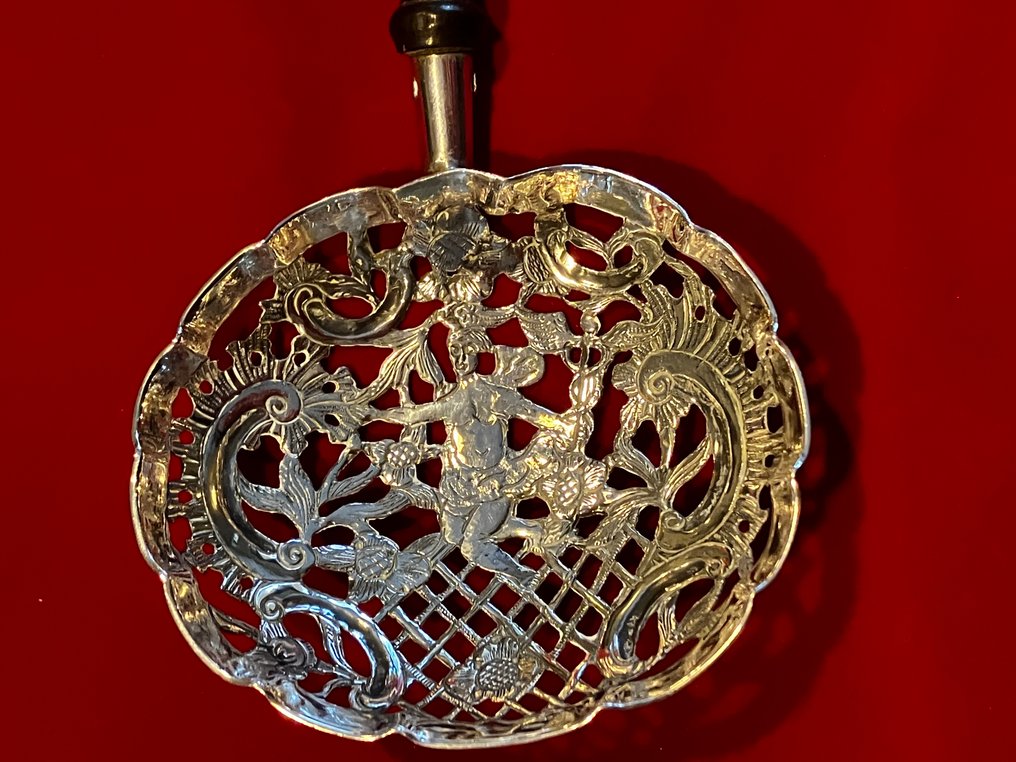
An 18th century sugar spoon with an ebony handle.
This piece of craftsmanship is in excellent condition and is a true spectacle to behold. The image on the scoop depicts the Greek god Asclepius with his Aesculapius, the symbol of medicine. Depictions of such scenes were given as gifts or used for special occasions. Furthermore, the scoop is richly decorated with floral motifs and ornaments. This example may have been given as a gift to a doctor completing his training at the time, or for another special occasion. Gifts were often not hallmarked, as the objects were accepted directly by the customer, eliminating the need for a visit to the hallmarking office, saving the silversmith money.
Article written by Mr. B.W.G. Wittewaall, author of the Dutch small silver and scoop book, in 1983.
The sugar-sprinkle spoon was a common utensil among the bourgeoisie throughout the Netherlands during the eighteenth and nineteenth centuries. This piece of silver was a must-have on the table, especially on festive occasions. It's difficult to describe the shape of the sugar-sprinkle spoon, as there are many different types. However, they all share a common feature: the bowl is much larger in relation to the handle than a regular spoon. The larger bowl is necessary to move the sugar back and forth while sprinkling, preventing it from spilling over the edge. If the handle is curved into a hook, it is usually no longer than the largest diameter of the bowl. If the sugar-sprinkle spoon has a regular handle, it is usually slightly curved. Straight ebony handles, often beautifully profiled, also exist.
Origin: Netherlands
Period: Mid/late 18th century
Maker: Unapproved
An 18th century sugar spoon with an ebony handle.
This piece of craftsmanship is in excellent condition and is a true spectacle to behold. The image on the scoop depicts the Greek god Asclepius with his Aesculapius, the symbol of medicine. Depictions of such scenes were given as gifts or used for special occasions. Furthermore, the scoop is richly decorated with floral motifs and ornaments. This example may have been given as a gift to a doctor completing his training at the time, or for another special occasion. Gifts were often not hallmarked, as the objects were accepted directly by the customer, eliminating the need for a visit to the hallmarking office, saving the silversmith money.
Article written by Mr. B.W.G. Wittewaall, author of the Dutch small silver and scoop book, in 1983.
The sugar-sprinkle spoon was a common utensil among the bourgeoisie throughout the Netherlands during the eighteenth and nineteenth centuries. This piece of silver was a must-have on the table, especially on festive occasions. It's difficult to describe the shape of the sugar-sprinkle spoon, as there are many different types. However, they all share a common feature: the bowl is much larger in relation to the handle than a regular spoon. The larger bowl is necessary to move the sugar back and forth while sprinkling, preventing it from spilling over the edge. If the handle is curved into a hook, it is usually no longer than the largest diameter of the bowl. If the sugar-sprinkle spoon has a regular handle, it is usually slightly curved. Straight ebony handles, often beautifully profiled, also exist.
Details
Era
1400-1900
Gross weight
26.12 g
Silver type
.934 silver
Title additional information
18th-century sugar cup
No. of items
1
Country of Origin
Netherlands
Material
ebony, Silver
Model
Asklepios met Esculaap
Style
Antique inspired
Condition
Excellent condition: barely used with minimal signs of wear
Height
3 cm
Width
8 cm
Depth
18 cm
Estimated period
1750-1800
Sold by