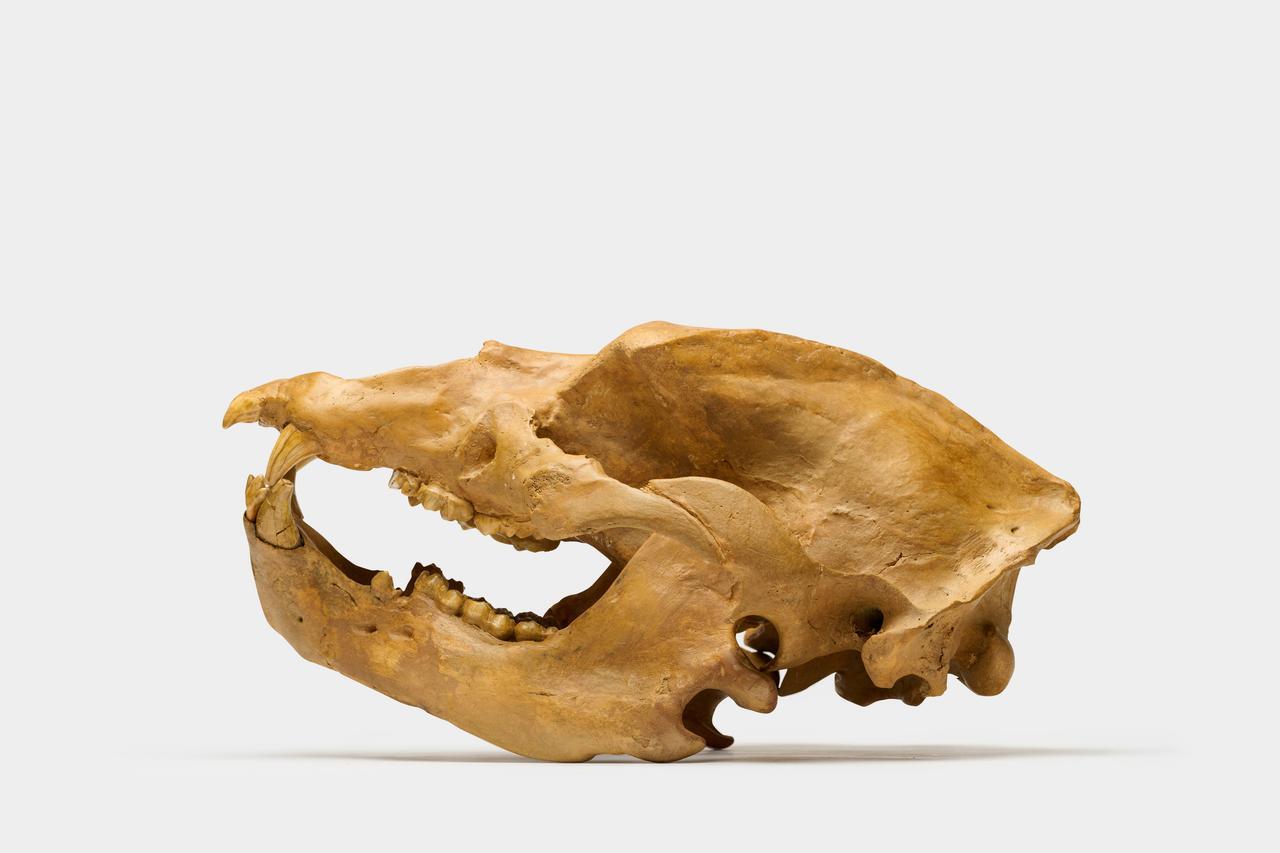
Large Trilobite Association - Fossil skeleton - Asaphus sp. - 66 cm - 6 cm


01
day
20
hours
46
minutes
26
seconds

23 other people are watching this object
 Bidder 8034 Bidder 8034 | €100 | |
|---|---|---|
 Bidder 9861 Bidder 9861 | €6 | |
 Bidder 1913 Bidder 1913 | €1 |
Catawiki Buyer Protection
Your payment’s safe with us until you receive your object.View details
Trustpilot 4.4 | 121899 reviews
Rated Excellent on Trustpilot.
Asaphus sp., a large trilobite association specimen from the Ordovician period, in natural condition, from Morocco.
AI-assisted summary
Description from the seller
A world-class matrix plate... About 40 examples on a matrix are not easy to find and belong in a museum. At home on the wall, you have something that is nearly 500 million years old and was one of the first animals in the world, long before the dinosaurs existed.
Asaphus is a genus of extinct trilobites from the Ordovician (around 500 to 450 million years ago), which lived in the seas of the then-continent Baltica. Fossils of these trilobites are mainly found in eastern Europe. The genus Asaphus belongs to the order Asaphida. Trilobites of this genus are typically between three and eight centimeters long, with a smooth cephalon that is clearly separated from the glabella. The segments of the pygidium are fused in this genus. The species within the genus Asaphus were benthic predators or detritivores.
In the Ordovician, a shallow inland sea was located in the eastern part of Baltica, where a trilobite fauna with a high diversity for that time developed. There are two independent lineages in which the eyes, on increasingly longer stalks called peduncula, evolved. It is likely that these species burrowed into the seabed, with only their eyes protruding above the sand. This development was probably a response to selective pressure caused by an increasing number of predators or due to greater turbulence of the seawater.
A world-class matrix plate... About 40 examples on a matrix are not easy to find and belong in a museum. At home on the wall, you have something that is nearly 500 million years old and was one of the first animals in the world, long before the dinosaurs existed.
Asaphus is a genus of extinct trilobites from the Ordovician (around 500 to 450 million years ago), which lived in the seas of the then-continent Baltica. Fossils of these trilobites are mainly found in eastern Europe. The genus Asaphus belongs to the order Asaphida. Trilobites of this genus are typically between three and eight centimeters long, with a smooth cephalon that is clearly separated from the glabella. The segments of the pygidium are fused in this genus. The species within the genus Asaphus were benthic predators or detritivores.
In the Ordovician, a shallow inland sea was located in the eastern part of Baltica, where a trilobite fauna with a high diversity for that time developed. There are two independent lineages in which the eyes, on increasingly longer stalks called peduncula, evolved. It is likely that these species burrowed into the seabed, with only their eyes protruding above the sand. This development was probably a response to selective pressure caused by an increasing number of predators or due to greater turbulence of the seawater.
Details
Number of items
1
Specimen
Large Trilobite Association
Scientific name
Asaphus sp.
Country of Origin
Morocco
Geological Period
Ordovician (485.4 - 443.8 million years)
Condition
Natural
Weight
50 kg
Height
66 cm
Width
6 cm
Depth
80 cm
Sold by