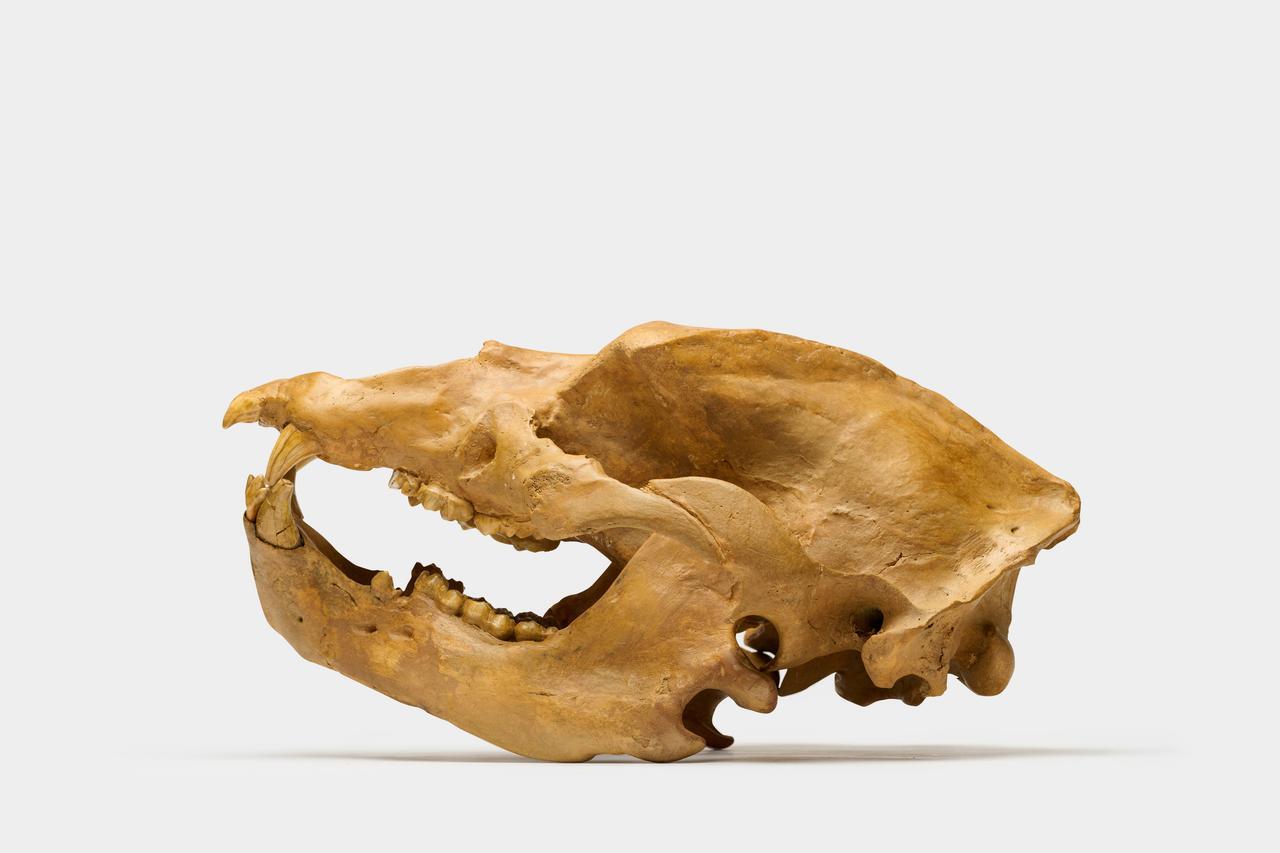
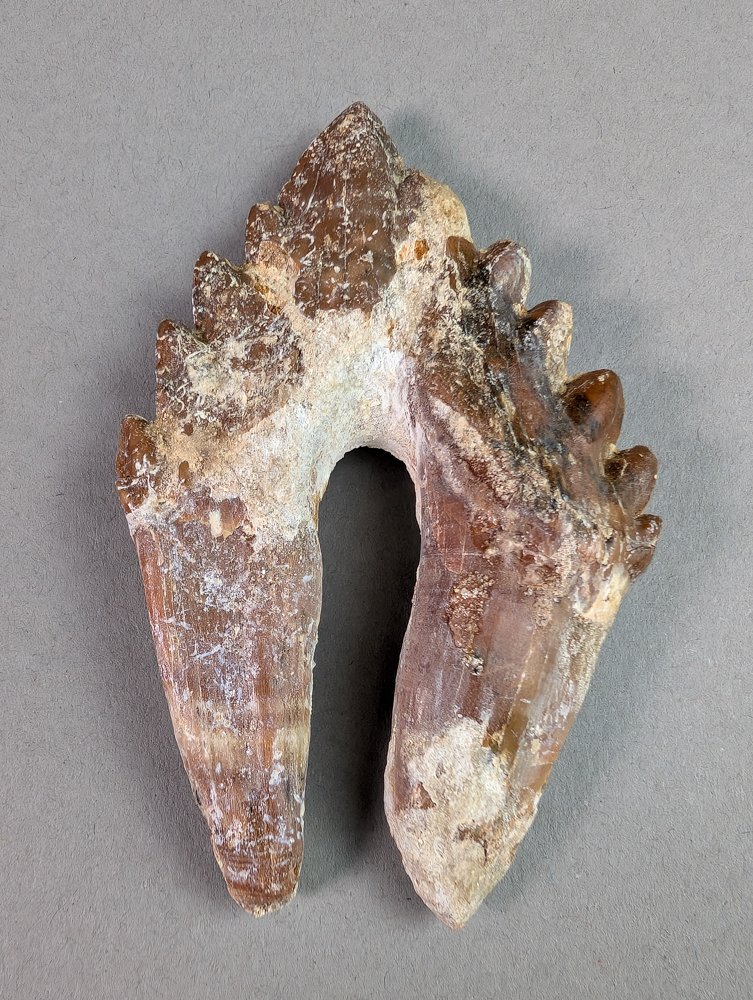
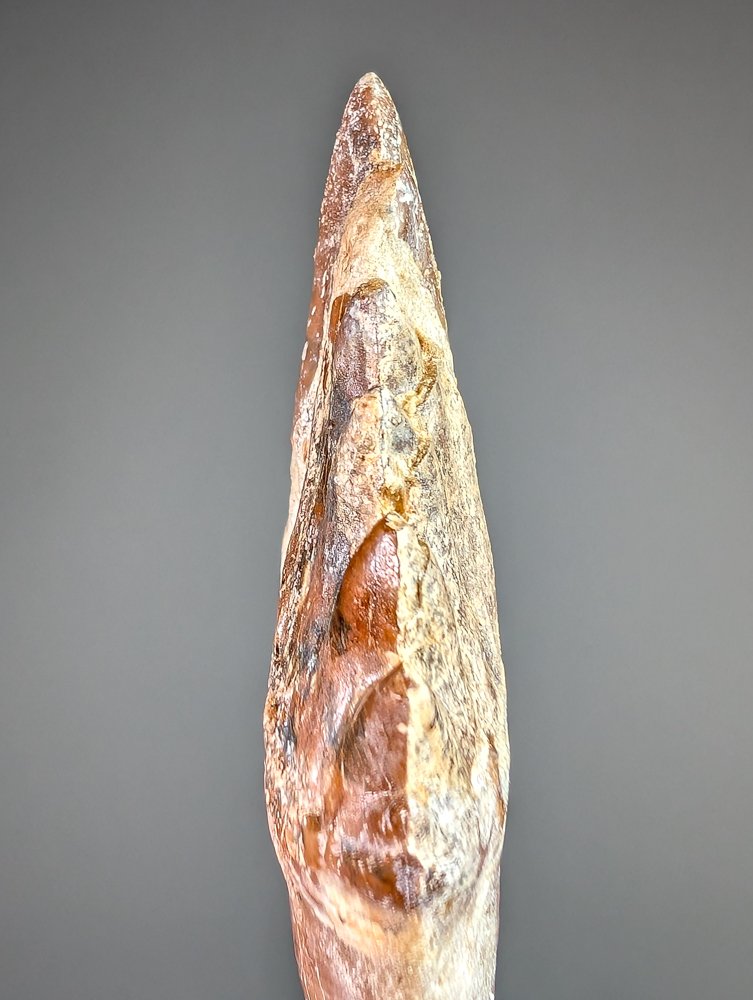
Molar tooth of Basilosaurus - Fossil tooth - Basilosaurus sp. - 8.5 cm - 5.2 cm
01
day
05
hours
43
minutes
08
seconds

28 other people are watching this object
 Bidder 3109 Bidder 3109 | €110 | |
|---|---|---|
 Bidder 2446 Bidder 2446 | €10 | |
| Bidder 3109 | €2 | |
Catawiki Buyer Protection
Your payment’s safe with us until you receive your object.View details
Trustpilot 4.4 | 121899 reviews
Rated Excellent on Trustpilot.
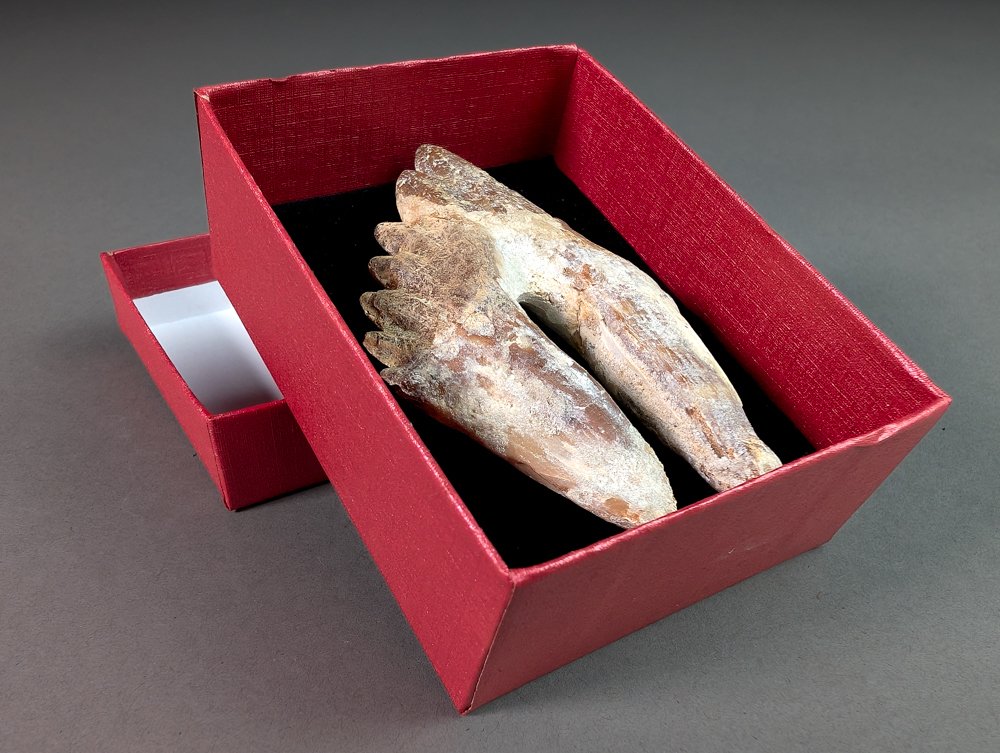
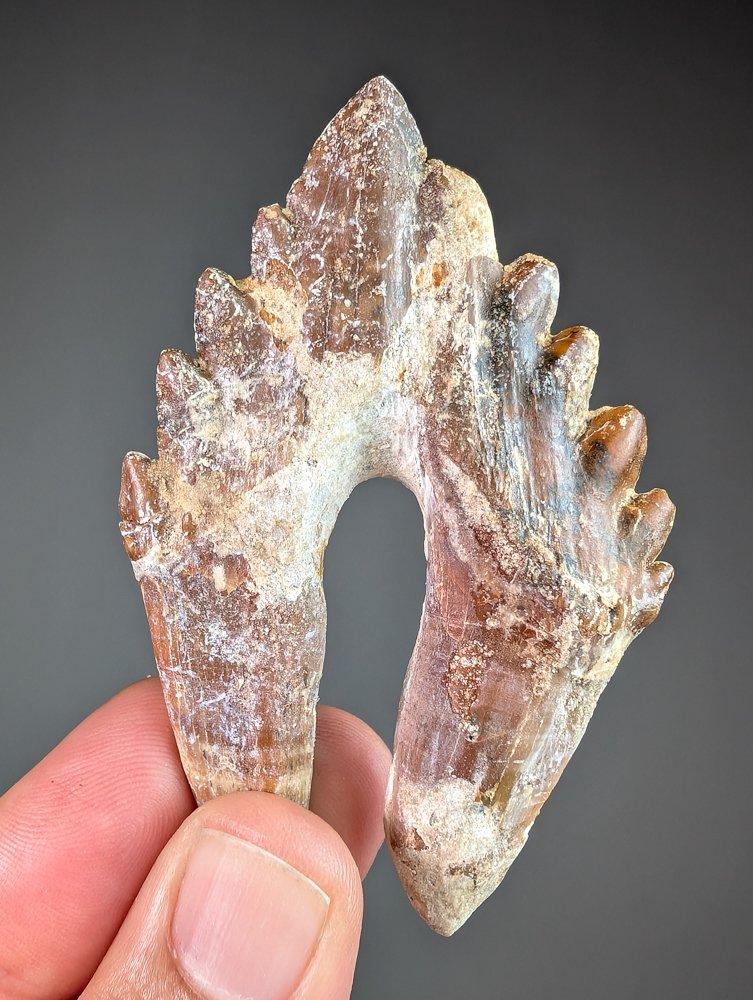
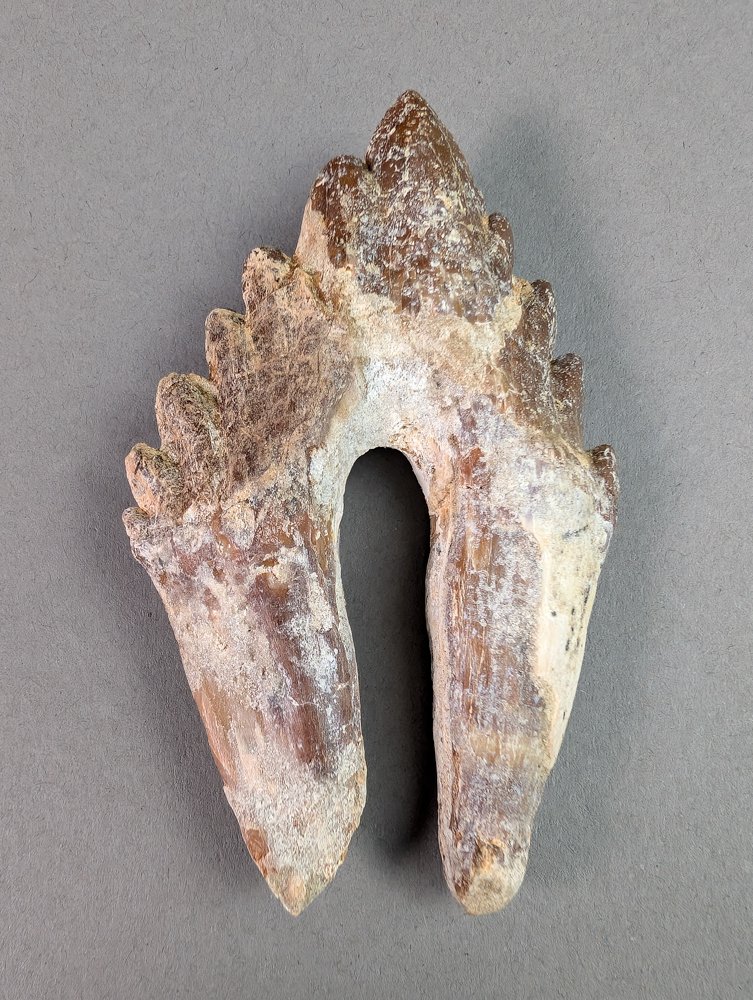
Specimen: Molar tooth of Basilosaurus (Basilosaurus sp.) from Morocco, Paleogene–Eocene (56–33.9 Ma), natural, 51 g, 8.5 × 5.2 × 1.3 cm.
AI-assisted summary
Description from the seller
Rare and Impressive Basilosaurus Molar in Excellent Condition
This striking and sizable molar from Basilosaurus is a rare find, showcasing excellent preservation and natural detail. With its robust structure and sharp cusps, the tooth provides a powerful window into the life of one of the ocean’s earliest apex predators.
About Basilosaurus
Despite its name—“king lizard”—Basilosaurus was not a reptile, but a primitive whale that thrived during the Eocene epoch (approximately 40 to 34 million years ago). Fully adapted to aquatic life, this formidable cetacean had an elongated, serpentine body and was equipped with strong jaws and teeth designed for gripping slippery prey such as fish and smaller marine mammals.
Fossil Details
Remarkably well-preserved enamel and root structure
Large and complete specimen with prominent cusps
A natural history collectible of both scientific and aesthetic appeal
Supplied in a padded display box for safe storage and elegant presentation
Whether displayed in a private collection or a professional setting, this fossil serves as a fascinating evolutionary link and a tangible piece of Earth’s ancient marine heritage.
Seller's Story
Latiaxis was founded in Italy by Bruno Briano and family, combining over 40 years of passion and expertise in natural and ethnographic science collections.
The diverse offerings include decorative shells, natural stones, museum-grade fossils, taxidermy, and tropical corals to serve a wide audience, from museums and private collectors to enthusiasts and interior designers. Our services extend beyond sales, providing consulting, evaluation, and tailored delivery, all while adhering to international trade laws for endangered species. We are fully licensed and authorized to source and offer all the specimens in our collection and for protected species, we strictly comply with the Convention on International Trade in Endangered Species of Wild Fauna and Flora (CITES). CITES is an international agreement between governments, designed to ensure that trade in specimens of wild animals and plants does not threaten their survival. By adhering to these stringent regulations, especially within European countries, we demonstrate our commitment to sustainability and ethical practices, ensuring the responsible sourcing and sale of all items. This dedication provides our clients with the assurance that they are acquiring specimens through legal, environmentally conscious, and trustworthy channels.
Rare and Impressive Basilosaurus Molar in Excellent Condition
This striking and sizable molar from Basilosaurus is a rare find, showcasing excellent preservation and natural detail. With its robust structure and sharp cusps, the tooth provides a powerful window into the life of one of the ocean’s earliest apex predators.
About Basilosaurus
Despite its name—“king lizard”—Basilosaurus was not a reptile, but a primitive whale that thrived during the Eocene epoch (approximately 40 to 34 million years ago). Fully adapted to aquatic life, this formidable cetacean had an elongated, serpentine body and was equipped with strong jaws and teeth designed for gripping slippery prey such as fish and smaller marine mammals.
Fossil Details
Remarkably well-preserved enamel and root structure
Large and complete specimen with prominent cusps
A natural history collectible of both scientific and aesthetic appeal
Supplied in a padded display box for safe storage and elegant presentation
Whether displayed in a private collection or a professional setting, this fossil serves as a fascinating evolutionary link and a tangible piece of Earth’s ancient marine heritage.
Seller's Story
Latiaxis was founded in Italy by Bruno Briano and family, combining over 40 years of passion and expertise in natural and ethnographic science collections.
The diverse offerings include decorative shells, natural stones, museum-grade fossils, taxidermy, and tropical corals to serve a wide audience, from museums and private collectors to enthusiasts and interior designers. Our services extend beyond sales, providing consulting, evaluation, and tailored delivery, all while adhering to international trade laws for endangered species. We are fully licensed and authorized to source and offer all the specimens in our collection and for protected species, we strictly comply with the Convention on International Trade in Endangered Species of Wild Fauna and Flora (CITES). CITES is an international agreement between governments, designed to ensure that trade in specimens of wild animals and plants does not threaten their survival. By adhering to these stringent regulations, especially within European countries, we demonstrate our commitment to sustainability and ethical practices, ensuring the responsible sourcing and sale of all items. This dedication provides our clients with the assurance that they are acquiring specimens through legal, environmentally conscious, and trustworthy channels.
Details
Specimen
Molar tooth of Basilosaurus
Scientific name
Basilosaurus sp.
Country of Origin
Morocco
Geological Period
Paleogene, Eocene (56 - 33.9 million years)
Condition
Natural
Weight
51 g
Height
8.5 cm
Width
5.2 cm
Depth
1.3 cm
Sold by