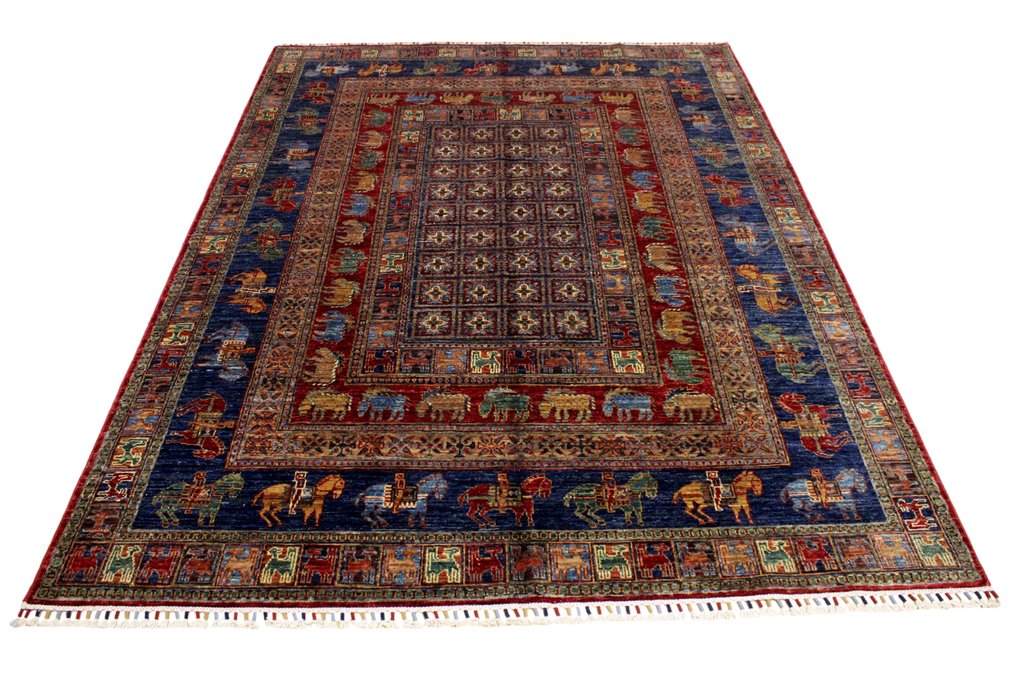
Designer "Pazyryk" Fine Quality Hand-knotted Masterpiece - Rug - 177 cm - 248 cm



Opens tomorrow
Starting bid
€ 1
Add to your favourites to get an alert when the auction starts.

Expert
Selected by Richard Ebbers
Certified appraiser at Federation TMV with 30 years' professional antiques experience.
Estimate € 950 - € 1,050
Catawiki Buyer Protection
Your payment’s safe with us until you receive your object.View details
Trustpilot 4.4 | 122529 reviews
Rated Excellent on Trustpilot.
Description from the seller
➤Materials & Craftsmanship:
The "Pazyryk" rug is a hand-knotted wool rug with cotton warps and wefts. The rugs are hand-knotted using Ghazni wool, a variety of wool unique to Afghanistan known for its luxuriant finish as well as its unique way of absorbing colour which gives the rugs Abrash - the technical term used to describe the mottled effect given by each strand of wool's subtle variation of colour.
➤Weaving Quality & Durability
With 520,000 hand-tied knots, the rug features the Turkish (double) knot technique, making it denser, more durable, and longer-lasting than Persian rugs.
➤Specifications
Weaving Type: %100 Hand-knotted
Materials: Wool & Cotton
Knot Count & Type: 520,000 knots, Turkish (double) knot
Pile Height: 5 mm
Condition: Brand New/Unused
Dimensions: 248x177cm (including fringes)
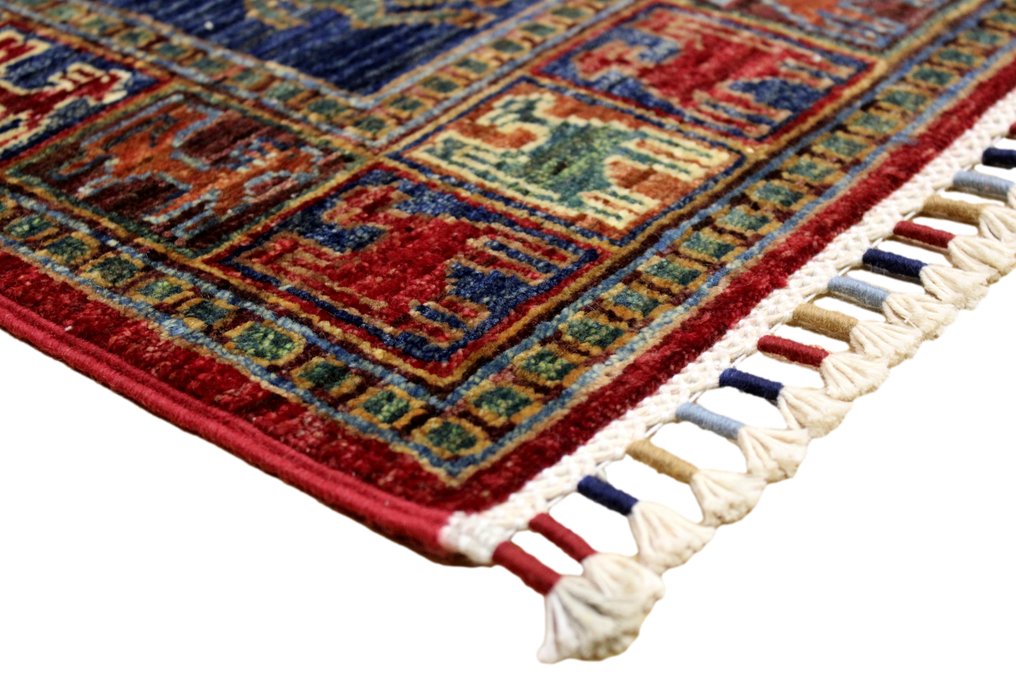
Ps: The knotted, multicolored wool threads on the fringes of the rug are intentionally placed to preserve its integrity. These threads serve as a built-in repair feature, allowing for seamless restoration in case of damage, ensuring the rug's longevity and durability while maintaining its authentic craftsmanship.
-------------------------------------------------------------------------
"Pazyryk" Rug: The Oldest Knotted Rug
The Pazyryk rug, dating back to the 5th century BCE, is the world's oldest known knotted rug. Discovered in 1949 by Russian archaeologist Sergei Rudenko in the Altai Mountains, Siberia, it measures 183 x 200 cm and features an advanced symmetrical knotting technique with 36 knots per cm².
Design & Symbolism
The central 4x6 grid contains star-like motifs, while the borders showcase horse riders, deer, and mythological griffins, reflecting the nomadic culture of its time.
Cultural Significance & Location
Believed to have Achaemenid Persian, Scythian, or Turkic influences, it highlights ancient rug-knotting expertise. Today, it is displayed at the Hermitage Museum in St. Petersburg, Russia.
➤Shipping:
All orders come with a "Tracking Code" for your convenience.
* UK/EU : 2-4 Days
* USA/CAN: 2-4 Days
* WW: 5-7 Days
The buyer is responsible for all customs duties that may occur.
➤Materials & Craftsmanship:
The "Pazyryk" rug is a hand-knotted wool rug with cotton warps and wefts. The rugs are hand-knotted using Ghazni wool, a variety of wool unique to Afghanistan known for its luxuriant finish as well as its unique way of absorbing colour which gives the rugs Abrash - the technical term used to describe the mottled effect given by each strand of wool's subtle variation of colour.
➤Weaving Quality & Durability
With 520,000 hand-tied knots, the rug features the Turkish (double) knot technique, making it denser, more durable, and longer-lasting than Persian rugs.
➤Specifications
Weaving Type: %100 Hand-knotted
Materials: Wool & Cotton
Knot Count & Type: 520,000 knots, Turkish (double) knot
Pile Height: 5 mm
Condition: Brand New/Unused
Dimensions: 248x177cm (including fringes)
Ps: The knotted, multicolored wool threads on the fringes of the rug are intentionally placed to preserve its integrity. These threads serve as a built-in repair feature, allowing for seamless restoration in case of damage, ensuring the rug's longevity and durability while maintaining its authentic craftsmanship.
-------------------------------------------------------------------------
"Pazyryk" Rug: The Oldest Knotted Rug
The Pazyryk rug, dating back to the 5th century BCE, is the world's oldest known knotted rug. Discovered in 1949 by Russian archaeologist Sergei Rudenko in the Altai Mountains, Siberia, it measures 183 x 200 cm and features an advanced symmetrical knotting technique with 36 knots per cm².
Design & Symbolism
The central 4x6 grid contains star-like motifs, while the borders showcase horse riders, deer, and mythological griffins, reflecting the nomadic culture of its time.
Cultural Significance & Location
Believed to have Achaemenid Persian, Scythian, or Turkic influences, it highlights ancient rug-knotting expertise. Today, it is displayed at the Hermitage Museum in St. Petersburg, Russia.
➤Shipping:
All orders come with a "Tracking Code" for your convenience.
* UK/EU : 2-4 Days
* USA/CAN: 2-4 Days
* WW: 5-7 Days
The buyer is responsible for all customs duties that may occur.
Details
Era
After 2000
Model
Designer "Pazyryk" Fine Quality Hand-knotted Masterpiece
Length
177 cm
Width
248 cm
Material
Wool on cotton
Country of Origin
Afghanistan
Condition
In very good condition
Professionally Cleaned
Yes
Manufacturing period
21st century
Weight
14 kg
Sold by