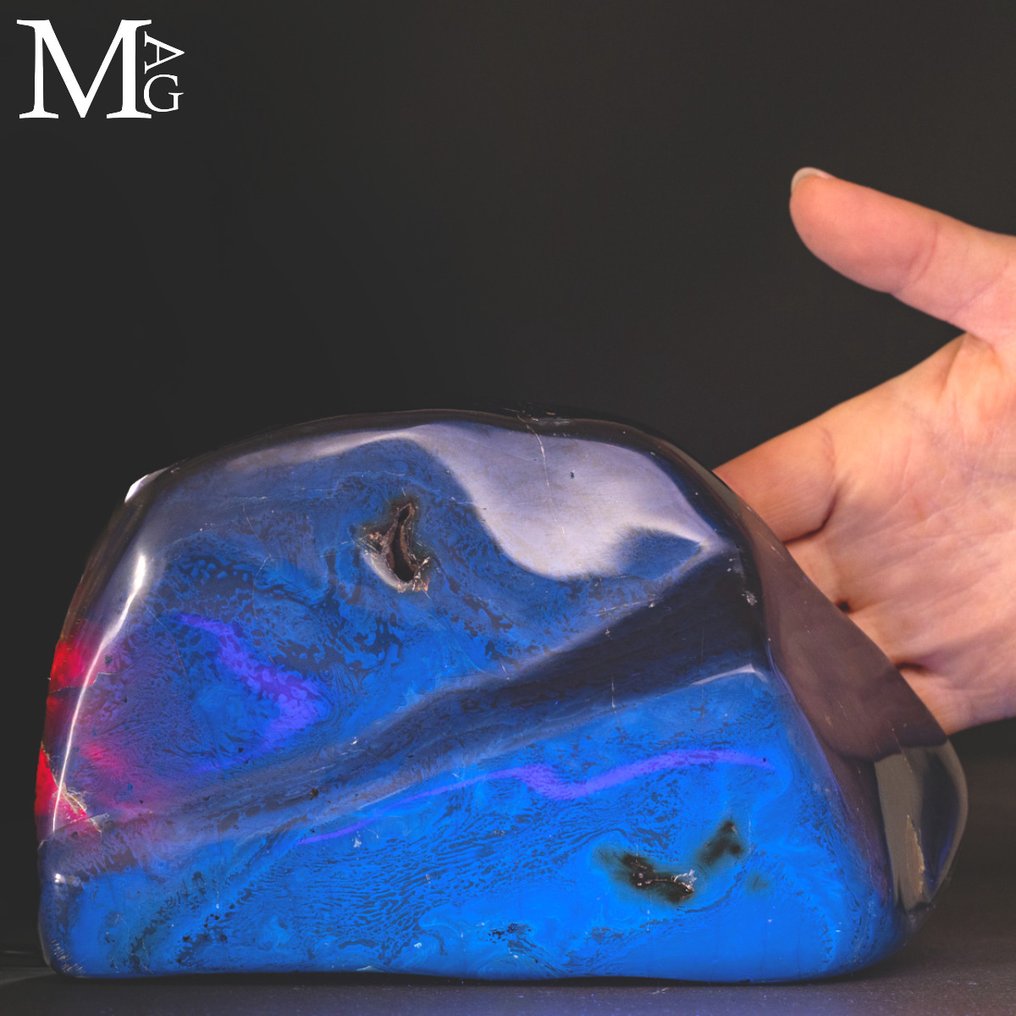
AMBRA SUMATRA Fossil amber specimen from Sumatra - rare sample with extraordinary color contrasts - Height: 211 mm - Width: 120 mm- 1042 g



00
days
14
hours
57
minutes
09
seconds

20 other people are watching this object
 Bidder 0738 Bidder 0738 | €2 | |
|---|---|---|
| Bidder 5179 | €1 |
Catawiki Buyer Protection
Your payment’s safe with us until you receive your object.View details
Trustpilot 4.4 | 121899 reviews
Rated Excellent on Trustpilot.
Specimen: fossil amber from Sumatra; Geological period: Upper Miocene; Treatment: hand-polished; Condition: rare sample with extraordinary color contrasts.
AI-assisted summary
Description from the seller
Rare Sample with Extraordinary Chromatic Contrasts
This fossil amber comes from the rainforests of Sumatra, Indonesia, one of the few places in the world where this variety of fossil resin is formed. The sample has been carefully polished and hand-lucided to highlight the complex inclusions and optical features. When photographed under UV light, it reveals a spectacular blue fluorescence effect, making it a unique specimen of its kind.
Sumatra amber was formed during the late Miocene, approximately 10 to 20 million years ago, from the resin of large tropical trees belonging to the Dipterocarpaceae family. In warm and humid environments, this resin was secreted to protect the trees from wounds or parasites, and was subsequently buried under thick layers of river sediments. The anoxic environment and geological pressure allowed for its fossilization, gradually transforming it into amber through a natural polymerization process.
Geological and optical characteristics
Geological system of origin: fluvio-deltaic sediments from the Jambi region, West Sumatra.
Age: Upper Miocene (10–20 million years ago)
Composition: polymerized resin with traces of aromatic hydrocarbons and succinic acids.
UV fluorescence: intense emission of blue light, due to the presence of aromatic compounds and organic inclusions that react to ultraviolet light.
Natural infiltrations: darker areas and visible fossil veins in the internal matrix, evidence of microfractures and mineralized inclusions.
Paleontological aspects
Although the sample does not show obvious visible inclusions of insects or plants, Sumatra amber is well known for often containing fragments of leaves, spores, and occasionally extinct insects, providing a valuable snapshot of the Miocene tropical ecosystem. The study of these samples has helped paleobotanists reconstruct the biodiversity and climate of ancient Southeast Asian rainforests.
Geological and paleontological collecting, themed interior design, scientific study of fossil resins.
Seller's Story
The Mineral Art Gallery offers minerals, fossils, shells and natural elements.
Born in Italy in 2017, today she collaborates with international galleries and collectors, she is a direct importer of large minerals and naturalistic collectible elements; deals with the processing to insert them inside the living space. A section of the gallery was dedicated to the Wunderkammer, "chamber of wonders or cabinet of curiosities" in which Mirabilia elements are presented: naturalia and italiania, a union between "the present is the past".
All lots are shipped via DHL Express and Fercam couriers, with insured parcel and tracking.
Translated by Google TranslateRare Sample with Extraordinary Chromatic Contrasts
This fossil amber comes from the rainforests of Sumatra, Indonesia, one of the few places in the world where this variety of fossil resin is formed. The sample has been carefully polished and hand-lucided to highlight the complex inclusions and optical features. When photographed under UV light, it reveals a spectacular blue fluorescence effect, making it a unique specimen of its kind.
Sumatra amber was formed during the late Miocene, approximately 10 to 20 million years ago, from the resin of large tropical trees belonging to the Dipterocarpaceae family. In warm and humid environments, this resin was secreted to protect the trees from wounds or parasites, and was subsequently buried under thick layers of river sediments. The anoxic environment and geological pressure allowed for its fossilization, gradually transforming it into amber through a natural polymerization process.
Geological and optical characteristics
Geological system of origin: fluvio-deltaic sediments from the Jambi region, West Sumatra.
Age: Upper Miocene (10–20 million years ago)
Composition: polymerized resin with traces of aromatic hydrocarbons and succinic acids.
UV fluorescence: intense emission of blue light, due to the presence of aromatic compounds and organic inclusions that react to ultraviolet light.
Natural infiltrations: darker areas and visible fossil veins in the internal matrix, evidence of microfractures and mineralized inclusions.
Paleontological aspects
Although the sample does not show obvious visible inclusions of insects or plants, Sumatra amber is well known for often containing fragments of leaves, spores, and occasionally extinct insects, providing a valuable snapshot of the Miocene tropical ecosystem. The study of these samples has helped paleobotanists reconstruct the biodiversity and climate of ancient Southeast Asian rainforests.
Geological and paleontological collecting, themed interior design, scientific study of fossil resins.
Seller's Story
The Mineral Art Gallery offers minerals, fossils, shells and natural elements.
Born in Italy in 2017, today she collaborates with international galleries and collectors, she is a direct importer of large minerals and naturalistic collectible elements; deals with the processing to insert them inside the living space. A section of the gallery was dedicated to the Wunderkammer, "chamber of wonders or cabinet of curiosities" in which Mirabilia elements are presented: naturalia and italiania, a union between "the present is the past".
All lots are shipped via DHL Express and Fercam couriers, with insured parcel and tracking.
Translated by Google TranslateDetails
Main Mineral
AMBRA SUMATRA
Mineral Form
Fossil amber specimen from Sumatra - rare sample with extraordinary color contrasts
Weight
1042 g
Country of Origin
Indonesia
Height
211 mm
Width
120 mm
Depth
82 mm
Sold by