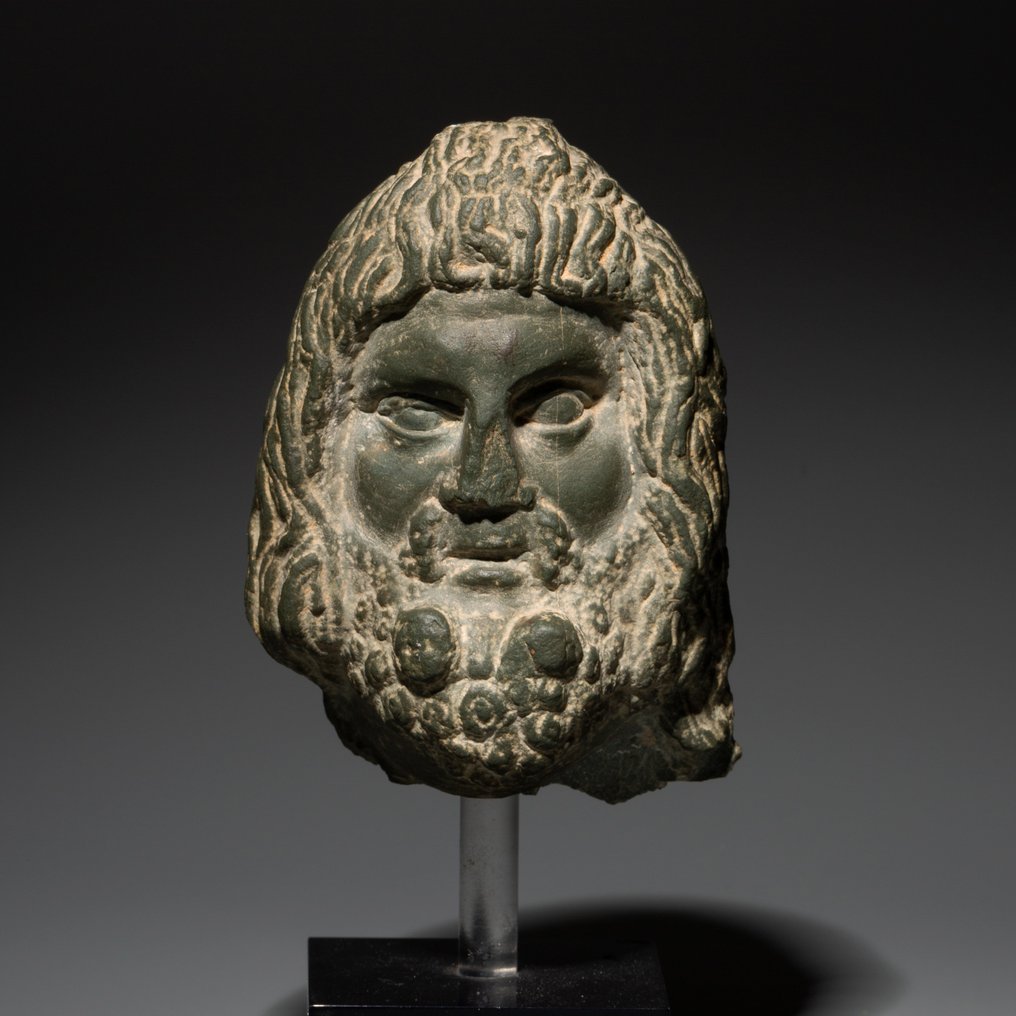
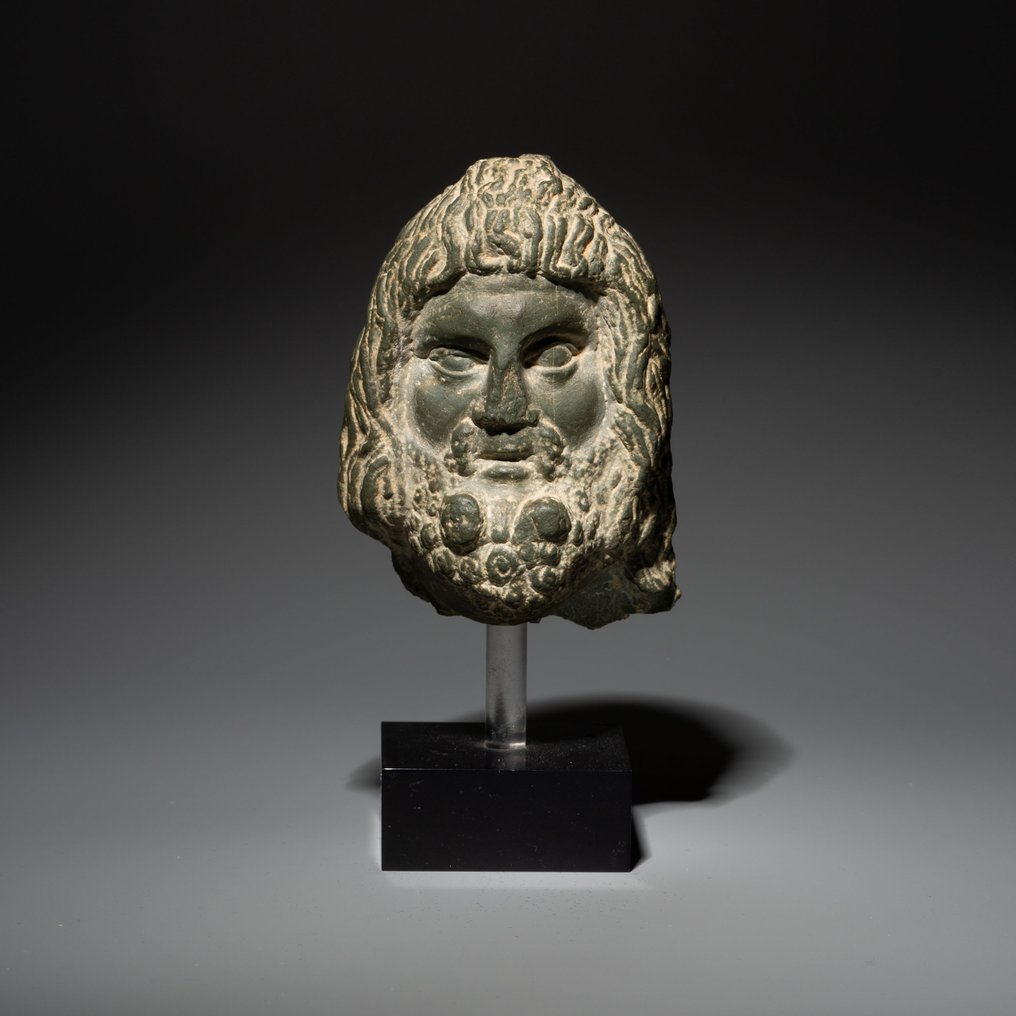
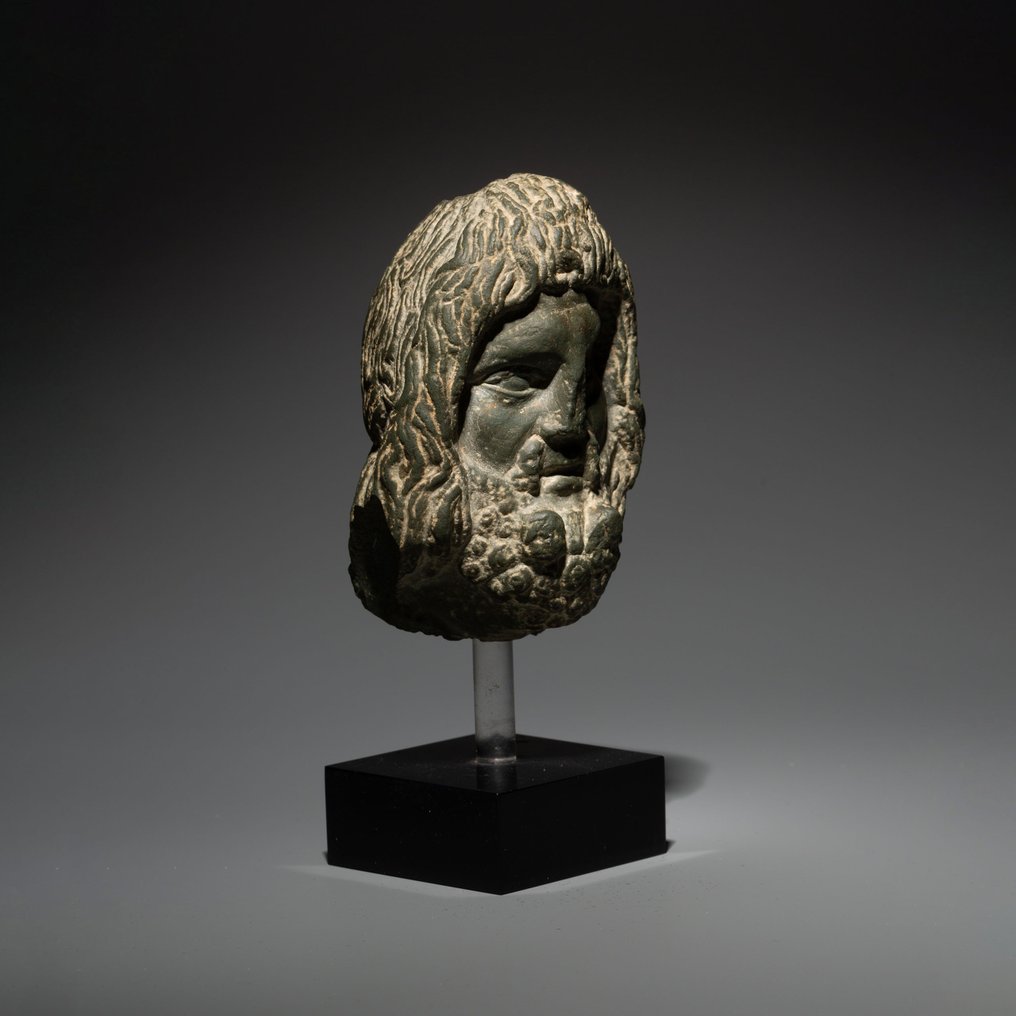
Ancient Egyptian Stone Head of a sculpture of the god Serapis. Ptolemaic-Roman period, 332 BC. - 1st century AD. 9.5 cm H.


11
days
15
hours
42
minutes
08
seconds
Current bid
€ 55
Reserve price not met

Expert
Selected by Ruth Garrido Vila
Directed the Ifergan Collection Museum, specialising in Phoenician and Mediterranean archaeology.
Estimate € 4,000 - € 4,400
5 other people are watching this object
 Bidder 5564 Bidder 5564 | €55 | |
|---|---|---|
 Bidder 9186 Bidder 9186 | €50 |
Catawiki Buyer Protection
Your payment’s safe with us until you receive your object.View details
Trustpilot 4.4 | 122115 reviews
Rated Excellent on Trustpilot.
Ancient Egyptian head of a sculpture of the god Serapis, dating to the Ptolemaic-Roman period (c. 332 BC–1st century AD), carved in schist, about 9.5 cm high (14 cm with the stand), in good condition and including an authenticity certificate.
AI-assisted summary
Description from the seller
Head of a sculpture of the god Serapis.
- very fine surface -
Ancient Egypt, Ptolemaic-Roman period, 332 BC. - 1st century AD.
Schist.
9.5 cm height, 14 with the stand.
Condition: Good general state of preservation, with wear on the nose.
Provenance: Private collection Paris, France, 1960 - 1970.
Description:
The Cult of Serapis was promoted by Ptolemy I Sotar (Ptolemaic dynasty) as a means of fostering harmony between his Egyptian and Greek subjects. The god combined Osiris and the Apis Bull (the sacred bull of Memphis) with aspects of the Greek gods Zeus (the king of the gods), Dionysus (also known as Bacchus, the god of wine), Helios (the personification of the Sun), Hades (the god of the underworld) and Asklepios (god of medicine).
Linguistically, his name is the result of the fusion of Osiris and Apis, and there is evidence that a cult of Osarapis existed before the Ptolemaic Period, but the Ptolemaic version was a more Greek conception.
Serapis personified divine majesty and represented the sun, fertility, healing, and the afterlife. His consort was Isis, the wife of Osiris and the most popular goddess during the Ptolemaic Period.
Serapis was depicted as a man with an elaborate Greek hairstyle wearing Greek style robes and a full beard. He often wears a corn modius or sheaf on his head. Less often, he is depicted as a serpent in recognition of his connection with the underworld and fertility.
Ptolemy built the Serapeum in Alexandria as the cult center of the new god and it remained the focus of pilgrimage until it was destroyed by the Emperor Theodosius in AD 389. Other smaller shrines and temples were constructed or adapted throughout Egypt, and the cult even spread to Roman territories.
The Serapeum in Saqqara (the home of the Apis bull) grew in popularity with the Greeks thanks to the connection with Serapis, but the native Egyptians never really took to this Hellenized version of Osiris.
Notes:
- The piece includes authenticity certificate.
- The piece includes Spanish Export License (Passport for European Union) - If the piece is destined outside the European Union a substitution of the export permit should be requested, can take between 1-2 weeks maximum.
- The seller guarantees that he acquired this piece according to all national and international laws related to the ownership of cultural property. Provenance statement seen by Catawiki.
#ExclusiveCabinetofCuriosities
Seller's Story
Gallery of Ancient Art - Archeology based in Barcelona with more than fifteen years of experience. Specialized in classical art, Egyptian art, Asian art and pre-Columbian art. It guarantees the authenticity of all its pieces. It participates in the most important art fairs in Spain, such as Feriarte, as well as in fairs abroad, BRAFA, Parcours des Mondes, Cultures Brussels.
All the pieces are sent with an Export Permit issued by the Spanish Ministry of Culture.
We are quick to ship via DHL Express or Direct Art Transport.
Translated by Google TranslateHead of a sculpture of the god Serapis.
- very fine surface -
Ancient Egypt, Ptolemaic-Roman period, 332 BC. - 1st century AD.
Schist.
9.5 cm height, 14 with the stand.
Condition: Good general state of preservation, with wear on the nose.
Provenance: Private collection Paris, France, 1960 - 1970.
Description:
The Cult of Serapis was promoted by Ptolemy I Sotar (Ptolemaic dynasty) as a means of fostering harmony between his Egyptian and Greek subjects. The god combined Osiris and the Apis Bull (the sacred bull of Memphis) with aspects of the Greek gods Zeus (the king of the gods), Dionysus (also known as Bacchus, the god of wine), Helios (the personification of the Sun), Hades (the god of the underworld) and Asklepios (god of medicine).
Linguistically, his name is the result of the fusion of Osiris and Apis, and there is evidence that a cult of Osarapis existed before the Ptolemaic Period, but the Ptolemaic version was a more Greek conception.
Serapis personified divine majesty and represented the sun, fertility, healing, and the afterlife. His consort was Isis, the wife of Osiris and the most popular goddess during the Ptolemaic Period.
Serapis was depicted as a man with an elaborate Greek hairstyle wearing Greek style robes and a full beard. He often wears a corn modius or sheaf on his head. Less often, he is depicted as a serpent in recognition of his connection with the underworld and fertility.
Ptolemy built the Serapeum in Alexandria as the cult center of the new god and it remained the focus of pilgrimage until it was destroyed by the Emperor Theodosius in AD 389. Other smaller shrines and temples were constructed or adapted throughout Egypt, and the cult even spread to Roman territories.
The Serapeum in Saqqara (the home of the Apis bull) grew in popularity with the Greeks thanks to the connection with Serapis, but the native Egyptians never really took to this Hellenized version of Osiris.
Notes:
- The piece includes authenticity certificate.
- The piece includes Spanish Export License (Passport for European Union) - If the piece is destined outside the European Union a substitution of the export permit should be requested, can take between 1-2 weeks maximum.
- The seller guarantees that he acquired this piece according to all national and international laws related to the ownership of cultural property. Provenance statement seen by Catawiki.
#ExclusiveCabinetofCuriosities
Seller's Story
Gallery of Ancient Art - Archeology based in Barcelona with more than fifteen years of experience. Specialized in classical art, Egyptian art, Asian art and pre-Columbian art. It guarantees the authenticity of all its pieces. It participates in the most important art fairs in Spain, such as Feriarte, as well as in fairs abroad, BRAFA, Parcours des Mondes, Cultures Brussels.
All the pieces are sent with an Export Permit issued by the Spanish Ministry of Culture.
We are quick to ship via DHL Express or Direct Art Transport.
Translated by Google TranslateDetails
Culture
Ancient Egyptian
Century/ Timeframe
Ptolemaic-Roman period, 332 BC. - 1st century AD
Name of object
Head of a sculpture of the god Serapis. Ptolemaic-Roman period, 332 BC. - 1st century AD. 9.5 cm H.
Acquired from
Private collection
Material
Stone
Condition
Good
Disclaimer
The seller was informed by Catawiki about documentation requirements and guarantees the following: - the object was legally obtained, - the seller has the right to sell and/or export the object, as relevant, - the seller will provide the necessary provenance information and arrange required documentation and permits/licenses, as applicable and as per local laws, - the seller will notify the buyer of any delays in obtaining permits/licenses. By bidding, you acknowledge that import documentation may be required depending on your country of residence and that obtaining permits/licenses may cause delays in the delivery of your object.
The seller was informed by Catawiki about documentation requirements and guarantees the following: - the object was legally obtained, - the seller has the right to sell and/or export the object, as relevant, - the seller will provide the necessary provenance information and arrange required documentation and permits/licenses, as applicable and as per local laws, - the seller will notify the buyer of any delays in obtaining permits/licenses. By bidding, you acknowledge that import documentation may be required depending on your country of residence and that obtaining permits/licenses may cause delays in the delivery of your object.
