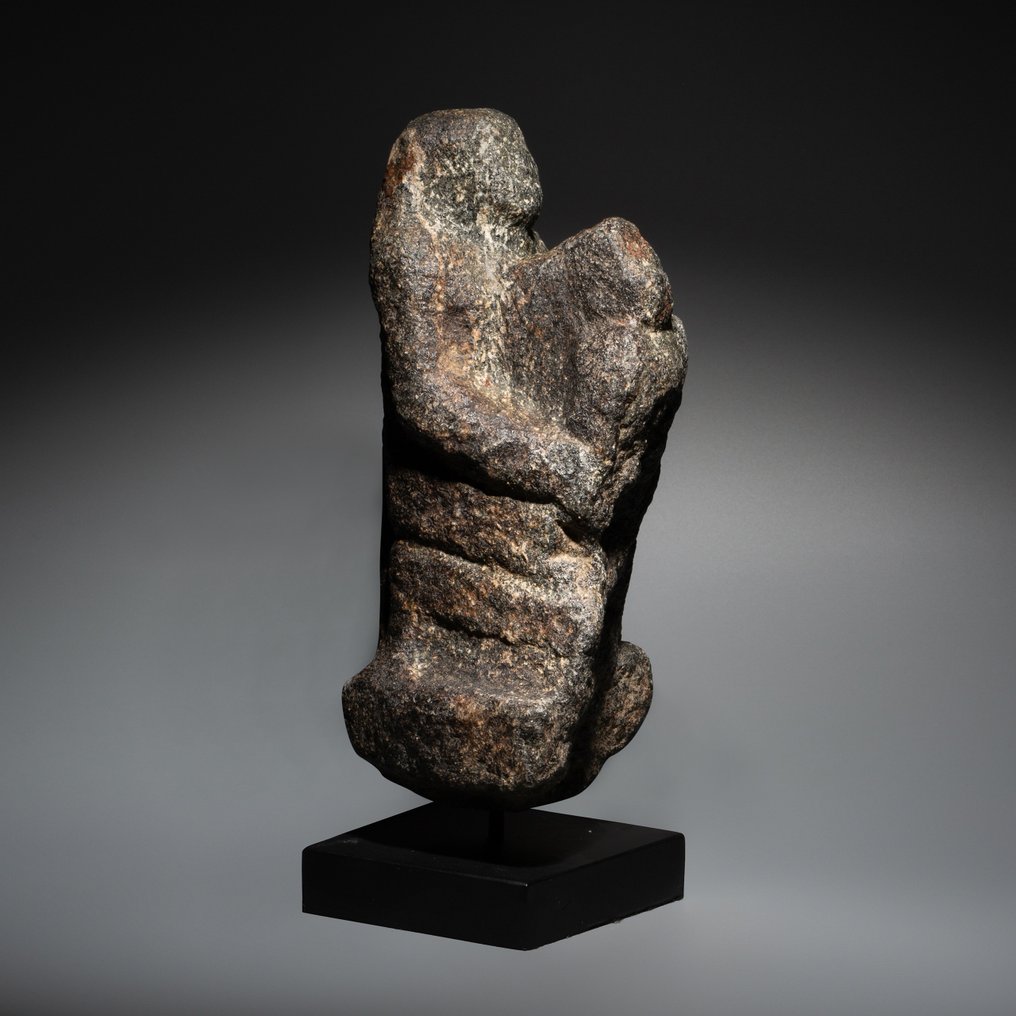
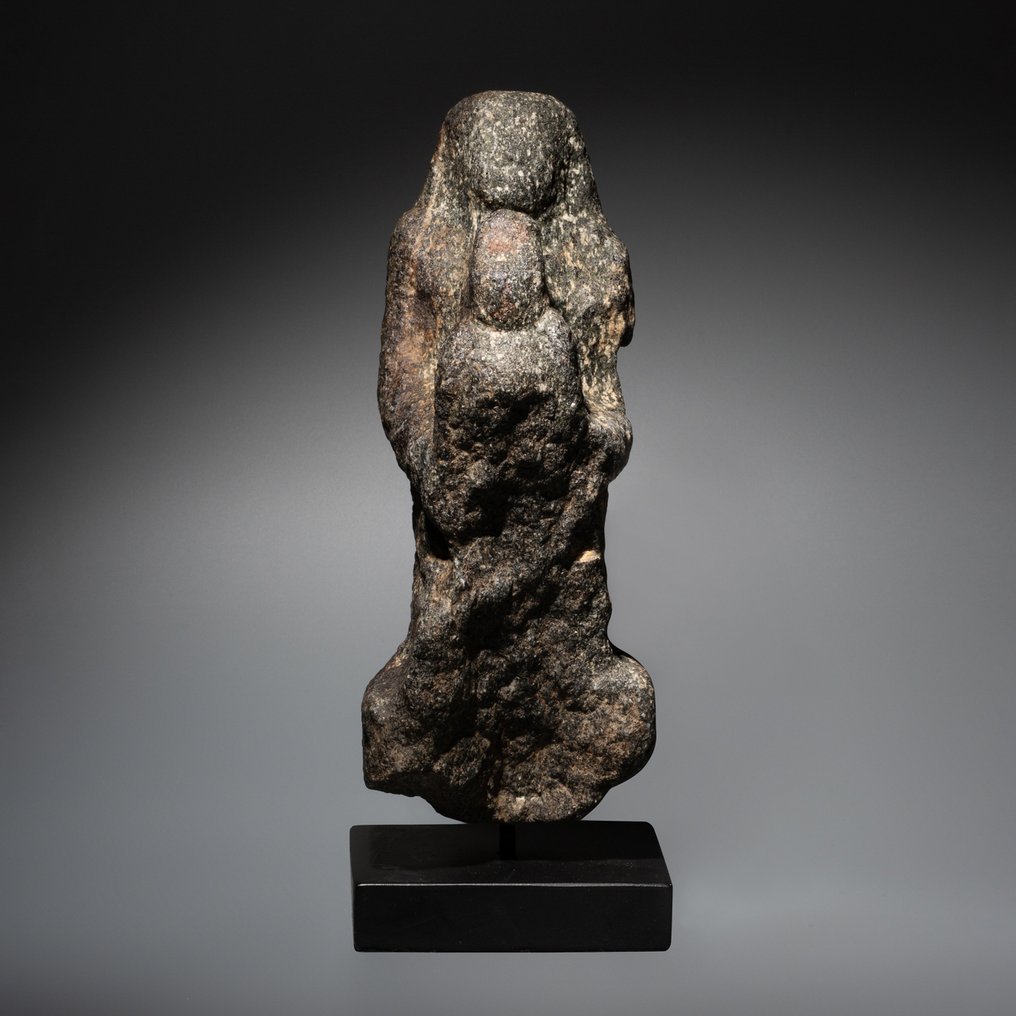
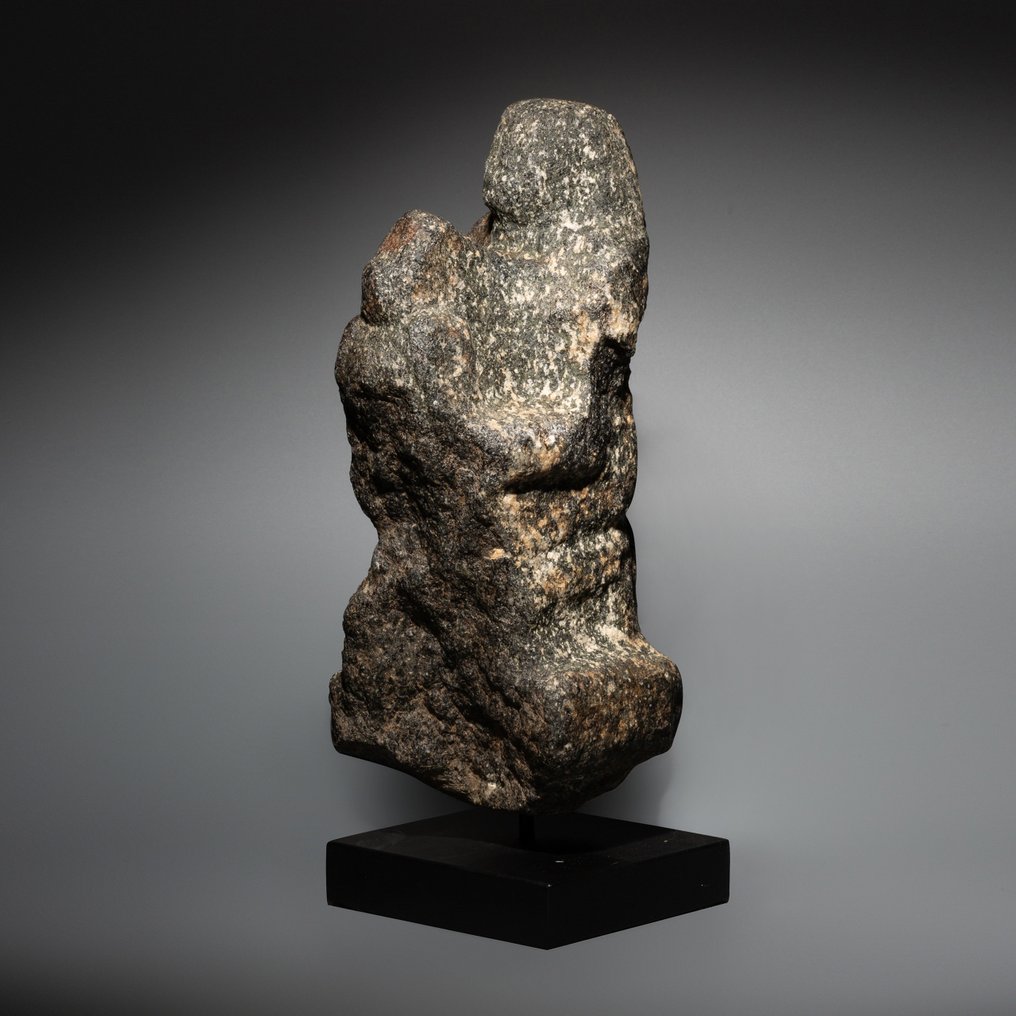
Ancient Egyptian Granite Granite Unfinished sculpture kneeling nobleman with a Horus. Late Period - Ptolemaic Period, 664 -


03
days
18
hours
07
minutes
00
seconds
Current bid
€ 100
Reserve price not met

Expert
Selected by Ruth Garrido Vila
Directed the Ifergan Collection Museum, specialising in Phoenician and Mediterranean archaeology.
Estimate € 12,000 - € 14,000
11 other people are watching this object
 Bidder 0168 Bidder 0168 | €100 | |
|---|---|---|
| Bidder 0168 | €50 |
Catawiki Buyer Protection
Your payment’s safe with us until you receive your object.View details
Trustpilot 4.4 | 122713 reviews
Rated Excellent on Trustpilot.
Ancient Egyptian granite unfinished sculpture of a kneeling nobleman holding Horus, Late Period - Ptolemaic Period (664–30 BC), about 23 cm tall (26 cm with stand), in good condition with the front legs missing.
AI-assisted summary
Description from the seller
Unfinished sculpture of a kneeling nobleman holding a figure of Horus.
- nice form -
CULTURE: Ancient Egypt
PERIOD: Late Period - Ptolemaic Period, 664 - 30 BC
MATERIAL: Granite
DIMENSIONS: 23 cm height and 26 cm height with the stand.
PROVENANCE: Private collection, north of London, acquired during 1970. After property of a West London gentleman.
CONDITION: Good condition, no restorations, the front part of the figure's legs is missing.
DESCRIPTION:
Sculptural representation of an offerer holding the falcon god Horus in his hands. Despite the faults caused by the passage of time, it can be deduced that it is a work linked to the funerary world, as it is a representation of an offering. It is therefore likely that this is the work of a man of high social standing, a nobleman, since not all citizens of Egypt were eligible for burial. Furthermore, this function is evidenced by the presence of the god Horus, as one of Egypt's most important and powerful deities, often depicted with a falcon's head, as in this sculpture. Horus played a key role in the resurrection rites related to the story of his parents, Isis and Osiris, together with whom he formed the so-called Osirian triad, and was central to the mythology surrounding Egyptian funerary rites.
The Ptolemaic period was a time of war and weakening of Egyptian culture, which came into contact with other peoples, with invasions in the south and west of the country. This weakened economic development, which obviously affected the arts. However, despite the aforementioned political instability, the rulers of this period took refuge in artistic representations of the periods of splendour, recovering the classicism and aesthetics of previous dynasties such as the XXX. A feature that was understood by the new pharaohs as a symbol of the legitimisation of their power.
Notes:
- The piece includes authenticity certificate.
- The piece includes Spanish Export License.
- The seller guarantees that he acquired this piece according to all national and international laws related to the ownership of cultural property. Provenance statement seen by Catawiki.
#ExclusiveCabinetofCuriosities
Seller's Story
Gallery of Ancient Art - Archeology based in Barcelona with more than fifteen years of experience. Specialized in classical art, Egyptian art, Asian art and pre-Columbian art. It guarantees the authenticity of all its pieces. It participates in the most important art fairs in Spain, such as Feriarte, as well as in fairs abroad, BRAFA, Parcours des Mondes, Cultures Brussels.
All the pieces are sent with an Export Permit issued by the Spanish Ministry of Culture.
We are quick to ship via DHL Express or Direct Art Transport.
Translated by Google TranslateUnfinished sculpture of a kneeling nobleman holding a figure of Horus.
- nice form -
CULTURE: Ancient Egypt
PERIOD: Late Period - Ptolemaic Period, 664 - 30 BC
MATERIAL: Granite
DIMENSIONS: 23 cm height and 26 cm height with the stand.
PROVENANCE: Private collection, north of London, acquired during 1970. After property of a West London gentleman.
CONDITION: Good condition, no restorations, the front part of the figure's legs is missing.
DESCRIPTION:
Sculptural representation of an offerer holding the falcon god Horus in his hands. Despite the faults caused by the passage of time, it can be deduced that it is a work linked to the funerary world, as it is a representation of an offering. It is therefore likely that this is the work of a man of high social standing, a nobleman, since not all citizens of Egypt were eligible for burial. Furthermore, this function is evidenced by the presence of the god Horus, as one of Egypt's most important and powerful deities, often depicted with a falcon's head, as in this sculpture. Horus played a key role in the resurrection rites related to the story of his parents, Isis and Osiris, together with whom he formed the so-called Osirian triad, and was central to the mythology surrounding Egyptian funerary rites.
The Ptolemaic period was a time of war and weakening of Egyptian culture, which came into contact with other peoples, with invasions in the south and west of the country. This weakened economic development, which obviously affected the arts. However, despite the aforementioned political instability, the rulers of this period took refuge in artistic representations of the periods of splendour, recovering the classicism and aesthetics of previous dynasties such as the XXX. A feature that was understood by the new pharaohs as a symbol of the legitimisation of their power.
Notes:
- The piece includes authenticity certificate.
- The piece includes Spanish Export License.
- The seller guarantees that he acquired this piece according to all national and international laws related to the ownership of cultural property. Provenance statement seen by Catawiki.
#ExclusiveCabinetofCuriosities
Seller's Story
Gallery of Ancient Art - Archeology based in Barcelona with more than fifteen years of experience. Specialized in classical art, Egyptian art, Asian art and pre-Columbian art. It guarantees the authenticity of all its pieces. It participates in the most important art fairs in Spain, such as Feriarte, as well as in fairs abroad, BRAFA, Parcours des Mondes, Cultures Brussels.
All the pieces are sent with an Export Permit issued by the Spanish Ministry of Culture.
We are quick to ship via DHL Express or Direct Art Transport.
Translated by Google TranslateDetails
Culture
Ancient Egyptian
Century/ Timeframe
Late Period - Ptolemaic Period, 664 - 30 BC
Name of object
Granite Unfinished sculpture kneeling nobleman with a Horus. Late Period - Ptolemaic Period, 664 -
Acquired from
Private collection
Material
Granite
Condition
Good
Disclaimer
The seller was informed by Catawiki about documentation requirements and guarantees the following: - the object was legally obtained, - the seller has the right to sell and/or export the object, as relevant, - the seller will provide the necessary provenance information and arrange required documentation and permits/licenses, as applicable and as per local laws, - the seller will notify the buyer of any delays in obtaining permits/licenses. By bidding, you acknowledge that import documentation may be required depending on your country of residence and that obtaining permits/licenses may cause delays in the delivery of your object.
The seller was informed by Catawiki about documentation requirements and guarantees the following: - the object was legally obtained, - the seller has the right to sell and/or export the object, as relevant, - the seller will provide the necessary provenance information and arrange required documentation and permits/licenses, as applicable and as per local laws, - the seller will notify the buyer of any delays in obtaining permits/licenses. By bidding, you acknowledge that import documentation may be required depending on your country of residence and that obtaining permits/licenses may cause delays in the delivery of your object.
