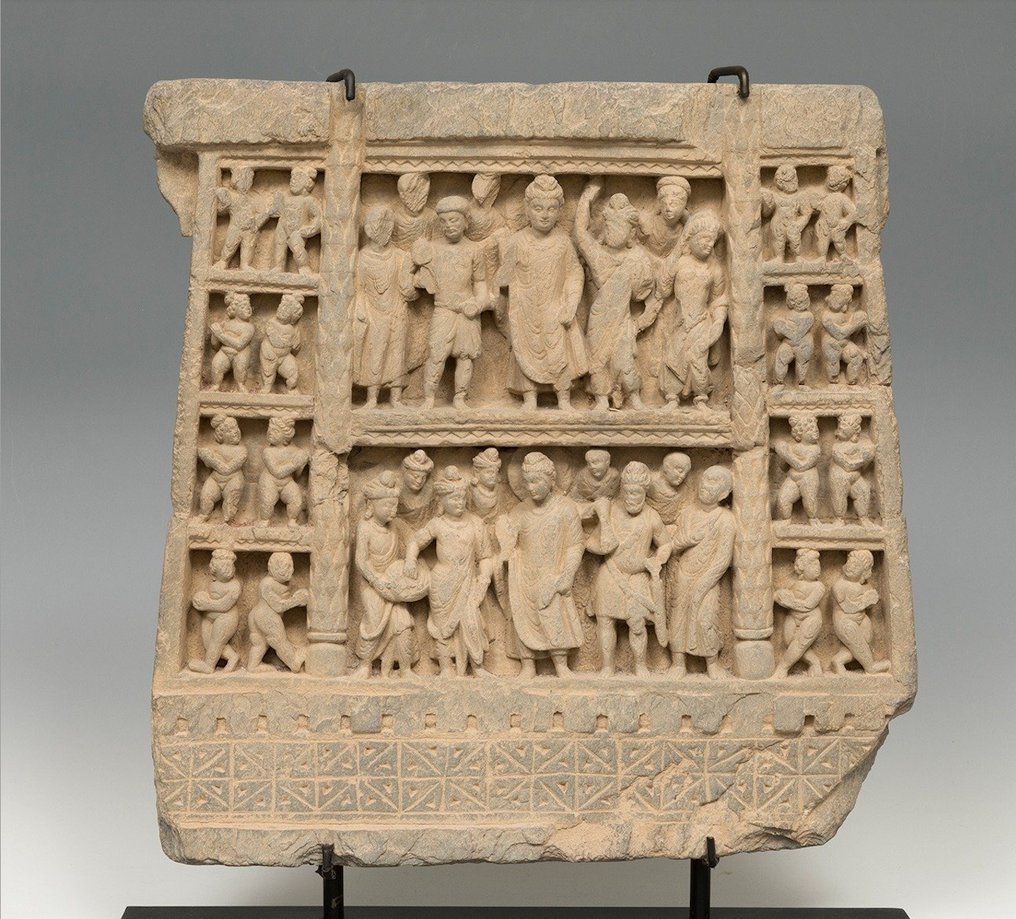
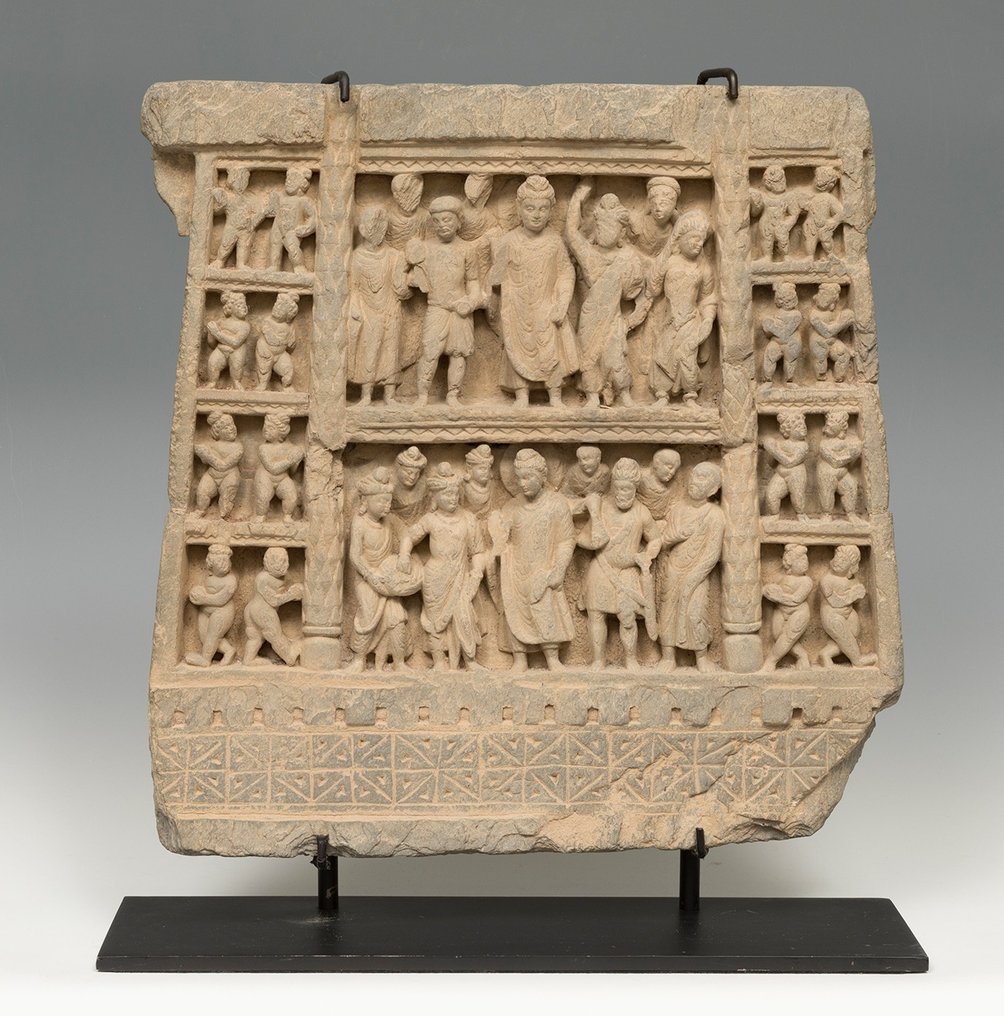
Gandhara Schist Relief with scenes from the life of Buddha. 46.3 cm H.


15
days
22
hours
24
minutes
30
seconds
Current bid
€ 1
Reserve price not met

Expert
Selected by Ruth Garrido Vila
Directed the Ifergan Collection Museum, specialising in Phoenician and Mediterranean archaeology.
Estimate € 33,000 - € 37,000
3 other people are watching this object
 Bidder 8220 Bidder 8220 | €1 |
|---|
Catawiki Buyer Protection
Your payment’s safe with us until you receive your object.View details
Trustpilot 4.4 | 121899 reviews
Rated Excellent on Trustpilot.
Gandharan schist relief with scenes from the life of Buddha, 46.3 cm high and 45.5 cm wide, dating to the 2nd–3rd century AD, in good condition, from a private collection.
AI-assisted summary
Description from the seller
Relief with scenes from the life of Buddha
- big relief -
Gandhara
2nd - 3rd century AD
Shist
45.5 cm large and 46.3 cm height
CONDITION: Good condition.
PROVENANCE: Private collection, Asia, 1960.
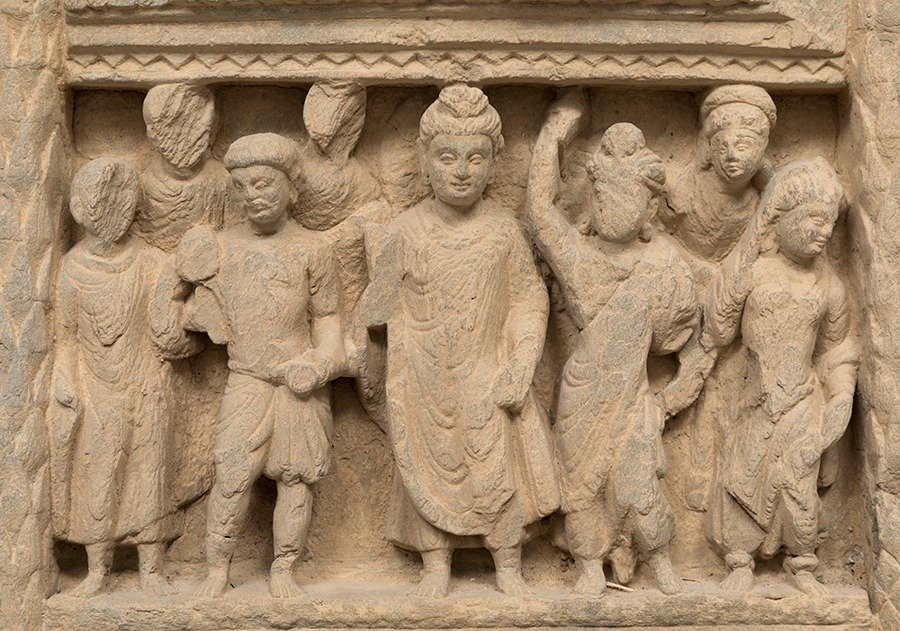
Relief made in schist structured in two central registers of rectangular format, flanked on the sides by four diagonally structured vignettes. All of them, smaller than the central ones, are starred by two characters, each one showing an active and different posture, which gives a great dynamism to the scene. In the central zone there are friezes referring to the life of Buddha, since the central character presents the same characteristics with which he is usually represented. It should be noted that the lower area has a geometric design, from which two large columns depart as palm trunks that serve as a division between the vignettes.
The historical region of Gandhara, which corresponds to the southeast of present-day Afghanistan, central and northern Pakistan, and northwest India, was a satrapy of the Achaemenid Persian Empire from the sixth century BC, conquered by Alexander the Great, remaining Hellenistic with the Greco-Hindu rulers, until it was annexed to the Kushana Empire (first - third centuries AD). The Kushans adopted many elements of Hellenistic culture, adapting the Greek alphabet, etc. to their language. It is because of these historical circumstances that Greco-Buddhist art developed in Gandhara, a syncretism between Greek culture and Buddhism. In particular, Hellenistic sculpture was the main source of influence in the art of Gandhara, since it represented the gods in human form. Later the area also had direct relations with the Roman world, through the trade and cultural exchange that developed through the Silk Road, through which Roman coins and sculptures appeared in Gandhara, depicting emperors, high dignitaries and gods. The Greco-Latin influence in this region was key in its artistic development, both for the formal aspects and for the fact that Buddha was represented in human form. In fact, Gandhara will be the first center, together with Mathura, where not only Sakyamuni or historical Buddha is represented in human form, but also other figures of the Buddhist pantheon. This figurative representation will also favor the expansion of Buddhism throughout East Asia.
Notes:
- The piece includes authenticity certificate.
- The piece includes Spanish Export License (Passport for European Union). NOT TAXES.
- According to Spanish legislation, items sent outside the European Union are subject to export taxes and will be added to the invoice, at the buyer's expense. These export fees are fixed on the final auction price and the tax rate is not applied directly on the total value of the item to be exported, but rather the different percentages by sections are applied to it:
- Up to 6,000 euros: 5%.
- From 6.001 to 60.000 euros: 10%.
This export permit application process can take between 1-2 months maximum.
- The seller guarantees that he acquired this piece according to all national and international laws related to the ownership of cultural property. Provenance statement seen by Catawiki.
#MasterpiecesW39
Seller's Story
Gallery of Ancient Art - Archeology based in Barcelona with more than fifteen years of experience. Specialized in classical art, Egyptian art, Asian art and pre-Columbian art. It guarantees the authenticity of all its pieces. It participates in the most important art fairs in Spain, such as Feriarte, as well as in fairs abroad, BRAFA, Parcours des Mondes, Cultures Brussels.
All the pieces are sent with an Export Permit issued by the Spanish Ministry of Culture.
We are quick to ship via DHL Express or Direct Art Transport.
Translated by Google TranslateRelief with scenes from the life of Buddha
- big relief -
Gandhara
2nd - 3rd century AD
Shist
45.5 cm large and 46.3 cm height
CONDITION: Good condition.
PROVENANCE: Private collection, Asia, 1960.
Relief made in schist structured in two central registers of rectangular format, flanked on the sides by four diagonally structured vignettes. All of them, smaller than the central ones, are starred by two characters, each one showing an active and different posture, which gives a great dynamism to the scene. In the central zone there are friezes referring to the life of Buddha, since the central character presents the same characteristics with which he is usually represented. It should be noted that the lower area has a geometric design, from which two large columns depart as palm trunks that serve as a division between the vignettes.
The historical region of Gandhara, which corresponds to the southeast of present-day Afghanistan, central and northern Pakistan, and northwest India, was a satrapy of the Achaemenid Persian Empire from the sixth century BC, conquered by Alexander the Great, remaining Hellenistic with the Greco-Hindu rulers, until it was annexed to the Kushana Empire (first - third centuries AD). The Kushans adopted many elements of Hellenistic culture, adapting the Greek alphabet, etc. to their language. It is because of these historical circumstances that Greco-Buddhist art developed in Gandhara, a syncretism between Greek culture and Buddhism. In particular, Hellenistic sculpture was the main source of influence in the art of Gandhara, since it represented the gods in human form. Later the area also had direct relations with the Roman world, through the trade and cultural exchange that developed through the Silk Road, through which Roman coins and sculptures appeared in Gandhara, depicting emperors, high dignitaries and gods. The Greco-Latin influence in this region was key in its artistic development, both for the formal aspects and for the fact that Buddha was represented in human form. In fact, Gandhara will be the first center, together with Mathura, where not only Sakyamuni or historical Buddha is represented in human form, but also other figures of the Buddhist pantheon. This figurative representation will also favor the expansion of Buddhism throughout East Asia.
Notes:
- The piece includes authenticity certificate.
- The piece includes Spanish Export License (Passport for European Union). NOT TAXES.
- According to Spanish legislation, items sent outside the European Union are subject to export taxes and will be added to the invoice, at the buyer's expense. These export fees are fixed on the final auction price and the tax rate is not applied directly on the total value of the item to be exported, but rather the different percentages by sections are applied to it:
- Up to 6,000 euros: 5%.
- From 6.001 to 60.000 euros: 10%.
This export permit application process can take between 1-2 months maximum.
- The seller guarantees that he acquired this piece according to all national and international laws related to the ownership of cultural property. Provenance statement seen by Catawiki.
#MasterpiecesW39
Seller's Story
Gallery of Ancient Art - Archeology based in Barcelona with more than fifteen years of experience. Specialized in classical art, Egyptian art, Asian art and pre-Columbian art. It guarantees the authenticity of all its pieces. It participates in the most important art fairs in Spain, such as Feriarte, as well as in fairs abroad, BRAFA, Parcours des Mondes, Cultures Brussels.
All the pieces are sent with an Export Permit issued by the Spanish Ministry of Culture.
We are quick to ship via DHL Express or Direct Art Transport.
Translated by Google TranslateDetails
Culture
Gandhara
Century/ Timeframe
2nd - 3rd century AD
Name of object
Relief with scenes from the life of Buddha. 46.3 cm H.
Acquired from
Private collection
Material
Schist
Condition
Good
Disclaimer
The seller was informed by Catawiki about documentation requirements and guarantees the following: - the object was legally obtained, - the seller has the right to sell and/or export the object, as relevant, - the seller will provide the necessary provenance information and arrange required documentation and permits/licenses, as applicable and as per local laws, - the seller will notify the buyer of any delays in obtaining permits/licenses. By bidding, you acknowledge that import documentation may be required depending on your country of residence and that obtaining permits/licenses may cause delays in the delivery of your object.
The seller was informed by Catawiki about documentation requirements and guarantees the following: - the object was legally obtained, - the seller has the right to sell and/or export the object, as relevant, - the seller will provide the necessary provenance information and arrange required documentation and permits/licenses, as applicable and as per local laws, - the seller will notify the buyer of any delays in obtaining permits/licenses. By bidding, you acknowledge that import documentation may be required depending on your country of residence and that obtaining permits/licenses may cause delays in the delivery of your object.
