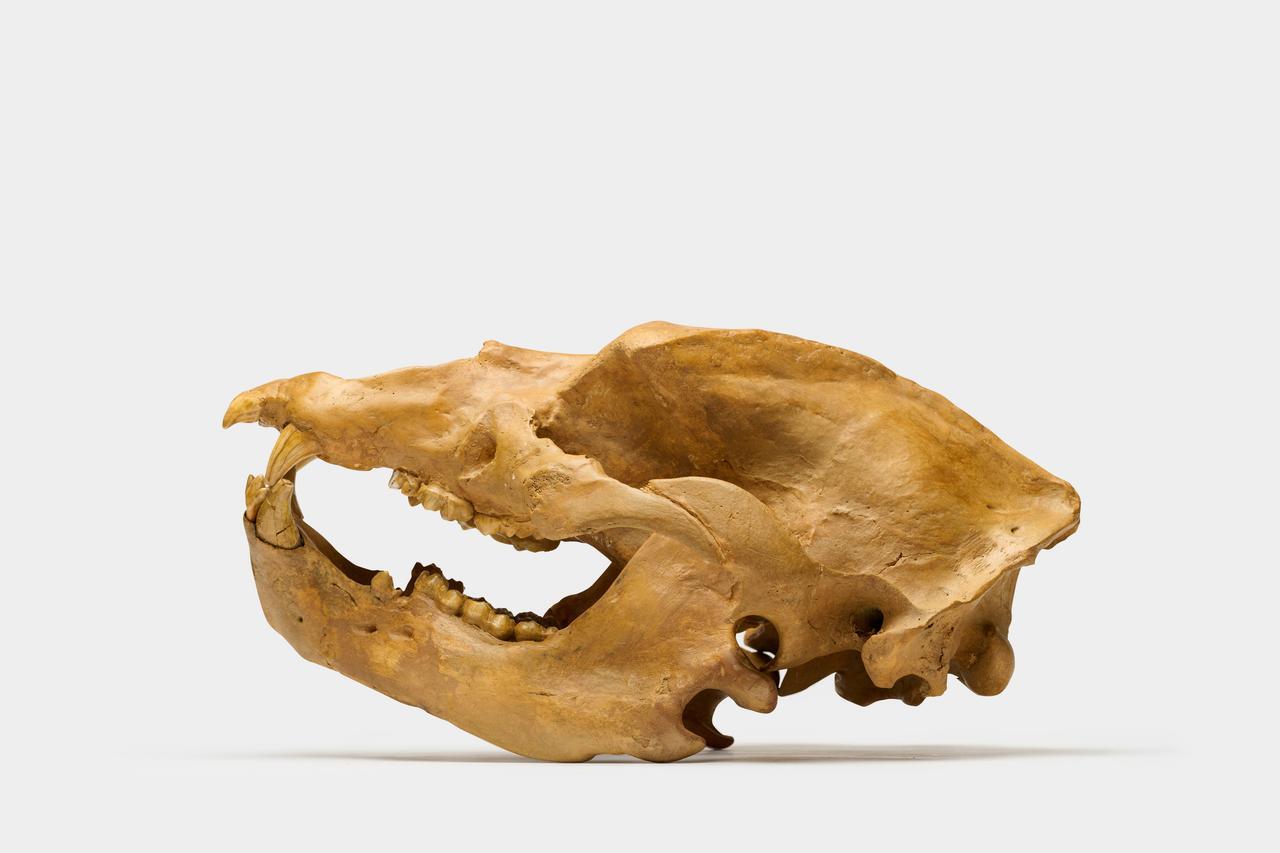
Very rare Jurassic tooth - Fossil tooth - Razanandrongobe sakalavae - 4 cm - 3 cm


00
days
09
hours
34
minutes
15
seconds

6 other people are watching this object
 Bidder 2098 Bidder 2098 | €50 |
|---|
Catawiki Buyer Protection
Your payment’s safe with us until you receive your object.View details
Trustpilot 4.4 | 121899 reviews
Rated Excellent on Trustpilot.
Description from the seller
Rarissimo Jurassic tooth of Razanandrongobe (a huge Jurassic notosuchian from Madagascar)
Its skull and teeth are very similar to those of the subsequent T. rex, which suggests that it probably occupied the same ecological niche.
Razanandrongobe (whose full name means 'ancestor of the great Sakalava lizard') is an extinct genus of notosuchian crocodile that lived during the Middle Jurassic, approximately 167-164 million years ago (Bathonian), in what is now the Sakaraha Formation, Madagascar. The genus contains a single species, R. sakalavae, which represents the oldest known genus of Notosuchia.
Razanandrongobe, like most notosuchians, was probably a terrestrial animal with some cranial adaptations convergent with theropods. What most impressed paleontologists were the animal's incredibly robust teeth, which it likely used to crush bones. The small ridges along the edges of the teeth are very substantial; even larger than those of Tyrannosaurus. A conservative estimate suggests that the skull was about one meter long, and therefore the entire animal was at least 5-6 meters long.
Rarissimo Jurassic tooth of Razanandrongobe (a huge Jurassic notosuchian from Madagascar)
Its skull and teeth are very similar to those of the subsequent T. rex, which suggests that it probably occupied the same ecological niche.
Razanandrongobe (whose full name means 'ancestor of the great Sakalava lizard') is an extinct genus of notosuchian crocodile that lived during the Middle Jurassic, approximately 167-164 million years ago (Bathonian), in what is now the Sakaraha Formation, Madagascar. The genus contains a single species, R. sakalavae, which represents the oldest known genus of Notosuchia.
Razanandrongobe, like most notosuchians, was probably a terrestrial animal with some cranial adaptations convergent with theropods. What most impressed paleontologists were the animal's incredibly robust teeth, which it likely used to crush bones. The small ridges along the edges of the teeth are very substantial; even larger than those of Tyrannosaurus. A conservative estimate suggests that the skull was about one meter long, and therefore the entire animal was at least 5-6 meters long.
Details
Number of items
1
Specimen
Very rare Jurassic tooth
Scientific name
Razanandrongobe sakalavae
Country of Origin
Madagascar
Geological Period
Jurassic (201.3 - 145 million years)
Condition
Natural
Height
4 cm
Width
3 cm
Depth
2 cm
Sold by