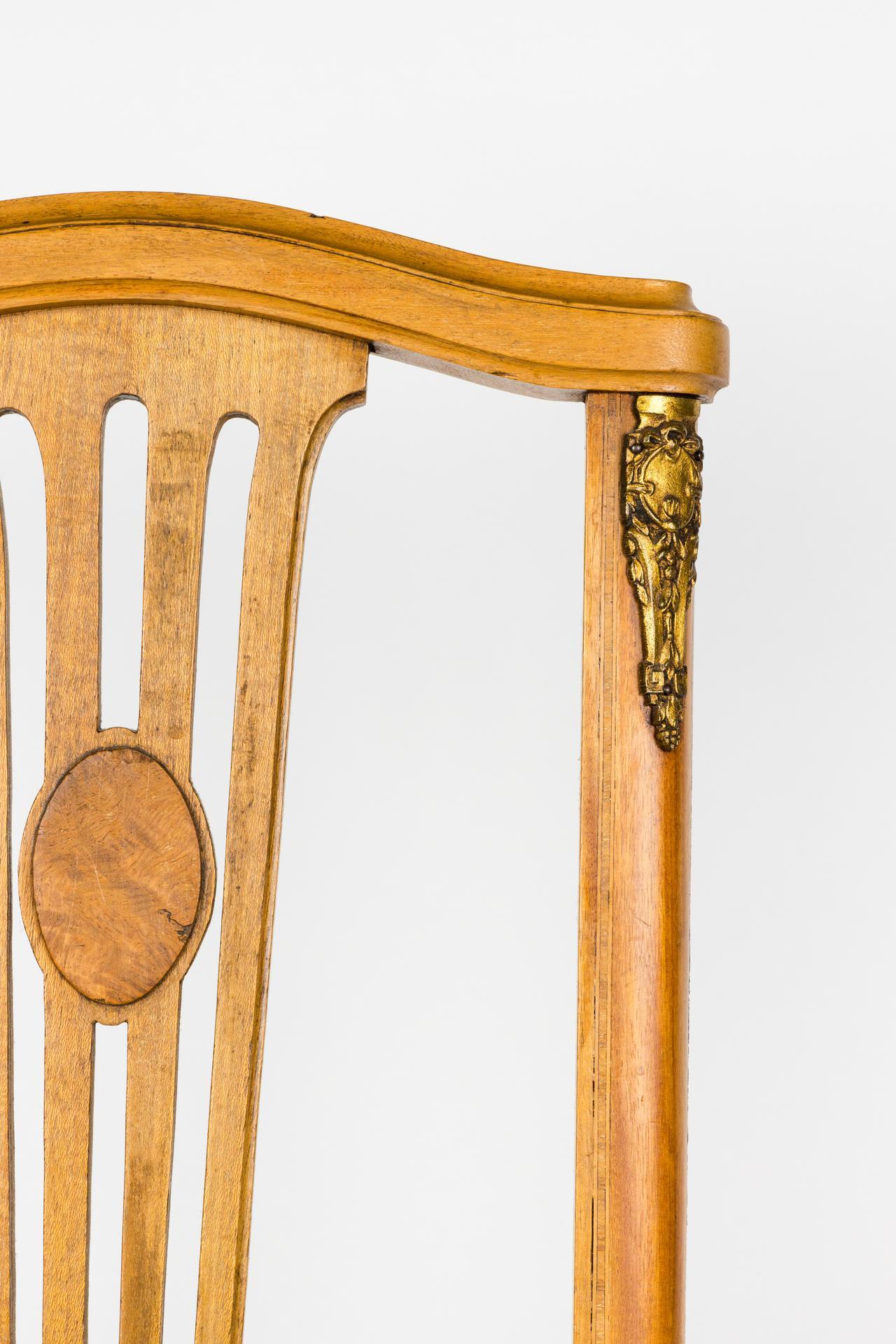
Ferenc Fürst, master carpenter - Prof. Gyula Kaesz - Buffet cabinet (2) - Fully restored - Mahogany, veneer, Pinewood - Sideboard-Buffet 1940s


07
days
17
hours
05
minutes
59
seconds
Starting bid
€ 1
Reserve price not met

Expert
Selected by Michel Karis
Art historian with extensive experience working at various auction houses in antiques.
Estimate € 1,900 - € 2,100
No bids placed
Catawiki Buyer Protection
Your payment’s safe with us until you receive your object.View details
Trustpilot 4.4 | 121899 reviews
Rated Excellent on Trustpilot.
Estimated period 1940–1950; materials include Cuban mahogany veneer over pinewood on a plywood carcass; style Bauhaus.
AI-assisted summary
Description from the seller
A rare and documented Bauhaus–Modernist sideboard designed by Prof. Gyula Kaesz, one of the most influential figures of twentieth-century Hungarian applied arts and design.
Kaesz was a key representative of Central European modernism, integrating the rational clarity of Bauhaus functionalism with refined craftsmanship and proportion. This sideboard appeared in the Hungarian design journal Tér és Forma and relates closely to examples published in the Austrian magazine Innen-Dekoration, both confirming its provenance and Kaesz’s international recognition.
The cabinet is constructed on a 3.8 mm plywood carcass and finished with 2.2 mm thick Cuban mahogany veneer of deep natural tone and subtle sheen. The interior remains completely original, featuring slightly curved shelves with untouched shellac polish and warm patina. The veneered legs have been carefully restored, with partial re-veneering performed by hand and finished with multiple layers of natural oil, preserving the authentic tactile quality and depth of color.
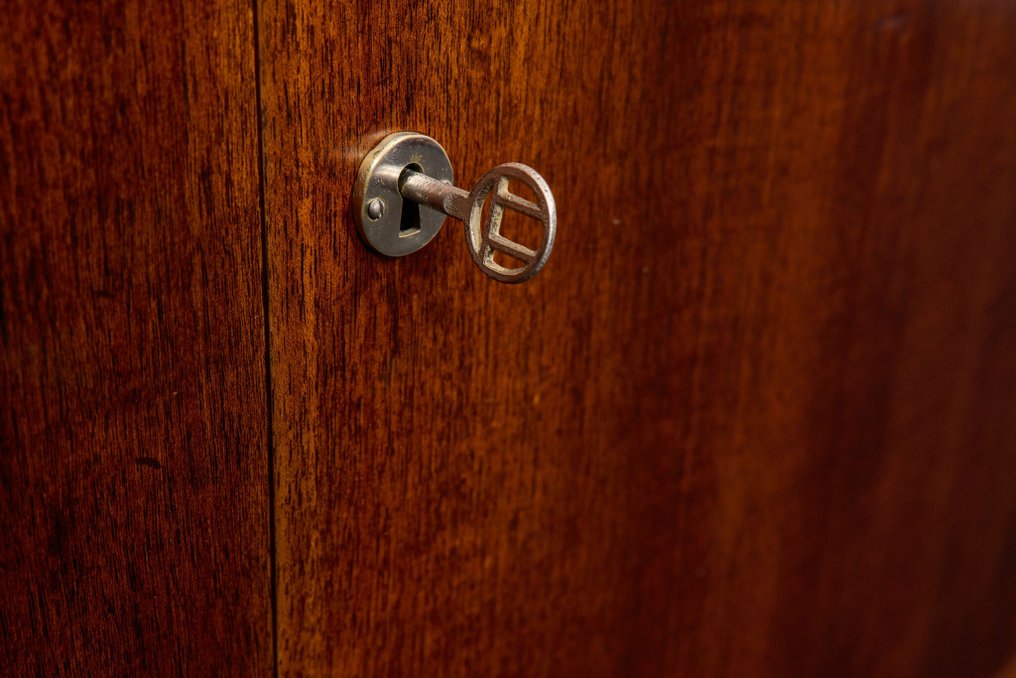
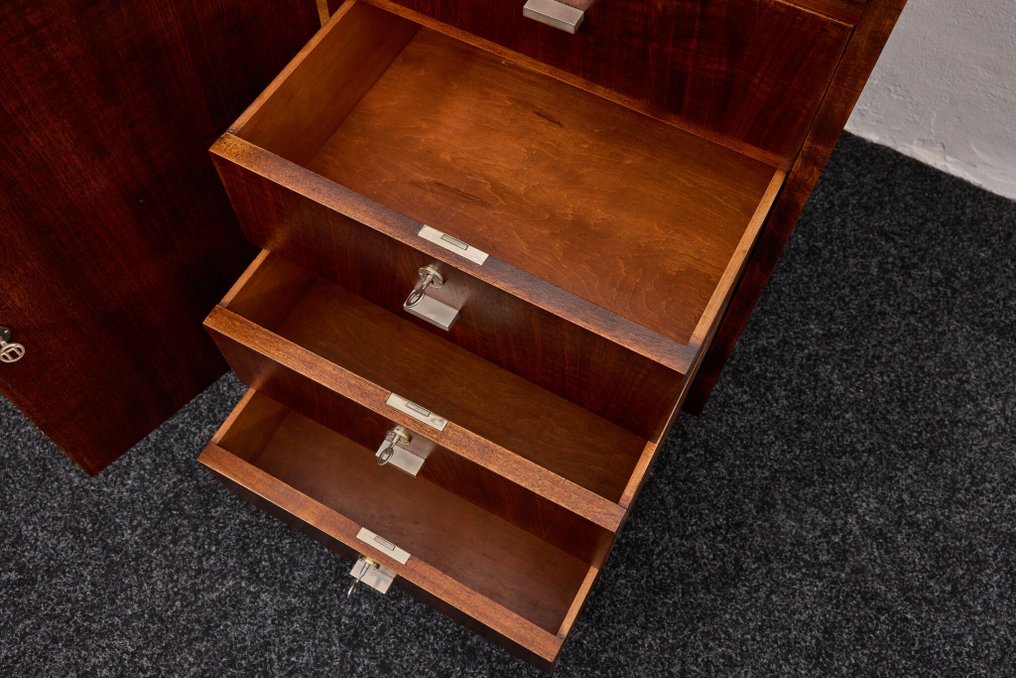
All nickel-plated Kaesz-designed hinges, 4 mm solid round key escutcheons, rectangular metal handles, and original keys are intact and fully functional. The right section contains precisely dovetailed drawers, while the left cabinet features extendable serving trays. The upper removable glass vitrine retains its original beveled glass sliding doors. Every element reflects Kaesz’s exceptional precision and artistic sensibility.
Works by Gyula Kaesz are held in international museum collections, including major Central European design archives and the Museum of Applied Arts in Budapest. This sideboard stands as a museum-quality collector’s piece, representing the pinnacle of Hungarian Bauhaus-inspired modernism — a period when design and craftsmanship existed in perfect harmony.
A rare and documented Bauhaus–Modernist sideboard designed by Prof. Gyula Kaesz, one of the most influential figures of twentieth-century Hungarian applied arts and design.
Kaesz was a key representative of Central European modernism, integrating the rational clarity of Bauhaus functionalism with refined craftsmanship and proportion. This sideboard appeared in the Hungarian design journal Tér és Forma and relates closely to examples published in the Austrian magazine Innen-Dekoration, both confirming its provenance and Kaesz’s international recognition.
The cabinet is constructed on a 3.8 mm plywood carcass and finished with 2.2 mm thick Cuban mahogany veneer of deep natural tone and subtle sheen. The interior remains completely original, featuring slightly curved shelves with untouched shellac polish and warm patina. The veneered legs have been carefully restored, with partial re-veneering performed by hand and finished with multiple layers of natural oil, preserving the authentic tactile quality and depth of color.
All nickel-plated Kaesz-designed hinges, 4 mm solid round key escutcheons, rectangular metal handles, and original keys are intact and fully functional. The right section contains precisely dovetailed drawers, while the left cabinet features extendable serving trays. The upper removable glass vitrine retains its original beveled glass sliding doors. Every element reflects Kaesz’s exceptional precision and artistic sensibility.
Works by Gyula Kaesz are held in international museum collections, including major Central European design archives and the Museum of Applied Arts in Budapest. This sideboard stands as a museum-quality collector’s piece, representing the pinnacle of Hungarian Bauhaus-inspired modernism — a period when design and craftsmanship existed in perfect harmony.
Details
Era
1900-2000
Title additional information
Sideboard-Buffet 1940s
No. of items
2
Country of Origin
Hungary
Manufacturer/ Brand
Ferenc Fürst, master carpenter
Model
Fully restored
Designer/Artist/Maker
Prof. Gyula Kaesz
Material
veneer, Mahogany, Pinewood
Style
Bauhaus
Condition
Excellent condition: barely used with minimal signs of wear
Height
85 cm
Width
153 cm
Depth
55 cm
Estimated Period
1940-1950
Can Be Locked
Yes
Sold by