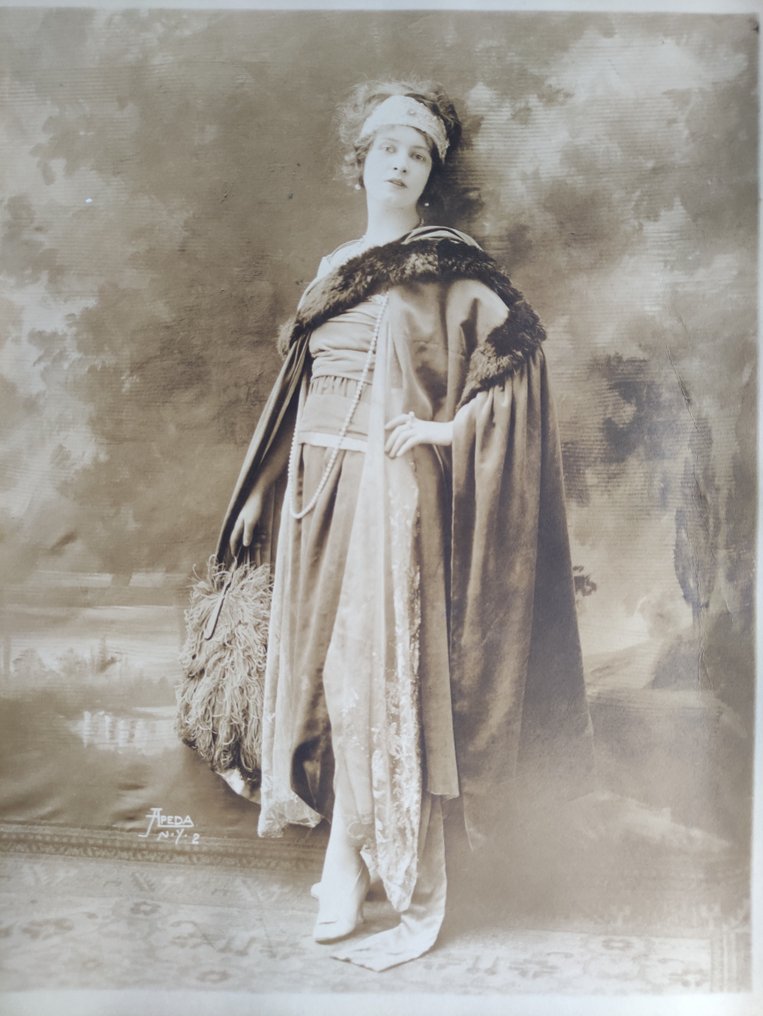
Apeda Studio N. Y. - Louise Reef


09
days
21
hours
58
minutes
04
seconds
Current bid
€ 1
No reserve price

Expert
Selected by Volker Riepenhausen
Specialist in travel literature and pre-1600 rare prints with 28 years experience.
Estimate € 150 - € 200
6 other people are watching this object
 Bidder 8633 Bidder 8633 | €1 |
|---|
Catawiki Buyer Protection
Your payment’s safe with us until you receive your object.View details
Trustpilot 4.4 | 121980 reviews
Rated Excellent on Trustpilot.
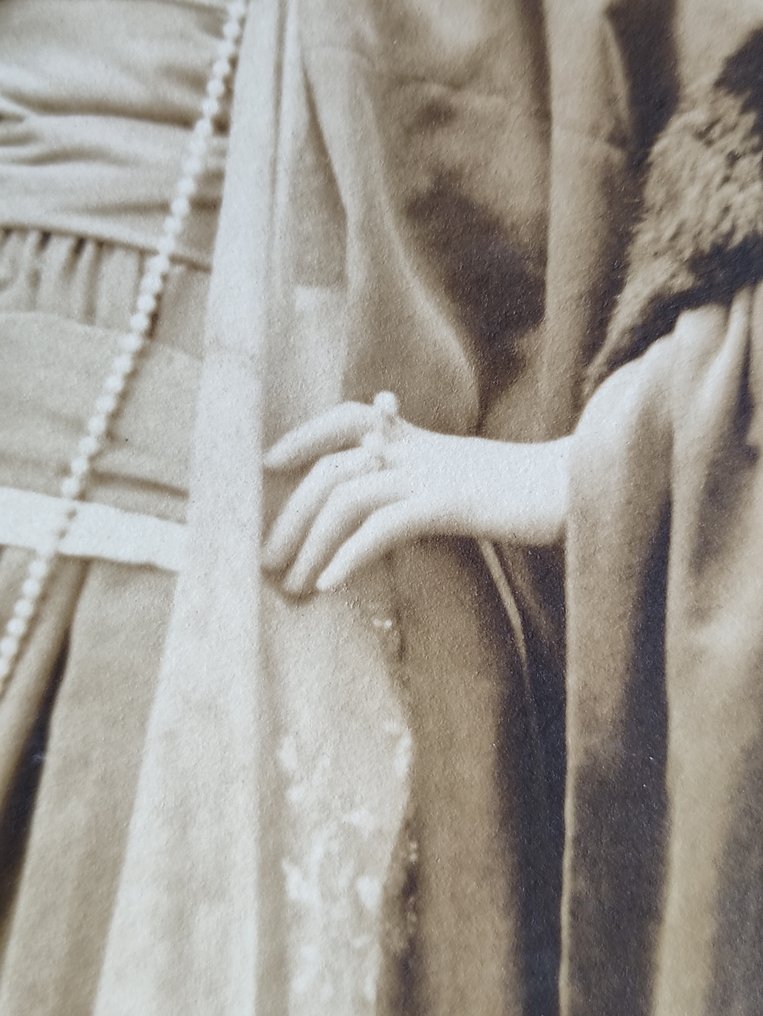
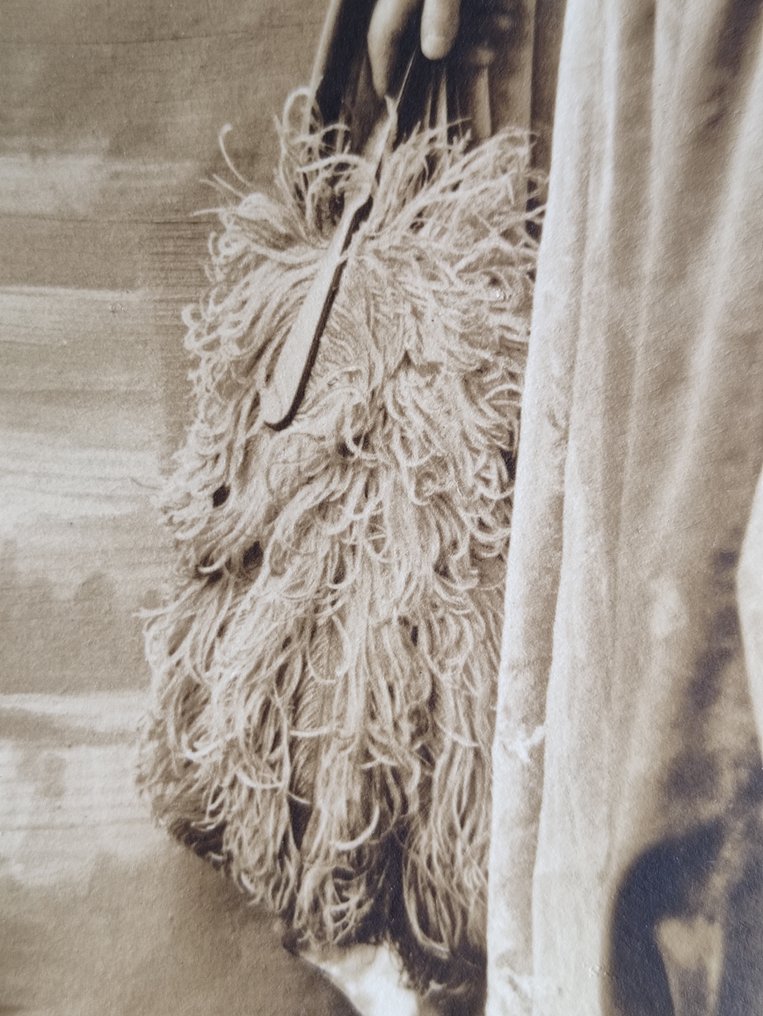
Louise Reef is an Autochrome photograph by Apeda Studio N. Y., 20 cm high by 25 cm wide, in SUP condition, signed on the plate, a fashion portrait.
AI-assisted summary
Description from the seller
Superb photograph of actress Louise Reef taken by the famous photography studio Apeda, Broadway, N.Y.
Apeda was a diversified corporate studio located in New York, founded in 1906 by its partners Alexander W. Dreyfoos and Henry Obstfield. Since its inception, it pursued two business strategies: creating original portraits and reproducing, under its own brand, royalty-free images taken by other photographers, including media scenes or celebrities. Dreyfoos was the chief photographer, and he is credited with developing sports portraiture beyond baseball and boxing imagery, making it a field as broad as theatrical portraiture, both in its treatment and promotion.
The main advantage of Apeda among the studios in the New York area was its possession of industrial photography developers and postcard printers. Whenever a New York photographer took a photo that they could not reproduce and sell themselves, or took a photograph that could not be protected by copyright due to the absence of a contract between the photographer and the model (for example, images of Broadway scenes taken with a flash), Apeda would obtain a copy, erase any names or trademarks appearing on the photo, and affix its own Apeda signature.
In 1912, they began selling copies of White Studio's production plates for 'The Chorus Lady', 'A Gentleman of Leisure', 'Gentleman from Mississippi', and 'Thais' under the name Apeda. Apeda won the subsequent lawsuit, White Studio v. Dreyfoos, in a landmark copyright case. The decision was based on the court's understanding of the concept of work on demand. If an actor hired White Studio to create a portrait, nothing prevented them from going to Apeda to reproduce that image in hundreds of copies at a lower cost than White would charge, since the actor himself held the copyright to the portrait.
Like Underwood & Underwood, Apeda purchased entire archives of photographers who were facing business difficulties or relocating to other parts of the country. For example, Apeda bought the negatives of the Geisler-Andrews firm after the partners split up. In the 1920s, Obstfeld handed over management of the company to Harold Danziger, whose background was in theater management. Dreyfoos remained the principal photographer, personally conducting sessions and supervising a small team of event and portrait photographers for university directories.
During the 1930s and 1940s, Apeda ceased its activities in the performing arts, turning to advertising imagery, industrial photography, high school class portraits, and portraits of the armed forces. By the end of the 20th century, it was reorganized as Apco Apeda and operated until the 1990s, when its headquarters in New York encountered difficulties with the Environmental Protection Agency due to chemical pollution. David S. Shields/ALS
Specialty
The several photographers who worked under contract with Apeda over the years all mastered contemporary portrait styles, often imitating the distinctive features of renowned photographers of the time. If there was a discernible skill unique to the company's photography, it was the ability to depict the subject's entire body. While full-body portraits were common in sports and dance photography, they became rare in theatrical portraiture of the 1920s, with full shots associated with production photos. Apeda's photographers challenged this trend, creating full-body portraits unrelated to production after this practice had fallen out of fashion in Manhattan.
University of California
Ray Martin, the museum collection donor, stated that she personally photographed Senator Claiborne Pell's wedding while working for Hill. Hill ultimately married five debutantes successively, according to Martin. His works were frequently published in Vanity Fair, Town and Country, and other magazines, and he produced his best work starting from 1920.
Hill Studio was located at 677 Fifth Avenue, near 53rd Street, according to a 1946 letter on letterhead 'Studio Ira L. Hill'. It is unknown whether the studio has always been at that location.
Ray Martin worked for Hill from 1936 to 1938. After Hill's death, Martin bought the studio and operated it until around 1960. Photographs in the collection dated after 1939 were probably taken by Mr. Martin or under his supervision. The early photographs of Hill and Martin were put into storage for several years after Martin closed the studio, which he later donated to the Division of the History of Photography at the Museum of History and Technology in the 1960s. The Division ultimately registered the collection in 1981 (acquisition number 1981.0463).
Although some sources cite 1938 as the year of Hill's death, a New York Times article from November 21, 1939, describes the arrest of 'society photographer' Ira L. Hill after a fight at his ex-wife's house.
Smithsonian Institute
Superb photograph of actress Louise Reef taken by the famous photography studio Apeda, Broadway, N.Y.
Apeda was a diversified corporate studio located in New York, founded in 1906 by its partners Alexander W. Dreyfoos and Henry Obstfield. Since its inception, it pursued two business strategies: creating original portraits and reproducing, under its own brand, royalty-free images taken by other photographers, including media scenes or celebrities. Dreyfoos was the chief photographer, and he is credited with developing sports portraiture beyond baseball and boxing imagery, making it a field as broad as theatrical portraiture, both in its treatment and promotion.
The main advantage of Apeda among the studios in the New York area was its possession of industrial photography developers and postcard printers. Whenever a New York photographer took a photo that they could not reproduce and sell themselves, or took a photograph that could not be protected by copyright due to the absence of a contract between the photographer and the model (for example, images of Broadway scenes taken with a flash), Apeda would obtain a copy, erase any names or trademarks appearing on the photo, and affix its own Apeda signature.
In 1912, they began selling copies of White Studio's production plates for 'The Chorus Lady', 'A Gentleman of Leisure', 'Gentleman from Mississippi', and 'Thais' under the name Apeda. Apeda won the subsequent lawsuit, White Studio v. Dreyfoos, in a landmark copyright case. The decision was based on the court's understanding of the concept of work on demand. If an actor hired White Studio to create a portrait, nothing prevented them from going to Apeda to reproduce that image in hundreds of copies at a lower cost than White would charge, since the actor himself held the copyright to the portrait.
Like Underwood & Underwood, Apeda purchased entire archives of photographers who were facing business difficulties or relocating to other parts of the country. For example, Apeda bought the negatives of the Geisler-Andrews firm after the partners split up. In the 1920s, Obstfeld handed over management of the company to Harold Danziger, whose background was in theater management. Dreyfoos remained the principal photographer, personally conducting sessions and supervising a small team of event and portrait photographers for university directories.
During the 1930s and 1940s, Apeda ceased its activities in the performing arts, turning to advertising imagery, industrial photography, high school class portraits, and portraits of the armed forces. By the end of the 20th century, it was reorganized as Apco Apeda and operated until the 1990s, when its headquarters in New York encountered difficulties with the Environmental Protection Agency due to chemical pollution. David S. Shields/ALS
Specialty
The several photographers who worked under contract with Apeda over the years all mastered contemporary portrait styles, often imitating the distinctive features of renowned photographers of the time. If there was a discernible skill unique to the company's photography, it was the ability to depict the subject's entire body. While full-body portraits were common in sports and dance photography, they became rare in theatrical portraiture of the 1920s, with full shots associated with production photos. Apeda's photographers challenged this trend, creating full-body portraits unrelated to production after this practice had fallen out of fashion in Manhattan.
University of California
Ray Martin, the museum collection donor, stated that she personally photographed Senator Claiborne Pell's wedding while working for Hill. Hill ultimately married five debutantes successively, according to Martin. His works were frequently published in Vanity Fair, Town and Country, and other magazines, and he produced his best work starting from 1920.
Hill Studio was located at 677 Fifth Avenue, near 53rd Street, according to a 1946 letter on letterhead 'Studio Ira L. Hill'. It is unknown whether the studio has always been at that location.
Ray Martin worked for Hill from 1936 to 1938. After Hill's death, Martin bought the studio and operated it until around 1960. Photographs in the collection dated after 1939 were probably taken by Mr. Martin or under his supervision. The early photographs of Hill and Martin were put into storage for several years after Martin closed the studio, which he later donated to the Division of the History of Photography at the Museum of History and Technology in the 1960s. The Division ultimately registered the collection in 1981 (acquisition number 1981.0463).
Although some sources cite 1938 as the year of Hill's death, a New York Times article from November 21, 1939, describes the arrest of 'society photographer' Ira L. Hill after a fight at his ex-wife's house.
Smithsonian Institute
Details
Artist
Apeda Studio N. Y.
Sold by
Owner or reseller
Title of artwork
Louise Reef
Condition
Extremely fine
Technique
Autochrome process
Height
20 cm
Width
25 cm
Signature
Plate signed
Genre
Fashion