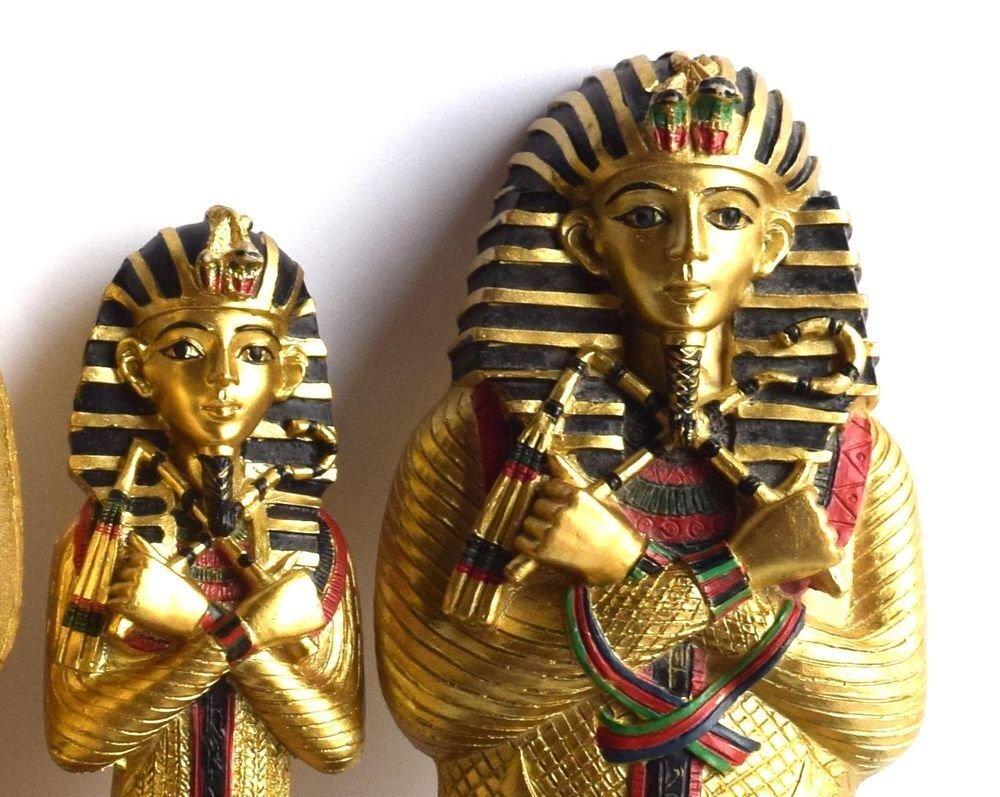
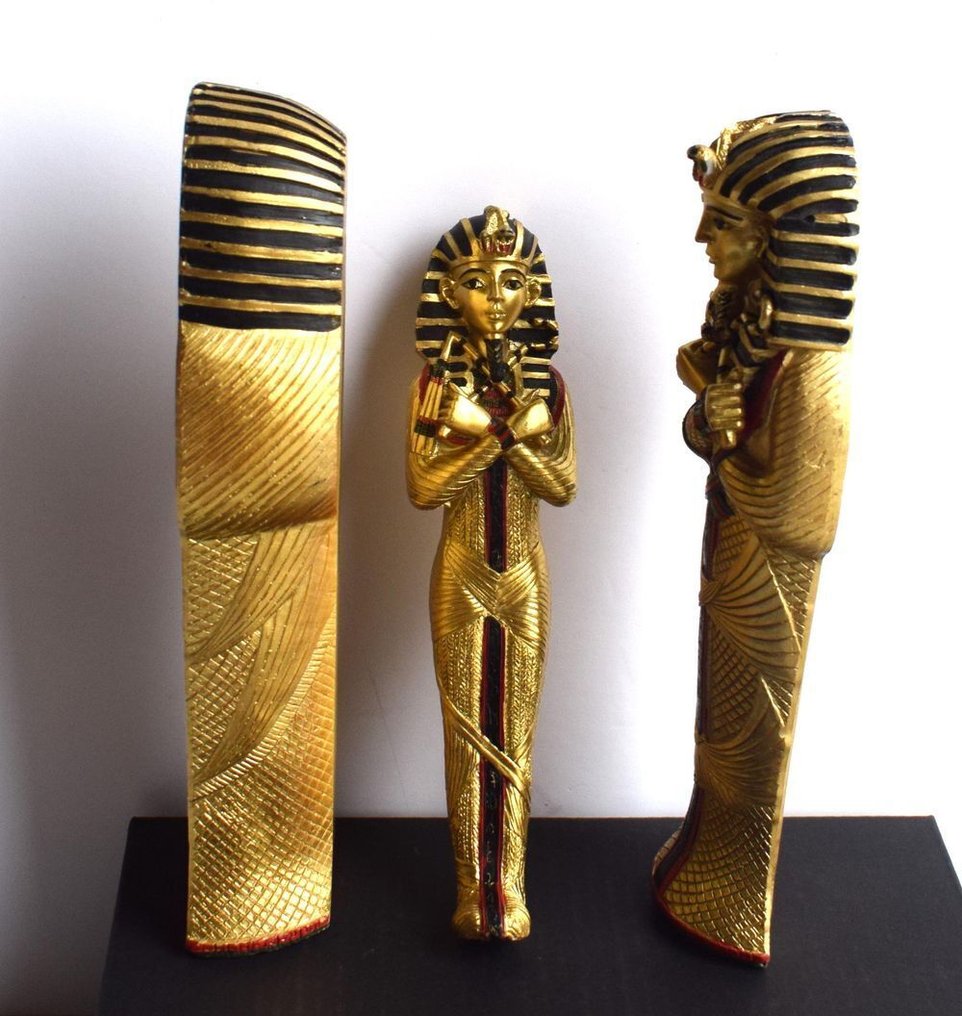
Themed collection - Polychrome figurine, 17 cm, of Tutankhamun's tomb.



05
days
09
hours
16
minutes
37
seconds

9 other people are watching this object
 Bidder 4202 Bidder 4202 | €15 | |
|---|---|---|
 Bidder 9168 Bidder 9168 | €10 | |
| Bidder 4202 | €5 | |
Catawiki Buyer Protection
Your payment’s safe with us until you receive your object.View details
Trustpilot 4.4 | 122529 reviews
Rated Excellent on Trustpilot.
Description from the seller
Ancient Egyptian figurine: Polychrome funerary sarcophagus from the tomb of Pharaoh Tutankhamun
Gold resin mold in 3 pieces: Tutankhamun's mummy - the body of the sarcophagus + its lid.
Size: 17 cm x 7 cm x 6 cm
Weight: 430 g
Fast and careful shipping via Colissimo La Poste, registered with signature and insurance.
Please be present during the delivery.
Articles are pre-packaged upon their listing on CATAWIKI – therefore, group orders are not possible.
The sarcophagus and mummy of Tutankhamun are among the most famous archaeological discoveries of ancient Egypt. Tutankhamun was a pharaoh of the 18th dynasty, who lived around 1332-1323 BC, known for his nearly intact tomb.
Tutankhamun's mummy rests in a wooden sarcophagus covered with gold leaf, symbolizing the wealth and divinity of the pharaoh. The main sarcophagus contained several wooden coffins, some also covered with gold, designed to protect the body in the afterlife.
The mummy itself is incredibly well preserved, with thin skin and visible bones, demonstrating the skill of the Egyptian artisans.
The mummy's head is adorned with the famous crown of Némès, a royal headdress, and the body is wrapped in linen bandages soaked in resin.
The discovery of the tomb in 1922 by archaeologist Howard Carter revealed an invaluable treasure, notably the famous solid gold funerary mask, adorned with lapis lazuli and carnelian, depicting the face of the pharaoh.
This tomb is unique because it is one of the few to have escaped looting, allowing researchers to study the royalty of Ancient Egypt up close.
The tomb of Tutankhamun illustrates Egypt's sophisticated funeral practice aimed at ensuring the king's rebirth in the afterlife.
His sarcophagus and his mummy have helped us learn more about the culture, religion, and art of this millennia-old civilization. The richness of his funerary objects also testifies to the symbolic and religious importance of these rites of passage.
Today, the mummy and the sarcophagus of Tutankhamun remain major symbols of ancient Egypt, attracting millions of visitors and archaeologists from around the world.
Ancient Egyptian figurine: Polychrome funerary sarcophagus from the tomb of Pharaoh Tutankhamun
Gold resin mold in 3 pieces: Tutankhamun's mummy - the body of the sarcophagus + its lid.
Size: 17 cm x 7 cm x 6 cm
Weight: 430 g
Fast and careful shipping via Colissimo La Poste, registered with signature and insurance.
Please be present during the delivery.
Articles are pre-packaged upon their listing on CATAWIKI – therefore, group orders are not possible.
The sarcophagus and mummy of Tutankhamun are among the most famous archaeological discoveries of ancient Egypt. Tutankhamun was a pharaoh of the 18th dynasty, who lived around 1332-1323 BC, known for his nearly intact tomb.
Tutankhamun's mummy rests in a wooden sarcophagus covered with gold leaf, symbolizing the wealth and divinity of the pharaoh. The main sarcophagus contained several wooden coffins, some also covered with gold, designed to protect the body in the afterlife.
The mummy itself is incredibly well preserved, with thin skin and visible bones, demonstrating the skill of the Egyptian artisans.
The mummy's head is adorned with the famous crown of Némès, a royal headdress, and the body is wrapped in linen bandages soaked in resin.
The discovery of the tomb in 1922 by archaeologist Howard Carter revealed an invaluable treasure, notably the famous solid gold funerary mask, adorned with lapis lazuli and carnelian, depicting the face of the pharaoh.
This tomb is unique because it is one of the few to have escaped looting, allowing researchers to study the royalty of Ancient Egypt up close.
The tomb of Tutankhamun illustrates Egypt's sophisticated funeral practice aimed at ensuring the king's rebirth in the afterlife.
His sarcophagus and his mummy have helped us learn more about the culture, religion, and art of this millennia-old civilization. The richness of his funerary objects also testifies to the symbolic and religious importance of these rites of passage.
Today, the mummy and the sarcophagus of Tutankhamun remain major symbols of ancient Egypt, attracting millions of visitors and archaeologists from around the world.
Details
Number of objects
3
Type
Polychrome figurine, 17 cm, of Tutankhamun's tomb.
Period
Late 20th century
Condition
Excellent
Sold by