Portico clock Louis XVI - Gilt bronze - 1790

Opens 17:00
Starting bid
€ 1
Add to your favourites to get an alert when the auction starts.

Expert
Selected by Paula Martin-Calero Toro
Holds a degree in art history; over six years cataloguing and appraising antiques.
Estimate € 2,000 - € 2,500
Catawiki Buyer Protection
Your payment’s safe with us until you receive your object.View details
Trustpilot 4.4 | 121899 reviews
Rated Excellent on Trustpilot.
Description from the seller
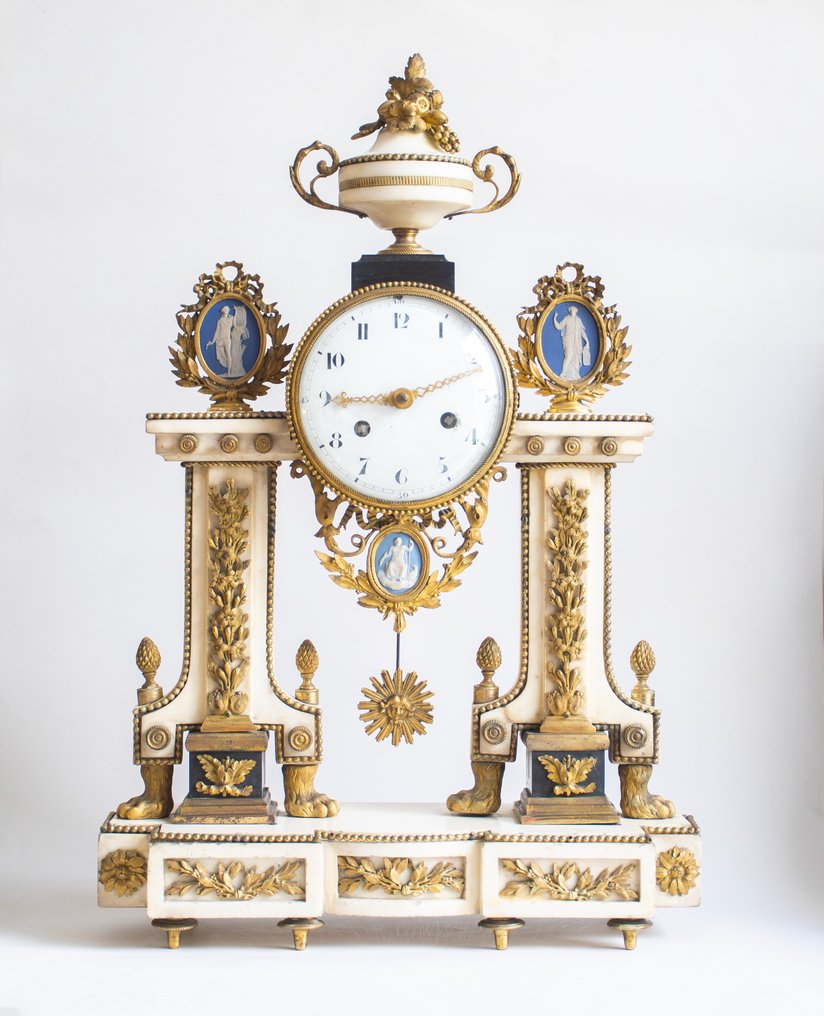
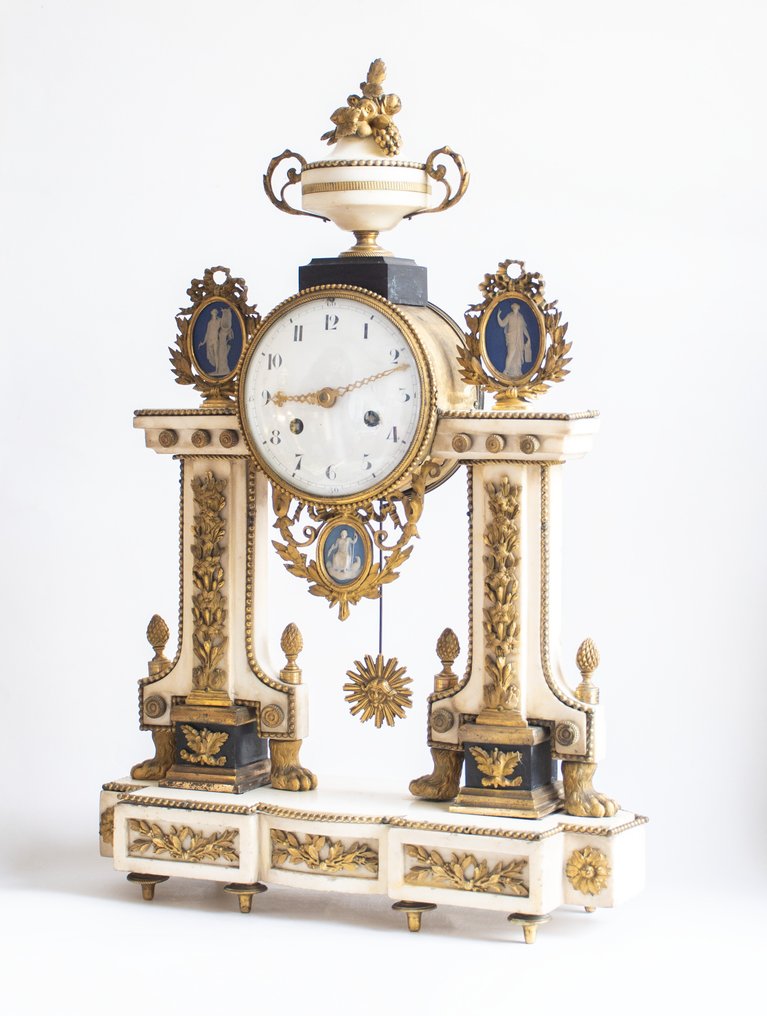
Superb Louis XVI-era portico clock, made of finely worked white marble and chiseled and gilded bronze.
This model gracefully illustrates the neoclassical vocabulary dear to the years 1770-1780: ribbons, pearls, pompons, and trimmings blend with vegetal scrolls, rosettes, palmettes, and urn-shaped motifs. The refined taste for Wedgwood biscuit cameos, very fashionable during the second half of the 18th century, adds a touch of English delicacy to French elegance.
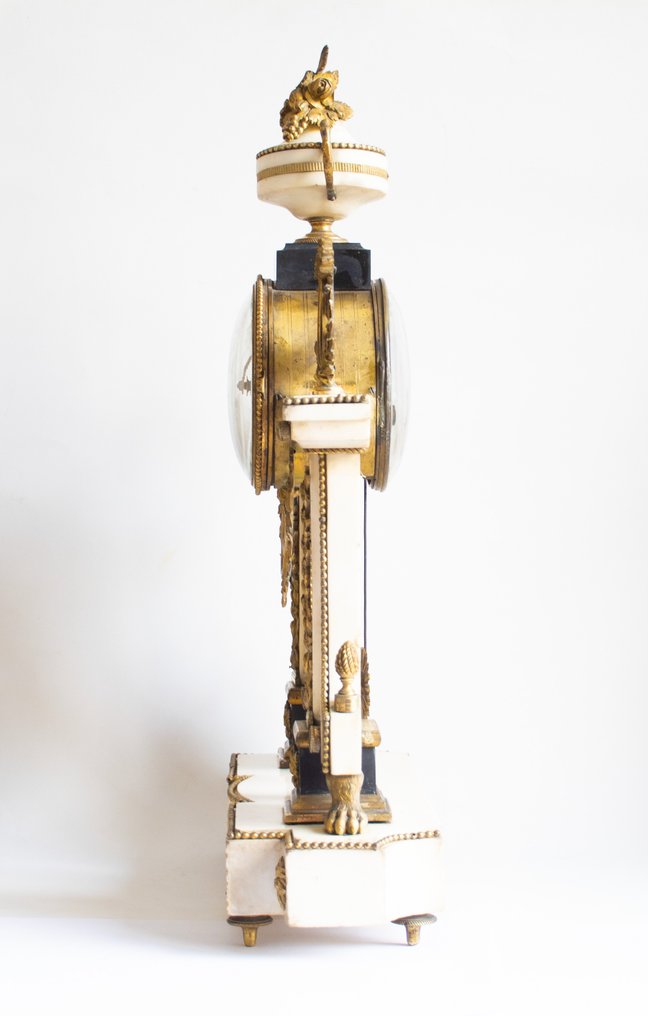
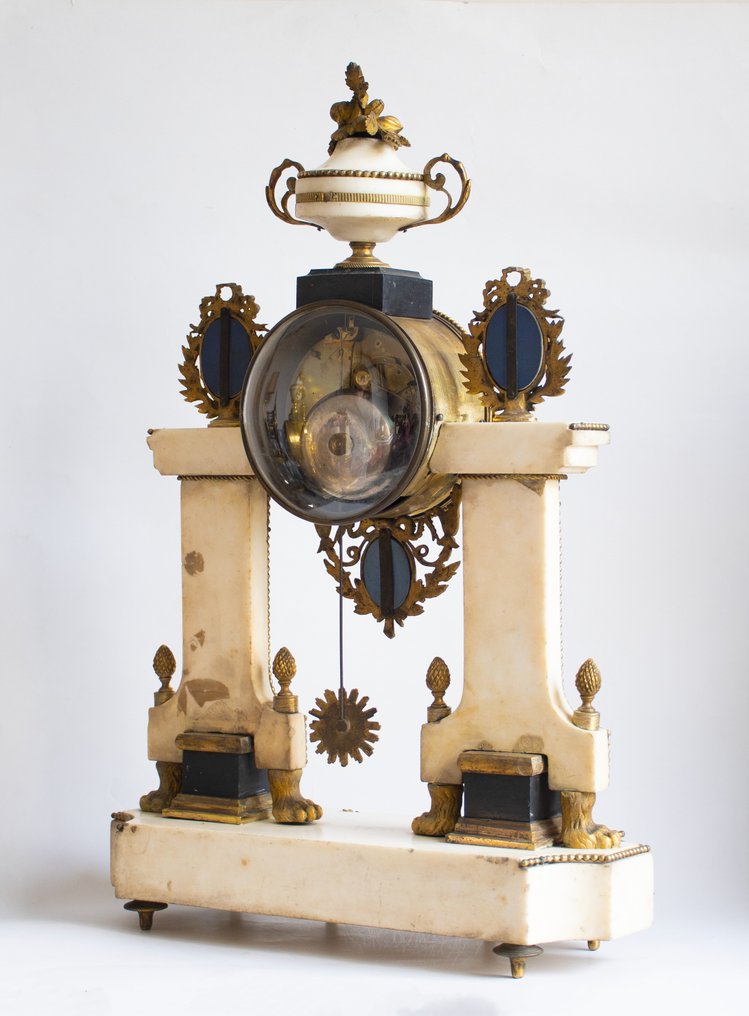
The white enamel dial with Arabic numerals is set within a sumptuous frame: it is topped with a covered vase decorated with fruits and flowers in an antique style, framed by two oval Wedgwood biscuit medallions, surrounded by laurel garlands and ribbons. Beneath the movement, fringes, pompons, and botanical motifs extend around a third medallion. The straight entablature, edged with a row of pearls and punctuated by rosettes, connects the two supports. These supports, decorated with scrollwork, are flanked by small pinecones on dice and rest on bases topped with lion paws.
The base, adorned with delicate garlands and rosettes, supports a pendulum depicting a radiant Apollo head.
Blending the purity of white marble with the richness of gilded bronze and the preciousness of Wedgwood cameos, this clock testifies to the excellence of Parisian workshops under the reign of Louis XVI and will appeal to connoisseurs of refined watchmaking and neoclassical furniture.
Superb Louis XVI-era portico clock, made of finely worked white marble and chiseled and gilded bronze.
This model gracefully illustrates the neoclassical vocabulary dear to the years 1770-1780: ribbons, pearls, pompons, and trimmings blend with vegetal scrolls, rosettes, palmettes, and urn-shaped motifs. The refined taste for Wedgwood biscuit cameos, very fashionable during the second half of the 18th century, adds a touch of English delicacy to French elegance.
The white enamel dial with Arabic numerals is set within a sumptuous frame: it is topped with a covered vase decorated with fruits and flowers in an antique style, framed by two oval Wedgwood biscuit medallions, surrounded by laurel garlands and ribbons. Beneath the movement, fringes, pompons, and botanical motifs extend around a third medallion. The straight entablature, edged with a row of pearls and punctuated by rosettes, connects the two supports. These supports, decorated with scrollwork, are flanked by small pinecones on dice and rest on bases topped with lion paws.
The base, adorned with delicate garlands and rosettes, supports a pendulum depicting a radiant Apollo head.
Blending the purity of white marble with the richness of gilded bronze and the preciousness of Wedgwood cameos, this clock testifies to the excellence of Parisian workshops under the reign of Louis XVI and will appeal to connoisseurs of refined watchmaking and neoclassical furniture.
Details
Over 200 years old
Yes
Bronze type
Gilt bronze
Style subtype
Louis XVI
Era
1400-1900
Clock type
Portico clock
Material
Bronze, Marble
Clock mechanism
Mechanical
Power Reserve
8 day movement
Striking
half hour, one bell
Style
Antique
Country of Origin
France
Condition
Good condition - used with small signs of ageing
In working order
Yes
Height
54 cm
Width
35 cm
Depth
14 cm
Estimated period
1790
Weight
10 kg
