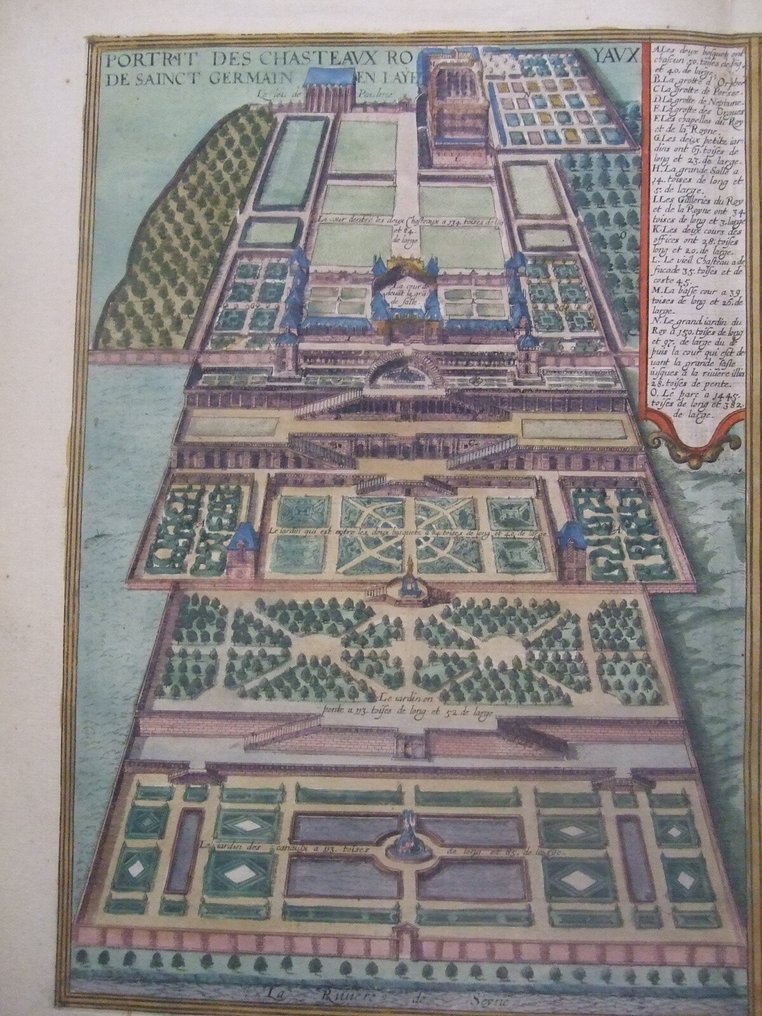
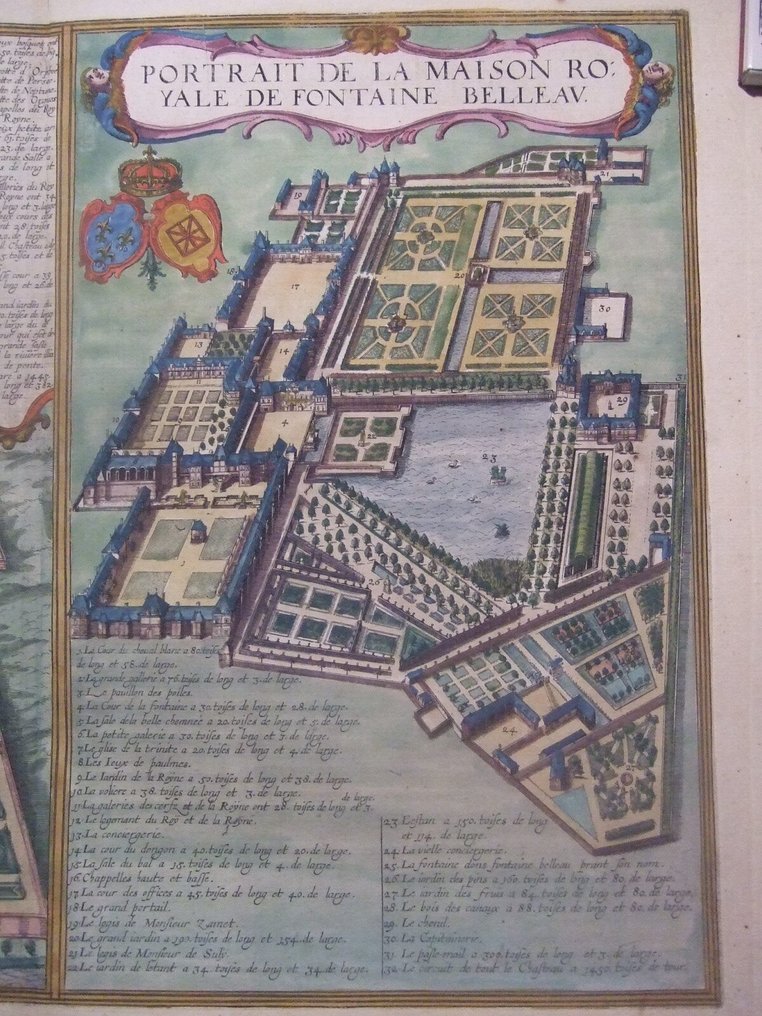
France - Paris, Château de Saint-Germain-en-Laye, Palace of Fontainebleau; Braun & Hogenberg - Portrait des Chasteaux Royaux de St. Germain en Laye - Portrait de la Maison Royale de Fontaine - 1601-1620


Opens 11:00
Starting bid
€ 1
Add to your favourites to get an alert when the auction starts.

Expert
Selected by Ilaria Colombo
Specialist in old books, specialising in theological disputes since 1999.
Estimate € 300 - € 500
Catawiki Buyer Protection
Your payment’s safe with us until you receive your object.View details
Trustpilot 4.4 | 121798 reviews
Rated Excellent on Trustpilot.
Description from the seller
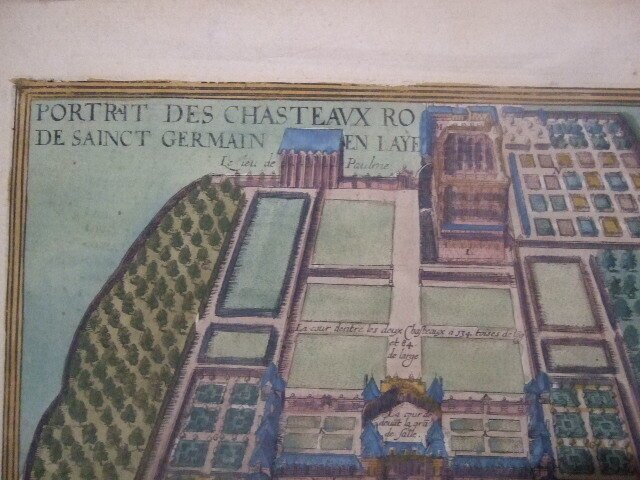
1617, from the rare 6th volume of the Civitates Orbis Terrarum , two bird's-eye plans of the royal palaces in Saint-Germain-en-Laye and Fontainebleau.
beautiful colored , very decorative
in fine condition
shipping by registered mail only - NO SHIPPING TO THE USA ! sorry.
------- The Civitates Orbis Terrarum, also known as the 'Braun & Hogenberg', is a six-volume town atlas and the most excellent book of town views and plans ever published: 363 engravings, sometimes beautifully coloured. It was one of the best-selling works in the last quarter of the 16th century. Georg Braun, a skilled writer, wrote the text accompanying the plans and views on the verso. Many plates were engraved after the original drawings of a professional artist, Joris Hoefnagel (1542-1600). ...
Palace of Fontainebleau located 55 kilometers (34 miles) southeast of the center of Paris, in the commune of Fontainebleau, is one of the largest French royal châteaux. It served as a hunting lodge and autumn residence for many of the French monarchs, including Louis VII, Francis I, Henry II, Louis-Philippe, Napoleon I, and Napoleon III. Though the monarchs only resided there for a few months of the year, they gradually transformed it into a genuine palace, filled with art and decoration. It became a national museum in 1927 and was designated a UNESCO World Heritage Site in 1981 for its unique architecture and historical importance.
The Château de Saint-Germain-en-Laye, originally constructed in the 12th century, has served various roles throughout its existence. Once a hunting lodge for French kings, it has been transformed into a grand royal residence. The castle's architectural evolution reflects the changing tastes and styles of the time, showcasing elements from the medieval period to the Renaissance.
As footsteps echo through the halls, the rich tapestry of history unfolds. Notable figures, including King Louis XIV, were born here, adding to the castle's significance in French royal history. The impressive façade, adorned with intricate stonework and elegant arches, invites admiration and curiosity.
Within the castle's walls, now the National Archaeological Museum is housed.
1617, from the rare 6th volume of the Civitates Orbis Terrarum , two bird's-eye plans of the royal palaces in Saint-Germain-en-Laye and Fontainebleau.
beautiful colored , very decorative
in fine condition
shipping by registered mail only - NO SHIPPING TO THE USA ! sorry.
------- The Civitates Orbis Terrarum, also known as the 'Braun & Hogenberg', is a six-volume town atlas and the most excellent book of town views and plans ever published: 363 engravings, sometimes beautifully coloured. It was one of the best-selling works in the last quarter of the 16th century. Georg Braun, a skilled writer, wrote the text accompanying the plans and views on the verso. Many plates were engraved after the original drawings of a professional artist, Joris Hoefnagel (1542-1600). ...
Palace of Fontainebleau located 55 kilometers (34 miles) southeast of the center of Paris, in the commune of Fontainebleau, is one of the largest French royal châteaux. It served as a hunting lodge and autumn residence for many of the French monarchs, including Louis VII, Francis I, Henry II, Louis-Philippe, Napoleon I, and Napoleon III. Though the monarchs only resided there for a few months of the year, they gradually transformed it into a genuine palace, filled with art and decoration. It became a national museum in 1927 and was designated a UNESCO World Heritage Site in 1981 for its unique architecture and historical importance.
The Château de Saint-Germain-en-Laye, originally constructed in the 12th century, has served various roles throughout its existence. Once a hunting lodge for French kings, it has been transformed into a grand royal residence. The castle's architectural evolution reflects the changing tastes and styles of the time, showcasing elements from the medieval period to the Renaissance.
As footsteps echo through the halls, the rich tapestry of history unfolds. Notable figures, including King Louis XIV, were born here, adding to the castle's significance in French royal history. The impressive façade, adorned with intricate stonework and elegant arches, invites admiration and curiosity.
Within the castle's walls, now the National Archaeological Museum is housed.
Details
Era
1400-1900
Number of items
1
Country
France
Geographical specification
Paris, Château de Saint-Germain-en-Laye, Palace of Fontainebleau
Map maker/ publisher
Braun & Hogenberg
Map/ Book title
Portrait des Chasteaux Royaux de St. Germain en Laye - Portrait de la Maison Royale de Fontaine
Period
1601-1620
Condition
Excellent
Technique
Copper engraving
Additional Information
1617, Large and rare map / birdseye view of the 2 famous French Royal Palaces
Map colour
Later hand colour
Height
350 mm
Width
460 mm
Sold by