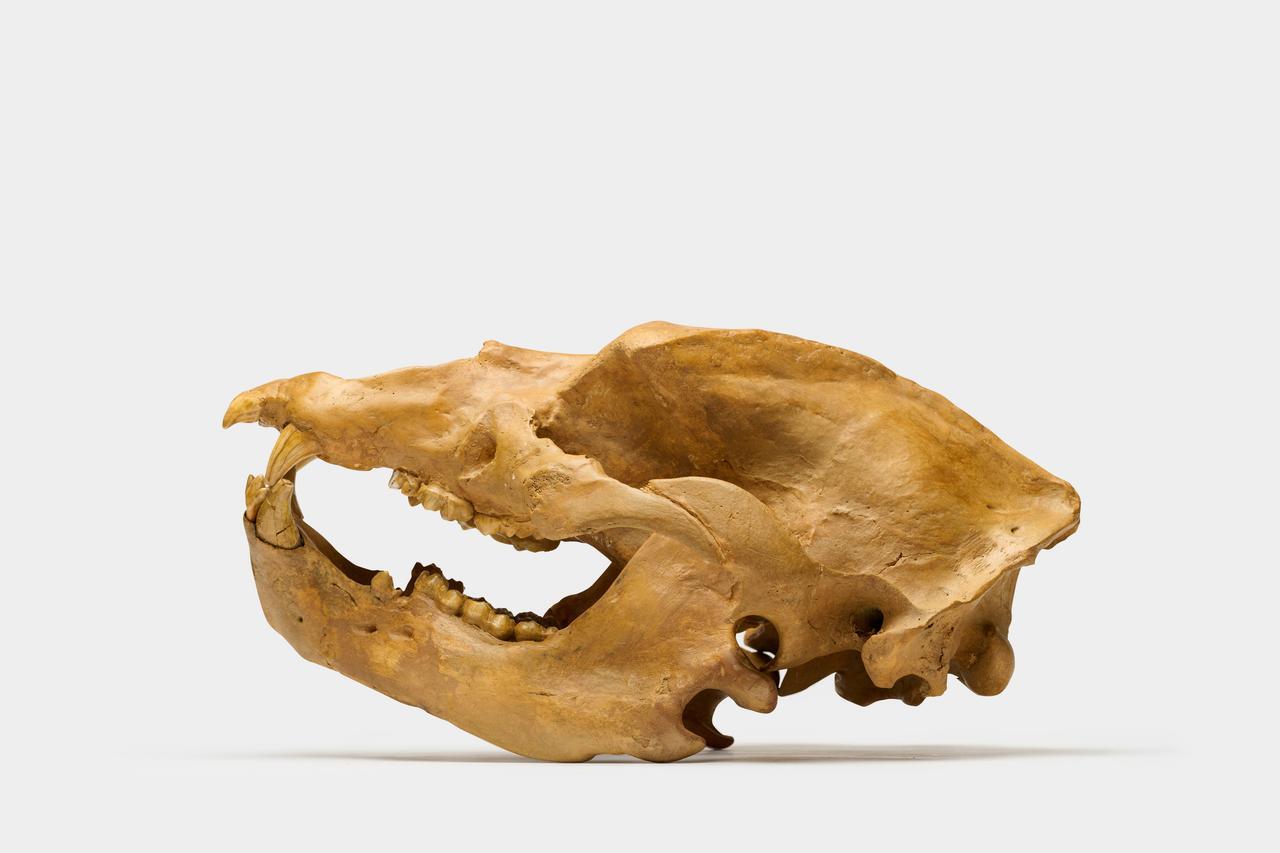
Mosasaur - Fossilised jaw - Thalassotitan atrox


03
days
10
hours
53
minutes
03
seconds

6 other people are watching this object
 Bidder 5250 Bidder 5250 | €1 |
|---|
Catawiki Buyer Protection
Your payment’s safe with us until you receive your object.View details
Trustpilot 4.4 | 121798 reviews
Rated Excellent on Trustpilot.
Specimen: Mosasaur, scientific name Thalassotitan atrox, Late Cretaceous period (100.5–66 Ma), treatment: reassembled, origin: Morocco.
AI-assisted summary
Description from the seller
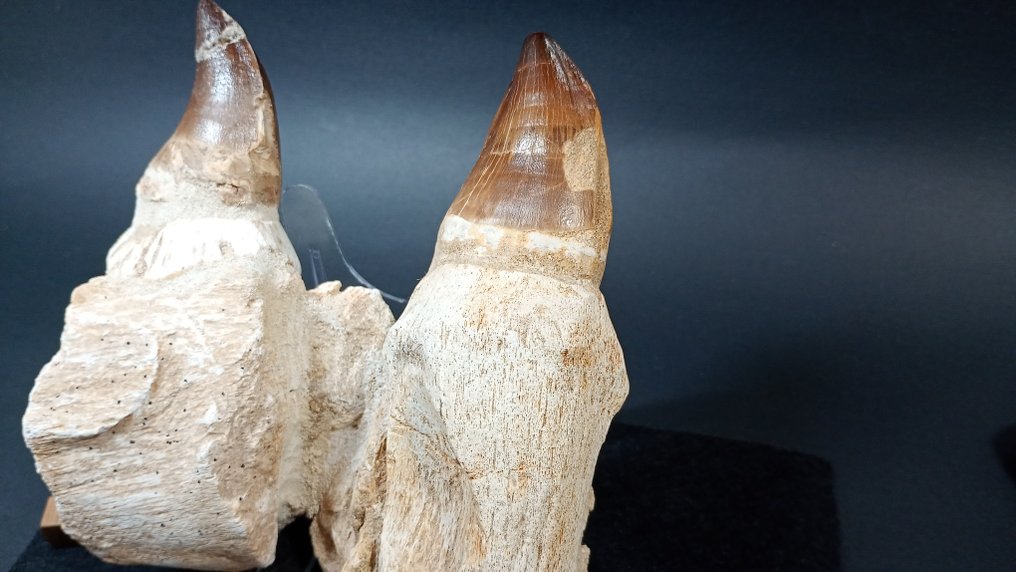
Mosasaurus jaw with two enormous teeth, with the root complete, "spectacular".
"It's impressive to hold it in your hands."
Probably from Thalassotitan atrox, formerly Prognathodon anceps.
A worthy piece for a great collection.
Both teeth show wear facets from the animal's use; it is not broken. This is a typical notch that occurs when the teeth of the upper and lower jaws come into contact, leaving interdental marks between the crowns of adjacent teeth. It is more common than people think, and in my opinion, it is one of the attractive features of this type of tooth.
It comes from the phosphate mines of the Abdoun Ouled basin, Khouribga province, (Morocco).
Oulad Abdoun is the largest fossiliferous basin, and the northernmost of Morocco's major phosphate basins.
Phosphate deposits have preserved a large number of vertebrate fossils from the Late Cretaceous to the Eocene.
The fossils include a diversity of marine and terrestrial animals, such as mosasaurs, plesiosaurs, pterosaurs, crocodiles, and dinosaurs.
Thalassotitan atrox is one of the largest known Mosasaurus, estimated to have reached over 10 meters in length.
Mosasaurus jaw with two enormous teeth, with the root complete, "spectacular".
"It's impressive to hold it in your hands."
Probably from Thalassotitan atrox, formerly Prognathodon anceps.
A worthy piece for a great collection.
Both teeth show wear facets from the animal's use; it is not broken. This is a typical notch that occurs when the teeth of the upper and lower jaws come into contact, leaving interdental marks between the crowns of adjacent teeth. It is more common than people think, and in my opinion, it is one of the attractive features of this type of tooth.
It comes from the phosphate mines of the Abdoun Ouled basin, Khouribga province, (Morocco).
Oulad Abdoun is the largest fossiliferous basin, and the northernmost of Morocco's major phosphate basins.
Phosphate deposits have preserved a large number of vertebrate fossils from the Late Cretaceous to the Eocene.
The fossils include a diversity of marine and terrestrial animals, such as mosasaurs, plesiosaurs, pterosaurs, crocodiles, and dinosaurs.
Thalassotitan atrox is one of the largest known Mosasaurus, estimated to have reached over 10 meters in length.
Details
Number of items
1
Specimen
Mosasaur
Scientific name
Thalassotitan atrox
Country of Origin
Morocco
Geological Period
Cretaceous, Upper (100.5 - 66 million years)
Condition
Reassembled
Sold by