Sheffield/Freemasonry - Flask - Silverplated - 1940(c)Masonic Hip Flask



06
days
14
hours
04
minutes
29
seconds
Current bid
€ 1
Reserve price not met

Expert
Selected by Edgar Clin
Has five years of experience working in Parisian auctions, specialising in Russian and Eastern European militaria.
Estimate € 150 - € 200
5 other people are watching this object
 Bidder 2496 Bidder 2496 | €1 |
|---|
Catawiki Buyer Protection
Your payment’s safe with us until you receive your object.View details
Trustpilot 4.4 | 121899 reviews
Rated Excellent on Trustpilot.
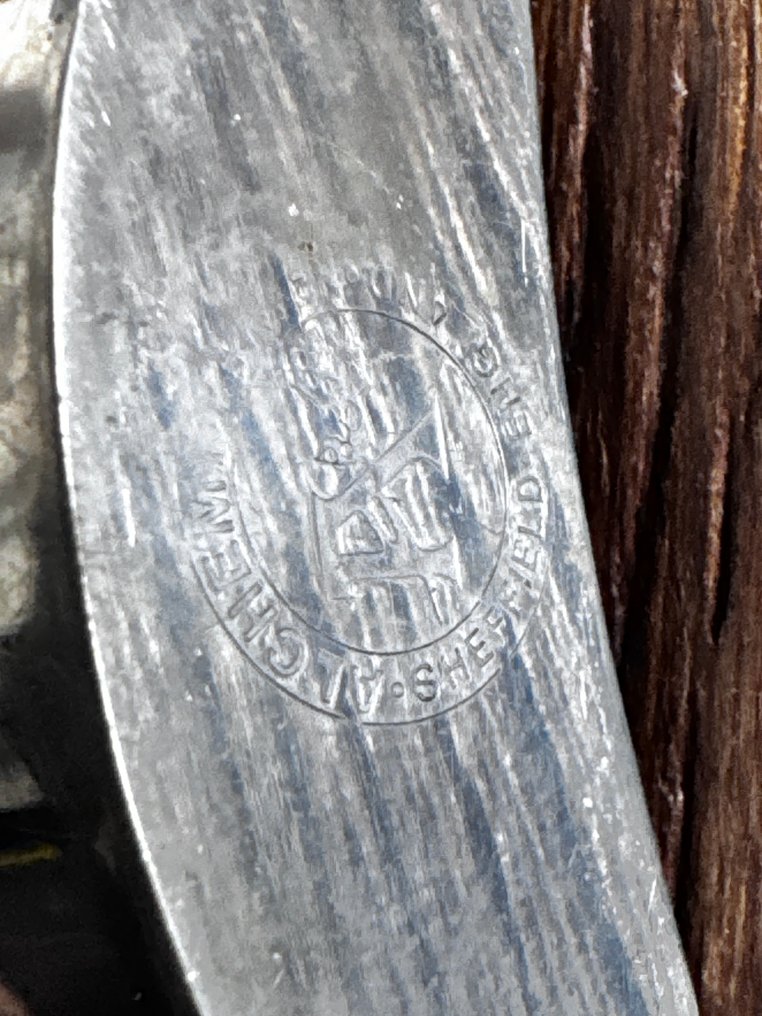
1940(c) Masonic Hip Flask, a silver-plated hip flask made in Sheffield, United Kingdom, dating to 1940–1950, in excellent condition.
AI-assisted summary
Description from the seller
1940(c)Masonic Hip Flask
Silver Plated, Made in Sheffield England
Great for X-mas Gift
One of many from my private collection, use several times on "Away" camping with my Lodge in Sweden...
Masonic metal flasks are a type of hip flask that became popular in the 19th century, decorated with Masonic symbols like the compass, square, and "G". The concept of a hip flask evolved from medieval canteens, with early versions using animal bladders and later glass, pewter, and silver. The first hip flasks with their characteristic curves were likely designed in the early 1800s, with metal versions becoming favored for their durability and non-reactivity with alcohol.
Origins of Hip Flasks
The hip flask is a descendant of older portable drink containers, including medieval pilgrim bottles and hollowed-out gourds or leather pouches used by travelers.
The recognizable, curved hip flask was developed in the early 1800s, often featuring glass with silver or leather sheaths.
Some Masonic members had glass flasks from their own glass production houses, etched with Masonic symbols, which are now collectible.
By the late 19th century, pewter and silver flasks became popular due to their durability and resistance to alcohol.
These flasks were often marked with the globally recognized Masonic symbols: a compass, a square, and the letter G in the center.
Many were handmade, sometimes using traditional techniques, to honor Masonic traditions and serve as gifts for members or those interested in the organization.
In the 18th and 19th centuries, Freemasonry was an important part of social life and voluntary associations, with members often owning items like Masonic snuff boxes.
Flasks bearing Masonic symbols were, and remain, an ideal gift for members of the organization.
Please note that if you wish your parcel to be sent as a “gift” rather than a “sale” (which may exempt you from additional customs fees), kindly inform me. However, please be aware that this decision is entirely your responsibility.
* All of my objects are from my family’s private, used collection by true Masons.
* Please be advised that parcels may be damaged, delayed, or subject to additional fees due to local courier transportation, customs checks, taxes, and other factors.
* The recipient is solely responsible for paying the customs charges, duties, or taxes applicable to the destination country.
* Parcels will be held by customs until any outstanding payments are made. Failure to make payments may result in the parcel being returned, delayed, or, in certain cases, destroyed. If a parcel is destroyed, no refund will be issued.
* Refused, unpaid, or parcels with incorrect addresses will be returned to me. This process may take up to a month, and the parcel will only be resend to the buyer once the full postage fees have been remitted.
Seller's Story
“Great experience, wonderful customer care, fast shipping!
I would highly recommend this seller for a unique experience and authentic objects”
1940(c)Masonic Hip Flask
Silver Plated, Made in Sheffield England
Great for X-mas Gift
One of many from my private collection, use several times on "Away" camping with my Lodge in Sweden...
Masonic metal flasks are a type of hip flask that became popular in the 19th century, decorated with Masonic symbols like the compass, square, and "G". The concept of a hip flask evolved from medieval canteens, with early versions using animal bladders and later glass, pewter, and silver. The first hip flasks with their characteristic curves were likely designed in the early 1800s, with metal versions becoming favored for their durability and non-reactivity with alcohol.
Origins of Hip Flasks
The hip flask is a descendant of older portable drink containers, including medieval pilgrim bottles and hollowed-out gourds or leather pouches used by travelers.
The recognizable, curved hip flask was developed in the early 1800s, often featuring glass with silver or leather sheaths.
Some Masonic members had glass flasks from their own glass production houses, etched with Masonic symbols, which are now collectible.
By the late 19th century, pewter and silver flasks became popular due to their durability and resistance to alcohol.
These flasks were often marked with the globally recognized Masonic symbols: a compass, a square, and the letter G in the center.
Many were handmade, sometimes using traditional techniques, to honor Masonic traditions and serve as gifts for members or those interested in the organization.
In the 18th and 19th centuries, Freemasonry was an important part of social life and voluntary associations, with members often owning items like Masonic snuff boxes.
Flasks bearing Masonic symbols were, and remain, an ideal gift for members of the organization.
Please note that if you wish your parcel to be sent as a “gift” rather than a “sale” (which may exempt you from additional customs fees), kindly inform me. However, please be aware that this decision is entirely your responsibility.
* All of my objects are from my family’s private, used collection by true Masons.
* Please be advised that parcels may be damaged, delayed, or subject to additional fees due to local courier transportation, customs checks, taxes, and other factors.
* The recipient is solely responsible for paying the customs charges, duties, or taxes applicable to the destination country.
* Parcels will be held by customs until any outstanding payments are made. Failure to make payments may result in the parcel being returned, delayed, or, in certain cases, destroyed. If a parcel is destroyed, no refund will be issued.
* Refused, unpaid, or parcels with incorrect addresses will be returned to me. This process may take up to a month, and the parcel will only be resend to the buyer once the full postage fees have been remitted.
Seller's Story
“Great experience, wonderful customer care, fast shipping!
I would highly recommend this seller for a unique experience and authentic objects”
Details
Era
1900-2000
Weight
63 g
Title additional information
1940(c)Masonic Hip Flask
No. of items
1
Country of Origin
United Kingdom
Manufacturer/ Brand
Sheffield/Freemasonry
Material
Silverplated
Condition
Excellent condition: barely used with minimal signs of wear
Height
85 mm
Width
47 mm
Depth
20 mm
Estimated Period
1940-1950
Sold by