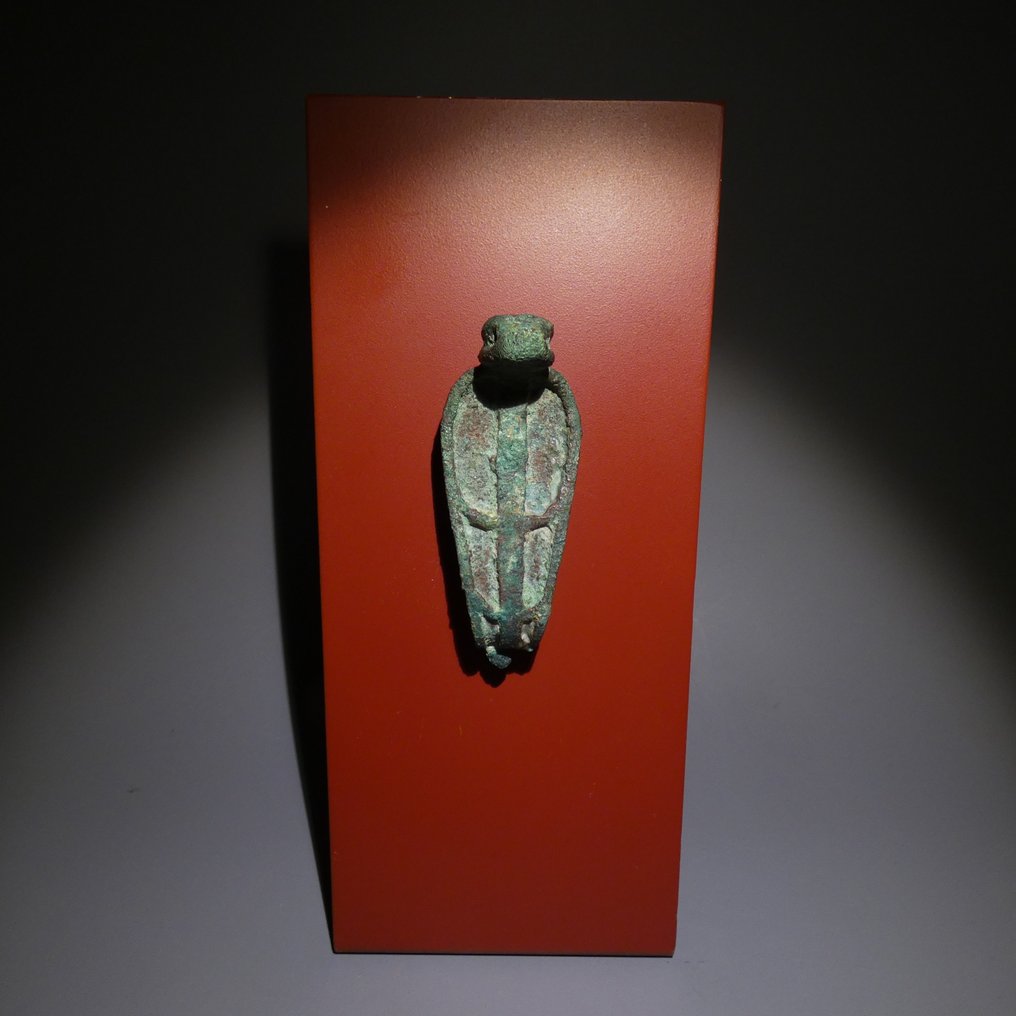
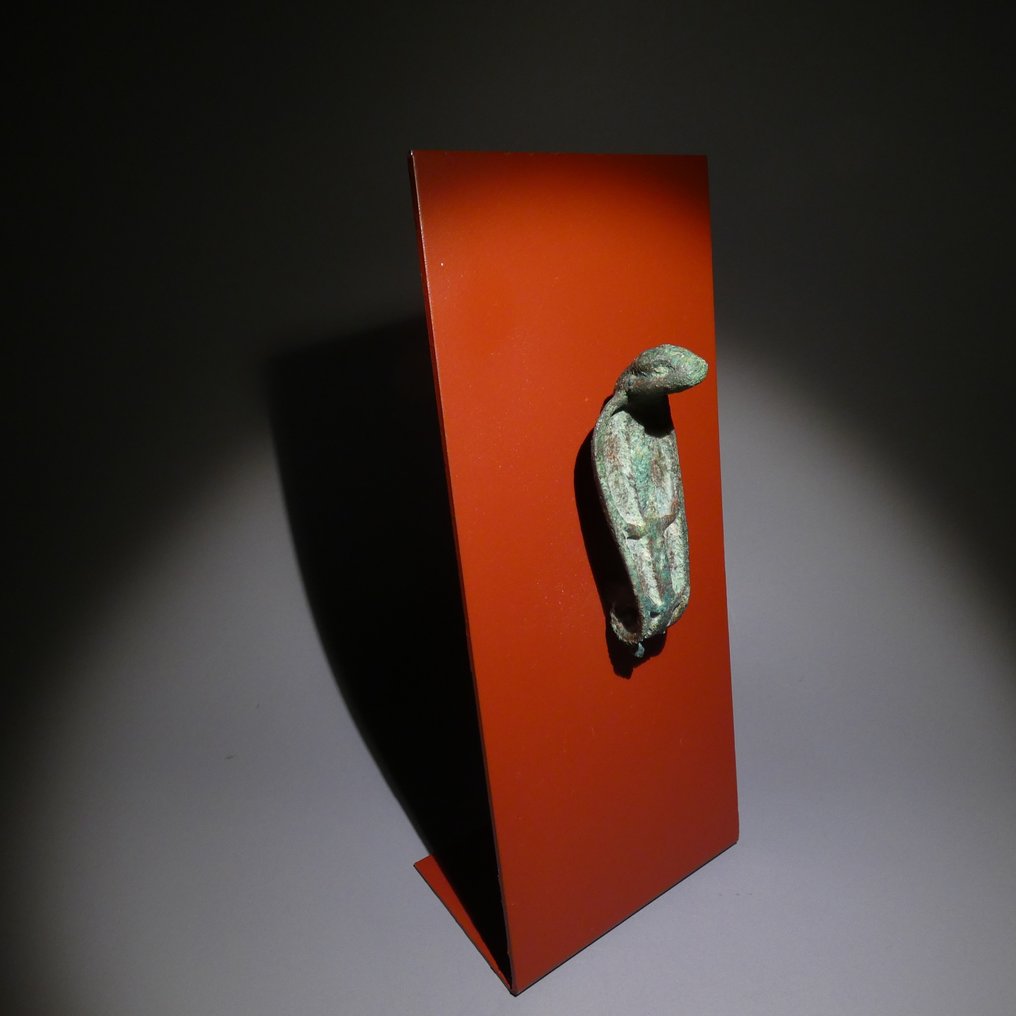
Ancient Egyptian Bronze Fine Uraeus God Sculpture. 7,5 CM H. Late Period, 664 - 332 BC

00
days
17
hours
09
minutes
38
seconds
Current bid
€ 150
Reserve price not met

Expert
Selected by Ruth Garrido Vila
Directed the Ifergan Collection Museum, specialising in Phoenician and Mediterranean archaeology.
Estimate € 2,000 - € 2,500
13 other people are watching this object
 Bidder 4621 Bidder 4621 | €150 | |
|---|---|---|
| Bidder 4621 | €30 | |
 Bidder 7823 Bidder 7823 | €25 | |
Catawiki Buyer Protection
Your payment’s safe with us until you receive your object.View details
Trustpilot 4.4 | 122190 reviews
Rated Excellent on Trustpilot.
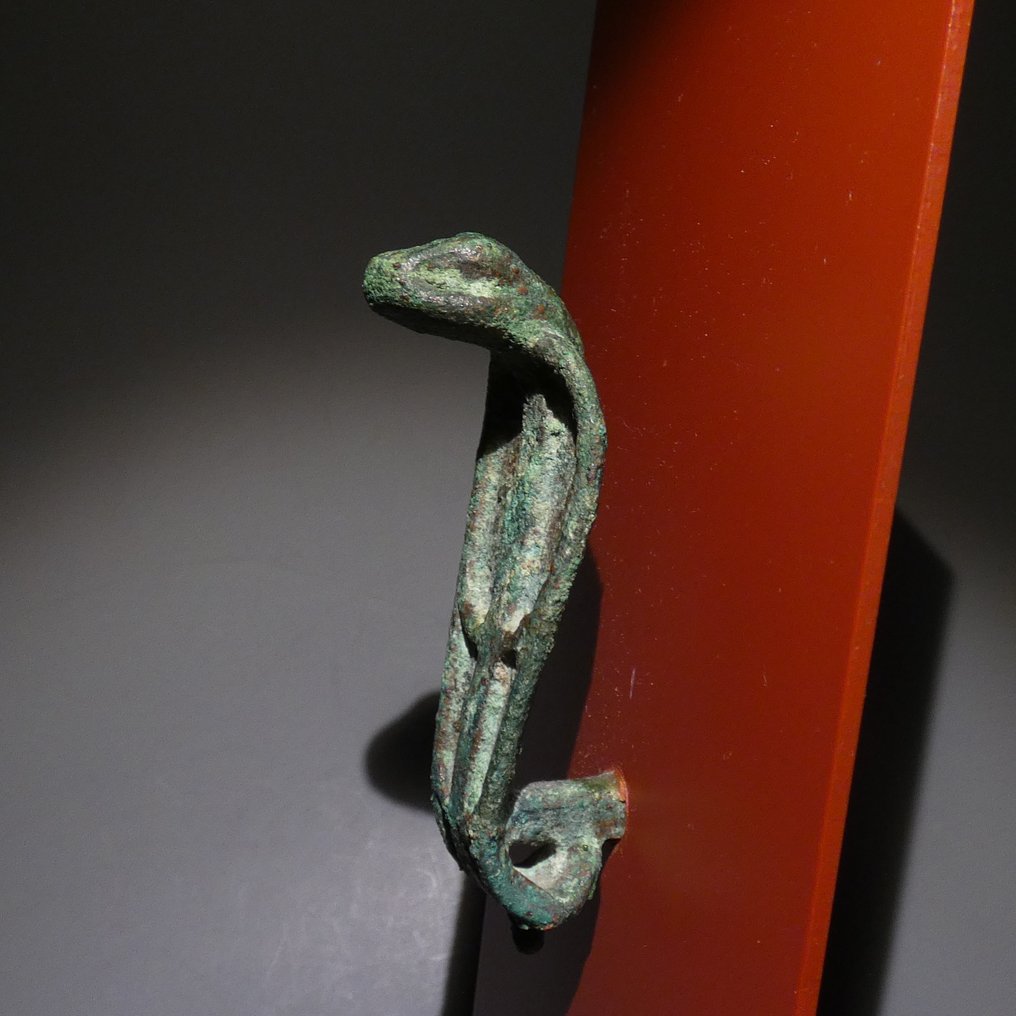
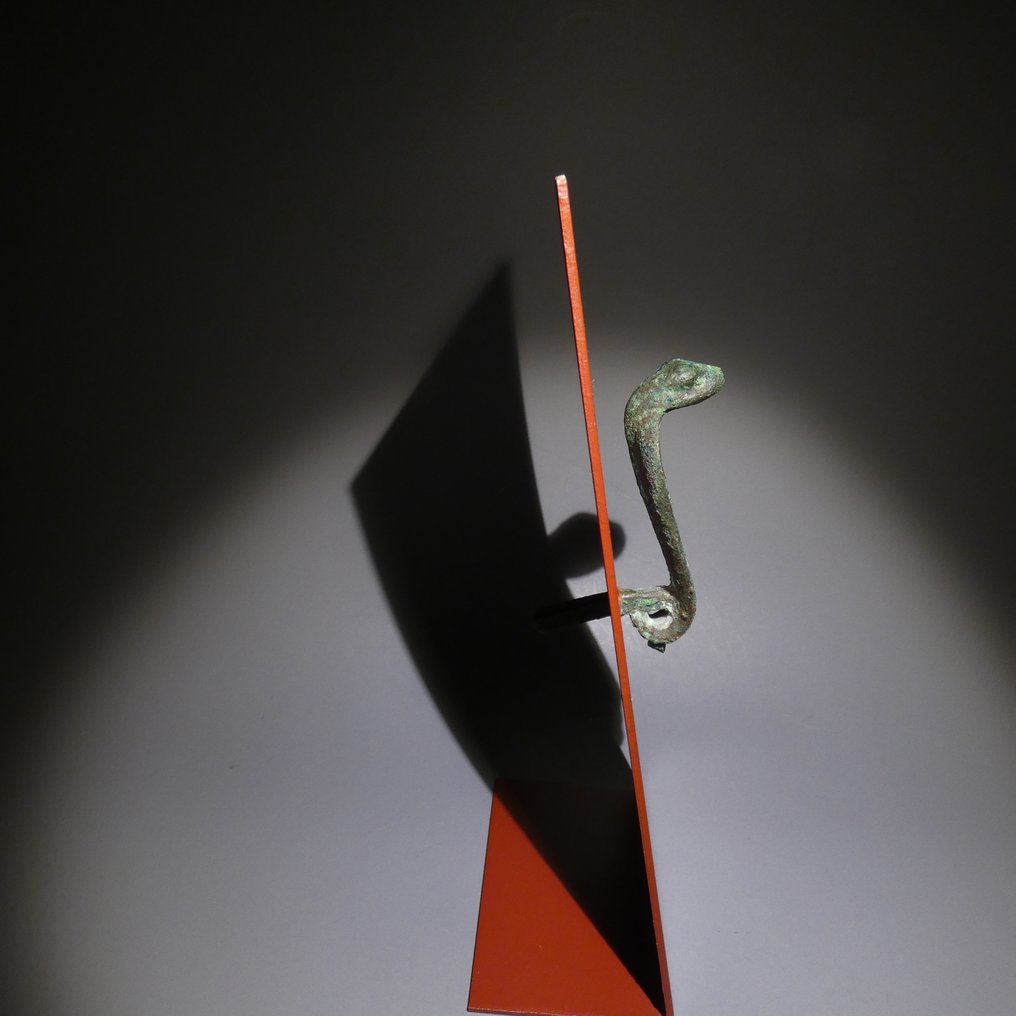
Ancient Egyptian bronze uraeus sculpture of the goddess Wadjet, 7.5 cm high (20 cm with stand), Late Period (664–332 BC), from a private collection.
AI-assisted summary
Description from the seller
Goddess Uraeus - Wadjet
- very huge and fine -
Ancient Egypt, Late Period, 664 - 332 BC
Solid Bronze
7,5 cm height, 20 cm height with metal stand.
Red metal stand included.
PROVENANCE:
- Private collection, Swiss, before 1980.
- Galería Arte y Arqueología E. Barbié, Barcelona, before 2000.
CONDITION: Good condition, see photos. Intact.
The uraeus, the image of an upright cobra, is one of the most powerful symbols of Ancient Egypt. Associated primarily with the goddess Wadjet, the ureo represented the fiery eye of the god Ra and functioned as the guardian of the king and divine order. Wadjet, an ancient Lower Egyptian deity, was revered as the protector of the pharaoh, to whom she bestowed legitimacy and supernatural defence. Its venomous serpent form symbolised the ability to attack enemies with fire or poison, thus representing the destructive power controlled by royalty.
In royal headdresses, the ureus was placed on the forehead, as an integral part of the crown. From this position, Wadjet was believed to constantly watch over and cast magical fire on the enemies of the pharaoh. In many cases, the ureo was also combined with the figure of the vulture, symbol of the goddess Nekhbet, protector of Upper Egypt, thus uniting both lands under one divine power.
In addition to Wadjet, other deities such as Sekhmet or Bastet could take the form of the ureo in its more combative aspects. Thus, the ureo was not only a visual ornament, but a living manifestation of the power of the protective gods and the sacred strength of the pharaoh.
The ureo, the image of an upright cobra, is one of the most powerful symbols of Ancient Egypt. Associated primarily with the goddess Wadjet, the ureo represented divine protection and royal power. In Ancient Egypt, the ureo - the stylised representation of an upright cobra - was a symbol of divine protection and royal power. During the New Kingdom period and later, bronze ureos were produced to decorate wooden figures, especially statues of gods, kings or sacred animals. These metal ureos were applied as ornaments on the foreheads of the figures, usually on headdresses or nemes, and served a symbolic function: they conferred legitimacy, divinity and magical defence against evil.
Bronze, a tough and durable alloy, made it possible to create finely detailed pieces that survived the passage of time. These wooden figures with ureo ornamentation were used in temples, tombs and religious rituals. In funerary contexts, ureo acted as a protective amulet for the deceased on their journey to the afterlife. The combination of materials - organic wood and worked metal - was not only aesthetic, but also symbolic: the perishable and the eternal united in a single image of power.
The bronze uraeus on wooden figures represents the Egyptian effort to capture the divine and the eternal, fusing art, religion and technology in objects of deep symbolic significance. Wadjet, an ancient Lower Egyptian deity, was revered as the protector of the pharaoh, to whom she bestowed legitimacy and supernatural defence. Its venomous serpent form symbolised the ability to attack enemies with fire or poison, thus representing the destructive power controlled by royalty.
In royal headdresses, the ureus was placed on the forehead, as an integral part of the crown. From this position, Wadjet was believed to constantly watch over and cast magical fire on the enemies of the pharaoh. In many cases, the ureo was also combined with the figure of the vulture, symbol of the goddess Nekhbet, protector of Upper Egypt, thus uniting both lands under one divine power.
In addition to Wadjet, other deities such as Sekhmet or Bastet could take the form of the ureo in its more combative aspects. Thus, the ureo was not only a visual ornament, but a living manifestation of the power of the protective gods and the sacred strength of the pharaoh.
Seller's Story
IMPORTANT NOTES:
-We are a professional seller.
- All items sold will come with their professional invoice.
- All items sold will come with their own Certificate of Authenticity (warranty document), including the description, image and provenance of the item.
- All items will be shipped via private courier with insurance (DHL express, CORREOS of Spain, or other similar with tracking number).
- All items when shipped (if required) will be declared as antiques over 100 years old and their price valued.
- For shipping outside of EU: Delivery time subject to customs clearance. Liability and Customs Regulations or Import Requirements applicable in the destination country are the sole responsibility of the buyer. We are not responsible for delays caused by customs procedures. Import taxes and vat are not included in the shipping costs. The import tax or VAT payable depends on the country of destination. Payments of any taxes or any disputes with the Customs Authorities are the sole responsibility of the buyer.
- For some of the items offered, for shipment outside the European Union it is necessary to obtain an Export Permit which will detail the payment by the buyer of Export Fees according to Spanish legislation. If it is necessary it will be mentioned in the description of the article, BECAUSE NOT IN ALL THE CASES IT IS LIKE THAT. These fees will be added to the invoice, at the buyer's expense. These export fees are fixed on the final auction price and the tax rate is not applied directly on the total value of the item to be exported, but rather the different percentages by sections are applied to it: Up to 6,000 euros: 5%. From 6,001 to 60,000 euros: 10%.
This export permit application process can take between 1-2 months maximum.
- We guarantee that he acquired this piece according to all national and international laws related to the ownership of cultural property.
Translated by Google TranslateGoddess Uraeus - Wadjet
- very huge and fine -
Ancient Egypt, Late Period, 664 - 332 BC
Solid Bronze
7,5 cm height, 20 cm height with metal stand.
Red metal stand included.
PROVENANCE:
- Private collection, Swiss, before 1980.
- Galería Arte y Arqueología E. Barbié, Barcelona, before 2000.
CONDITION: Good condition, see photos. Intact.
The uraeus, the image of an upright cobra, is one of the most powerful symbols of Ancient Egypt. Associated primarily with the goddess Wadjet, the ureo represented the fiery eye of the god Ra and functioned as the guardian of the king and divine order. Wadjet, an ancient Lower Egyptian deity, was revered as the protector of the pharaoh, to whom she bestowed legitimacy and supernatural defence. Its venomous serpent form symbolised the ability to attack enemies with fire or poison, thus representing the destructive power controlled by royalty.
In royal headdresses, the ureus was placed on the forehead, as an integral part of the crown. From this position, Wadjet was believed to constantly watch over and cast magical fire on the enemies of the pharaoh. In many cases, the ureo was also combined with the figure of the vulture, symbol of the goddess Nekhbet, protector of Upper Egypt, thus uniting both lands under one divine power.
In addition to Wadjet, other deities such as Sekhmet or Bastet could take the form of the ureo in its more combative aspects. Thus, the ureo was not only a visual ornament, but a living manifestation of the power of the protective gods and the sacred strength of the pharaoh.
The ureo, the image of an upright cobra, is one of the most powerful symbols of Ancient Egypt. Associated primarily with the goddess Wadjet, the ureo represented divine protection and royal power. In Ancient Egypt, the ureo - the stylised representation of an upright cobra - was a symbol of divine protection and royal power. During the New Kingdom period and later, bronze ureos were produced to decorate wooden figures, especially statues of gods, kings or sacred animals. These metal ureos were applied as ornaments on the foreheads of the figures, usually on headdresses or nemes, and served a symbolic function: they conferred legitimacy, divinity and magical defence against evil.
Bronze, a tough and durable alloy, made it possible to create finely detailed pieces that survived the passage of time. These wooden figures with ureo ornamentation were used in temples, tombs and religious rituals. In funerary contexts, ureo acted as a protective amulet for the deceased on their journey to the afterlife. The combination of materials - organic wood and worked metal - was not only aesthetic, but also symbolic: the perishable and the eternal united in a single image of power.
The bronze uraeus on wooden figures represents the Egyptian effort to capture the divine and the eternal, fusing art, religion and technology in objects of deep symbolic significance. Wadjet, an ancient Lower Egyptian deity, was revered as the protector of the pharaoh, to whom she bestowed legitimacy and supernatural defence. Its venomous serpent form symbolised the ability to attack enemies with fire or poison, thus representing the destructive power controlled by royalty.
In royal headdresses, the ureus was placed on the forehead, as an integral part of the crown. From this position, Wadjet was believed to constantly watch over and cast magical fire on the enemies of the pharaoh. In many cases, the ureo was also combined with the figure of the vulture, symbol of the goddess Nekhbet, protector of Upper Egypt, thus uniting both lands under one divine power.
In addition to Wadjet, other deities such as Sekhmet or Bastet could take the form of the ureo in its more combative aspects. Thus, the ureo was not only a visual ornament, but a living manifestation of the power of the protective gods and the sacred strength of the pharaoh.
Seller's Story
IMPORTANT NOTES:
-We are a professional seller.
- All items sold will come with their professional invoice.
- All items sold will come with their own Certificate of Authenticity (warranty document), including the description, image and provenance of the item.
- All items will be shipped via private courier with insurance (DHL express, CORREOS of Spain, or other similar with tracking number).
- All items when shipped (if required) will be declared as antiques over 100 years old and their price valued.
- For shipping outside of EU: Delivery time subject to customs clearance. Liability and Customs Regulations or Import Requirements applicable in the destination country are the sole responsibility of the buyer. We are not responsible for delays caused by customs procedures. Import taxes and vat are not included in the shipping costs. The import tax or VAT payable depends on the country of destination. Payments of any taxes or any disputes with the Customs Authorities are the sole responsibility of the buyer.
- For some of the items offered, for shipment outside the European Union it is necessary to obtain an Export Permit which will detail the payment by the buyer of Export Fees according to Spanish legislation. If it is necessary it will be mentioned in the description of the article, BECAUSE NOT IN ALL THE CASES IT IS LIKE THAT. These fees will be added to the invoice, at the buyer's expense. These export fees are fixed on the final auction price and the tax rate is not applied directly on the total value of the item to be exported, but rather the different percentages by sections are applied to it: Up to 6,000 euros: 5%. From 6,001 to 60,000 euros: 10%.
This export permit application process can take between 1-2 months maximum.
- We guarantee that he acquired this piece according to all national and international laws related to the ownership of cultural property.
Translated by Google TranslateDetails
Culture
Ancient Egyptian
Century/ Timeframe
Late Period, 664 - 332 BC
Name of object
Fine Uraeus God Sculpture. 7,5 CM H. Late Period, 664 - 332 BC
Acquired from
Private collection
Material
Bronze
Condition
Good
Disclaimer
The seller was informed by Catawiki about documentation requirements and guarantees the following: - the object was legally obtained, - the seller has the right to sell and/or export the object, as relevant, - the seller will provide the necessary provenance information and arrange required documentation and permits/licenses, as applicable and as per local laws, - the seller will notify the buyer of any delays in obtaining permits/licenses. By bidding, you acknowledge that import documentation may be required depending on your country of residence and that obtaining permits/licenses may cause delays in the delivery of your object.
The seller was informed by Catawiki about documentation requirements and guarantees the following: - the object was legally obtained, - the seller has the right to sell and/or export the object, as relevant, - the seller will provide the necessary provenance information and arrange required documentation and permits/licenses, as applicable and as per local laws, - the seller will notify the buyer of any delays in obtaining permits/licenses. By bidding, you acknowledge that import documentation may be required depending on your country of residence and that obtaining permits/licenses may cause delays in the delivery of your object.
