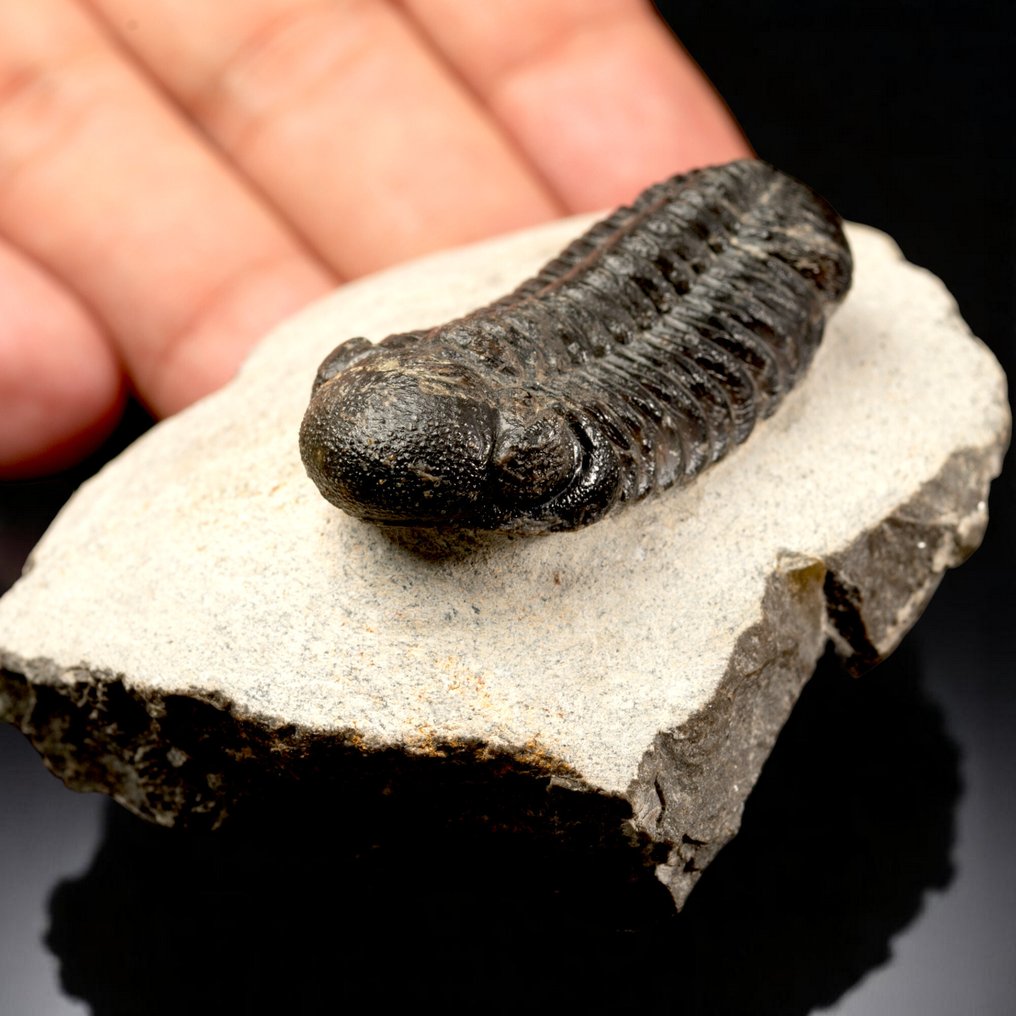
Trilobite fossil – Devonian, Morocco Carapace - Phacops Rana - 79 mm - 60 mm - 40 mm



Opens 11:00
Starting bid
€ 1
Add to your favourites to get an alert when the auction starts.

Expert
Selected by Jonas Rathaj
Has worked with taxidermy since childhood and gained retailer experience.
Estimate € 300 - € 350
Catawiki Buyer Protection
Your payment’s safe with us until you receive your object.View details
Trustpilot 4.4 | 123113 reviews
Rated Excellent on Trustpilot.
Description from the seller
This specimen of trilobite belongs to the species Phacops rana, a Paleozoic trilobite from the Devonian fossil deposits of southeastern Morocco, specifically from the limestone formations of Alnif. This fossil dates back approximately 390 million years, during the Middle Devonian period.
Phacops rana lived during the Middle Devonian, a period known as the 'Age of Fishes', during which the oceans teemed with life. This trilobite inhabited relatively shallow seabeds, rich in organic debris, in warm and subtropical environments.
The area of Morocco where it is currently found was part of a continental platform immersed in the Rheic Ocean, with ideal conditions for fossilization: fine sediments, low oxygenation, and rapid burial after death.
This specimen shows an excellent state of preservation, with all structural bodies clearly visible and perfectly integrated into the original matrix. The natural, non-compressed position and the slightly rolled appearance attest to the quality of the manual preparation, carried out with precision tools to avoid damaging the original structure.
The measurement of the trilobite alone (excluding the matrix) is 52 mm.
Seller's Story
The Mineral Art Gallery offers minerals, fossils, shells and natural elements.
Born in Italy in 2017, today she collaborates with international galleries and collectors, she is a direct importer of large minerals and naturalistic collectible elements; deals with the processing to insert them inside the living space. A section of the gallery was dedicated to the Wunderkammer, "chamber of wonders or cabinet of curiosities" in which Mirabilia elements are presented: naturalia and italiania, a union between "the present is the past".
All lots are shipped via DHL Express and Fercam couriers, with insured parcel and tracking.
Translated by Google TranslateThis specimen of trilobite belongs to the species Phacops rana, a Paleozoic trilobite from the Devonian fossil deposits of southeastern Morocco, specifically from the limestone formations of Alnif. This fossil dates back approximately 390 million years, during the Middle Devonian period.
Phacops rana lived during the Middle Devonian, a period known as the 'Age of Fishes', during which the oceans teemed with life. This trilobite inhabited relatively shallow seabeds, rich in organic debris, in warm and subtropical environments.
The area of Morocco where it is currently found was part of a continental platform immersed in the Rheic Ocean, with ideal conditions for fossilization: fine sediments, low oxygenation, and rapid burial after death.
This specimen shows an excellent state of preservation, with all structural bodies clearly visible and perfectly integrated into the original matrix. The natural, non-compressed position and the slightly rolled appearance attest to the quality of the manual preparation, carried out with precision tools to avoid damaging the original structure.
The measurement of the trilobite alone (excluding the matrix) is 52 mm.
Seller's Story
The Mineral Art Gallery offers minerals, fossils, shells and natural elements.
Born in Italy in 2017, today she collaborates with international galleries and collectors, she is a direct importer of large minerals and naturalistic collectible elements; deals with the processing to insert them inside the living space. A section of the gallery was dedicated to the Wunderkammer, "chamber of wonders or cabinet of curiosities" in which Mirabilia elements are presented: naturalia and italiania, a union between "the present is the past".
All lots are shipped via DHL Express and Fercam couriers, with insured parcel and tracking.
Translated by Google TranslateDetails
Era
Before 1400
Specimen
Trilobite fossil – Devonian, Morocco
Scientific Name
Phacops Rana
Country of Origin
Alnif Morocco
Condition
Good condition
Year
2024
Weight
223 g
Height
79 mm
Width
60 mm
Depth
40 mm
Sold by