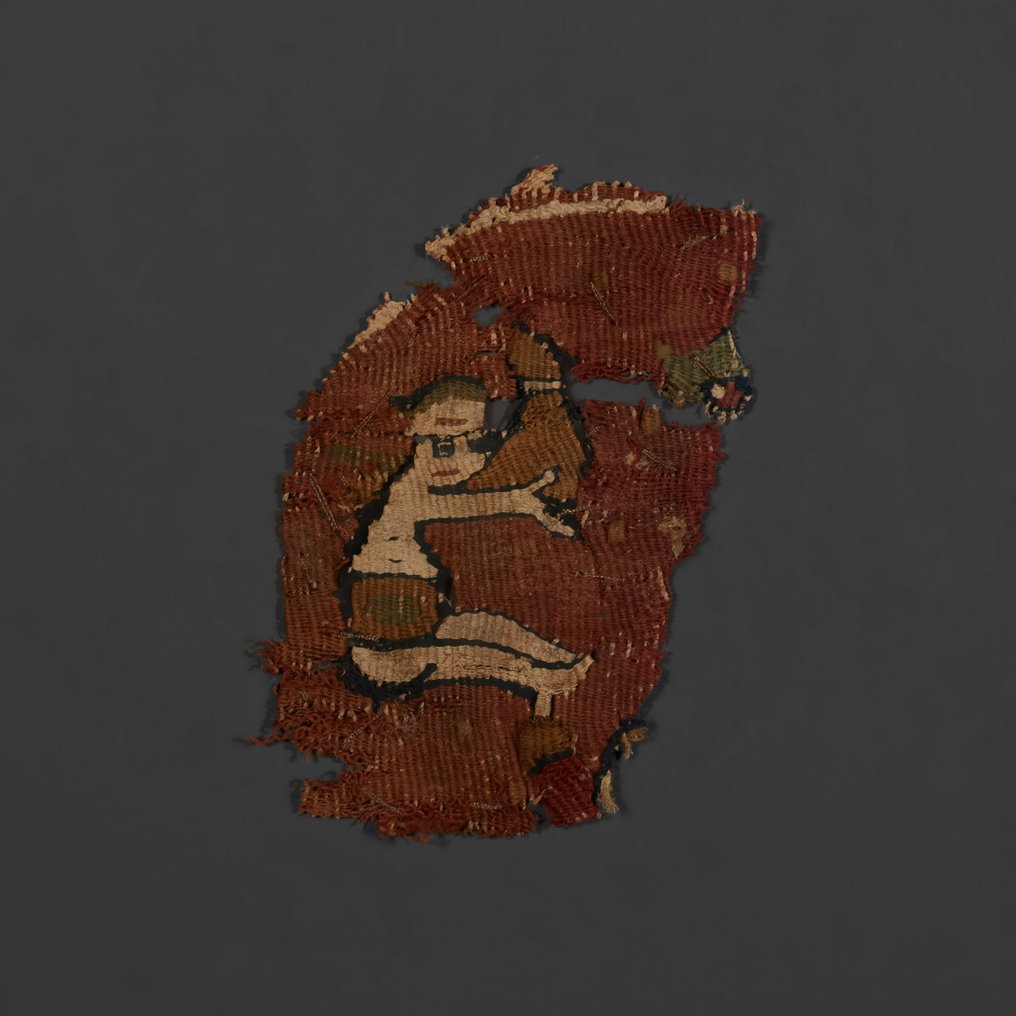
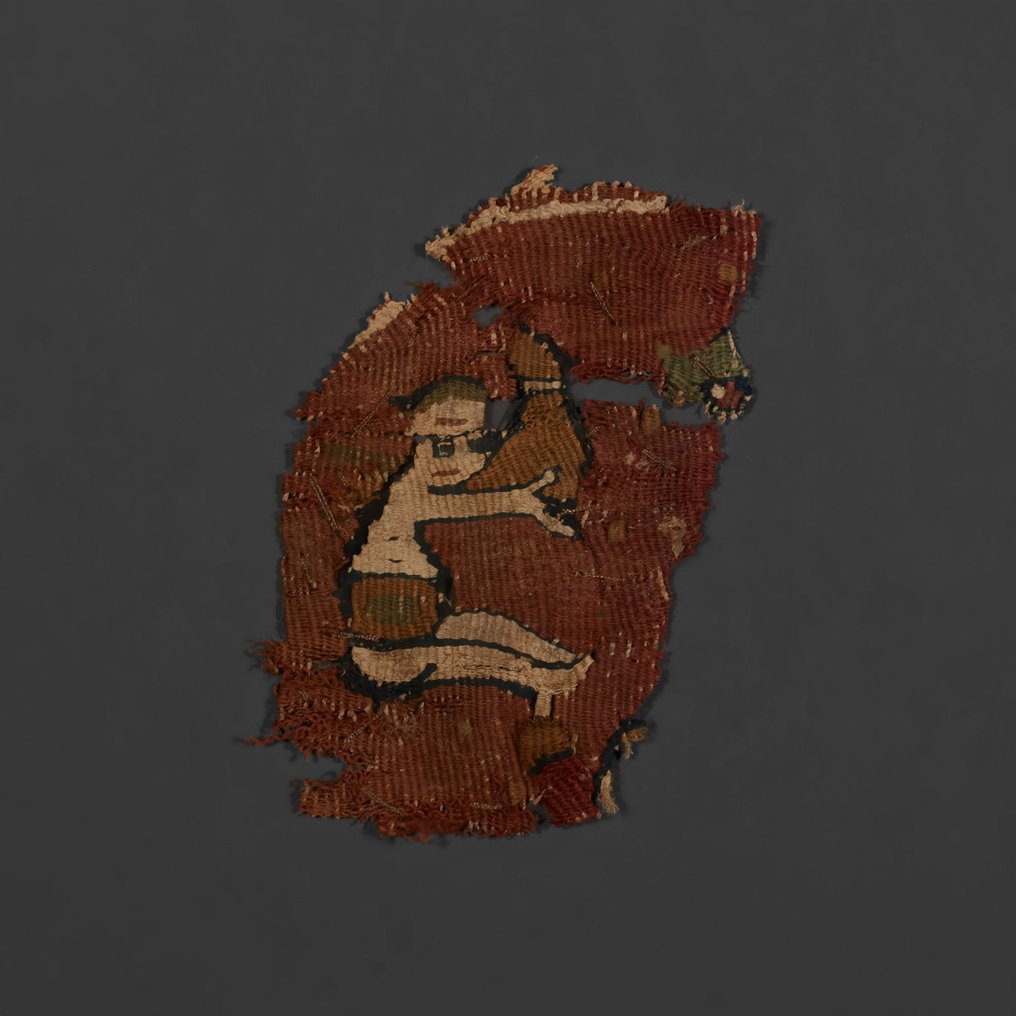
Ancient Egypt, Coptic Linen Textile fragment. Framed. 4th-6th century AD. 8.5 cm height.


00
days
10
hours
24
minutes
53
seconds
Current bid
€ 171
Reserve price not met

Expert
Selected by Ruth Garrido Vila
Directed the Ifergan Collection Museum, specialising in Phoenician and Mediterranean archaeology.
Estimate € 900 - € 1,000
6 other people are watching this object
 Bidder 7476 Bidder 7476 | €171 |
|---|
Catawiki Buyer Protection
Your payment’s safe with us until you receive your object.View details
Trustpilot 4.4 | 122190 reviews
Rated Excellent on Trustpilot.
Ancient Egypt, Coptic textile fragment, framed, dating to the 4th–6th century AD, made of linen; 8.5 cm high and 6 cm long.
AI-assisted summary
Description from the seller
Textile fragment. Framed.
Ancient Egypt, Coptic, 4th-6th century AD.
Linen.
8.5 cm height 6 cm length. Frame: 25.5 x 25.5 cm.
PROVENANCE: Private collection, Germany. 1970.
DOCUMENTS: Provided of a certificate of authenticity and export license by the Ministry of Culture.
CONDITION: Good condition.
DESCRIPTION:
Many examples of Coptic textiles are preserved, thanks to the custom of including them in funeral trousseau and to the dryness of Egyptian tombs. They are woolen or linen fabrics, in red, blue, yellow, green, purple, black and brown, obtained from blonde, indigo, glastum, saffron, Tyrian purple and carmine.
The first looms were horizontal, and over time vertical ones were introduced. The basic garment was the tunic, which became the dalmatic. Some were woven in one piece and decorated with clavi, a decoration imported from Rome. Some beautiful examples of textiles are exhibited in museums around the world, and the largest collection is in the Coptic Museum in Cairo.
Tens of thousands of colored fragments are part of the collection of many museums, especially after 1889, when the French archaeologist Albert Gayet published a catalog of Coptic art, and the first exhibition of Coptic monuments was held at the Bulaq Museum.
Notes:
- The piece includes authenticity certificate.
- The piece includes Spanish Export License (Passport for European Union). NOT TAXES.
- According to Spanish legislation, items sent outside the European Union are subject to export taxes and will be added to the invoice, at the buyer's expense. These export fees are fixed on the final auction price and the tax rate is not applied directly on the total value of the item to be exported, but rather the different percentages by sections are applied to it:
- Up to 6,000 euros: 5%.
- From 6.001 to 60.000 euros: 10%.
This export permit application process can take between 1-2 months maximum.
- The seller guarantees that he acquired this piece according to all national and international laws related to the ownership of cultural property. Provenance statement seen by Catawiki.
Seller's Story
Gallery of Ancient Art - Archeology based in Barcelona with more than fifteen years of experience. Specialized in classical art, Egyptian art, Asian art and pre-Columbian art. It guarantees the authenticity of all its pieces. It participates in the most important art fairs in Spain, such as Feriarte, as well as in fairs abroad, BRAFA, Parcours des Mondes, Cultures Brussels.
All the pieces are sent with an Export Permit issued by the Spanish Ministry of Culture.
We are quick to ship via DHL Express or Direct Art Transport.
Translated by Google TranslateTextile fragment. Framed.
Ancient Egypt, Coptic, 4th-6th century AD.
Linen.
8.5 cm height 6 cm length. Frame: 25.5 x 25.5 cm.
PROVENANCE: Private collection, Germany. 1970.
DOCUMENTS: Provided of a certificate of authenticity and export license by the Ministry of Culture.
CONDITION: Good condition.
DESCRIPTION:
Many examples of Coptic textiles are preserved, thanks to the custom of including them in funeral trousseau and to the dryness of Egyptian tombs. They are woolen or linen fabrics, in red, blue, yellow, green, purple, black and brown, obtained from blonde, indigo, glastum, saffron, Tyrian purple and carmine.
The first looms were horizontal, and over time vertical ones were introduced. The basic garment was the tunic, which became the dalmatic. Some were woven in one piece and decorated with clavi, a decoration imported from Rome. Some beautiful examples of textiles are exhibited in museums around the world, and the largest collection is in the Coptic Museum in Cairo.
Tens of thousands of colored fragments are part of the collection of many museums, especially after 1889, when the French archaeologist Albert Gayet published a catalog of Coptic art, and the first exhibition of Coptic monuments was held at the Bulaq Museum.
Notes:
- The piece includes authenticity certificate.
- The piece includes Spanish Export License (Passport for European Union). NOT TAXES.
- According to Spanish legislation, items sent outside the European Union are subject to export taxes and will be added to the invoice, at the buyer's expense. These export fees are fixed on the final auction price and the tax rate is not applied directly on the total value of the item to be exported, but rather the different percentages by sections are applied to it:
- Up to 6,000 euros: 5%.
- From 6.001 to 60.000 euros: 10%.
This export permit application process can take between 1-2 months maximum.
- The seller guarantees that he acquired this piece according to all national and international laws related to the ownership of cultural property. Provenance statement seen by Catawiki.
Seller's Story
Gallery of Ancient Art - Archeology based in Barcelona with more than fifteen years of experience. Specialized in classical art, Egyptian art, Asian art and pre-Columbian art. It guarantees the authenticity of all its pieces. It participates in the most important art fairs in Spain, such as Feriarte, as well as in fairs abroad, BRAFA, Parcours des Mondes, Cultures Brussels.
All the pieces are sent with an Export Permit issued by the Spanish Ministry of Culture.
We are quick to ship via DHL Express or Direct Art Transport.
Translated by Google TranslateDetails
Culture
Ancient Egypt, Coptic
Century/ Timeframe
4th-6th century AD.
Name of object
Textile fragment. Framed. 4th-6th century AD. 8.5 cm height.
Acquired from
Private collection
Material
Linen
Condition
Good
Disclaimer
The seller was informed by Catawiki about documentation requirements and guarantees the following: - the object was legally obtained, - the seller has the right to sell and/or export the object, as relevant, - the seller will provide the necessary provenance information and arrange required documentation and permits/licenses, as applicable and as per local laws, - the seller will notify the buyer of any delays in obtaining permits/licenses. By bidding, you acknowledge that import documentation may be required depending on your country of residence and that obtaining permits/licenses may cause delays in the delivery of your object.
The seller was informed by Catawiki about documentation requirements and guarantees the following: - the object was legally obtained, - the seller has the right to sell and/or export the object, as relevant, - the seller will provide the necessary provenance information and arrange required documentation and permits/licenses, as applicable and as per local laws, - the seller will notify the buyer of any delays in obtaining permits/licenses. By bidding, you acknowledge that import documentation may be required depending on your country of residence and that obtaining permits/licenses may cause delays in the delivery of your object.
