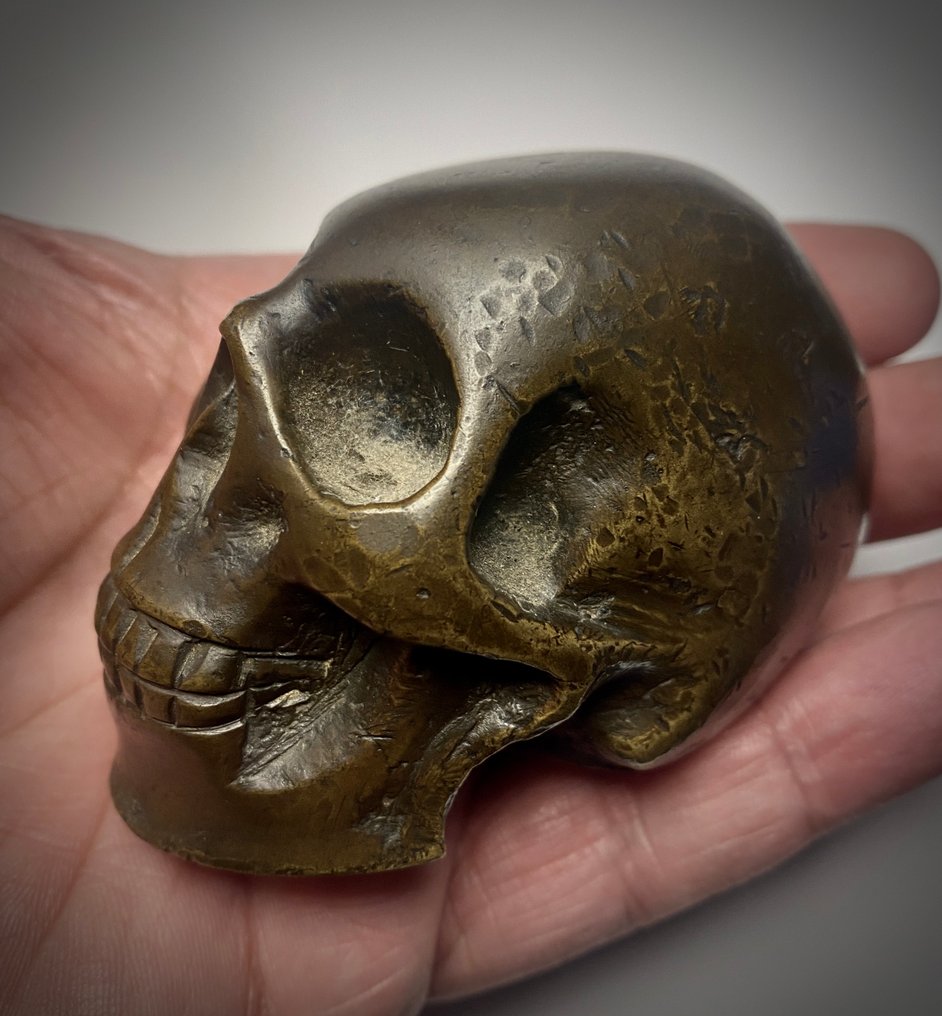
Sculpture, Memento Mori - Scultura in Bronzo Raffigurante Cranio Sorridente, Europa, XIX Secolo - 8 cm - Lost wax casting
09
days
19
hours
21
minutes
15
seconds

No bids placed
Catawiki Buyer Protection
Your payment’s safe with us until you receive your object.View details
Trustpilot 4.4 | 122385 reviews
Rated Excellent on Trustpilot.
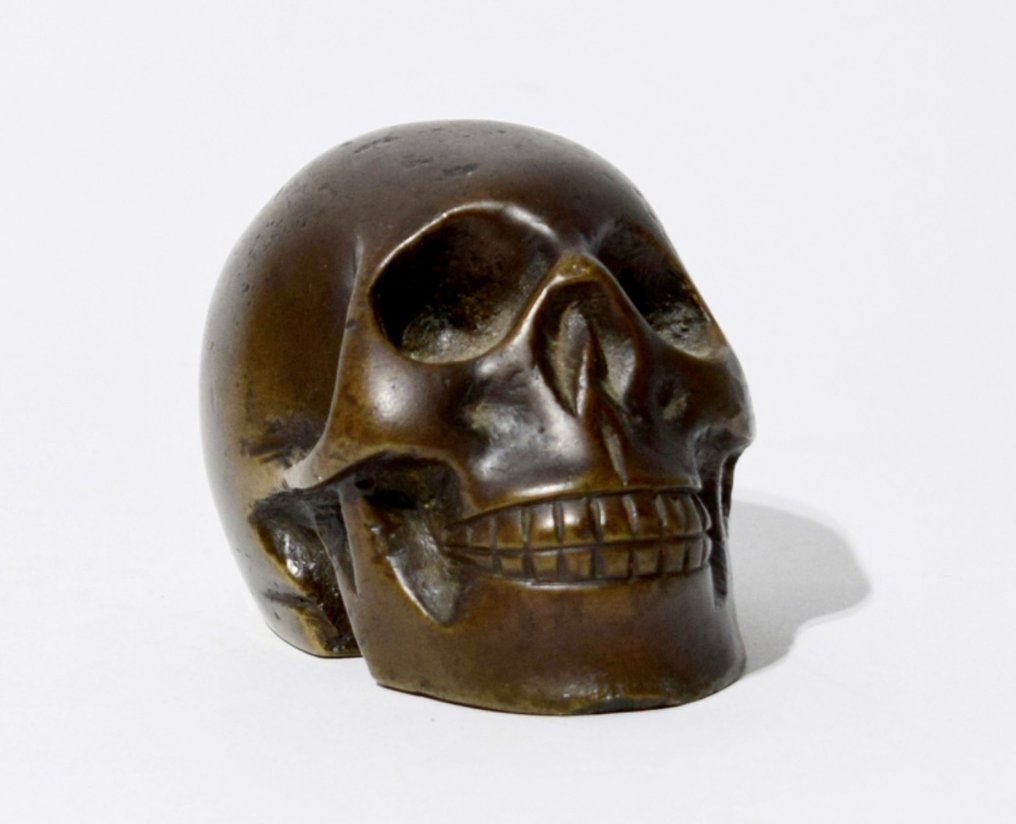
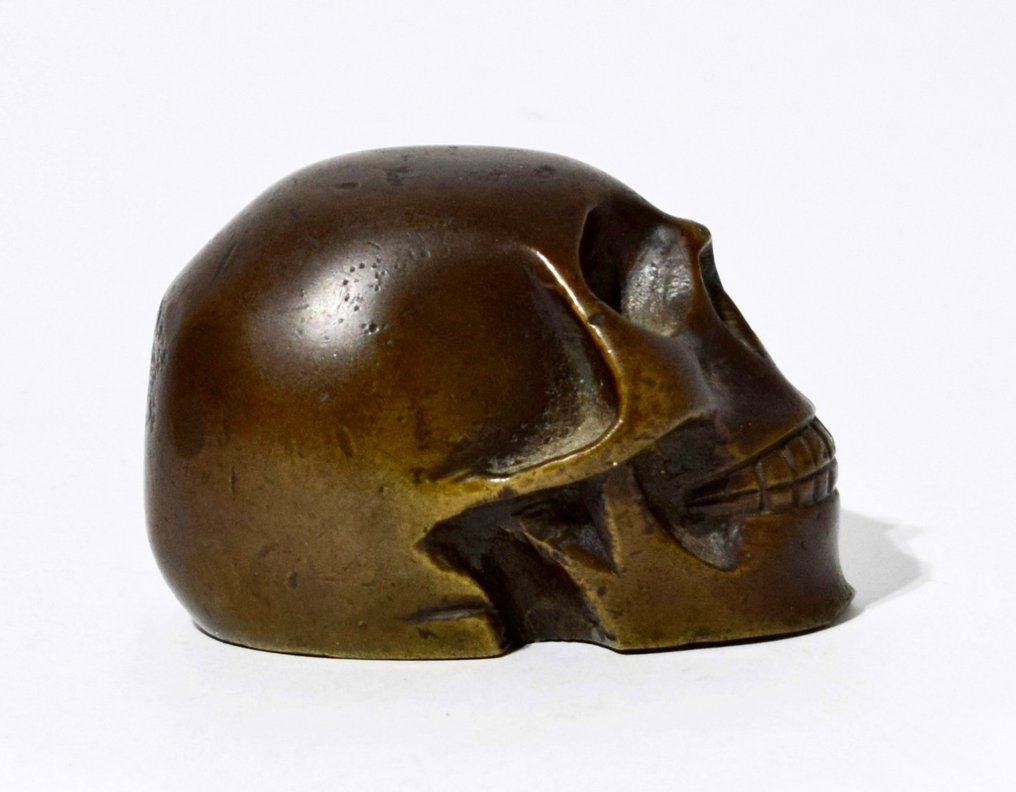
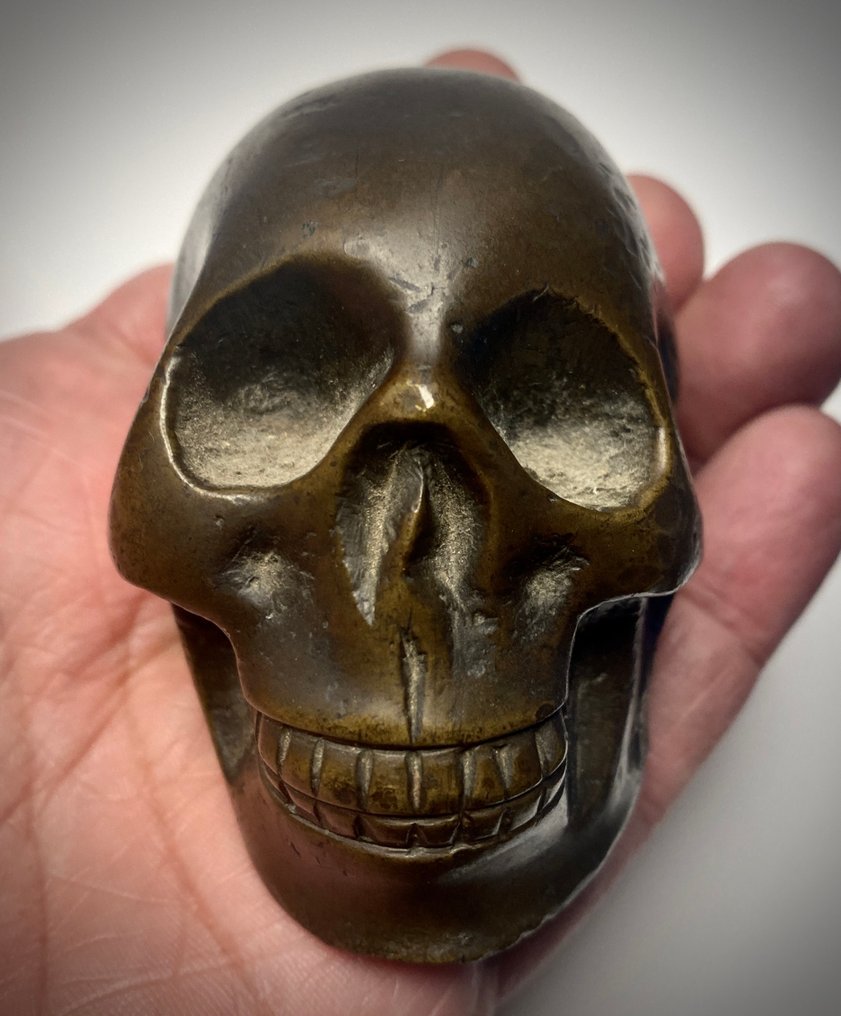
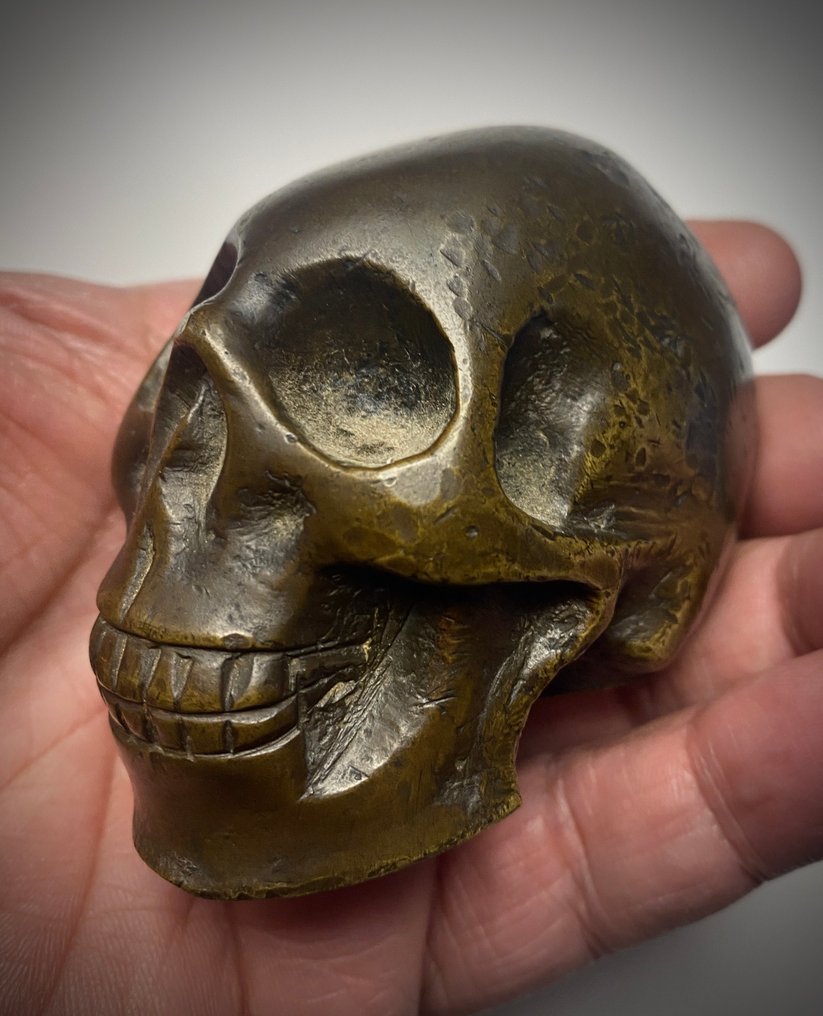
Bronze sculpture in lost-wax casting depicting a smiling skull, in antique Victorian (Vittoriano) style, Europe, unsigned.
AI-assisted summary
Description from the seller
Memento Mori – Bronze Sculpture Depicting a Smiling Skull, Europe, Mid 19th Century (Victorian Era)
Cast bronze sculpture depicting a human skull with an ironically smiling expression, conceived according to the tradition of memento mori, a theme deeply rooted in the symbolist and moralizing culture of 19th-century Europe. The work features an intense and realistic plastic rendering, with deep orbital cavities, a marked dental arch, and a deliberately irregular surface modeling, intended to evoke decay, transience, and meditation on the fleeting nature of existence.
The object can be consistently placed within the Victorian era (circa 1860–1900), a period during which the cult of death, memory, and funeral symbolism gained widespread popularity both in private collecting and in desk accessories. The possibility of also identifying it as a paperweight is entirely correct: its high weight, the compactness of the casting, and the partially finished flat base make it functional as well as decorative, as was often the case with 'moral' desk objects of that period.
From a technical perspective, the sculpture appears to have been made using lost wax casting. The base shows an irregular but closed foundation, not hollowed out internally, which suggests a solid and intentionally massive production typical of the 19th century, rather than a lightweight, serial 20th-century casting. Tool marks and slight asymmetries are evident, reinforcing the hypothesis of handcrafted rather than industrial workmanship. The patina is dark, natural, with consistent oxidation that was not artificially accelerated, further supporting a 19th-century date.
Regarding the geographical origin, the object is likely attributable to Central or Western Europe, with good compatibility with British, French, or Austro-German cultural spheres, where memento mori found particular popularity in the Victorian and Symbolist contexts.
Memento Mori – Bronze Sculpture Depicting a Smiling Skull, Europe, Mid 19th Century (Victorian Era)
Cast bronze sculpture depicting a human skull with an ironically smiling expression, conceived according to the tradition of memento mori, a theme deeply rooted in the symbolist and moralizing culture of 19th-century Europe. The work features an intense and realistic plastic rendering, with deep orbital cavities, a marked dental arch, and a deliberately irregular surface modeling, intended to evoke decay, transience, and meditation on the fleeting nature of existence.
The object can be consistently placed within the Victorian era (circa 1860–1900), a period during which the cult of death, memory, and funeral symbolism gained widespread popularity both in private collecting and in desk accessories. The possibility of also identifying it as a paperweight is entirely correct: its high weight, the compactness of the casting, and the partially finished flat base make it functional as well as decorative, as was often the case with 'moral' desk objects of that period.
From a technical perspective, the sculpture appears to have been made using lost wax casting. The base shows an irregular but closed foundation, not hollowed out internally, which suggests a solid and intentionally massive production typical of the 19th century, rather than a lightweight, serial 20th-century casting. Tool marks and slight asymmetries are evident, reinforcing the hypothesis of handcrafted rather than industrial workmanship. The patina is dark, natural, with consistent oxidation that was not artificially accelerated, further supporting a 19th-century date.
Regarding the geographical origin, the object is likely attributable to Central or Western Europe, with good compatibility with British, French, or Austro-German cultural spheres, where memento mori found particular popularity in the Victorian and Symbolist contexts.
Details
Era
1900-2000
Style subtype
Victorian
Over 200 years old
No
Country of Origin
Europe
Style
Antique
Material
Lost wax casting
Title of artwork
Memento Mori - Scultura in Bronzo Raffigurante Cranio Sorridente, Europa, XIX Secolo
Signature
Not signed
Condition
Good condition
Height
8 cm
Width
5.5 cm
Depth
5 cm
Weight
585 g
Sold by