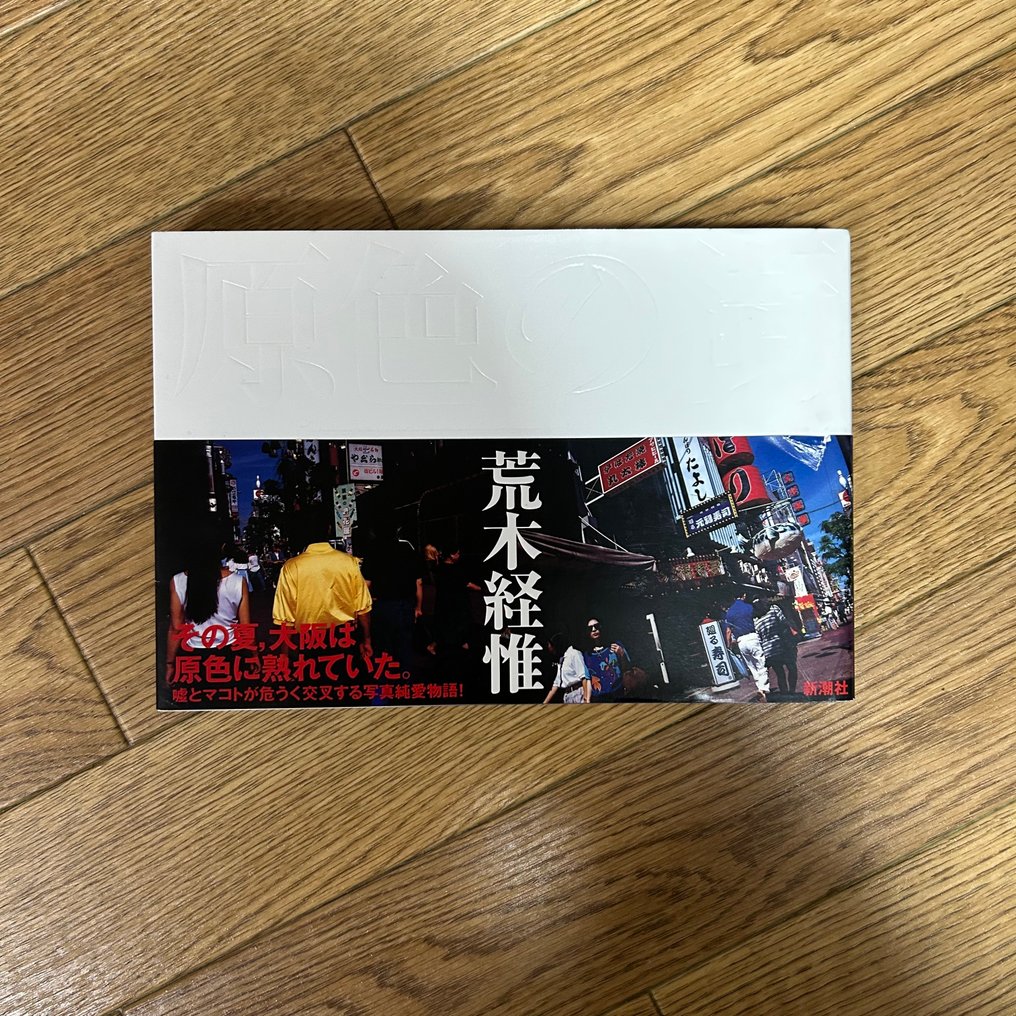
Nobuyoshi Araki - City of primary colors - 1992


04
days
04
hours
45
minutes
17
seconds

17 other people are watching this object
 Bidder 5157 Bidder 5157 | €15 | |
|---|---|---|
 Bidder 0041 Bidder 0041 | €3 | |
| Bidder 5157 | €2 | |
Catawiki Buyer Protection
Your payment’s safe with us until you receive your object.View details
Trustpilot 4.4 | 122713 reviews
Rated Excellent on Trustpilot.
Description from the seller
City of primary colors
Nobuyoshi Araki
Shinchosha/1992/Japanese/150*223*18
Nobuyoshi Araki, known by the nickname “Araki,” is a leading Japanese photographer. This book is a collection of photographs from Yoshiyuki Junnosuke's novel “The City of Original Color,” published in 1992, in which Araki attempted to photograph Yoshiyuki Junnosuke's novel “The City of Original Color” (Mitori). Araki went to Osaka in search of the scene and photographed it. After losing his wife, he continued to photograph empty and close views in monochrome, and then moved on to colored landscapes. I wanted to use primary colors, and I really wanted to use primary colors.” Araki turned his camera from the monochrome world, which seemed to project his feelings after the death of his wife Yoko, to the colorful bustle of Osaka. The scenes of Shinsaibashi, Tsutenkaku Tower, and the colorful streets of Osaka, as well as the people he encounters, are captured in color, and his meeting with a certain woman (a married woman, K) has a novelistic sentiment. The book is a sentimental journey of four days and three nights, with a sense of the energy and obscenity of Osaka, which is different from that of Tokyo, a city synonymous with Araki, everywhere in the book.
City of primary colors
Nobuyoshi Araki
Shinchosha/1992/Japanese/150*223*18
Nobuyoshi Araki, known by the nickname “Araki,” is a leading Japanese photographer. This book is a collection of photographs from Yoshiyuki Junnosuke's novel “The City of Original Color,” published in 1992, in which Araki attempted to photograph Yoshiyuki Junnosuke's novel “The City of Original Color” (Mitori). Araki went to Osaka in search of the scene and photographed it. After losing his wife, he continued to photograph empty and close views in monochrome, and then moved on to colored landscapes. I wanted to use primary colors, and I really wanted to use primary colors.” Araki turned his camera from the monochrome world, which seemed to project his feelings after the death of his wife Yoko, to the colorful bustle of Osaka. The scenes of Shinsaibashi, Tsutenkaku Tower, and the colorful streets of Osaka, as well as the people he encounters, are captured in color, and his meeting with a certain woman (a married woman, K) has a novelistic sentiment. The book is a sentimental journey of four days and three nights, with a sense of the energy and obscenity of Osaka, which is different from that of Tokyo, a city synonymous with Araki, everywhere in the book.
Details
Number of Books
1
Subject
Art, Erotica, Photography
Book Title
City of primary colors
Author/ Illustrator
Nobuyoshi Araki
Condition
Good
Publication year oldest item
1992
Edition
1st Edition
Language
Japanese
Original language
Yes
Publisher
Shinchosha
Number of pages
224
Sold by