Islamic (Umayyad / Early Abbasid) Square Weight with Kufic Inscription - Unknown


02
days
20
hours
08
minutes
14
seconds
Current bid
€ 1
No reserve price

Expert
Selected by Peter Reynaers
Has nearly 30 years’ experience and moderated multiple online art research groups.
Estimate € 150 - € 200
6 other people are watching this object
 Bidder 7031 Bidder 7031 | €1 |
|---|
Catawiki Buyer Protection
Your payment’s safe with us until you receive your object.View details
Trustpilot 4.4 | 122529 reviews
Rated Excellent on Trustpilot.
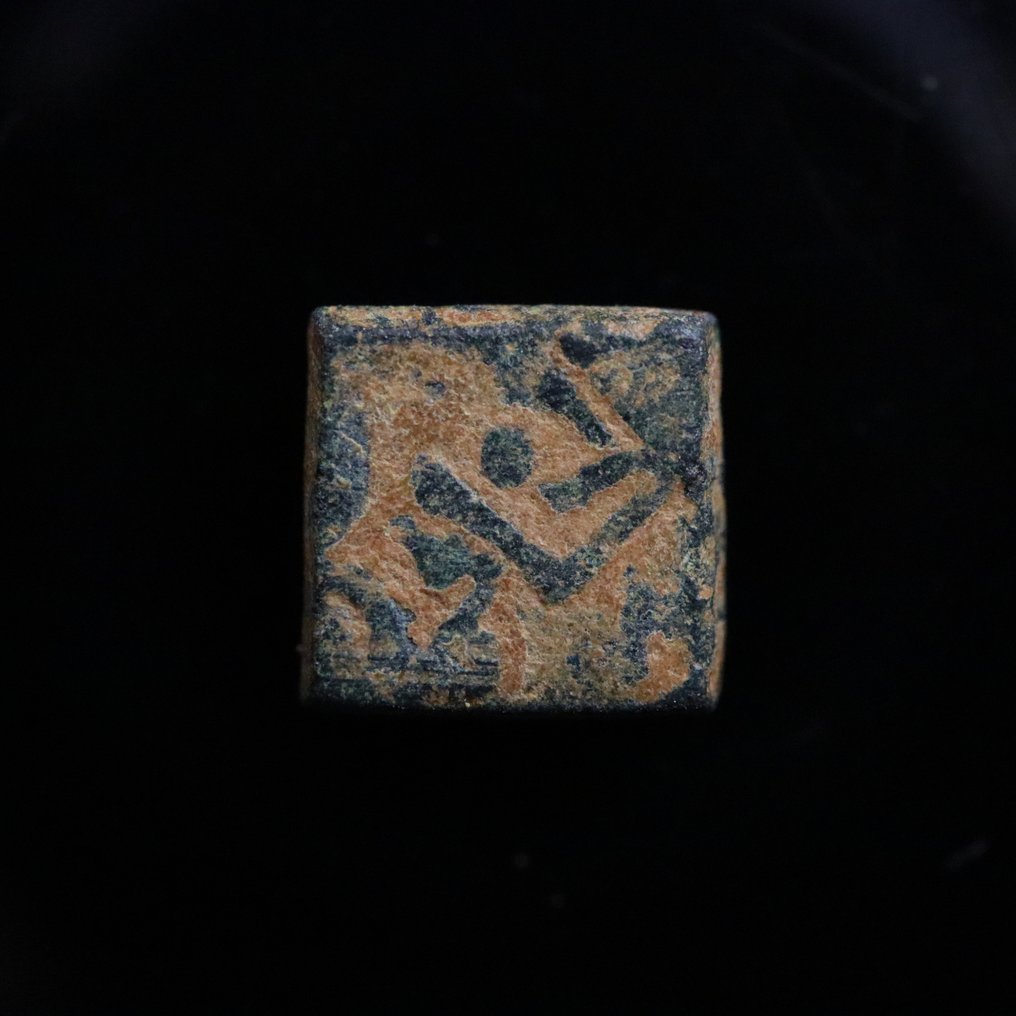
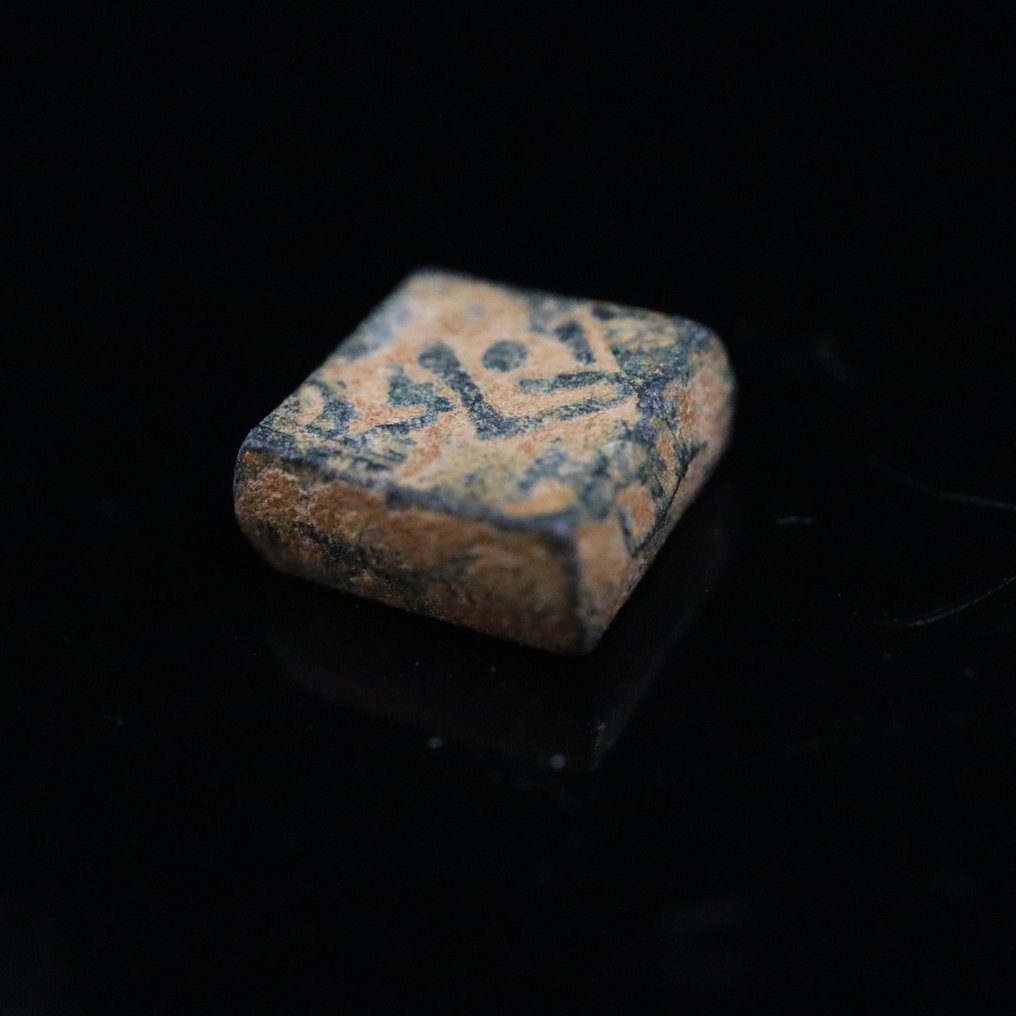
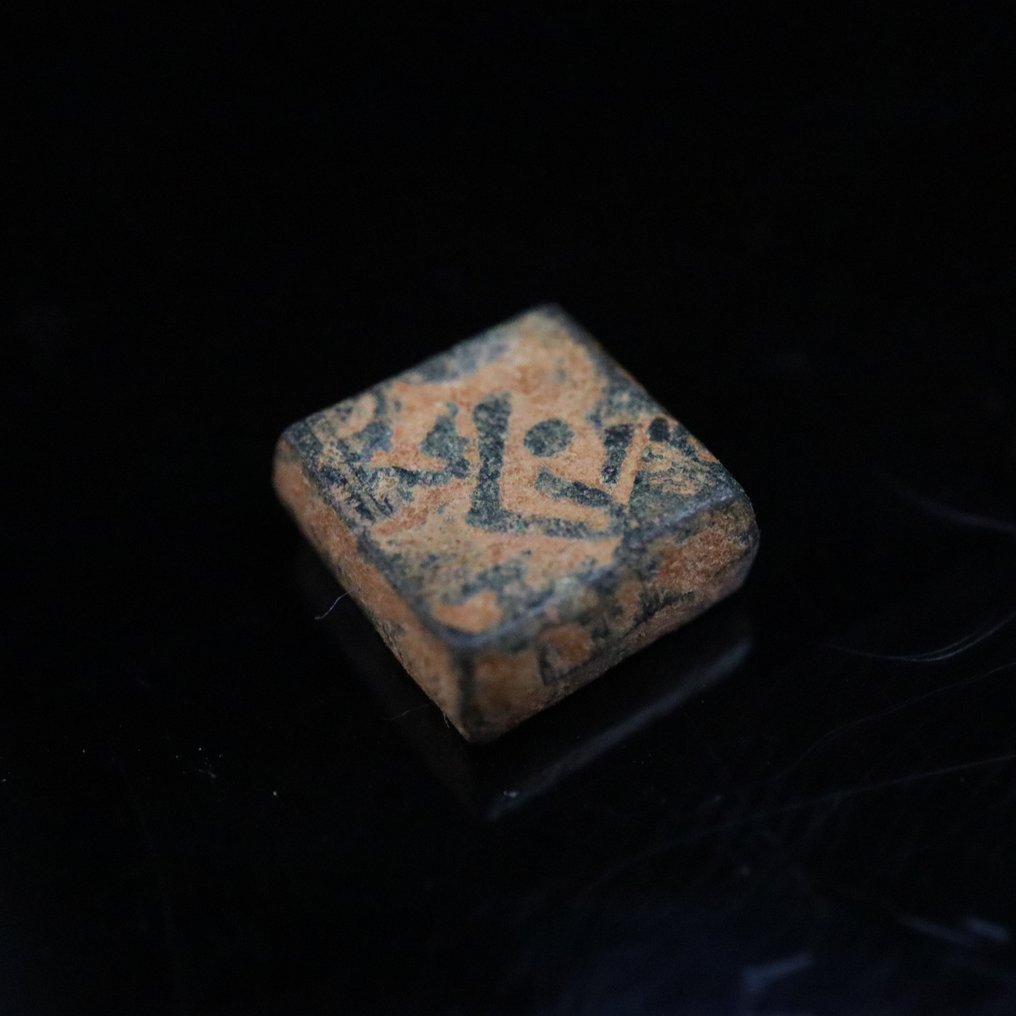
Islamic bronze square weight with Kufic inscription, likely Umayyad or Early Abbasid (c. 7th–9th century AD), weighing 1.58 g, 7.8 mm square, possible ½ dirham denomination, in excellent condition.
AI-assisted summary
Description from the seller
Islamic Bronze Square Weight with Kufic Inscription – 7th–9th Century AD – Possibly Umayyad / Early Abbasid
Material: Bronze
Weight: 1.58 g
Dimensions: 7.8 mm (square)
Culture: Early Islamic, influenced by Byzantine metrological system
Provisional dating: c. 7th – 9th century AD
Possible denomination: ½ Dirham (approx.)
Description:
A rare and authentic early Islamic square bronze weight, produced under the influence of the former Byzantine metrological tradition following the Islamic conquests of the eastern Mediterranean.
The upper surface is engraved with stylised Arabic inscriptions in early Kufic script, accompanied by geometric elements and dots. These markings most likely refer to official verification and denomination, commonly seen on weights from provincial Islamic mints and administrative centers.
The form and size strongly resemble earlier Byzantine cubic and square commercial weights, showing a transitional phase in early Islamic material culture, when former Roman-Byzantine systems were adapted to Islamic monetary standards.
Weighing 1.58 grams, this piece closely matches a half-dirham (½ Dirham) standard, used as a commercial control weight in markets and trade.
Possible Dynasty Attribution
Based on:
• The square Byzantine-inspired form
• The early Kufic letter style
• The light weight standard
• The lack of elaborate later Abbasid ornamentation
This example is most likely Umayyad (661–750 AD) or early Abbasid (750–850 AD) in date.
A late 7th to 8th century attribution is therefore highly plausible.
Condition
Very good archaeological condition with:
• Dark green and brown patina
• Clear incised markings
• Crisp edges and intact structure
• Natural earthen and oxidation deposits
• No restorations or modern alterations
Historical Context
During the first Islamic centuries, newly established administrations standardised weights for silver dirhams, gold dinars and trade goods, often copying Byzantine weight styles, especially in former Roman provinces such as Syria, Egypt and Palestine. Such weights were essential for taxation, coin production and commercial accuracy.
These early Islamic weights are increasingly rare and strongly collected for their direct connection to the formation of the Islamic Caliphate economy.
Provenance: From a European private collection formed in the 1980s. A Provenance document is available in PDF format upon request.
Seller's Story
As a second-generation history enthusiast and antique art collector, I have a deep passion for historical artifacts—from prehistoric civilizations to the Medieval era. I love connecting with fellow history lovers and sharing unique, carefully selected pieces. My goal is to find new homes for remarkable items while continuing to expand my own collection. Feel free to explore my selection—I hope you find something special!
Islamic Bronze Square Weight with Kufic Inscription – 7th–9th Century AD – Possibly Umayyad / Early Abbasid
Material: Bronze
Weight: 1.58 g
Dimensions: 7.8 mm (square)
Culture: Early Islamic, influenced by Byzantine metrological system
Provisional dating: c. 7th – 9th century AD
Possible denomination: ½ Dirham (approx.)
Description:
A rare and authentic early Islamic square bronze weight, produced under the influence of the former Byzantine metrological tradition following the Islamic conquests of the eastern Mediterranean.
The upper surface is engraved with stylised Arabic inscriptions in early Kufic script, accompanied by geometric elements and dots. These markings most likely refer to official verification and denomination, commonly seen on weights from provincial Islamic mints and administrative centers.
The form and size strongly resemble earlier Byzantine cubic and square commercial weights, showing a transitional phase in early Islamic material culture, when former Roman-Byzantine systems were adapted to Islamic monetary standards.
Weighing 1.58 grams, this piece closely matches a half-dirham (½ Dirham) standard, used as a commercial control weight in markets and trade.
Possible Dynasty Attribution
Based on:
• The square Byzantine-inspired form
• The early Kufic letter style
• The light weight standard
• The lack of elaborate later Abbasid ornamentation
This example is most likely Umayyad (661–750 AD) or early Abbasid (750–850 AD) in date.
A late 7th to 8th century attribution is therefore highly plausible.
Condition
Very good archaeological condition with:
• Dark green and brown patina
• Clear incised markings
• Crisp edges and intact structure
• Natural earthen and oxidation deposits
• No restorations or modern alterations
Historical Context
During the first Islamic centuries, newly established administrations standardised weights for silver dirhams, gold dinars and trade goods, often copying Byzantine weight styles, especially in former Roman provinces such as Syria, Egypt and Palestine. Such weights were essential for taxation, coin production and commercial accuracy.
These early Islamic weights are increasingly rare and strongly collected for their direct connection to the formation of the Islamic Caliphate economy.
Provenance: From a European private collection formed in the 1980s. A Provenance document is available in PDF format upon request.
Seller's Story
As a second-generation history enthusiast and antique art collector, I have a deep passion for historical artifacts—from prehistoric civilizations to the Medieval era. I love connecting with fellow history lovers and sharing unique, carefully selected pieces. My goal is to find new homes for remarkable items while continuing to expand my own collection. Feel free to explore my selection—I hope you find something special!
Details
Era
Before 1400
Type
Islamic (Umayyad / Early Abbasid) Square Weight with Kufic Inscription
Weight
1.58 g
Culture
Umayyad / Early Abbasid
No. of items
1
Century/ Timeframe
7th–9th Century AD
Acquired from
Private collection
Country of Origin
Unknown
Year acquired
2024
Material
Bronze
Country acquired from
Europe
Condition
Excellent condition: barely used with minimal signs of wear
Previous owner acquired from
Inherited
Height
7.8 mm
Previous owner - year acquired
1980
Width
7.7 mm
Previous owner - country acquired from
Europe
Depth
3.3 mm
I verify that I have obtained this object legally and that I am allowed to sell it
Yes
Title additional information
½ Dirham Denomination
Sold by
