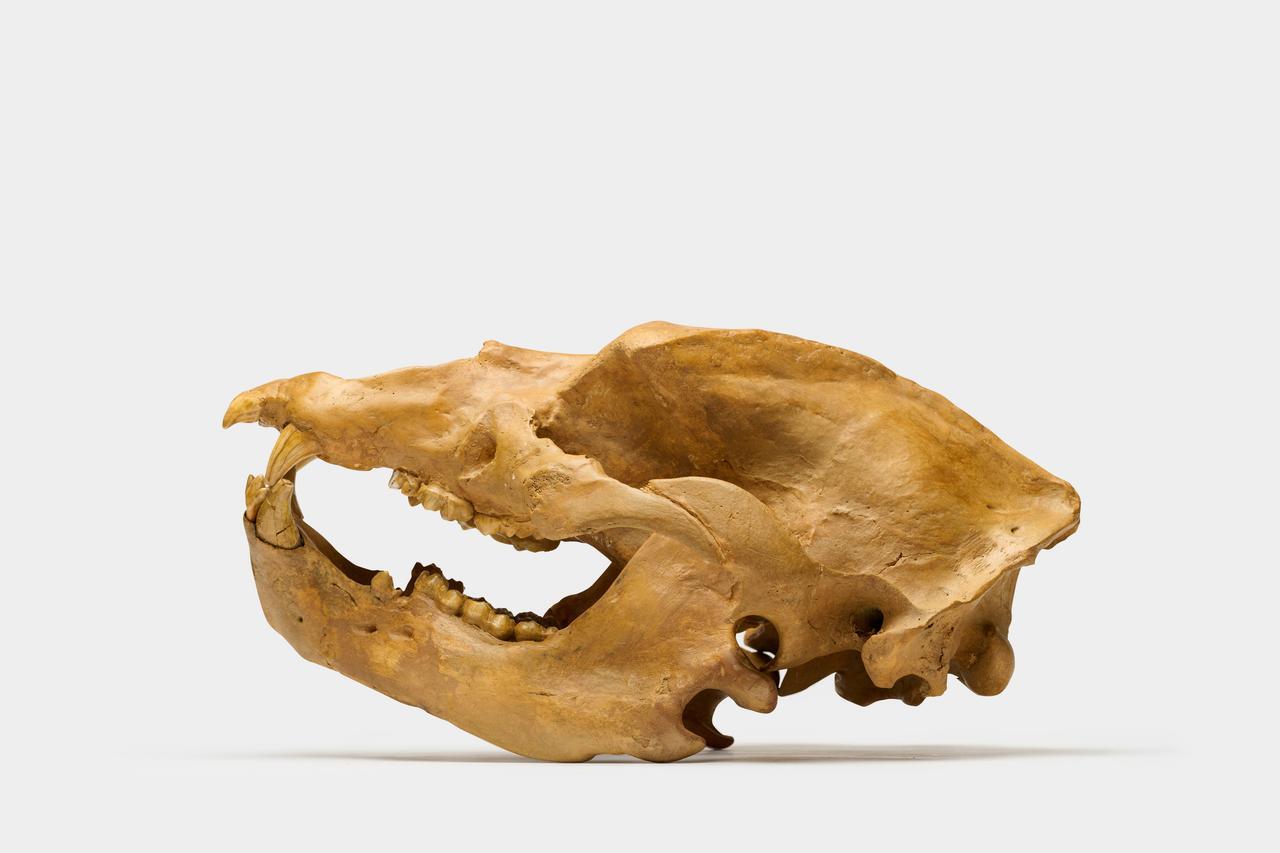
Mammal - Fossil tooth - Hyaenodon sp.


05
days
20
hours
02
minutes
39
seconds

No bids placed
Catawiki Buyer Protection
Your payment’s safe with us until you receive your object.View details
Trustpilot 4.4 | 121899 reviews
Rated Excellent on Trustpilot.
Hyaenodon sp., a mammal fossil canine tooth from the late Oligocene of the Linxia Basin, Gansu, China (Paleogene, 33.9–23.03 Ma), natural condition, about 90 mm long with repairs but no restorations.
AI-assisted summary
Description from the seller
Up for sale is a RARE canine/fang tooth of prehistoric animal Hyaenodon sp. (carnivorous mammal) from late Oligocene of Linxia basin, Gansu, China!
The late Oligocene Hyaenodon specimen from the Linxia Basin of northwestern China provides a valuable window into one of Asia’s most dynamic intervals of mammalian evolution. By this time, the region had begun to shift from warm, mixed woodlands toward more open, seasonally dry environments influenced by early uplift phases of the northeastern Tibetan Plateau. These environmental changes shaped the composition and ecology of the Linxia mammal community, producing a fauna that combined long-standing Paleogene lineages with the first waves of more modern Neogene groups.
Within this landscape, Hyaenodon persisted as one of the dominant predators. Its specialized carnassial teeth, elongated skull, and cursorial limb adaptations reflect a lifestyle focused on active predation and carcass processing, placing it at or near the top of the late Oligocene food web. The surrounding fauna includes typical representatives of the time: rhinocerotids such as Aceratherium, early chalicotheres, anthracotheres, entelodonts, small ruminants, and a diverse rodent and lagomorph assemblage. Carnivore guilds were shared with amphicyonids, smaller hyaenodont species, and nimravid-grade feliforms, marking a period of ecological competition before true carnivorans came to dominate Asian predator niches.
The presence of Hyaenodon in this late Oligocene setting highlights both the resilience and the impending decline of the hyaenodonts in Eurasia. Its occurrence in the Linxia Basin not only enriches the regional fossil record but also contributes to broader discussions of predator turnover, environmental restructuring, and the biogeographic ties linking Asian faunas across the Paleogene–Neogene boundary.
——————————
The size measurements of this item is around 90 mm/3.54 inches in length, with repairs but no restorations.
For shipping, the Chunghwa post (the official post of Taiwan) will be used to carry the item worldwide.
Please do not hesitate to contact us if you have any questions in mind
Up for sale is a RARE canine/fang tooth of prehistoric animal Hyaenodon sp. (carnivorous mammal) from late Oligocene of Linxia basin, Gansu, China!
The late Oligocene Hyaenodon specimen from the Linxia Basin of northwestern China provides a valuable window into one of Asia’s most dynamic intervals of mammalian evolution. By this time, the region had begun to shift from warm, mixed woodlands toward more open, seasonally dry environments influenced by early uplift phases of the northeastern Tibetan Plateau. These environmental changes shaped the composition and ecology of the Linxia mammal community, producing a fauna that combined long-standing Paleogene lineages with the first waves of more modern Neogene groups.
Within this landscape, Hyaenodon persisted as one of the dominant predators. Its specialized carnassial teeth, elongated skull, and cursorial limb adaptations reflect a lifestyle focused on active predation and carcass processing, placing it at or near the top of the late Oligocene food web. The surrounding fauna includes typical representatives of the time: rhinocerotids such as Aceratherium, early chalicotheres, anthracotheres, entelodonts, small ruminants, and a diverse rodent and lagomorph assemblage. Carnivore guilds were shared with amphicyonids, smaller hyaenodont species, and nimravid-grade feliforms, marking a period of ecological competition before true carnivorans came to dominate Asian predator niches.
The presence of Hyaenodon in this late Oligocene setting highlights both the resilience and the impending decline of the hyaenodonts in Eurasia. Its occurrence in the Linxia Basin not only enriches the regional fossil record but also contributes to broader discussions of predator turnover, environmental restructuring, and the biogeographic ties linking Asian faunas across the Paleogene–Neogene boundary.
——————————
The size measurements of this item is around 90 mm/3.54 inches in length, with repairs but no restorations.
For shipping, the Chunghwa post (the official post of Taiwan) will be used to carry the item worldwide.
Please do not hesitate to contact us if you have any questions in mind
Details
Specimen
Mammal
Scientific name
Hyaenodon sp.
Country of Origin
China
Geological Period
Paleogene, Oligocene (33.9 - 23.03 million years)
Condition
Natural
Sold by