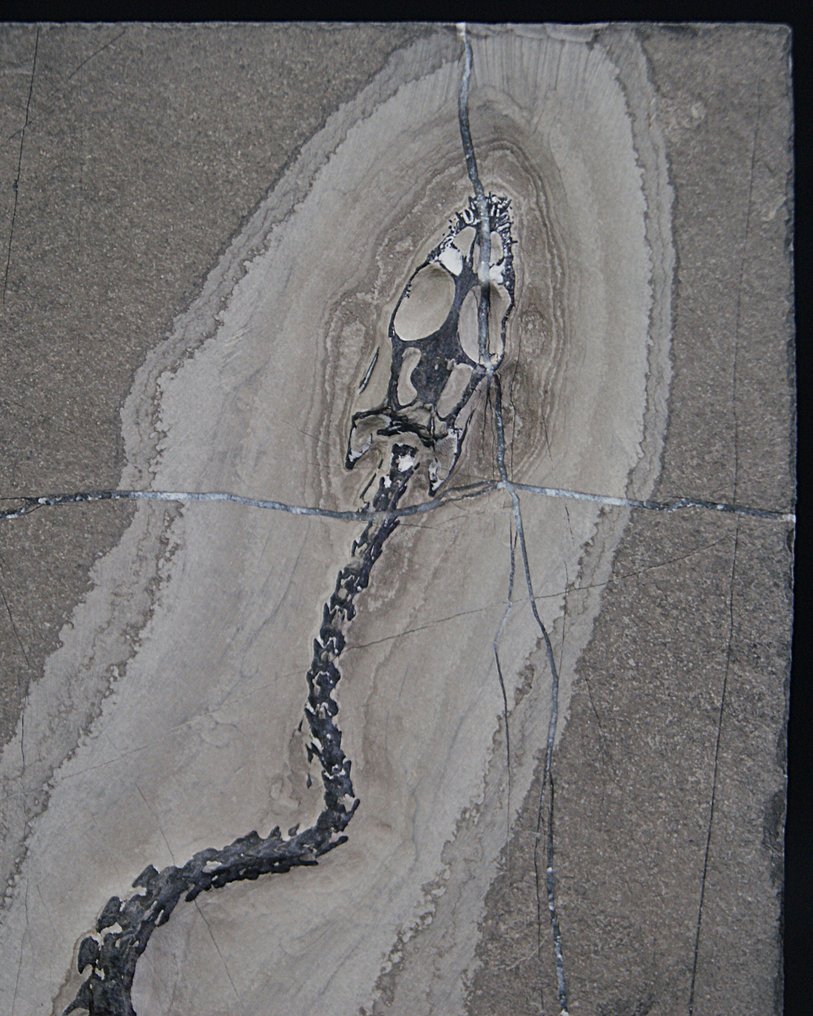
Marine reptile - Fossilised animal - Keichousaurus hui - 24 cm



05
days
12
hours
37
minutes
40
seconds

5 other people are watching this object
 Bidder 4208 Bidder 4208 | €1 |
|---|
Catawiki Buyer Protection
Your payment’s safe with us until you receive your object.View details
Trustpilot 4.4 | 121899 reviews
Rated Excellent on Trustpilot.
Scientific name Keichousaurus hui; the specimen is a marine reptile; geological period Early Triassic; condition natural; treatment cracks filled.
AI-assisted summary
Description from the seller
Scientific Name: Keichousaurus hui
Location: Hunan, China
Geological Formation: Probably Falang or Huxia Formation.
Stage: Lower Triassic – Spathian (approximately 242 million years ago)
Size: 24 cm (full skeleton in a matrix)
Fossil description
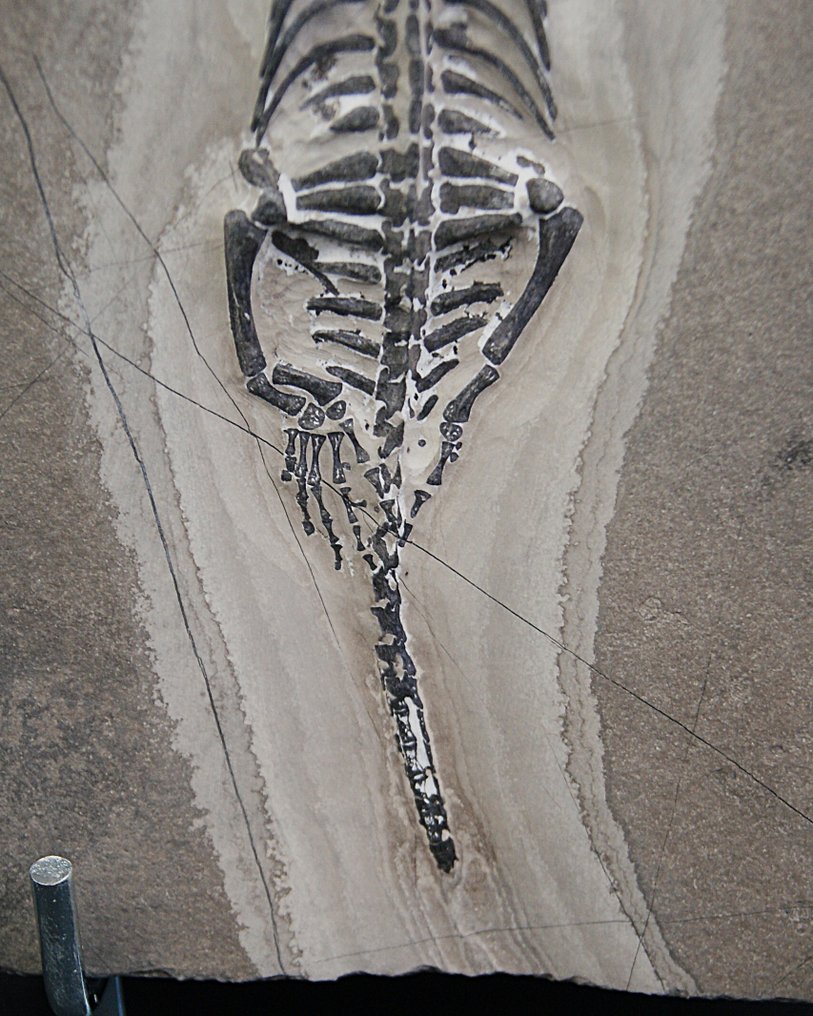
A spectacular complete specimen of Keichousaurus hui from Hunan, China, perfectly preserved in its original matrix. This fossil stands out for its natural state and complete articulation, with clearly visible bone details: skull, spine, limbs, and tail.
Keichousaurus was a marine reptile from the group of pachipleurosaurians, with an elongated body, flexible neck, and limbs adapted for swimming. Its diet was piscivorous, and its bone structure suggests an evolutionary transition between aquatic and terrestrial life.
This specimen is a museum-quality piece of the highest caliber, ideal for scientific, educational, or private collections. Its preservation and aesthetics make it a paleontological jewel that is difficult to match.
REF: 2490
Seller's Story
Travel in Time, Your Collection of Unique Fossils
Welcome to our fossil shop! Explore our fascinating catalogue of prehistoric remains and discover the history encapsulated in each piece. From majestic dinosaurs to ancient marine invertebrates, our collection will transport you to forgotten times. Find the perfect piece for your collection or gift a piece of natural history. Start your journey back in time today!
Translated by Google TranslateScientific Name: Keichousaurus hui
Location: Hunan, China
Geological Formation: Probably Falang or Huxia Formation.
Stage: Lower Triassic – Spathian (approximately 242 million years ago)
Size: 24 cm (full skeleton in a matrix)
Fossil description
A spectacular complete specimen of Keichousaurus hui from Hunan, China, perfectly preserved in its original matrix. This fossil stands out for its natural state and complete articulation, with clearly visible bone details: skull, spine, limbs, and tail.
Keichousaurus was a marine reptile from the group of pachipleurosaurians, with an elongated body, flexible neck, and limbs adapted for swimming. Its diet was piscivorous, and its bone structure suggests an evolutionary transition between aquatic and terrestrial life.
This specimen is a museum-quality piece of the highest caliber, ideal for scientific, educational, or private collections. Its preservation and aesthetics make it a paleontological jewel that is difficult to match.
REF: 2490
Seller's Story
Travel in Time, Your Collection of Unique Fossils
Welcome to our fossil shop! Explore our fascinating catalogue of prehistoric remains and discover the history encapsulated in each piece. From majestic dinosaurs to ancient marine invertebrates, our collection will transport you to forgotten times. Find the perfect piece for your collection or gift a piece of natural history. Start your journey back in time today!
Translated by Google TranslateDetails
Specimen
Marine reptile
Scientific name
Keichousaurus hui
Country of Origin
China
Geological Period
Triassic, Lower (251.9 - 247.2 million years)
Condition
Natural
Treatment
Filled cracks
Height
24 cm
Sold by