Enrique Molins Balleste - Sculpture, The Dancer and the Dove - 21 cm - Spelter, Marble



02
days
19
hours
00
minutes
20
seconds
Current bid
€ 10
Reserve price not met

Expert
Selected by Michel Karis
Art historian with extensive experience working at various auction houses in antiques.
Estimate € 220 - € 250
15 other people are watching this object
 Bidder 8953 Bidder 8953 | €10 | |
|---|---|---|
| Bidder 8953 | €6 | |
| Bidder 8953 | €5 |
Catawiki Buyer Protection
Your payment’s safe with us until you receive your object.View details
Trustpilot 4.4 | 122813 reviews
Rated Excellent on Trustpilot.
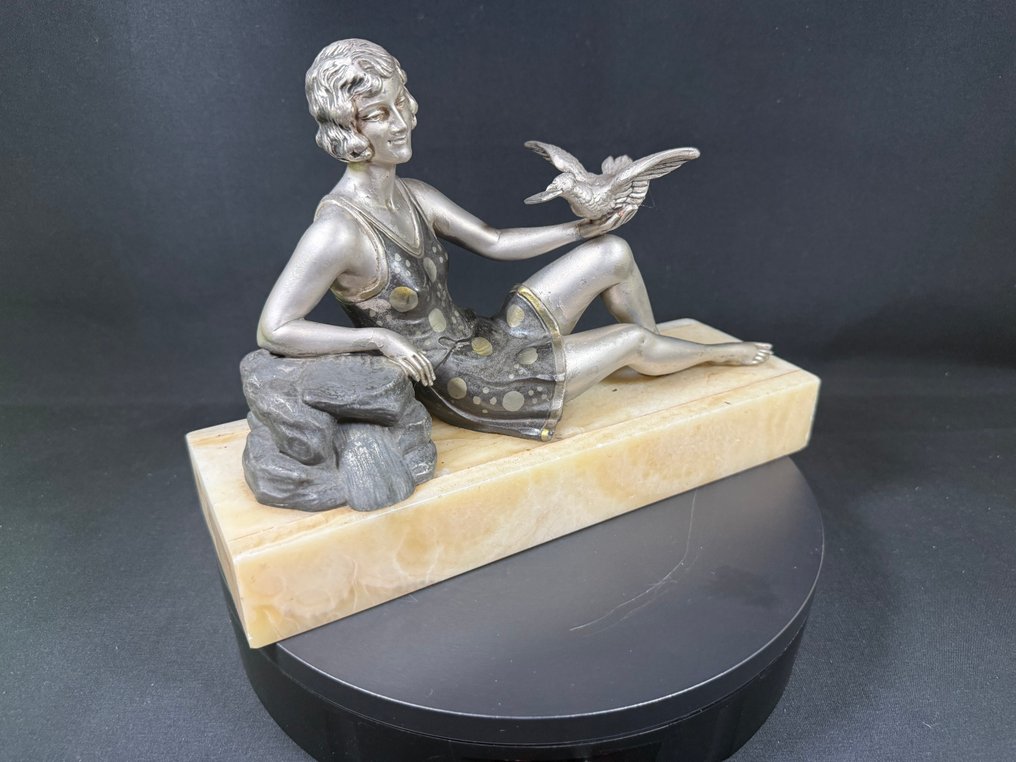
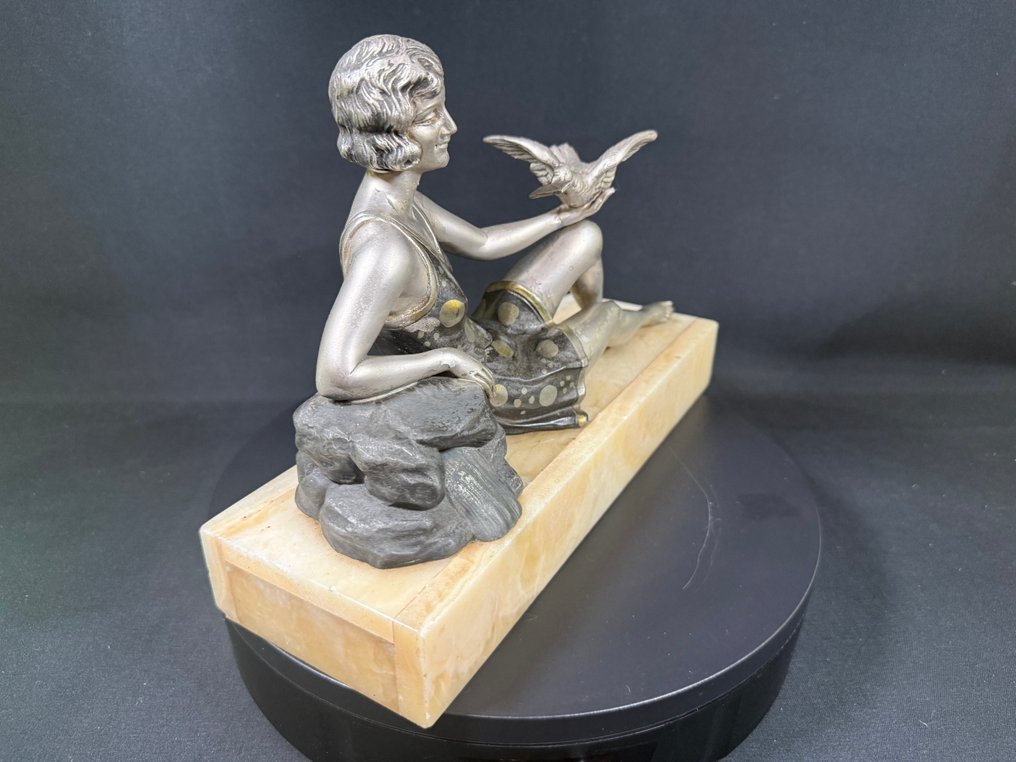
Art Deco sculpture The Dancer and the Dove by Enrique Molins Balleste dating to ca. 1925–1935, in spelter with a marble base.
AI-assisted summary
Description from the seller
Artist: Enrique Molins Balleste (signed “Balleste”)
Period: Art Deco, ca. 1925–1935
Material: Spelter (zamak) with cold-painted decoration, bird figure; onyx/alabaster base
Dimensions: (add in cm)
Condition: Good vintage condition (details below)
⸻
Description
Beautiful Art Deco sculpture by Enrique Molins Balleste, depicting a young woman seated gracefully with a bird resting on her arm. Molins Balleste was a prolific and highly collectible Spanish sculptor working in Paris during the interwar years, known for his elegant female figures, dancers, and allegorical themes.
This piece is cast in spelter and retains its original cold-painted polychrome decorations, especially visible on the dress. The work sits on a heavy onyx/alabaster plinth, typical of the period’s decorative sculptures.
The pose, hairstyle, and refined anatomy are characteristic of Molins Balleste’s style, combining sensuality with lightness and movement. Comparable works from the artist regularly appear in Art Deco auctions.
Signed “Balleste” on the base.
⸻
Condition
• Typical age-related wear to the cold paint
• Minor patina and oxidation spots on spelter
• Onyx base with small edge chips and scratches
• Underside with original fabric covering, partly worn
• Overall structurally sound and visually attractive
Photos are part of the description.
Enrique Molins Balleste
Place: Barcelona
Born: 1893
Death: 1958
Biography:
Introduction to Enrique Molins Balleste
Enrique Molins Balleste
was a Spanish artist born in Barcelona in 1893. He moved to Paris and became known for his lighting figural work and wood sculptures. He passed away in 1958.
Early Life and Career
Enrique Molins Balleste began his artistic journey in his hometown of Barcelona, where he was exposed to various art movements and styles. His early works were influenced by the Catalan Modernisme movement, which was a significant force in Spanish art during that time. As he progressed in his career, Enrique Molins Balleste became known for his unique style, which blended traditional techniques with modern elements.
Artistic Style and Notable Works
Enrique Molins Balleste
's artistic style was characterized by his use of lighting figural work, which gave his pieces a sense of depth and dimension. His wood sculptures were also notable for their intricate details and textures. Some of his most famous works include Personnage à la Main Percée II 16-2 38, created by Julio Gonzalez, which can be found at the Museu Coleção Berardo in Lisbon, Portugal. Another notable work is Menú de Els Quatre Gats, created by Pablo Picasso, which showcases his early style and influence.
Influences and Legacy
Enrique Molins Balleste
's work was influenced by various artists, including Julio Gonzalez and Pablo Picasso. His unique style and contributions to the world of art have made him a notable figure in Spanish art history. The Museo de Bellas Artes de Bilbao in Bilbao, Spain, has a collection of his works, including View of L’Aleixar, created by Joaquim Mir.
Conclusion
Enrique Molins Balleste
's legacy continues to be celebrated through his works, which can be found in various museums and collections around the world. His unique style and contributions to Spanish art have made him a significant figure in the history of art. For more information on Enrique Molins Balleste and his works, visit Enrique Molins Balleste.
Top 5 Famous Artists of All Time
Enrique Molins Balleste
Ramon Casas Y Carbó
Notable works by Enrique Molins Balleste include his lighting figural work and wood sculptures, which have been exhibited in various museums and collections.
Artist: Enrique Molins Balleste (signed “Balleste”)
Period: Art Deco, ca. 1925–1935
Material: Spelter (zamak) with cold-painted decoration, bird figure; onyx/alabaster base
Dimensions: (add in cm)
Condition: Good vintage condition (details below)
⸻
Description
Beautiful Art Deco sculpture by Enrique Molins Balleste, depicting a young woman seated gracefully with a bird resting on her arm. Molins Balleste was a prolific and highly collectible Spanish sculptor working in Paris during the interwar years, known for his elegant female figures, dancers, and allegorical themes.
This piece is cast in spelter and retains its original cold-painted polychrome decorations, especially visible on the dress. The work sits on a heavy onyx/alabaster plinth, typical of the period’s decorative sculptures.
The pose, hairstyle, and refined anatomy are characteristic of Molins Balleste’s style, combining sensuality with lightness and movement. Comparable works from the artist regularly appear in Art Deco auctions.
Signed “Balleste” on the base.
⸻
Condition
• Typical age-related wear to the cold paint
• Minor patina and oxidation spots on spelter
• Onyx base with small edge chips and scratches
• Underside with original fabric covering, partly worn
• Overall structurally sound and visually attractive
Photos are part of the description.
Enrique Molins Balleste
Place: Barcelona
Born: 1893
Death: 1958
Biography:
Introduction to Enrique Molins Balleste
Enrique Molins Balleste
was a Spanish artist born in Barcelona in 1893. He moved to Paris and became known for his lighting figural work and wood sculptures. He passed away in 1958.
Early Life and Career
Enrique Molins Balleste began his artistic journey in his hometown of Barcelona, where he was exposed to various art movements and styles. His early works were influenced by the Catalan Modernisme movement, which was a significant force in Spanish art during that time. As he progressed in his career, Enrique Molins Balleste became known for his unique style, which blended traditional techniques with modern elements.
Artistic Style and Notable Works
Enrique Molins Balleste
's artistic style was characterized by his use of lighting figural work, which gave his pieces a sense of depth and dimension. His wood sculptures were also notable for their intricate details and textures. Some of his most famous works include Personnage à la Main Percée II 16-2 38, created by Julio Gonzalez, which can be found at the Museu Coleção Berardo in Lisbon, Portugal. Another notable work is Menú de Els Quatre Gats, created by Pablo Picasso, which showcases his early style and influence.
Influences and Legacy
Enrique Molins Balleste
's work was influenced by various artists, including Julio Gonzalez and Pablo Picasso. His unique style and contributions to the world of art have made him a notable figure in Spanish art history. The Museo de Bellas Artes de Bilbao in Bilbao, Spain, has a collection of his works, including View of L’Aleixar, created by Joaquim Mir.
Conclusion
Enrique Molins Balleste
's legacy continues to be celebrated through his works, which can be found in various museums and collections around the world. His unique style and contributions to Spanish art have made him a significant figure in the history of art. For more information on Enrique Molins Balleste and his works, visit Enrique Molins Balleste.
Top 5 Famous Artists of All Time
Enrique Molins Balleste
Ramon Casas Y Carbó
Notable works by Enrique Molins Balleste include his lighting figural work and wood sculptures, which have been exhibited in various museums and collections.
Details
Era
1900-2000
Country of Origin
France
Style
Art Deco
Material
Marble, Spelter
Artist
Enrique Molins Balleste
Title of artwork
The Dancer and the Dove
Signature
Signed
Colour
Beige, Silver
Condition
Good condition
Height
21 cm
Width
30 cm
Depth
10 cm
Weight
4600 g
Sold by
