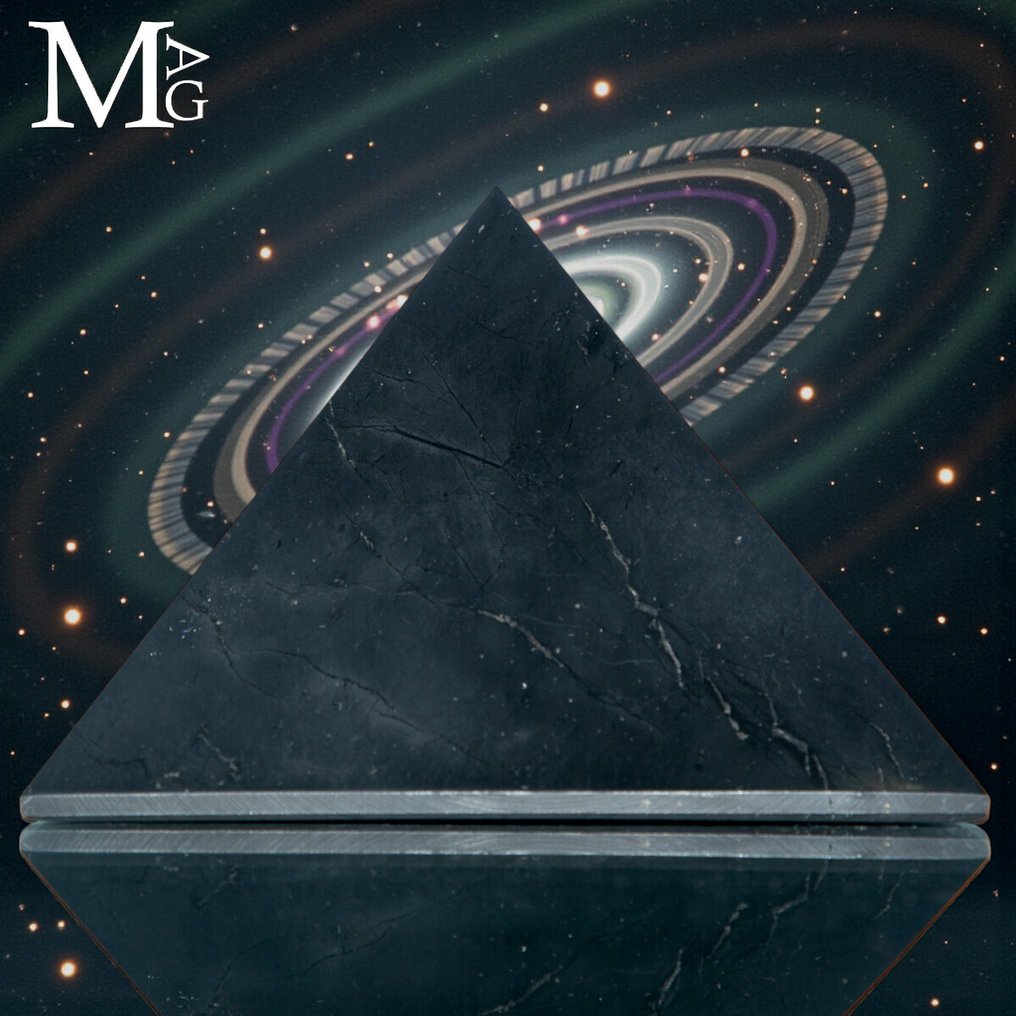
Shungite Shungite – The Primordial Energy of Ancient Carbon Pyramid in Shungite Ancient Carbon Monolite - Height: 90 mm - Width: 120 mm- 1114 g



04
days
16
hours
29
minutes
21
seconds
Current bid
€ 5
Reserve price not met

Expert
Selected by Jonas Rathaj
Has worked with taxidermy since childhood and gained retailer experience.
Estimate € 150 - € 200
7 other people are watching this object
 Bidder 5246 Bidder 5246 | €5 |
|---|
Catawiki Buyer Protection
Your payment’s safe with us until you receive your object.View details
Trustpilot 4.4 | 122813 reviews
Rated Excellent on Trustpilot.
Shungite pyramid specimen carved from a single block of noble shungite, dimensions 120 × 120 × 90 mm with a height of 90 mm, weight 1114 g, origin Russia, Mineral Form described as Shungite – The Primordial Energy of Ancient Carbon Piramide in Shungite Monolite di Carbonio Antico and supplement TTO-86.
AI-assisted summary
Description from the seller
This pyramid is carved from a single block of noble shungite, selected for its compact structure and the natural veins typical of this rare carbonaceous mineral from Karelia. Its dimensions — 120 mm per side and 90 mm in height — give it a sculptural presence, stable and rigorous, with perfectly polished surfaces that highlight its deep black hue. Shungite is considered one of the oldest natural materials on the planet. Its formation dates back to about 2 billion years ago, at the beginning of the Proterozoic Era. During that period, the Earth's atmosphere was poor in oxygen and rich in primordial organic compounds: the ideal environment for the transformation of ancient carbonaceous sediments into a unique mineral, composed of: high-purity amorphous carbon, traces of natural fullerene, and an extraordinarily compact microcrystalline matrix.
Seller's Story
The Mineral Art Gallery offers minerals, fossils, shells and natural elements.
Born in Italy in 2017, today she collaborates with international galleries and collectors, she is a direct importer of large minerals and naturalistic collectible elements; deals with the processing to insert them inside the living space. A section of the gallery was dedicated to the Wunderkammer, "chamber of wonders or cabinet of curiosities" in which Mirabilia elements are presented: naturalia and italiania, a union between "the present is the past".
All lots are shipped via DHL Express and Fercam couriers, with insured parcel and tracking.
Translated by Google TranslateThis pyramid is carved from a single block of noble shungite, selected for its compact structure and the natural veins typical of this rare carbonaceous mineral from Karelia. Its dimensions — 120 mm per side and 90 mm in height — give it a sculptural presence, stable and rigorous, with perfectly polished surfaces that highlight its deep black hue. Shungite is considered one of the oldest natural materials on the planet. Its formation dates back to about 2 billion years ago, at the beginning of the Proterozoic Era. During that period, the Earth's atmosphere was poor in oxygen and rich in primordial organic compounds: the ideal environment for the transformation of ancient carbonaceous sediments into a unique mineral, composed of: high-purity amorphous carbon, traces of natural fullerene, and an extraordinarily compact microcrystalline matrix.
Seller's Story
The Mineral Art Gallery offers minerals, fossils, shells and natural elements.
Born in Italy in 2017, today she collaborates with international galleries and collectors, she is a direct importer of large minerals and naturalistic collectible elements; deals with the processing to insert them inside the living space. A section of the gallery was dedicated to the Wunderkammer, "chamber of wonders or cabinet of curiosities" in which Mirabilia elements are presented: naturalia and italiania, a union between "the present is the past".
All lots are shipped via DHL Express and Fercam couriers, with insured parcel and tracking.
Translated by Google TranslateDetails
Main Mineral
Shungite
Mineral Form
Shungite – The Primordial Energy of Ancient Carbon Pyramid in Shungite Ancient Carbon Monolite
Supplement
TTO-86
Weight
1114 g
Country of Origin
Russia
Height
90 mm
Width
120 mm
Depth
120 mm
Sold by