Industrial equipment - Everett Edgcumbe “Synclock” Time / Frequency Difference Meter - United Kingdom - Synclock Difference Meter

05
days
03
hours
43
minutes
02
seconds
Starting bid
€ 1
No reserve price

Expert
Selected by Paula Martin-Calero Toro
Holds a degree in art history; over six years cataloguing and appraising antiques.
Estimate € 180 - € 220
No bids placed
Catawiki Buyer Protection
Your payment’s safe with us until you receive your object.View details
Trustpilot 4.4 | 122529 reviews
Rated Excellent on Trustpilot.
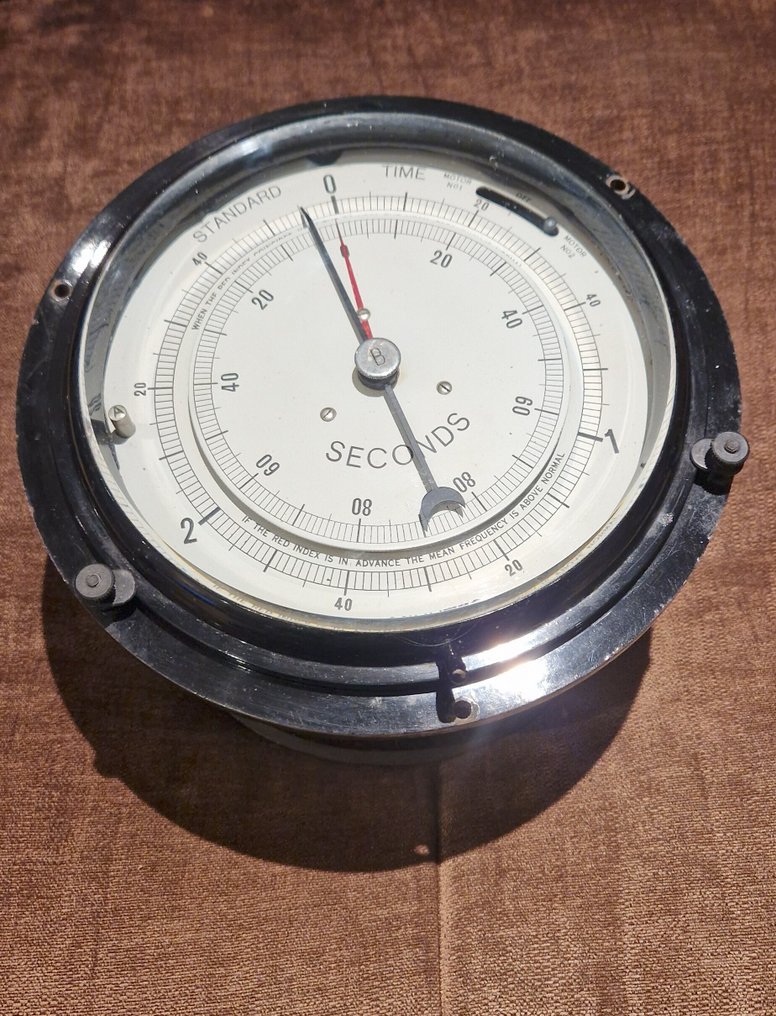
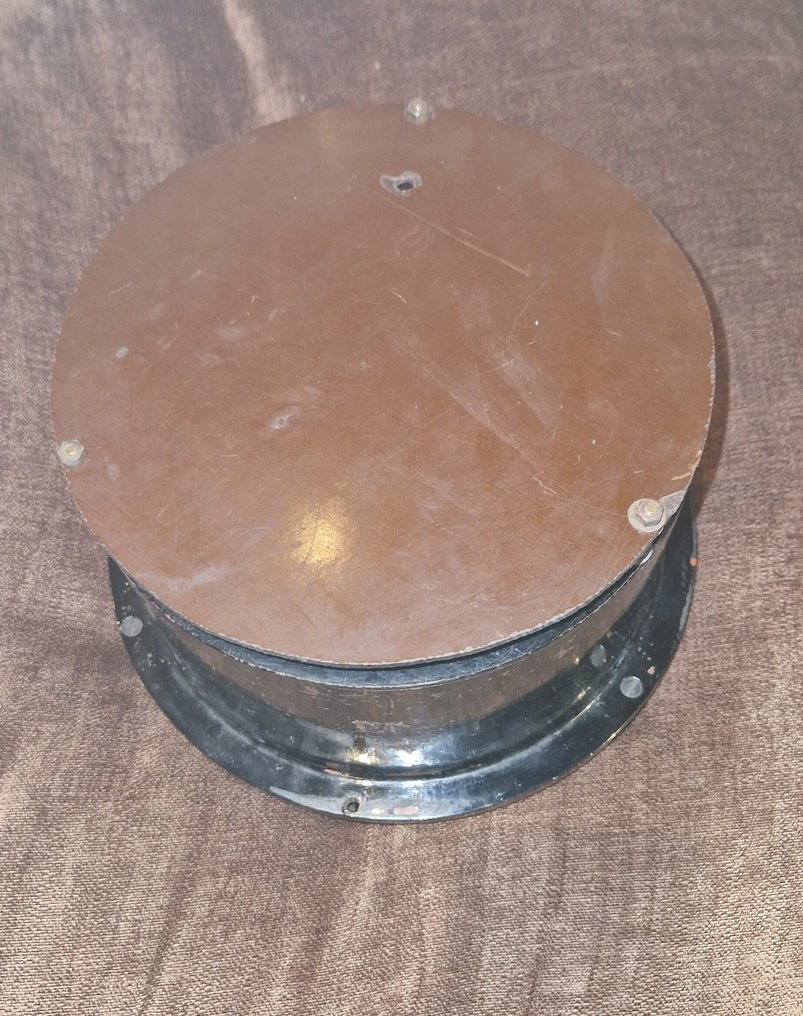
Everett Edgcumbe & Co. Ltd, London, presents the Synclock Time / Frequency Difference Meter in steel with enamel dial, a 1930s–1950s DC 110 V device in good condition, 170 mm high, 250 mm wide, 250 mm deep, weighing 9.5 kg.
AI-assisted summary
Description from the seller
Everett Edgcumbe “Synclock” Time / Frequency Difference Meter Circa 1935–1950 (most likely 1938–1948)
A rare and highly specialised industrial instrument manufactured by Everett Edgcumbe & Co. Ltd, London – one of Britain’s foremost makers of precision electrical measuring equipment in the pre- and immediate post-war period.
This is a Time/Frequency Deviation Indicator used in electricity generating stations, substations, large industrial plants and railway signalling installations. It continuously displays the cumulative difference between a high-accuracy “Standard Time” reference (quartz master clock or radio time signal) and the time derived from the 50 Hz mains frequency.
Engineers monitored the separation between the black minute/second hand and the red index hand to keep the grid frequency within very tight limits, ensuring that millions of synchronous electric clocks across the country remained accurate.
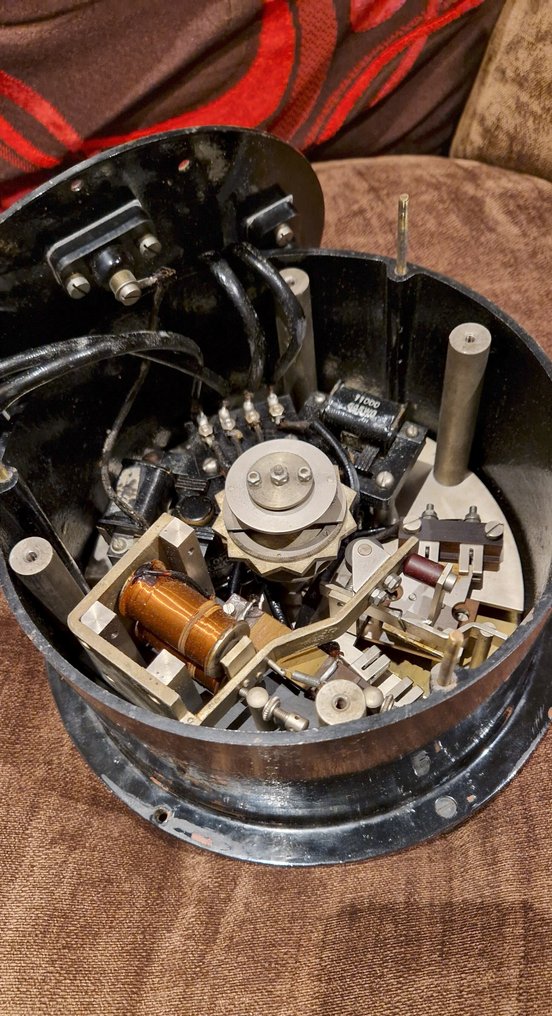
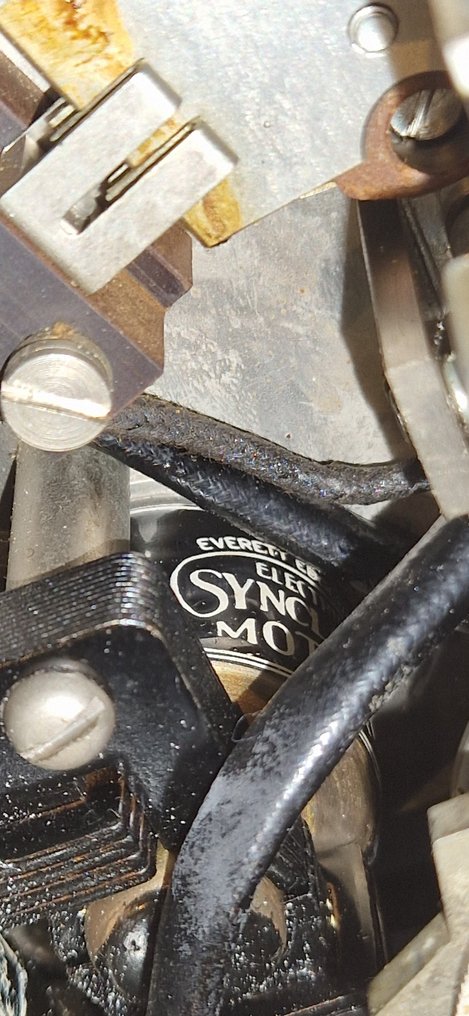
Key features - Enamel dial with the characteristic “STANDARD TIME” and “MEAN FREQUENCY IS NORMAL / ABOVE NORMAL” legends - Clearly labelled Everett Edgcumbe “SYNCLOCK MOTOR” - Heavy black-painted steel bulkhead case with hinged bevelled-glass bezel - Dual motor switching (“MOTOR No.1 / No.2 / OFF”) for redundancy - Marked “110 V D.C. 0.2 A” – this is a scarce DC-powered variant
Condition is complete, original and undamaged with honest industrial patina and light surface corrosion typical of genuine power-station use.
No cracks to the dial, glass intact, hands and mechanism excellent.
Electrically untested but visually superb for display or straightforward restoration. Believe period to be 1935–1950, with this exact combination of dial layout, DC rating and case style placing it firmly in the late 1930s to immediate post-war years.
As-is, and untested.
Everett Edgcumbe “Synclock” Time / Frequency Difference Meter Circa 1935–1950 (most likely 1938–1948)
A rare and highly specialised industrial instrument manufactured by Everett Edgcumbe & Co. Ltd, London – one of Britain’s foremost makers of precision electrical measuring equipment in the pre- and immediate post-war period.
This is a Time/Frequency Deviation Indicator used in electricity generating stations, substations, large industrial plants and railway signalling installations. It continuously displays the cumulative difference between a high-accuracy “Standard Time” reference (quartz master clock or radio time signal) and the time derived from the 50 Hz mains frequency.
Engineers monitored the separation between the black minute/second hand and the red index hand to keep the grid frequency within very tight limits, ensuring that millions of synchronous electric clocks across the country remained accurate.
Key features - Enamel dial with the characteristic “STANDARD TIME” and “MEAN FREQUENCY IS NORMAL / ABOVE NORMAL” legends - Clearly labelled Everett Edgcumbe “SYNCLOCK MOTOR” - Heavy black-painted steel bulkhead case with hinged bevelled-glass bezel - Dual motor switching (“MOTOR No.1 / No.2 / OFF”) for redundancy - Marked “110 V D.C. 0.2 A” – this is a scarce DC-powered variant
Condition is complete, original and undamaged with honest industrial patina and light surface corrosion typical of genuine power-station use.
No cracks to the dial, glass intact, hands and mechanism excellent.
Electrically untested but visually superb for display or straightforward restoration. Believe period to be 1935–1950, with this exact combination of dial layout, DC rating and case style placing it firmly in the late 1930s to immediate post-war years.
As-is, and untested.
Details
Era
1900-2000
Weight
9.5 kg
Style subtype
Industrial design
Metal type
Steel
Specific region of origin
London
Title additional information
Synclock Difference Meter
Material
Metal
Country of Origin
United Kingdom
Model
Everett Edgcumbe “Synclock” Time / Frequency Difference Meter
Style
Vintage
Condition
Good condition - used with small signs of aging & blemishes
Height
170 mm
Width
250 mm
Depth
250 mm
Estimated Period
1930-1940, 1940-1950
Sold by